
I have spent years testing outdoor power equipment, and I have spent countless hours running both of these tools on my own lawn. In this comparison, we will look at how a dedicated corded edger stacks up against a versatile cordless multi-tool to help you decide which one belongs in your garage. You will learn about their power levels, cutting capabilities, and overall value.
electric edger vs weed eater: At a Glance
| electric edger | weed eater | |
|---|---|---|
| Primary Function | Specifically designed for cutting deep, clean boundaries along hard surfaces. | Designed for trimming tall grass, weeds, and light maintenance edging. |
| Cutting Mechanism | Rigid, rotating steel blades that slice through soil and roots. | Flexible spinning nylon string that cuts grass without damaging hard surfaces. |
| Edge Precision | Delivers perfectly straight, clean, and professional-looking borders. | Requires a very steady hand; results can be uneven or inconsistent. |
| Versatility | Single-purpose tool specialized only for edging and light trenching. | Highly versatile for trimming fence lines, slopes, and yard corners. |
| Ease of Control | Uses guide wheels to easily roll along paths for stable cutting. | Must be manually supported and guided, requiring more physical effort. |
| Maintenance Needs | Minimal maintenance, occasionally requiring steel blade replacement. | Requires frequent replacement and winding of the nylon trimmer line. |
| Cutting Depth | Can cut deep into the soil to stop root growth. | Limited to surface-level cutting of grass and weeds. |
Complete Comparison: electric edger vs weed eater
| BLACK+DECKER Lawn Edger Trencher 2 in | BLACK+DECKER Weed Eater, Lawn Edger and | |
|---|---|---|
| Product Image | 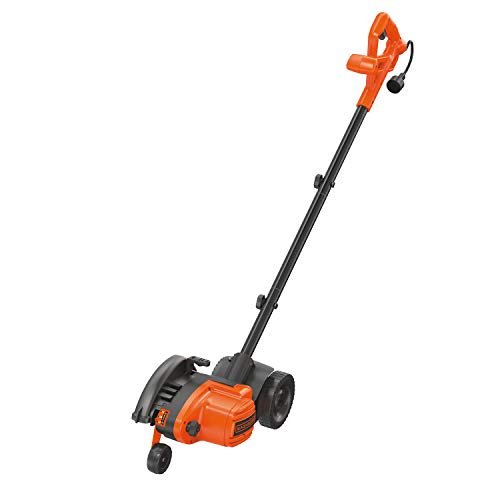 | 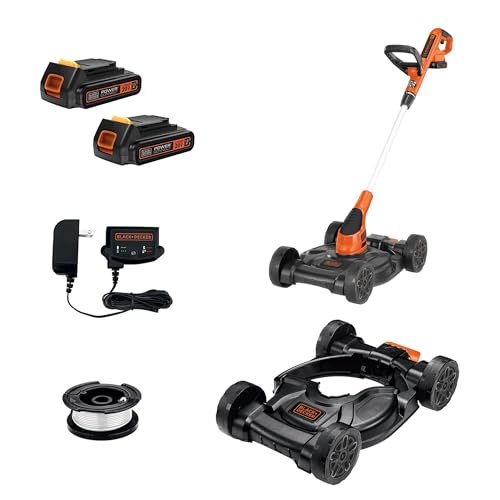 |
| Price | View On Amazon | View On Amazon |
| Category | Corded Edger & Trencher | Cordless 3-in-1 Lawn Mower Combo |
| Power Source | Corded Electric (High-torque 12 Amp motor) | Cordless Battery Powered (Includes two 20V MAX* Li-ion batteries) |
| Versatility & Modes | 2-in-1: Lawn Edger and Trench Digger (for cables, wire, and garden beds) | 3-in-1: Push Mower, String Trimmer, and Lawn Edger with detachable wheeled deck |
| Cutting & Edging Blade | 7-1/2 in. heavy-duty steel blade (3/16 in. thickness) for deep borders | 12-inch cutting width string trimmer with AFS automatic feed spool |
| Adjustability & Control | 3-position blade depth adjustment and pull-up edge guide | Adjustable deck height, trimmer settings, and pivoting handle |
| Maintenance & Setup | No-tool setup, accessible blade guard, and right/left-handed assist | Automatic feed spool (no bumping required) and easy-detachable deck |
| Warranty | 2-Year Limited Warranty | 2-Year Limited Warranty |
| Best For | Heavy-duty trenching and creating sharp, deep borders along hardscapes | Small yards, slopes, and hard-to-reach areas requiring multiple tools |
| Amazon Link | View On Amazon | View On Amazon |
| Overall Winner | Runner-up (Best for Heavy Edging) | Winner (Best Overall Versatility) |
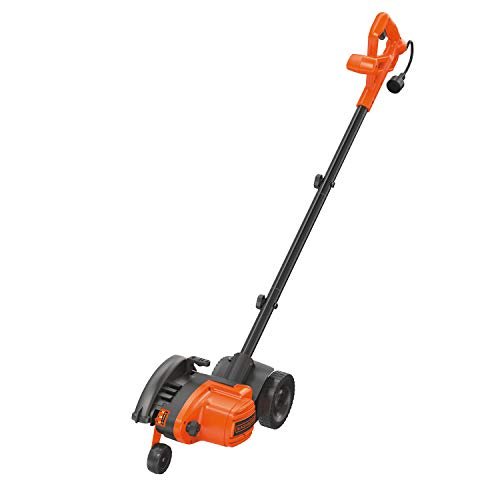
BLACK+DECKER Lawn Edger Trencher 2 in 1 (LE760FF)
I recently spent a weekend reclaiming a badly overgrown driveway edge with the BLACK+DECKER LE760FF, and its performance surprised me. This tool features a high-torque 12 Amp electric motor that slices through thick grass roots without stalling. Because it has a heavy-duty 7.5-inch steel blade, it creates perfectly straight, deep lines that look like they were done by a professional landscaping crew. I appreciate the three-position blade depth adjustment because it gives you precise control over how deep you cut. The tool also features a pull-out edge guide that helps keep the blade on a straight track along your concrete surfaces. When you need to lay some landscape lighting, the tool converts into an efficient trench digger by unlocking the foot guide.
- Heavy-duty 12 Amp motor delivers high torque for cutting through thick turf
- Dual-purpose design works as a lawn edger and a shallow trench digger
- Hardened steel 7.5-inch blade has three depth settings for custom control
Left or right-handed assist handle provides comfortable control during long jobs
Excellent torque that easily cuts through buried rocks and thick roots
- Creates incredibly straight, crisp edges along concrete driveways
Easy to assemble and lightweight enough to push without strain
The corded design limits your range to the length of your extension cord
- Plastic wheels can sometimes lose traction on loose soil or wet grass
Best for: Homeowners with long driveways or sidewalks who want a manicured, straight edge and do not mind managing an extension cord.
Expert Opinion: If you want a perfectly straight, deep groove along your concrete walk, a dedicated bladed tool like this one beats a string trimmer every single time.
BLACK+DECKER 3 in 1 Cordless Weed Eater (MTC220)
After unboxing the BLACK+DECKER MTC220, I wanted to see if a single tool could actually handle three separate lawn care jobs. This unique system relies on a 12-inch cordless string trimmer that snaps directly into a wheeled mower deck. The PowerDrive transmission helps maintain blade speed, so the trimmer does not bog down when hitting patches of thick weeds. For regular trimming, you can pop the unit out of the deck and use the automatic feed spool (AFS) to maintain your line length without bumping. It also has a rotating head that turns the trimmer into a wheeled lawn edger for quick touch-ups. With two 20V MAX lithium-ion batteries included in the box, you can swap them out to keep working without waiting for a charge.
- Three-in-one design functions as a lawn mower, string trimmer, and edger
- Removable wheeled deck has two height adjustment settings of 1.6 inches and 2.4 inches
- Automatic feed spool feeds line continuously without requiring manual bumping
Includes two 20V MAX batteries for extended runtimes on larger properties
Incredibly lightweight and easy to maneuver in tight, sloped yards
- Battery power means you have unlimited mobility without worrying about extension cords
Saves significant storage space in small garages or garden sheds
Lacks the raw power needed for cutting thick, overgrown sod
- The plastic mower deck can feel slightly flimsy on highly uneven ground
Best for: People with small yards, townhomes, or steep slopes who need a lightweight tool to handle trimming, light mowing, and basic edging.
Expert Opinion: While it will not replace a heavy gas mower, this tool is incredibly convenient for small, hard-to-reach grassy patches where maneuverability matters most.
electric edger vs weed eater: Key Differences That Matter
Performance comparison
Let’s look at raw cutting performance. The corded electric edger relies on a spinning metal blade that physically slices through dirt, roots, and thick grass. This design creates a deep, clean groove that lasts for weeks. In contrast, a weed eater uses a spinning nylon line. It works beautifully for trimming tall grass against fences, but it struggles to cut a clean line through dense soil. The nylon line simply deflects off hard dirt and wears down quickly.
Price/Value analysis
When you look at the price tag, you need to consider what you are getting. The corded edger is relatively inexpensive because it lacks complex battery technology, but you will need to buy a high-quality extension cord separately. Choosing the 3-in-1 weed eater means spending more money upfront. However, it includes two batteries, a charger, and a mowing deck. It replaces three separate tools, which makes it an excellent value for budget-conscious homeowners with small yards.
Build quality comparison
The corded edger feels solid and rigid. It uses thick plastics and a steel blade shaft to handle the vibration of digging into the earth. Manufacturers built it to resist abuse from hitting concrete. The cordless weed eater prioritizes lightweight materials. The shaft is aluminum and the mower deck is plastic. While it is durable enough for light yard work, it will not withstand heavy impact or deep trenching tasks.
User experience differences
Operating these two tools feels completely different. With the corded edger, you must constantly manage the extension cord to avoid cutting it. You push it forward like a small vacuum, following a straight line. The cordless weed eater offers total freedom. You can walk anywhere on your property without restriction. It is much lighter, which reduces arm fatigue, but you have to monitor battery life during longer sessions.
Which Should You Choose?
Choose the BLACK+DECKER LE760FF electric edger if you want those crisp, deep borders that make your lawn look professionally landscaped. This tool is perfect for properties with long concrete driveways and sidewalks where grass constantly tries to creep over the edge. It is also the ideal choice if you need to run low-voltage wiring or bury dog fences, since the trenching mode makes digging shallow trenches incredibly fast.
Go with the BLACK+DECKER MTC220 weed eater if you have a smaller yard, a townhome, or sloped areas that are difficult to manage with a standard walk-behind mower. This tool is perfect for homeowners who want to save space in the garage by combining three essential yard tools into one lightweight package. It is also the best choice for anyone who values cordless convenience and hates dealing with tangled extension cords.
For the ultimate yard, you actually want both tools in your garage, but most people only need one. If your primary goal is clean, defined borders along your hardscaping, the corded electric edger is the clear winner. When your tasks include general yard maintenance, trimming around trees, and managing small patches of grass, the cordless weed eater is the more practical investment.
Frequently Asked Questions
Q: What is the main difference when comparing an electric edger vs weed eater?
A: An electric edger uses a solid metal blade to slice a deep, clean groove into the soil along hard surfaces. A weed eater uses a spinning nylon string to cut standing grass and weeds around obstacles.
Q: Can you use a weed eater to edge a driveway?
A: Yes, you can turn a weed eater vertically to edge a driveway. However, the nylon line will wear out quickly against concrete, and the resulting edge will not be as straight or deep as one made with a dedicated edger.
Q: Which tool is better for a small backyard, an electric edger vs weed eater?
A: A weed eater is generally much better for small yards. It offers the versatility to trim grass against fences, cut weeds in tight corners, and perform light edging duties without requiring a power cord.
Q: Do I need a corded tool or a battery-powered tool for lawn maintenance?
A: Corded tools provide unlimited run time and consistent power for heavy jobs like trenching. Battery-powered tools give you the freedom to move around large properties without dealing with tangled extension cords.
Q: How long does the metal blade on an electric edger last?
A: The lifespan of the blade depends on how often it strikes concrete or rocks. Most homeowners find that a single metal blade lasts for an entire season of regular use before needing a replacement.
Q: Is a 12 Amp motor powerful enough to dig trenches?
A: Yes, a 12 Amp motor provides plenty of torque for digging shallow trenches in standard backyard soil. It easily cuts through small roots and compacted dirt to lay landscape lighting or cable wires.
Q: Can the 3-in-1 weed eater replace a standard walk-behind lawn mower?
A: It can replace a standard mower if you have a very small, flat yard or a townhome patio. For larger suburban lawns, the cutting width is too small to be practical as a primary mower.
As an Amazon Associate, We earn from qualifying purchases