
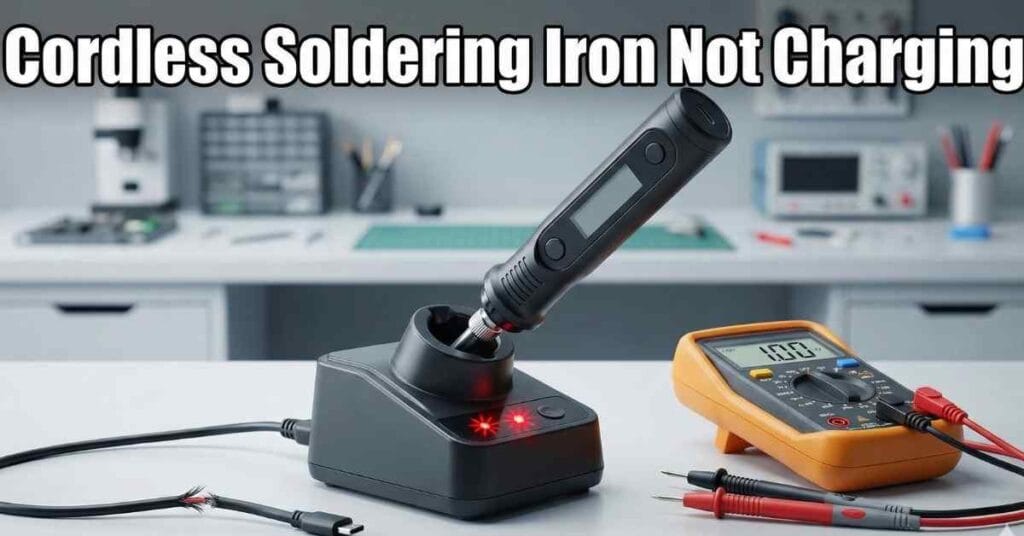
There is nothing worse than a dead tool. I was fixing a wire in my cold garage. I grabbed my iron. It was dead. A cordless soldering iron not charging kills your workflow. I learned this the hard way on jobs from humid Florida to snowy Ohio. Here is what I do now.
Table of Contents
When Your Cordless Soldering Iron Suddenly Won’t Charge
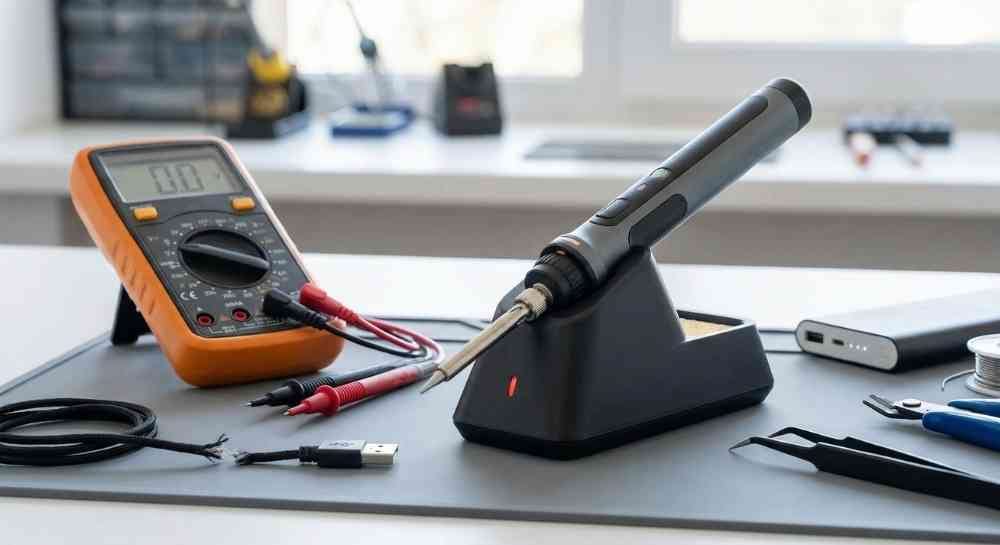
It usually happens mid-project. It is late. The garage door is half open. You drop the iron in the dock. You wait. Nothing happens. The light stays dark.
First assumptions most people make
I used to blame the battery first. Or I blamed the cheap charger. I even thought cordless tools were just bad. That was frustration talking. The fix is usually much simpler.
Basic Charging Checks Most People Skip
I skip the manual. I check the simple stuff first. It saves me time. I check the wall first.
Power source problems in real U.S. workshops
My garage has GFCI outlets. They trip often. Humid weather makes it worse. I check that reset button first. Sometimes the power strip is off. It might be buried under wood scraps.
I also check USB ports. Many new irons use USB. Some ports are weak. They don’t give enough power. Old phone blocks fail here.
Charger lights that lie
A solid green light can lie. It says “full” instantly. That is often wrong. Sometimes there is no light at all. Blinking codes help if you look. But most of us ignore them.
Battery Issues That Stop Charging Cold
The iron seems fine. But the battery is the culprit. It happens silently. There is no drama. Just a dead tool.
Lithium-ion battery protection lockout
Lithium-ion packs are smart. If voltage drops too low, they lock. This is a safety feature. The charger sees it as unsafe. It will not send power. This happens after long storage.
Temperature problems people underestimate
My shop gets cold in winter. Lithium cells hate freezing temps. They won’t charge below 32°F. It protects the chemistry. I bring batteries inside to warm up.
Hot packs fail too. Did you just solder for an hour? The pack is hot. The charger will wait. Let it cool down first.
Battery age and cycle fatigue
Old cells hold less charge. The run time gets short. The charger might blink. It tries to charge but gives up. Compact cells have short lives. They work hard and die young.
Dirty Contacts and Mechanical Fit Problems
The iron looks clean. But is it? This is my next step. Dirt is invisible.
Oxidized or contaminated charging contacts
Flux gets everywhere. It coats the metal pins. Dust does too. Even oil from my hands blocks power. I wipe them down. It helps more than you think.
Loose docks and misaligned cradles
I wiggle the iron in the dock. Sometimes it is not seated. The springs get weak over time. Travel creates wear too. A loose fit means no charge.
Brand-Specific Charging Quirks
Not all irons are the same. I have used most of them. They break differently.
Milwaukee, DeWalt, and tool-battery hybrids
Their batteries are tough. But the handshake fails. The charger talks to the chip. Sometimes a pack works in a drill. But it fails in the iron. It is odd but true.
Craftsman, Weller, and compact USB-charged irons
These use USB often. The cable matters. Thin cables drop voltage. The tiny boards inside burn out. I see this on budget models. They fail quietly.
How I Test a Cordless Soldering Iron That Won’t Charge
I have a routine. It is fast. It works for me. It is not the manual’s way.
Simple tests before opening anything
I try a wall outlet inside the house. I swap the USB cord. I wait 30 minutes. The battery might just need rest. Simple swaps solve most issues.
Multimeter checks
I grab my meter. It is not hard. I check the charger output. Then I check the battery pins. Zero volts means it is truly dead.
When It’s Not Worth Fixing
Sometimes you must stop. It is not worth the risk. A cheap tool is not worth a fire.
Red flags I don’t ignore
Is the battery puffy? Throw it out. Does it smell burnt? Stop. If the charger gets hot, unplug it. These are signs of danger.
Safety notes that actually matter
Damaged lithium is dangerous. OSHA warns about this. Do not force a charge. It can cause a fire. Your shop is not worth the risk.
How to Prevent Charging Problems Next Time
Prevention is boring. But it saves money. It keeps your tools ready.
Storage and charging habits that help
Do not drain it to zero. Bring batteries inside during winter. Charge it before it sits for months. A full battery stays healthy longer.
Small habits that extend battery life
Wipe the pins with alcohol. Use the factory block. Let the tool cool down first. These small steps add years to the tool.
FAQs – Cordless Soldering Iron Not Charging
Why is my cordless soldering iron not charging at all
A cordless soldering iron not charging is often due to low battery voltage or a bad outlet. Cold garages and weak chargers can also stop charging. Try a warm room and a known outlet.
Can a cold garage stop a cordless soldering iron from charging
Yes. Lithium batteries will not charge when they are too cold. In winter garages, the charger may look fine but do nothing. Bring the iron inside and let it warm up first.
How do I know if the battery is bad or just empty
If the iron runs for seconds or not at all, the battery may be worn out. Chargers may show green but not fill the pack. This is common with older cordless soldering irons.
Do dirty contacts stop a cordless soldering iron from charging
Yes. Flux, dust, or oil can block the contacts. The iron may sit in the dock but not charge. A light clean often fixes this fast.
Are USB chargers a problem for cordless soldering irons
They can be. Some USB ports do not give enough power. Low output chargers often cause slow or failed charging. Use the charger made for the iron when possible.
As an Amazon Associate, We earn from qualifying purchases