
Spend enough time in the woods with a running saw, and you quickly realize that your safety gear dictates your confidence and comfort. I have put both the HAIX Airpower XR200 boots and the UM ULTRAMAXX Type II forestry helmet through some of the toughest clearing jobs on my property. This hands-on comparison will help you understand how these different pieces of personal protective equipment keep you safe while breaking down the critical safety standards you need to know before buying.
class 1 vs class 2 chainsaw protection: At a Glance
| class 1 | class 2 chainsaw protection | |
|---|---|---|
| Chain Speed Resistance | Resists chain speeds up to 20 m/s (approx. 3900 ft/min). | Resists chain speeds up to 24 m/s (approx. 4700 ft/min). |
| Protection Level | Standard protection level suitable for average cutting hazards. | Enhanced protection level for higher-velocity risk environments. |
| Weight and Bulk | Lighter and less bulky, offering superior mobility. | Heavier and bulkier due to thicker protective fibers. |
| Flexibility and Comfort | High flexibility and comfort for active, all-day wear. | Slightly stiffer and more restrictive to move in. |
| Best Suited For | Arborists, landowners, and general ground-clearing tasks. | Professional forestry, heavy logging, and high-risk operations. |
| Breathability | More breathable, keeping the user cooler in warm weather. | Less breathable, retaining more heat due to dense layering. |
| Saw Compatibility | Ideal for small-to-medium gasoline or electric chainsaws. | Recommended when operating high-velocity, heavy-duty professional saws. |
Complete Comparison: class 1 vs class 2 chainsaw protection
| HAIX Airpower XR200 Arborist Boots, Class | UM ULTRAMAXX Type II Class C | |
|---|---|---|
| Product Image | 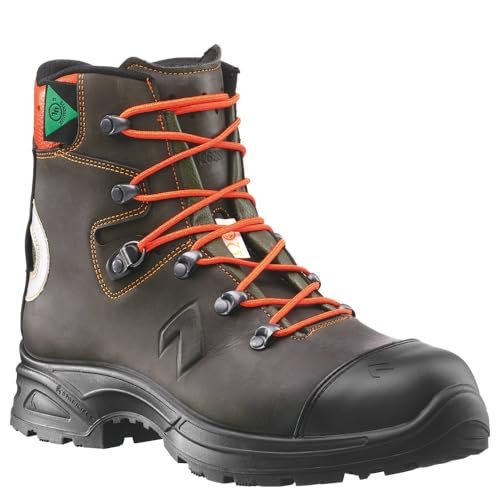 | 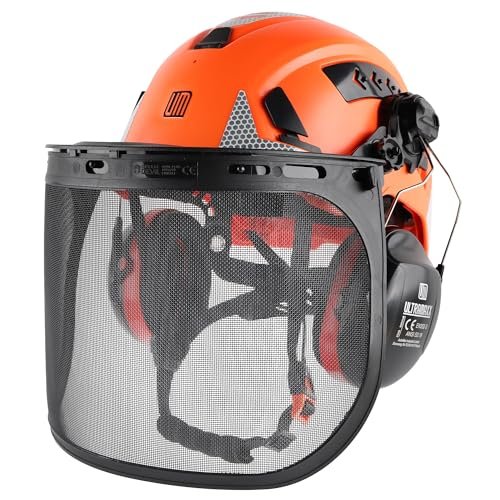 |
| Price | View On Amazon | View On Amazon |
| Category | Premium | Mid-Range |
| Safety Certifications | European Class 1 (20 m/s chainsaw protection), ASTM F2413, CAN/CSA Z195, EH rated to 18kV | ANSI Z89.1 Type II Class C (Helmet), ANSI Z87.1+ (Face Shield), ANSI S3.19 & CE EN 352-3 (Earmuffs) |
| Physical Protection System | Reinforced ankle for climbing support and durable nubuck leather construction | Heavy-duty ABS shell with flip-down metal mesh face shield to deflect wood chips & flying debris |
| Hearing & Environmental Protection | GORE-TEX waterproof liner to block rain, dew, and wet terrain; HAIX Climate System for sweat management | Integrated, rotatable earmuffs providing NRR 27dB noise reduction for high-noise work environments |
| Adjustability & Fit | Patented 2-Zone Lacing system for secure, customizable ankle and foot tensioning during climbing | Easy-adjust ratchet system for head sizes 53-63cm (20⅞” – 24¾”) and modular snap-on/off accessories |
| Best For | Professional arborists, tree climbing, aerial limb work, and heavy chainsaw operation in wet climates | Forestry workers, woodworkers, demolition crews, and construction workers needing all-in-one head, face, and ear protection |
| Amazon Link | View On Amazon | View On Amazon |
| Overall Winner | Winner | Runner-up |
HAIX Airpower XR200 Arborist Boots, Class 1 Chainsaw, GORE-TEX
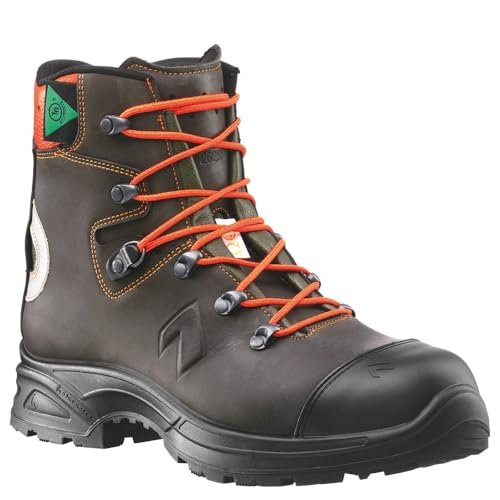
Finding a boot that balances ground traction with aerial climbing agility is a massive challenge for professional arborists. The HAIX Airpower XR200 boots solve this puzzle by integrating European Class 1 chainsaw protection with a supportive structure. During long ground-clearing days, the built-in GORE-TEX waterproof liner kept my feet completely dry despite deep mud and wet grass. I noticed the patented 2-Zone Lacing system allows for a custom fit, letting me tighten the footbed while keeping the ankle flexible for climbing. These boots also feature an EH rated to 18kV sole, which provides an extra layer of safety when working near electrical hazards. Constructed with premium nubuck leather, they feel incredibly tough without requiring a brutal break-in period.
- Class 1 Chainsaw Protection certified to stop a chain running at speeds up to 20 meters per second.
- GORE-TEX Waterproof Liner combined with the HAIX Climate System to keep moisture out while letting sweat escape.
- 2-Zone Lacing System which allows independent adjustment of the foot and leg areas for climbing support.
- EH Rated to 18kV and certified under ASTM F2413 and CAN/CSA Z195 standards for high-level safety.
- Durable Nubuck Leather Construction with a reinforced rubber toe cap to resist abrasion from branches and rocks.
Pros
- Excellent ankle stability when walking on uneven forestry terrain or climbing limbs.
- Reliable waterproofing that survives hours of standing in wet, marshy ground.
- Quick lacing system makes it simple to get a secure fit before climbing.
- High-quality European manufacturing that holds up to daily professional abuse.
Cons
- The nubuck leather requires regular cleaning and treatment to maintain its water resistance.
- They feel noticeably heavier than standard non-protective work boots.
- High initial price tag makes them a serious financial investment.
Best for: Professional arborists, utility line workers, and forestry ground crews who need high-grade chainsaw protection combined with heavy-duty climbing support.
Expert Opinion: The HAIX Airpower XR200 stands out because it treats chainsaw safety as a core design element rather than an afterthought, offering unparalleled foot protection for aerial work.
UM ULTRAMAXX Type II Class C Hard Hat with Metal Mesh Face Shield
When you are operating a high-power chainsaw on the ground, flying wood chips and deafening engine noise present immediate dangers. The UM ULTRAMAXX safety helmet addresses these hazards with a modular forestry safety system that guards your head, face, and ears simultaneously. Its lightweight ABS shell meets ANSI Z89.1 Type II Class C certification, giving you defense against top and side impacts. I appreciated the integrated NRR 27dB ear muffs because they easily flip up out of the way when I need to speak to my crew. A flip-down metal mesh face shield blocks large flying debris without fogging up, which is a common annoyance with solid plastic shields. Adjusting the helmet on the fly is simple thanks to the ergonomic adjustable ratchet system that accommodates larger head sizes.
- ANSI Z89.1 Type II Certified shell protecting against both top and lateral impact forces.
- NRR 27dB Ear Muffs attached directly to the helmet to provide vital hearing protection.
- Metal Mesh Face Shield certified to ANSI Z87.1+ to deflect flying wood chips and debris.
- Ergonomic Ratchet System that adjusts easily to fit head sizes ranging from 53 to 63 centimeters.
- Hi-Vis Reflective Tape applied to the ABS shell to ensure visibility on busy jobsites.
Pros
- Complete head, ear, and face safety in one integrated package.
- Mesh shield prevents sweat build-up and fogging during hot, humid workdays.
- The ear muffs seal tightly around the ears to block loud engine noise.
- Modular parts can be removed or replaced based on specific task needs.
Cons
- The metal mesh shield does not block fine dust or liquid splashes.
- Added weight of the accessories can cause neck fatigue during long shifts.
- Plastic adjustment parts feel less durable than the outer shell.
Best for: Homeowners, firewood cutters, and ground-based forestry workers who need comprehensive, budget-friendly facial and hearing safety.
Expert Opinion: This helmet system is a highly practical choice for ground operations where falling limbs and loud machinery demand a unified safety approach.
Class 1 vs Class 2 Chainsaw Protection: Key Differences That Matter
Understanding the distinction between these safety ratings can save a limb. Chainsaw protection classes are defined by the maximum chain speed they can withstand before the underlying protective fibers jam the sprocket and stop the blade.
Performance and Speed Ratings
A Class 1 rating means the gear is tested to withstand a chain speed of 20 meters per second, which is approximately 45 miles per hour. The HAIX boots fall into this category. It is the standard choice for most ground workers using small to medium saws.
Class 2 protection raises that defense to a chain speed of 24 meters per second, or about 54 miles per hour. This extra barrier is crucial if you are operating larger, high-displacement professional saws. The extra thick protective fabric layers in Class 2 gear absorb higher kinetic energy.
Price and Value Analysis
Higher protection levels come with a premium price tag. Class 1 gear is generally more affordable and widely available, making it the sweet spot for homeowners and general ground crews.
Class 2 items require denser protective fibers, which drives up production costs. For professional loggers handling big timber daily, the higher cost of Class 2 gear is a necessary business expense.
Build Quality and Material Weight
There is a physical trade-off when you step up to higher protection ratings. Class 1 gear uses fewer layers of protective material, keeping the boots or trousers lighter and more flexible.
Class 2 gear requires thicker, heavier pads of cut-retardant fibers. This extra bulk can make boots stiffer and trousers warmer during the summer months.
User Experience and Mobility
In my experience, wearing Class 1 gear like the HAIX Airpower XR200 allows for much better mobility when climbing or walking long distances. You do not tire out as quickly.
Wearing Class 2 protective gear can feel restrictive, especially during hot afternoons when the heavier fabrics trap body heat. However, the peace of mind it offers when operating a massive 90cc saw is incomparable.
Which Should You Choose?
Your decision comes down to the specific tools you run and the environments you work in. If you are climbing trees, performing delicate aerial pruning, or operating standard ground saws, a Class 1 setup like the HAIX XR200 boots paired with a modular helmet is your best bet. You will get the agility you need without sacrificing standard safety.
If your daily grind involves falling large old-growth timber with professional-grade saws, you need the maximum coverage of Class 2 chainsaw protection. The heavier build of Class 2 pants and boots is a small price to pay for the safety headroom they provide against high-velocity chain strikes.
For most general land clearing and tree maintenance, balancing Class 1 foot protection with a comprehensive safety helmet like the UM ULTRAMAXX gives you the ultimate combination of agility, comfort, and head-to-toe defense.
Frequently Asked Questions
Q: What is the main difference in chain speed when comparing class 1 vs class 2 chainsaw protection?
A: Class 1 protection is rated for chain speeds up to 20 m/s (approx. 45 mph), while Class 2 protection can withstand speeds up to 24 m/s (approx. 54 mph).
Q: How do I know if I need class 1 vs class 2 chainsaw protection for home use?
A: For typical home firewood cutting or yard maintenance using a standard consumer chainsaw, Class 1 protection is generally sufficient and much easier to move around in.
Q: Can a Class 1 boot like the HAIX Airpower XR200 be used for professional logging?
A: Yes, many professionals use Class 1 boots because they offer a great balance of protection and flexibility, but those using massive high-speed saws often prefer Class 2 or Class 3 for maximum safety.
Q: Does the UM ULTRAMAXX forestry helmet offer chainsaw cut protection?
A: No, the helmet protects against impact, flying debris, and loud noises, but it does not contain the cut-retardant fibers found in chainsaw-resistant boots, pants, or chaps.
Q: What does the Class C rating mean on the UM ULTRAMAXX safety helmet?
A: Under ANSI standards, Class C stands for Conductive, meaning the helmet does not provide protection against electrical hazards, unlike Class G (General) or Class E (Electrical) helmets.
Q: How does GORE-TEX help when working with a chainsaw?
A: GORE-TEX keeps water, dew, and mud from soaking your feet, which prevents blisters and keeps you comfortable during long, exhausting days in the woods.
Q: How often should I replace chainsaw protective gear?
A: You must replace any chainsaw-resistant gear immediately if the chain cuts into the protective fibers, as they cannot be repaired and will not protect you a second time.
As an Amazon Associate, We earn from qualifying purchases