
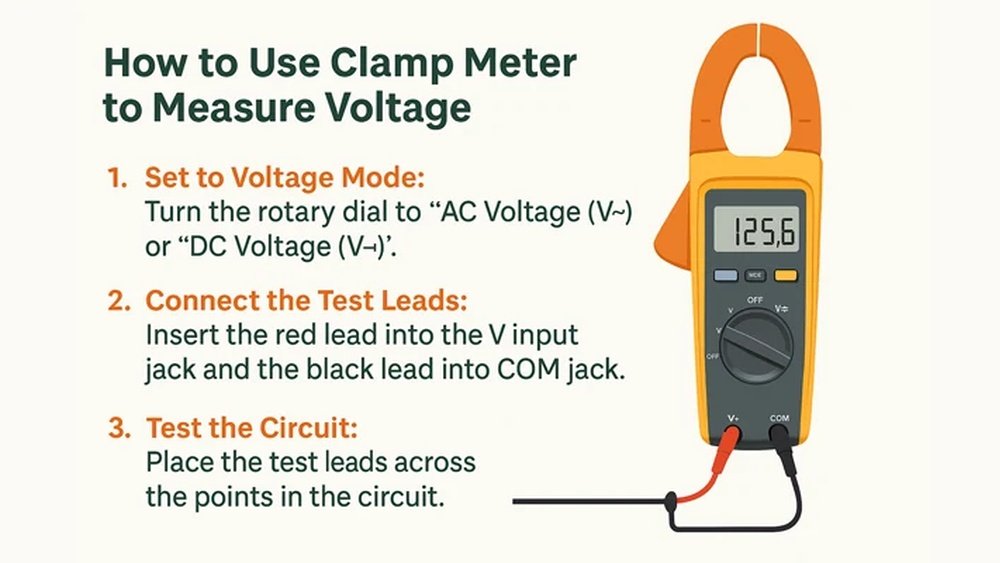
Can A Clamp Meter Measure Voltage? My Hands-on Experience
I still remember the first time I held a clamp meter. I was in my garage, trying to figure out why the lights were flickering. I thought clamp meters only measured current. But as I worked more with these tools, I learned they can do much more. The big question I often get is: Can a clamp meter measure voltage? Let me walk you through what I discovered, step by step, in simple words.
What Is A Clamp Meter?
If you have never used a clamp meter, imagine a device that looks a bit like a big pair of scissors. But instead of cutting, it has jaws that open and close around a wire. The main job of a clamp meter is to measure electric current without touching or breaking the wire. This makes it much safer than older tools.
When I first got my clamp meter, I used it to check if a wire in my house was carrying too much current. It was easy. I just opened the jaws and snapped them around the wire. The screen showed the current right away.
Clamp Meter Vs. Multimeter: What’s The Difference?
Many people ask me if a clamp meter is the same as a multimeter. I used to wonder about this too. Here’s what I learned from using both tools side by side:
| Feature | Clamp Meter | Multimeter |
|---|---|---|
| Main Use | Measuring current | Measuring voltage, current, resistance, and more |
| How to Use | Clamp around a live wire | Touch probes to wires or circuit points |
| Safety | Safer, no need to touch live wire | Must touch wires, higher risk |
| Accuracy (Current) | Very accurate | Accurate for small currents |
| Measures Voltage? | Some models do | Yes, all do |
From my experience, a multimeter is like a Swiss army knife. A clamp meter is more like a laser pointer—focused and easy to use for current. But modern clamp meters often have extra features, including voltage measurement.
Can A Clamp Meter Measure Voltage?
Here’s the key: Not all clamp meters measure voltage. My first clamp meter only measured current. But when I upgraded to a digital model, I found a voltage setting on the dial.
Let me break down how this works:
- Basic clamp meters only measure current.
- Advanced clamp meters (usually digital ones) can measure current, voltage, resistance, and sometimes more.
So, before you try to measure voltage with a clamp meter, check if your device has this feature. Look for symbols like V, ACV, or DCV on the dial.
How Does A Clamp Meter Measure Voltage?
When I first tried to measure voltage with my clamp meter, I was surprised. I had to use the test leads that came with the device. These are two wires with metal tips, usually colored red and black.
Here’s what I did:
- I plugged the test leads into the clamp meter.
- I turned the dial to the voltage symbol.
- I touched the leads to the two points I wanted to measure (like the two ends of a battery).
- The screen showed the voltage right away.
The clamp part is only for measuring current. For voltage, you must use the test leads—just like you do with a multimeter.
Step-by-step: Measuring Voltage With A Clamp Meter
Let me share my actual process, so you can do it safely:
- Check your clamp meter’s manual. Make sure it can measure voltage.
- Plug in the test leads. Red goes to the V (voltage) port, black to COM (common).
- Turn the dial to voltage. Choose AC or DC, depending on what you’re testing.
- Touch the probes to the points you want to measure.
- For a wall outlet: Insert one probe in each slot.
- For a battery: Touch one probe to each end.
- Read the value on the screen.
One mistake I made at first was trying to measure voltage using just the clamp jaws. That doesn’t work! The clamp only measures current flowing through a wire.
What Types Of Clamp Meters Measure Voltage?
Not all clamp meters are created equal. Here’s what I found after buying a few different models:
| Clamp Meter Type | Measures Current | Measures Voltage | Typical Price Range |
|---|---|---|---|
| Basic Analog | Yes | No | $20–$40 |
| Digital (Standard) | Yes | Yes (with test leads) | $40–$80 |
| True RMS | Yes | Yes (with test leads) | $70–$150 |
| Advanced (Multifunction) | Yes | Yes (with test leads) | $100–$250+ |
If you want to measure voltage, make sure your clamp meter is at least a digital standard model. True RMS models are even better, especially for work with complex electrical systems.

Ac Voltage Vs. Dc Voltage: What’s The Difference?
When I first started, I didn’t know the difference between AC voltage and DC voltage. Here’s a quick explanation:
- AC voltage is what comes from your wall outlets at home. It changes direction many times per second.
- DC voltage is what you get from batteries. It flows in one direction only.
Clamp meters can often measure both, but you have to set the dial to the right mode. I once forgot to switch from AC to DC and got a weird reading when checking a car battery. Always double-check the setting!
Accuracy: Is A Clamp Meter Good For Voltage Measurement?
This is an important question. From my experience, clamp meters are accurate enough for most jobs. But if you need super-precise voltage readings, a high-quality multimeter is still better.
Here’s why:
- Clamp meters are great for quick checks and rough measurements.
- Multimeters are more precise, especially for small voltages.
Let’s compare the two:
| Device | Typical Voltage Accuracy | Best Use |
|---|---|---|
| Clamp Meter | ±1% to ±3% | Quick troubleshooting |
| Multimeter | ±0.5% or better | Precise measurements, electronics |
So, if you’re fixing a light, a clamp meter is fine. If you’re building a circuit board, use a multimeter.
Safety Tips When Measuring Voltage
I learned the hard way that safety comes first. I once got a small shock because I wasn’t careful. Here are my personal tips:
- Always turn off the power before connecting or disconnecting test leads.
- Hold the probes by the insulated handles. Never touch the metal parts.
- Check the meter and leads for damage before use.
- Wear rubber-soled shoes if you’re working near live wires.
- Use one hand if possible to avoid creating a path across your heart.
Most clamp meters have a fuse inside for extra safety, but don’t rely on it alone.
Common Mistakes When Using A Clamp Meter For Voltage
I made plenty of mistakes when I was new to clamp meters. Here are a few you can avoid:
- Using the clamp jaws to measure voltage: Only works for current.
- Forgetting to switch between AC and DC: Gives wrong readings.
- Not plugging test leads in all the way: Can lead to no reading or a false zero.
- Trying to measure voltage on the wrong scale: Some meters have ranges, like 200V or 600V. Start high and move down.
Double-check your settings before you measure. It saves time and keeps you safe.
When Should You Use A Clamp Meter To Measure Voltage?
From my projects at home and work, I’ve found clamp meters are best for:
- Quick checks when you want to see if power is present.
- Troubleshooting electrical issues in appliances or outlets.
- HVAC work, like checking voltages in air conditioners.
- Automotive work for measuring battery voltage (if the meter supports DC).
But for detailed electronics work, I still grab my multimeter.
Hidden Features Of Clamp Meters
Most beginners miss a few cool features. Here’s what I found after reading the manual and experimenting:
- Non-contact voltage detection: Some clamp meters can sense voltage near a wire without even touching it. Great for finding live wires in walls.
- Data hold: You can freeze the reading on the screen, so you don’t have to remember it.
- Backlit display: Very useful if you’re working in a dark corner, like under a sink or behind a washing machine.
Look for these features if you buy a new clamp meter. They make life easier.
How Clamp Meters Have Changed My Work
Before I used a clamp meter, I spent a lot of time using test lamps or cheap multimeters. Now, I can check current and voltage with one tool. It’s faster and safer. I can find problems in minutes that used to take me hours.
Also, it’s a relief not to disconnect wires every time I need to check something. The clamp saves time and reduces the risk of electric shock.
Choosing The Right Clamp Meter
If you’re thinking about buying a clamp meter for voltage measurement, here’s what I recommend:
- Check for voltage measurement: Not all models have it.
- Look for true RMS if you work with variable speed devices or non-standard power.
- Pick a trusted brand. Cheap meters may not be accurate or safe.
- Read reviews and manuals online before buying.
A good clamp meter can last for years if you take care of it.
Where To Learn More
If you want more technical details about clamp meters, I recommend visiting the Wikipedia page on clamp meters. It has deep information and history.
Frequently Asked Questions
Can I Use The Clamp Jaws To Measure Voltage?
No, the clamp jaws only measure current. For voltage, you must use the test leads and touch them to the points you want to measure.
Do All Clamp Meters Measure Voltage?
No. Only digital or advanced clamp meters measure voltage. Basic models do not have this feature.
Is A Clamp Meter As Accurate As A Multimeter For Voltage?
Clamp meters are accurate for most basic tasks but not as precise as high-quality multimeters. For sensitive electronics, use a multimeter.
Can I Measure Both Ac And Dc Voltage With A Clamp Meter?
Yes, if your clamp meter supports it. Make sure to select the correct setting (AC or DC) before measuring.
Is It Safe To Measure Voltage With A Clamp Meter?
Yes, if you follow safety steps: use insulated leads, check your meter for damage, and never touch metal parts during testing.
—
A clamp meter has become one of my favorite tools. It makes checking electrical problems simple, fast, and safe. Just remember, for voltage, you need the right model and you must use the test leads—not the clamp. With practice, you’ll find it just as useful as I do.
Stay safe and happy measuring!

As an Amazon Associate, We earn from qualifying purchases