

Can a Clamp Meter Measure DC Current? Here’s What I’ve Learned
A few years ago, I bought my first clamp meter. I was excited—I thought it would solve all my electrical measurement problems. I wanted to use it for everything, especially for measuring DC current in my car and DIY solar projects. But right away, I got confused. Some people said clamp meters only measure AC current. Others claimed you just need the right type. If you’re searching for answers, you’re not alone. I’ve been there, made mistakes, and learned a lot. Let me share what I know so you don’t have to waste time or money.
What Is A Clamp Meter?
A clamp meter is a tool that lets you measure electric current without touching wires directly. You open the clamp, put it around a wire, and the meter tells you how much current is flowing. Electricians use them all the time because they’re fast and safe. You don’t need to cut the wire or disconnect anything.
There are two main types of clamp meters:
- AC clamp meters: Measure only alternating current (AC), which is the type of electricity that comes from wall outlets.
- AC/DC clamp meters: Can measure both alternating current (AC) and direct current (DC), like the electricity in car batteries or solar panels.
Early in my journey, I made the mistake of buying a cheap clamp meter that could only measure AC current. I tried to measure the current from my car battery and got zero every time. That’s when I realized: Not all clamp meters measure DC.
How Clamp Meters Work
The secret behind clamp meters is how they sense current. Most use something called the Hall Effect or a current transformer.
- Current transformer (CT) clamp meters: These are the most common. They only work with AC. When AC flows through a wire, it creates a changing magnetic field. The clamp senses that field and converts it into a number on the screen. But CT clamps can’t detect DC current because the magnetic field doesn’t change.
- Hall Effect clamp meters: These are more advanced. They use a special sensor (the Hall sensor) that can detect both AC and DC magnetic fields. That means they can measure DC current, like the kind from batteries or solar panels.
Here’s a simple comparison to make it clear:
| Type of Clamp Meter | Measures AC Current | Measures DC Current |
|---|---|---|
| Current Transformer (CT) | Yes | No |
| Hall Effect | Yes | Yes |
This was a big “aha!” moment for me. If you want to measure DC current, make sure your clamp meter uses the Hall Effect.
Can All Clamp Meters Measure Dc Current?
No, and this is where I see most people get stuck. Many clamp meters, especially the cheap ones, can only measure AC. I still remember standing in a hardware store, looking at a fancy clamp meter. The box said “AC current clamp.
” I almost bought it, but I checked the manual and saw it didn’t mention DC at all.
If you want to measure DC current, look for these features:
- The box or manual must say “DC current” or “AC/DC current.”
- The specs should mention the Hall Effect sensor.
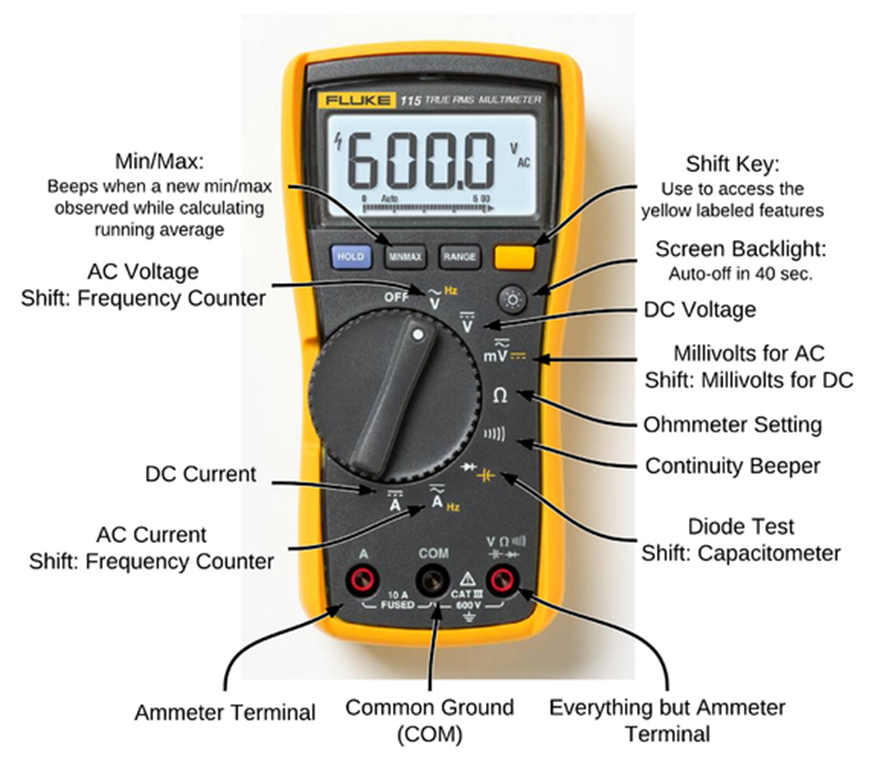
- There should be a “DC” symbol on the dial or buttons.
I always recommend reading the manual or searching for reviews before buying. Don’t trust just the picture on the box.
When Would You Need To Measure Dc Current?
I use my clamp meter for DC current a lot more than I expected. Some common examples:
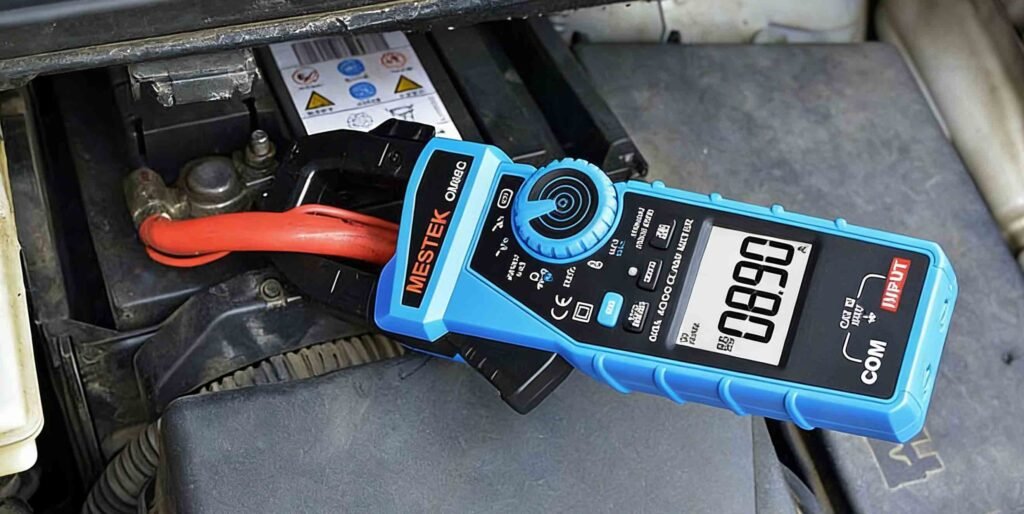
- Car electronics: If you’re adding a new stereo, winch, or lights, you need to check how much current they draw.
- Solar panels: Measuring DC current tells you how much power your panels are making.
- Battery charging: Checking how much current goes in or out of a battery helps you keep things safe.
- Electric bikes and scooters: DC systems everywhere!
- Home electronics repair: Sometimes you need to see if a power supply is working right.
The first time I tried to measure my car’s alternator output, I used the wrong meter and got zero. I spent a whole afternoon troubleshooting wiring that wasn’t even broken. The problem was the meter! After I bought a DC-capable clamp meter, I got the right reading in seconds.
How To Measure Dc Current With A Clamp Meter
Once you have the right clamp meter, measuring DC current is easy. Here’s how I do it:
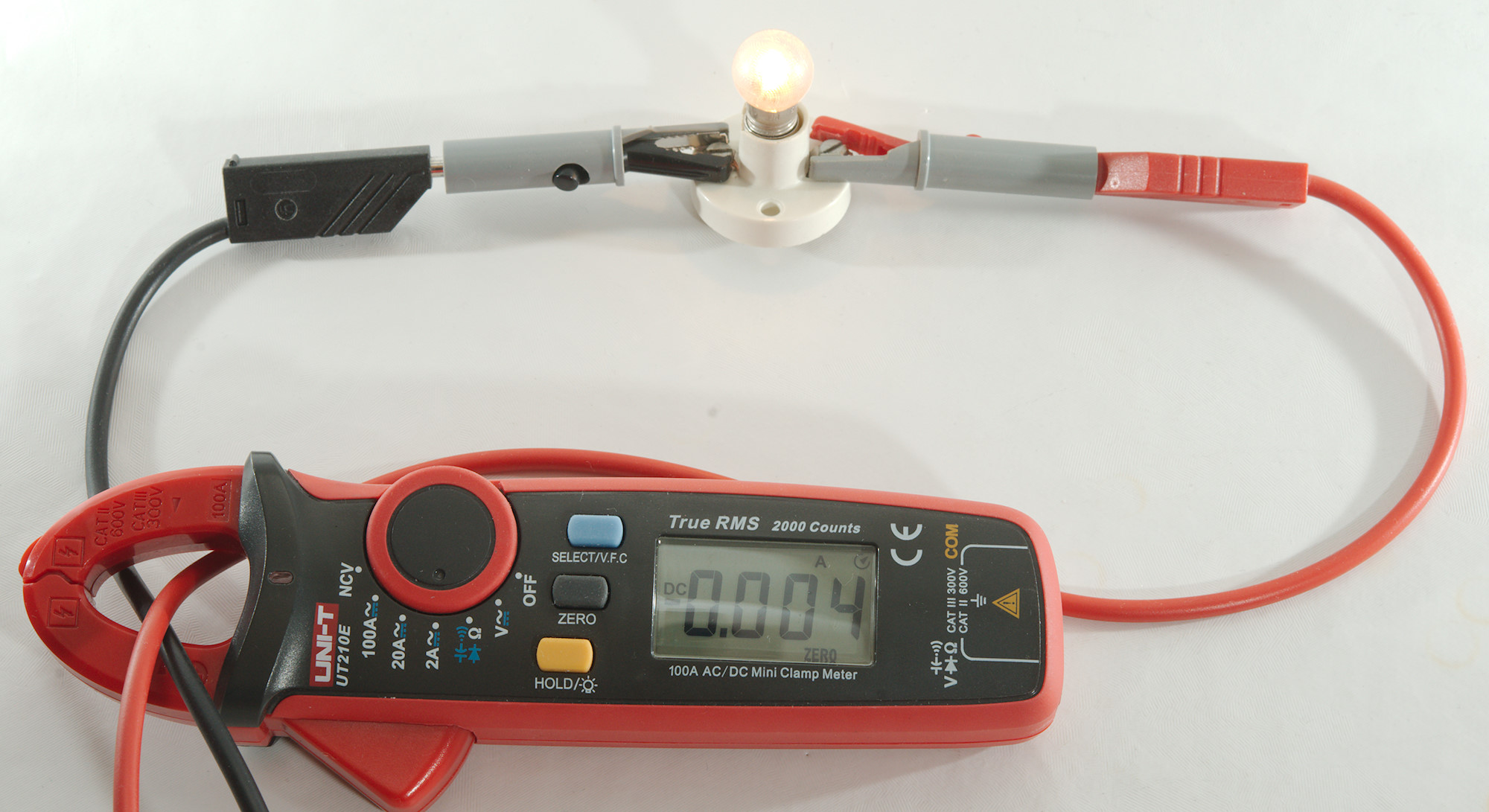
- Turn on the meter and select the DC current mode. Look for the “A⎓” symbol (that’s the standard DC current sign).
- Zero the meter. Most DC clamp meters have a “zero” or “rel” (relative) button. This step is important. The Hall sensor can drift a bit, so you want to reset it to zero before you measure.
- Open the clamp and put it around just one wire—never the whole cable (if it has both positive and negative wires). Measuring both wires at once gives you nothing because the currents cancel each other.
- Read the value. The display shows the current in amps (A). On some meters, you’ll see a minus sign if the current flows the opposite way.
- Check for accuracy. If the reading jumps around a lot, try moving the wire to the center of the clamp or zeroing the meter again.
Here’s a quick example: I wanted to measure the DC current going to my car’s amplifier. I clamped around just the positive wire, set my meter to “DC A,” zeroed it, and turned on the music. The meter showed 2.5A, which matched the amp’s rating. Easy!
What I Wish I Knew Before Using A Dc Clamp Meter
When I started, I thought all clamp meters were the same. I was wrong! Here are a few things I learned, often the hard way:
- DC clamp meters cost more. Hall Effect sensors are more advanced, so expect to pay a little extra. But it’s worth it if you need to measure DC current.
- Accuracy matters. Cheap clamp meters can be off by 5-10% for low currents (under 1A). This can be a problem if you’re troubleshooting sensitive electronics.
- Zeroing the meter is a must. If you skip this step, your readings can drift. I once measured a battery at 0.7A when it was really zero, just because I forgot to zero.
- Wire position matters. The wire should be centered in the clamp for best accuracy. If it’s off to one side, the reading drops.
- Magnetic fields can interfere. If you measure near large motors or transformers, stray fields can mess up the reading. I learned this when measuring near a running air conditioner.
These are things I never saw in the manuals but figured out through trial and error.
Main Differences: Ac Vs Dc Clamp Meters
To make things even clearer, here’s a simple side-by-side comparison:
| Feature | AC Clamp Meter | AC/DC Clamp Meter |
|---|---|---|
| Sensing Method | Current Transformer | Hall Effect Sensor |
| Measures AC Current | Yes | Yes |
| Measures DC Current | No | Yes |
| Price Range | Low to Medium | Medium to High |
| Best For | Home wiring, appliances | Cars, batteries, solar, electronics |
If you only work with household wiring, you might not need DC measurement. But for cars, solar, or electronics, get a meter with the Hall Effect sensor.
Common Mistakes When Measuring Dc Current
I’ve made almost every mistake possible, so here’s what to watch out for:
- Measuring both wires at once: If you clamp around both the positive and negative wires, the meter will show zero. Always measure one wire only.
- Using the wrong mode: Some meters have separate settings for AC and DC. Double-check you’re on “DC A.”
- Not zeroing the meter: Hall sensors can drift. Always hit the “zero” button before measuring.
- Expecting high accuracy at very low currents: Most clamp meters are not very precise below 0.5A. For tiny currents, a traditional multimeter is better.
- Ignoring wire position: Keep the wire centered in the clamp for best results.
- Buying a cheap clamp meter: You really do get what you pay for. Some cheap meters just can’t measure DC at all or give unreliable readings.
Choosing The Right Clamp Meter For Dc Current
Here’s what I look for when buying a clamp meter for DC current:
- Hall Effect sensor: Must have it for DC measurement.
- DC amps range: Check that it can measure the expected current (for example, up to 100A for cars or solar).
- Accuracy: Look for ±2% or better if you need precise results.
- Display resolution: A meter that shows down to 0.01A is helpful for small electronics.
- Zero button: This is a must-have for reliable DC readings.
- Safety ratings: Make sure the meter is rated for the voltages you work with, especially if you use it on cars or solar panels.
I also check user reviews and, if possible, test the meter in the store. I once bought a meter online that claimed “DC current measurement,” but it was only for the test leads, not the clamp. Live and learn.
Real-world Example: Measuring Dc Current In My Solar Setup
Last summer, I installed a small solar panel on my shed to keep my lawn tractor battery charged. I wanted to see how much current the panel was sending to the battery on a sunny day. My clamp meter had a Hall Effect sensor, so I switched to “DC A,” zeroed it, and clamped around the positive wire from the charge controller.
The reading bounced between 1. 8A and 2. 2A, which made sense for a 30W panel. I moved the wire around and found that centering it in the clamp gave me the most stable reading. This quick test helped me spot a wiring issue (a loose connection) that I would have missed without a DC clamp meter.
How Accurate Are Dc Clamp Meters?
In my experience, most DC clamp meters are accurate enough for everyday work. For example, if your car stereo should draw 5A and your meter reads 4. 8A, that’s good enough. But if you’re working with tiny currents (under 0.
5A), even the best clamp meters can be off by 5-10%.
Some high-end models have accuracy within 1%, but they cost a lot. For most DIY projects, ±2-3% is fine. If you need super high accuracy, use a regular multimeter with the circuit open and run the current through the test leads.
Here’s how accuracy looks for different price levels:
| Price Range | Expected Accuracy (DC Amps) |
|---|---|
| Under $50 | ±5-10% |
| $50–$150 | ±2-3% |
| Over $150 | ±1-2% |
Remember, accuracy also depends on how you use the meter. Center the wire, zero the meter, and avoid strong magnetic fields for best results.
Where To Learn More
If you want a deeper dive into how clamp meters and the Hall Effect work, I recommend this resource: Clamp Meter – Wikipedia. It covers the technical details and history.
Wrapping Up
So, can a clamp meter measure DC current? Yes—but only if you choose the right type. Most cheap clamp meters only measure AC. If you want to measure DC current (like in cars, batteries, or solar panels), look for a clamp meter with a Hall Effect sensor and a “DC A” setting. Remember to zero the meter before each use, center the wire, and check the specs before you buy.
I’ve made mistakes, wasted money, and learned by doing. Now, I never start a project without making sure my clamp meter can handle DC. I hope my experiences save you time and help you get the right tool for the job.
Frequently Asked Questions
How Do I Know If My Clamp Meter Can Measure Dc Current?
Check the manual or the dial on the meter. If you see “DC A” or “A⎓,” it can measure DC current. The specs should mention a Hall Effect sensor. If it only says “AC A,” it’s not for DC.
Why Does My Clamp Meter Read Zero When Measuring Dc Current?
This usually happens if you’re using an AC-only clamp meter, or you accidentally clamped around both positive and negative wires. Always clamp around just one wire, and make sure your meter is set to “DC A. ”
Can I Use A Clamp Meter To Measure Dc Current In Solar Panels?
Yes, but only if the clamp meter is rated for DC current. Make sure it has a Hall Effect sensor and enough range for your panel’s current. Zero the meter before measuring for best accuracy.
Are Dc Clamp Meters Safe For Automotive Work?
Yes, DC clamp meters are great for cars and trucks. They let you measure current without disconnecting wires, which is safer and faster. Always check the voltage rating and safety category of your meter before using it on high-power systems.
What Is The Best Clamp Meter For Dc Current?
Look for a Hall Effect clamp meter with good accuracy, a wide DC range, and a zero function. Brands like Fluke, Klein Tools, and UNI-T make reliable models. Read reviews and buy from a trusted seller to avoid fakes.
If you have more questions or want advice on choosing a clamp meter, feel free to ask. I’m happy to share what I’ve learned from years of trial and error!
As an Amazon Associate, We earn from qualifying purchases