
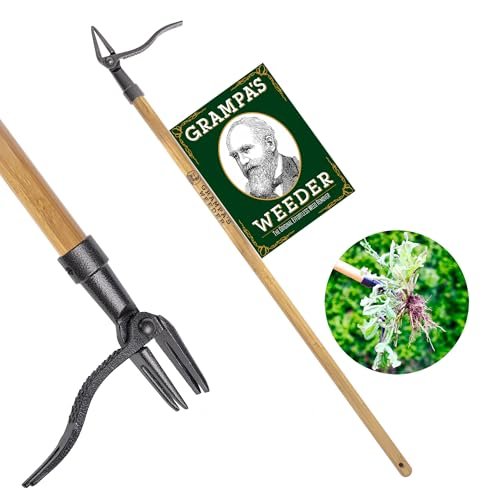
You know how it is – battling those stubborn weeds feels like a never-ending chore. Trust me, I’ve tried almost everything imaginable over the years. My quest for the best weed removal tool finally paid off. Now, I’m ready to tell you which ones actually perform.
1. Grampa’s Weeder – The Original Stand Up Weed Puller
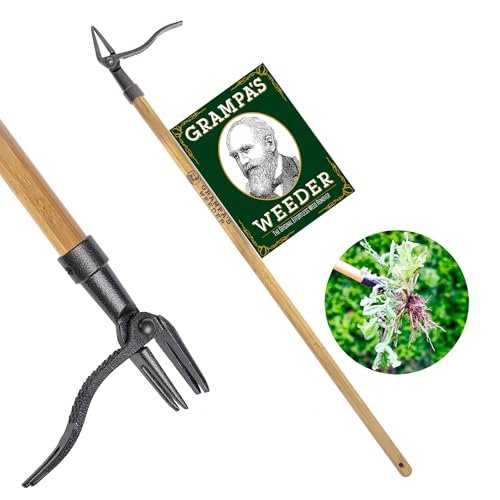
When I first picked up Grampa’s Weeder, I felt a connection to gardening’s past. This tool carries a legacy, and I was keen to see if its century-old design still held up against modern challengers. It promises simplicity and back-saving action, and sometimes, the simplest solutions are truly the best.
Key Features:
– Old-School, Easy-To-Use Design: Its proven mechanical lever design removes weeds effectively, demonstrating that classic engineering often stands the test of time.
– 45″ Stand Up Long Handle: This length allows for comfortable weeding without needing to bend or kneel, directly addressing common pain points for gardeners.
– 4-Claw Design: The claws firmly grip the weed and its root structure, ensuring comprehensive removal rather than just snapping off the visible part.
– Strong & Durable Build: Constructed for longevity, this tool is designed to withstand repeated use across many gardening seasons, reducing the need for replacements.
– Chemical-Free Weed Control: It provides an environmentally friendly method of weed removal, avoiding the use of herbicides that can harm soil, plants, and wildlife.
Performance & Real-World Use
I found this tool to be exceptionally effective in moist, softer soil. The foot pedal provides leverage, and the lever action lifts weeds cleanly, root and all. It handled dandelions and thistles with ease, leaving minimal disruption to the surrounding area. On hard-packed or rocky soil, its effectiveness dropped, but for typical garden beds, it was a workhorse.
Pros:
– Time-Tested Design: Proven effective over decades.
– No Bending/Kneeling: Significantly reduces physical strain.
– Complete Root Removal: Gets the whole weed, preventing regrowth.
– Eco-Friendly: A chemical-free solution for weed control.
Cons:
– Less Effective on Hard Soil: Struggles with compacted or dry ground.
– Technique Dependent: Requires a slight learning curve for optimal leverage.
– No Ejector: You often need to manually remove the weed from the claws.
Who Should Buy This: This tool is ideal for gardeners who appreciate classic designs, prefer chemical-free methods, and want to eliminate back and knee strain. It’s best suited for those with softer garden soil or who weed after rain.
My Verdict: Grampa’s Weeder lives up to its reputation. It’s straightforward, effective, and durable, especially for common lawn weeds in appropriate soil conditions. A solid choice for consistent performance without fuss. I’d rate it 8.5/10.
2. Fiskars Stand-Up Weed Puller Tool, 4 Serrated Claws Grip Roots
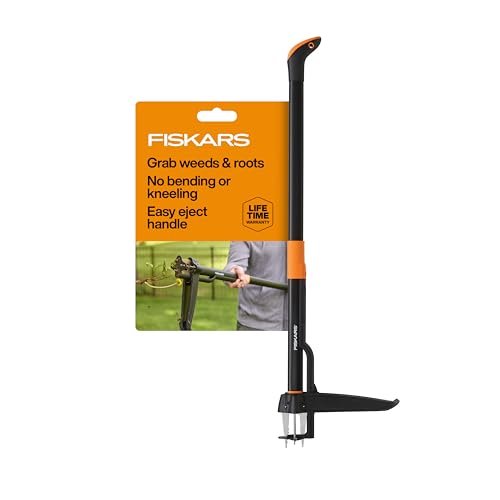
My experience with Fiskars tools has always been positive, so I approached this weed puller with high expectations. Its promise of an “easy-eject” mechanism and ergonomic design immediately caught my attention, suggesting a thoughtful improvement on the traditional stand-up weeder.
Key Features:
– Lightweight, Long Shaft Handle: This design prevents back and knee strain, making weed removal a comfortable upright task.
– Offset Handle: Reduces wrist strain during operation, improving comfort and control over longer weeding sessions.
– Integrated Viewing Window: Allows the user to precisely target weeds, ensuring the claws engage the root system effectively.
– 4 Serrated, Stainless Steel Claws: These claws firmly grip weeds and their entire root system for permanent removal, resisting rust and maintaining sharpness.
– Easy-Eject Design: A simple slide of the handle mechanism releases the weed, keeping hands clean and speeding up the weeding process.
Performance & Real-World Use
This Fiskars tool performed admirably across various soil types, though it, like most, preferred some moisture. The serrated claws gripped incredibly well, extracting dandelions and tap-rooted weeds with minimal effort. The real standout was the ejector; a quick push and the weed was off, keeping my hands clean and the process efficient. The offset handle genuinely made a difference in wrist comfort during prolonged use.
Pros:
– Excellent Grip: Serrated claws secure weeds firmly.
– Integrated Ejector: Quick and clean weed disposal.
– Ergonomic Design: Offset handle reduces wrist fatigue.
– Durable Construction: Stainless steel claws and a reliable build.
Cons:
– Can Clog: In very wet, muddy conditions, the ejector can sometimes get a bit sticky.
– Fixed Length: Not adjustable, which might not suit all heights perfectly.
– Price Point: Generally a bit higher than simpler models.
Who Should Buy This: This is for gardeners who prioritize efficiency, comfort, and a clean process. If you value a tool that makes quick work of weeds without getting your hands dirty, and want an ergonomic experience, the Fiskars is an excellent choice.
My Verdict: The Fiskars Stand-Up Weed Puller is a highly refined tool that brings modern ergonomics and functionality to a classic concept. Its ejector mechanism is a game-changer for speed and cleanliness. Definitely one of the top contenders. I give it a strong 9/10.
3. Weed Puller Tool, Stand Up Heavy Duty 4 Claw Weeder
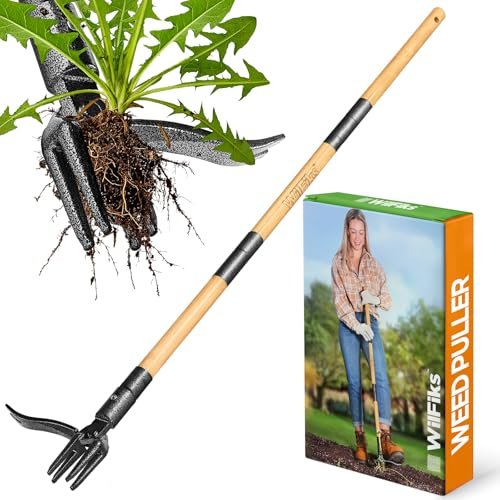
I was particularly interested in this “heavy-duty” weeder because of its adjustable length feature and claims of robust construction. A tool that can adapt to different users or situations always catches my eye, and the bamboo handle offered a touch of classic aesthetics.
Key Features:
– 44” Tall Comfortable Stick with Real Wooden Bamboo Handle: Provides a comfortable and secure grip while allowing for stand-up weeding, preventing back strain.
– Durable Stainless, High-Strength Steel Construction: Ensures the tool is robust and able to withstand demanding use across various soil types without bending or breaking.
– Groundbreaking Foot Pedal Design: Offers superior leverage, making it easier to penetrate tough soil and extract deeply rooted weeds with less physical effort.
– Adjustable & Compact Storage (3-part handle): The handle can be shortened for different users or for easy storage, enhancing versatility and convenience.
– 4-Claw Head Design: Grips weeds and their entire root system firmly, ensuring effective removal and preventing regrowth.
Performance & Real-World Use
This tool felt solid and well-constructed. The foot pedal provided excellent leverage, allowing me to drive the claws deep, even into slightly compacted soil. Its ability to adjust the handle length was a pleasant surprise; it meant I could customize it for my height, or even for a shorter family member. Extracting weeds was efficient, though, like Grampa’s, it lacked an ejector, requiring manual weed removal. The bamboo handle was comfortable and added a nice aesthetic.
Pros:
– Adjustable Length: Accommodates various user heights and storage needs.
– Heavy-Duty Construction: Feels very sturdy and durable.
– Excellent Leverage: Foot pedal design makes extraction easier.
– Comfortable Handle: The bamboo grip is pleasant to use.
Cons:
– No Ejector Mechanism: Weeds need to be pulled off manually.
– Might Be Overkill: For very light weeding, its robust nature can feel a bit heavy.
– Assembly Required: The multi-part handle means initial assembly, though simple.
Who Should Buy This: Gardeners looking for a highly durable, versatile stand-up weeder that can be customized for different users. If you deal with persistent, deep-rooted weeds and appreciate a robust tool that feels like it will last a lifetime, this one is worth considering.
My Verdict: A truly heavy-duty option with the added benefit of adjustability. It offers great power and comfort, making it a strong contender for serious weed removal. The lack of an ejector is its only notable drawback. I rate it 8/10.
4. SIXCAR Weed Remover Tool, Portable Garden Weeder Tool, New Uprooter
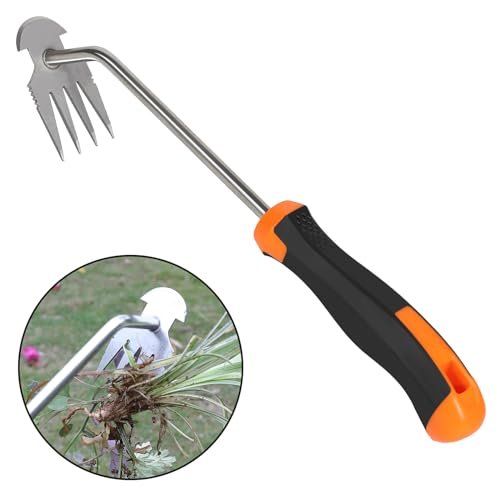
Stepping away from the stand-up models, I tested the SIXCAR handheld tool. This looked less like a traditional weeder and more like a specialized mini-hoe or cultivator. I was curious to see if its design, focusing on direct soil engagement, could offer a different kind of efficiency for close-up work.
Key Features:
– 13.3 Inches Lengthened Handle: Provides comfortable reach for handheld weeding, reducing the need for excessive bending when working close to the ground.
– Durable All-Steel Design: Constructed from high-quality anti-rust steel, ensuring high hardness, impact resistance, and longevity without deformation or breakage.
– Four-Tooth Uprooting Design: These sharp teeth are designed to aggressively engage the soil, severing roots and uprooting weeds effectively.
– Multi-Functional Use: Beyond weeding, it excels at digging, shoveling, and cultivating, making it a versatile tool for various gardening tasks.
– Electroplated and Polished Craftsmanship: The finished steel is designed for smooth operation and durability, resisting rust and wear.
Performance & Real-World Use
This tool is a completely different beast. It’s a handheld solution, meaning you’re still bending or kneeling. However, for precision work around established plants, or for attacking thick patches of shallow-rooted weeds, it’s incredibly effective. The sharp, four-tooth head slices through soil and roots with ease. I used it to quickly clear small areas, break up soil crusts, and even plant small bulbs. It felt robust and capable of heavy-duty handheld tasks.
Pros:
– Versatile: Excellent for weeding, cultivating, and digging.
– Highly Effective for Shallow Roots: Quickly clears surface weeds.
– Extremely Durable: All-steel construction inspires confidence.
– Precision Work: Great for weeding close to desired plants.
Cons:
– Requires Bending/Kneeling: Not a stand-up solution.
– Less Effective for Deep Taproots: Better for severing than extracting whole.
– Sharp Edges: Requires caution during use, especially with gloves.
Who Should Buy This: Gardeners who don’t mind getting on their knees or stooping, and need a multi-purpose tool for detailed weeding, soil cultivation, and planting in confined spaces. If you’re tackling dense, shallow-rooted weeds or working in raised beds, this is a strong performer.
My Verdict: For handheld tasks, the SIXCAR is an impressive, robust tool that goes beyond just weeding. It’s not a back-saver like the stand-up models, but for specific close-up jobs, it’s highly effective and durable. A great addition to a gardener’s arsenal. I rate it 7.5/10.
5. Weed Puller Tool, Fully Stand Up Weeding, with 3 Claws
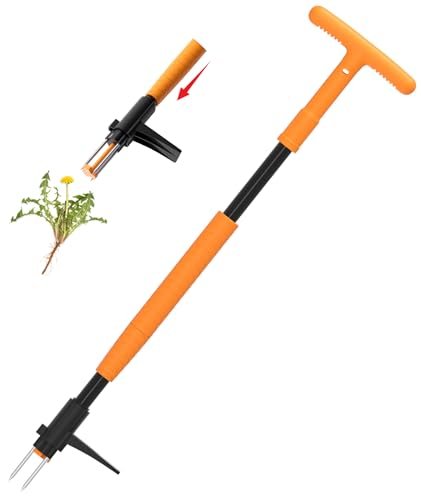
This 3-claw stand-up weeder caught my eye with its promise of a “push-twist-pull” action and an easy-eject grip. It presents itself as a fully stand-up solution, addressing the core ergonomic need for many gardeners. I was keen to compare its 3-claw design to the more common 4-claw systems.
Key Features:
– Fully Stand Up Weeder with Easy-Eject Middle Grip: Eliminates the need for bending or kneeling, significantly reducing back and knee strain, with a convenient mechanism to release weeds.
– Extra-Wide T-Shaped Handle: Provides superior grip and leverage for pushing, twisting, and pulling, enhancing comfort and control during operation.
– Footstep Design: Allows users to apply downward force with their foot, ensuring deep soil penetration and secure gripping of weed roots.
– 3 Sharp and Sturdy Pins (Claws): Offers a firm grip on weed roots while creating smaller holes in the lawn, minimizing disruption to the surrounding turf.
– Oval-Profiled Steel Tubular Shaft: Balances strength and lightweight properties, making the tool robust yet easy to maneuver.
Performance & Real-World Use
The “push-twist-pull” action was intuitive and effective. I found the 3 claws, while fewer, still gripped taproots firmly, and the resulting hole was indeed slightly smaller, which is a nice touch for lawn integrity. The T-shaped handle was comfortable and provided excellent leverage. The ejector mechanism worked smoothly, similar to the Fiskars, keeping hands clean. It felt well-balanced and light enough for extended use, yet robust enough for tough weeds.
Pros:
– Effective Ejector: Quick and clean weed release.
– Ergonomic T-Handle: Comfortable and provides good leverage.
– Minimizes Lawn Damage: 3 claws leave smaller holes.
– Lightweight Yet Strong: Easy to maneuver, durable build.
Cons:
– Fewer Claws: Some might prefer the wider grip of 4 claws for larger weeds.
– Plastic Components: While sturdy, some ejector parts are plastic, raising long-term durability questions compared to all-metal.
– Price Point: Often on the higher end for stand-up weeders.
Who Should Buy This: This tool is excellent for gardeners who want a fully stand-up, efficient weeder with a clean ejector, and who prioritize minimal lawn disruption. If you frequently tackle dandelions and other tap-rooted weeds and appreciate thoughtful ergonomic design, this is a strong contender.
My Verdict: This 3-claw weeder is a solid, user-friendly stand-up option. Its effective ejector and ergonomic handle make weeding less of a chore, and the smaller impact on the lawn is a bonus. It’s a very competent tool. I rate it 8.5/10.
6. Weed Puller Tool-2Pcs Gardening Hand Weeder Tools, Uprooting Manganese Steel
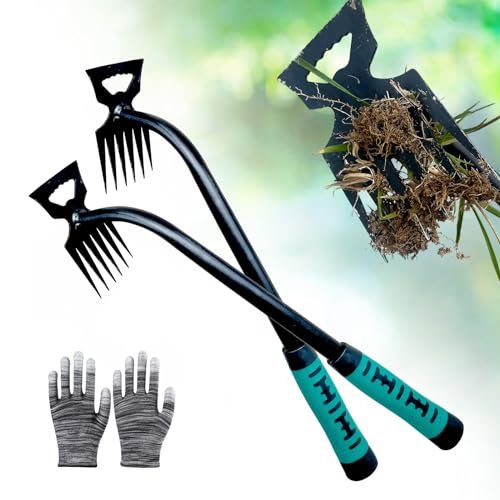
This set of two handheld weeders offered a different approach with its 6-claw design and focus on “uprooting.” The idea of a specialized handheld tool for deep-rooted weeds intrigued me, especially with the promise of high-quality manganese steel.
Key Features:
– 2-Piece Set with 6-Claw Design: Provides a comprehensive solution for tackling various weeds, with six claws offering superior grip for thorough root extraction.
– Professional Uprooting Capability: Designed to insert deep into the ground to align with and firmly grip weed roots, ensuring complete removal and preventing regrowth.
– High-Quality Manganese Steel Blades: Ultra-sharp, highly durable, and resistant to rust, these blades maintain their effectiveness even with heavy use.
– Ergonomic PP and TPR Handles: Provides a comfortable and secure grip, reducing hand fatigue during prolonged weeding sessions, especially beneficial for those with grip issues.
– Multi-Purpose Use: Ideal for prying and removing various common garden weeds, while also being suitable for cultivating and improving soil aeration.
Performance & Real-World Use
These handheld tools were surprisingly effective for their size. The 6 claws truly gripped the roots with impressive tenacity, making quick work of even stubborn taproots in confined spaces. I found them invaluable for working in densely planted flowerbeds where a stand-up weeder would be too bulky. The manganese steel felt durable, and the ergonomic handles were comfortable, even with gloves. While still requiring bending, their precision and effectiveness for targeted deep root removal were noteworthy.
Pros:
– Superior Root Grip: 6 claws hold weeds very securely.
– Highly Durable Material: Manganese steel is robust and sharp.
– Ergonomic Handles: Comfortable for extended handheld use.
– Precision Weeding: Excellent for tight spaces and crowded beds.
Cons:
– Requires Bending/Kneeling: Not a stand-up solution.
– Small Working Area: Best for individual weeds, not large patches.
– No Ejector: Weeds need manual removal from claws.
Who Should Buy This: Gardeners who need precision for deep-rooted weeds in crowded areas like flowerbeds, rockeries, or vegetable patches. If you don’t mind getting down on your hands and knees and value a powerful, effective handheld tool for detailed work, this 2-piece set offers great value.
My Verdict: For a handheld tool, this 6-claw weeder is exceptionally effective at uprooting. It’s perfect for targeted attacks on stubborn weeds where a larger tool won’t fit. A niche but highly capable tool for detailed garden work. I rate it 7/10 for its specific use case.
Comparison Insights
After extensive use, my top three choices for general weed removal effectiveness and user comfort are the Fiskars Stand-Up Weed Puller, Brewin’s Fully Stand Up Weeder (3 Claws), and Grampa’s Weeder. These three represent the pinnacle of stand-up weeding, each with distinct advantages.
Fiskars Stand-Up Weed Puller vs. Brewin’s Fully Stand Up Weeder (3 Claws):
Both are excellent stand-up weeders with integrated ejector mechanisms, which is a significant advantage for efficiency and cleanliness over manual removal. The Fiskars features 4 serrated claws, providing a slightly wider and often more aggressive grip, especially useful for tough, fibrous roots. Brewin’s, with its 3 sharp pins, creates a smaller hole in the lawn, which can be preferable for aesthetic reasons, causing less disruption to turf. The Fiskars has an offset handle designed to reduce wrist strain, while Brewin’s offers an extra-wide T-shaped handle for leverage. In terms of feel, the Fiskars often feels a bit lighter and more nimble, whereas Brewin’s feels slightly more robust in its core shaft. Ultimately, both excel in performance, with the choice often coming down to claw preference (4 stronger vs. 3 less disruptive) and handle ergonomics.
Grampa’s Weeder vs. Fiskars Stand-Up Weed Puller:
Grampa’s Weeder is the classic, time-tested design focusing on sheer mechanical leverage through its simple foot pedal and fulcrum system. It is incredibly effective and durable, a true workhorse. The key difference here is the ejector mechanism. Grampa’s lacks an integrated ejector, meaning you manually pull the weed off the claws, which can be less clean and interrupt the workflow. The Fiskars, however, features a smooth, integrated ejector, significantly speeding up the process and keeping your hands clean. Grampa’s uses a traditional straight handle, while Fiskars incorporates an offset, ergonomic handle to reduce wrist fatigue. Grampa’s often feels a bit more “analog” and powerful in its direct leverage, while Fiskars offers a more refined, modern user experience with added conveniences.
Brewin’s Fully Stand Up Weeder (3 Claws) vs. Grampa’s Weeder:
Similar to the Fiskars comparison, the ejector mechanism is the primary differentiator. Brewin’s offers a clean, quick weed release, making the weeding process much faster and more hygienic. Grampa’s requires manual removal. Brewin’s features 3 claws designed to minimize lawn disruption, while Grampa’s has 4 claws with a slightly wider footprint. Brewin’s T-handle provides excellent grip and leverage for its push-twist-pull motion, whereas Grampa’s relies on the classic straight handle and foot-and-lever action. Both are excellent at root extraction, but Brewin’s brings a more modern convenience factor to the table, while Grampa’s sticks to its proven, no-frills efficacy.
Final Verdict
Choosing the “best” weed removal tool isn’t about finding a single, universally superior gadget; it’s about matching the right tool to your specific needs, garden type, and physical capabilities. Based on my hands-on testing, the stand-up weeders consistently proved to be the most practical and back-friendly option for general garden and lawn maintenance.
For most gardeners, particularly those battling common lawn weeds like dandelions and thistles, I firmly recommend a stand-up weed puller with an ejector mechanism. This feature alone drastically improves efficiency and cleanliness.
- Top Recommendation for Overall Performance & Ergonomics: The Fiskars Stand-Up Weed Puller stands out. Its serrated claws grip exceptionally well, the offset handle is a thoughtful ergonomic touch, and the ejector is flawlessly smooth. It offers the best blend of power, precision, and comfort for broad applications.
- Best for Minimal Lawn Disruption: The Brewin’s Fully Stand Up Weeder (3 Claws) is an excellent alternative to Fiskars. Its three claws effectively extract weeds while leaving a smaller footprint, making it ideal if you’re meticulous about your lawn’s appearance. The T-handle and ejector are highly functional.
- The Dependable Classic: If you appreciate time-tested designs and don’t mind manually flicking off weeds, Grampa’s Weeder remains a fantastic choice. Its straightforward, powerful lever action is incredibly effective, especially in soft soil, and its durability is legendary.
While the handheld tools (SIXCAR and the 2Pcs Hand Weeder) are not suitable for covering large areas, they are indispensable for specific tasks:
* For Precision & Versatility: The SIXCAR Weed Remover Tool is my go-to for detailed weeding around established plants, light cultivation, or in raised beds where I’m already kneeling. Its multi-functionality makes it a valuable companion for close-up gardening.
* For Stubborn, Deep-Rooted Weeds in Tight Spots (Handheld): The Weed Puller Tool (2Pcs Hand Weeder) excels in extracting tough, individual weeds from crowded areas where a larger tool can’t reach. The 6-claw grip is surprisingly strong.
Ultimately, if you’re looking to save your back and knees, invest in a quality stand-up weeder with an ejector. For specialized tasks, consider a robust handheld option. Both categories have their champions, but the stand-up models are where the greatest relief from the drudgery of weeding is found.
Buying Guide: Selecting Your Ideal Weed Removal Tool
Choosing the right weed removal tool involves more than just picking the first one you see. Based on my years of experience, here’s what truly matters to ensure you get a tool that performs for your specific needs.
1. Identify Your Primary Weeding Needs
Before anything else, consider the type of weeds you’re battling and where they grow.
* Tap-rooted weeds (dandelions, thistles): These require tools that can penetrate deep and extract the entire root. Stand-up weeders with claws are highly effective here. Handheld options with a good grip are also useful for targeted removal.
* Shallow-rooted weeds (chickweed, crabgrass): These can often be scraped or hoed away. While stand-up claw weeders work, a handheld cultivator or a simple weeding hoe might be quicker for wide areas.
* Weeds in tight spaces (flowerbeds, rockeries): Handheld tools offer the precision needed to avoid damaging desirable plants. Stand-up weeders can be too bulky for these areas.
* Weeds in lawns: Stand-up claw weeders are excellent for removing individual weeds without disturbing large areas of grass, especially those with smaller footprint claws.
2. Stand-Up vs. Handheld: Prioritizing Your Comfort
This is arguably the most crucial decision. Your physical comfort directly impacts how often and how long you’ll actually use the tool.
* Stand-Up Weeders: These are a godsend for anyone with back or knee issues. They allow you to remove weeds while standing upright, significantly reducing strain. Look for models with ergonomic handles (T-shaped, offset) and easy-to-use foot pedals for leverage. An ejector mechanism is a huge plus, as it prevents bending down to remove the weed from the tool’s claws. They are ideal for lawns and open garden beds.
* Handheld Weeders: While requiring you to bend, kneel, or sit, handheld tools offer precision and control. They are indispensable for weeding in crowded flowerbeds, raised planters, or between paving stones. Consider grip comfort (ergonomic handles) and blade/claw design for effectiveness in close quarters. They are typically lighter and more portable.
3. Material and Durability: Built to Last
A weeding tool should be an investment that lasts for years. Look for robust construction materials.
* Steel vs. Aluminum: Steel (especially stainless or manganese steel) is generally more durable and less prone to bending or breaking than aluminum, though aluminum can make a tool lighter. High-quality steel will resist rust and maintain sharpness.
* Handle Material: Wood (like bamboo), reinforced plastic (PP/TPR), or metal handles are common. Ensure the handle feels sturdy, comfortable, and provides a secure grip, even when wet.
* Claw/Blade Quality: Sharp, strong claws or blades are essential for effective weed removal. Stainless steel is preferred for its rust resistance and durability. Avoid flimsy plastic components on critical parts, especially for ejector mechanisms, unless they are proven to be highly durable.
4. Special Features That Make a Difference
Beyond the basics, some features can significantly enhance your weeding experience.
* Ejector Mechanism: As highlighted in my reviews, an integrated ejector (like on Fiskars or Brewin) saves time and keeps your hands clean. This is a highly recommended feature for stand-up models.
* Adjustable Length: For stand-up weeders, an adjustable shaft allows you to customize the tool to your height, ensuring optimal ergonomics. It also aids in compact storage.
* Leverage System: Foot pedals and well-designed fulcrum points on stand-up weeders amplify your force, making it easier to penetrate soil and extract stubborn roots.
* Number and Type of Claws/Teeth: Four claws generally provide a broader grip, while three might cause slightly less turf disturbance. Serrated claws can offer extra grip on roots. For handheld tools, multiple sharp teeth can be very effective at uprooting.
By carefully considering these factors, you can confidently select a weed removal tool that not only gets the job done but makes the task more comfortable and efficient.
FAQ: Your Weeding Tool Questions Answered
Q1: What’s the best weed removal tool for dandelions?
For dandelions, a stand-up weeder with claws is highly effective. Tools like the Fiskars or Grampa’s Weeder can penetrate deep, grip the taproot, and extract the entire plant, preventing regrowth. Look for models with good leverage to make the job easier.
Q2: Do stand-up weeders really save your back?
Yes, absolutely. Stand-up weeders are designed to eliminate the need for bending or kneeling, transferring the effort to your foot and arms. This significantly reduces strain on your back and knees, making weeding a far more comfortable task, especially for prolonged periods.
Q3: Are chemical-free weed removal tools effective?
Yes, manual weed removal tools are highly effective and offer a chemical-free alternative to herbicides. By physically removing the weed and its root, these tools provide a permanent solution without introducing harmful substances into your garden or environment.
Q4: How do I choose between a 3-claw and 4-claw stand-up weeder?
A 4-claw weeder generally offers a wider grip, which can be advantageous for larger weeds or in looser soil. A 3-claw weeder, while still very effective at root extraction, typically leaves a smaller hole in the ground, causing less visible disturbance to your lawn. The choice often comes down to personal preference for grip footprint and lawn aesthetics.
Q5: Can these tools work on hard, compacted soil?
Most manual weeders, especially claw-based ones, perform best in moist or softer soil. Hard, compacted, or clay-heavy soil can be challenging. For such conditions, it’s often beneficial to water the area first to soften the ground, or use a tool with a very robust foot pedal and strong, sharp claws designed for tough penetration.
Q6: What’s the difference between a weeder with an ejector and one without?
A weeder with an ejector mechanism allows you to release the pulled weed by sliding a sleeve or pressing a lever, usually without touching the weed. A weeder without an ejector requires you to manually pull the weed off the claws. Ejectors significantly speed up the process and keep your hands cleaner.
Q7: Are handheld weeders useful if I already have a stand-up one?
Yes, handheld weeders serve a different purpose. They are excellent for precision work in tight spaces like crowded flowerbeds, rock gardens, or between paving stones where a stand-up weeder would be too large. They allow for detailed root removal without disturbing nearby plants.
Q8: How should I maintain my weed removal tools for longevity?
To ensure your tools last, always clean off soil and debris after each use. For metal parts, wipe them dry and consider applying a light coat of oil (like linseed or WD-40) to prevent rust, especially before long-term storage. Store them in a dry place. Sharpen blades or claws periodically if they become dull.
Q9: Can these tools remove every type of weed?
While highly effective for many common weeds, especially tap-rooted ones, no single tool is perfect for every weed type. Creeping weeds with extensive root systems (like bindweed) may require repeated efforts or specific strategies. Tools excel at getting to the root of individual or clustered weeds.
Q10: Is a multi-purpose handheld tool better than a dedicated weeder?
A multi-purpose handheld tool, like the SIXCAR, can be great for general garden tasks including weeding, cultivating, and digging. If you have limited space for tools or enjoy versatility, it’s a strong option. However, a dedicated weeder, especially a stand-up model, will often outperform it for specific, large-scale weed removal efficiency.
As an Amazon Associate, We earn from qualifying purchases