
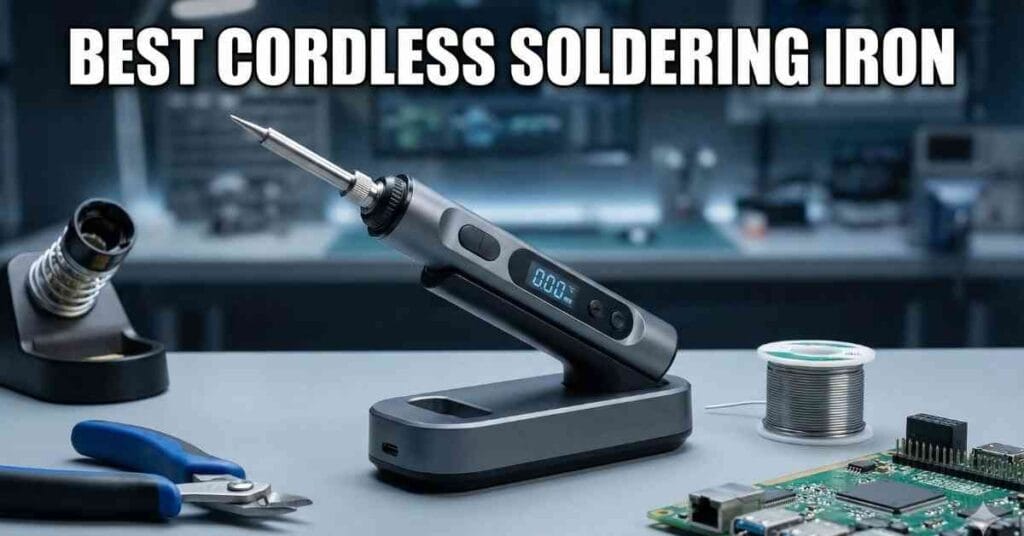
It was a Tuesday night in my garage. The air smelled like old flux and dust. The radio played low. I grabbed a cordless iron to fix a trailer wire. I waited a long time for it to heat up. This guide helps you pick a tool that saves your time and your mood.
Table of Contents
What “Best Cordless Soldering Iron” Really Means Today
Cordless soldering irons now come in clear types. Each type works in a very different way once it heats up. They may look the same on a store shelf, but the tech inside is not the same. Many people buy the wrong one because they miss this detail. A strong car iron can damage a small drone board fast.
The three cordless types you’ll actually encounter
First are USB-C smart soldering irons. They are small and heat up fast. Some even control heat on their own.
Second are tool-battery soldering irons. They use the same 12V or 18V packs as a drill. They are made for tougher jobs.
Third are butane soldering irons. They run on gas, not power. They work when no outlet is nearby.
Why no single iron wins for everyone
There is no one perfect iron for every job. Each task needs something different. An iron made for small boards will fail on thick trailer wire. You must pick based on what you fix most. Do you work at a bench, or under a dash where strong heat matters more?
How I Evaluate a Cordless Soldering Iron
This list comes from real use over many years. I have burned fingers and made cold joints. I once watched an iron roll off the bench and melt my work mat. Box specs never tell you how a tool feels after twenty minutes.
Heat up and recovery in real use
I do not care about big claims on the box. I care how fast solder melts. Recovery matters even more. The tip cools when it hits a wire. A good iron adds heat right away. A bad one goes cold and sticks.
Temperature control that stays steady
Cheap irons jump in heat and then drop fast. This can damage small parts. It can also lift pads from a board. A good battery powered iron uses digital control. It should act like a normal bench station.
Power source you can trust
USB-C irons can pick the wrong power level. That leaves the tip warm, not hot. Tool batteries give strong heat, but they drain fast on hard jobs. Butane is strong, but cold air lowers pressure in winter.
Comfort after twenty minutes
If the grip gets hot, work stops fast. Poor balance also hurts your wrist. A big battery on the back feels heavy. The best iron feels natural in your hand, not like a brick.
Best Cordless Soldering Iron for Electronics & Precision Work
This group is for PCBs, drones, and keyboards. One bad joint can ruin your day. In the U.S., many makers now use smart irons. They work fast and save time. They are small enough for a backpack, but still very strong.
Winner: Pinecil V2
The Pinecil V2 is a USB-C soldering iron made for hobby work. It costs very little for what you get. It beats many irons that cost much more. It heats up in about six seconds. It runs IronOS, which lets you change many settings.
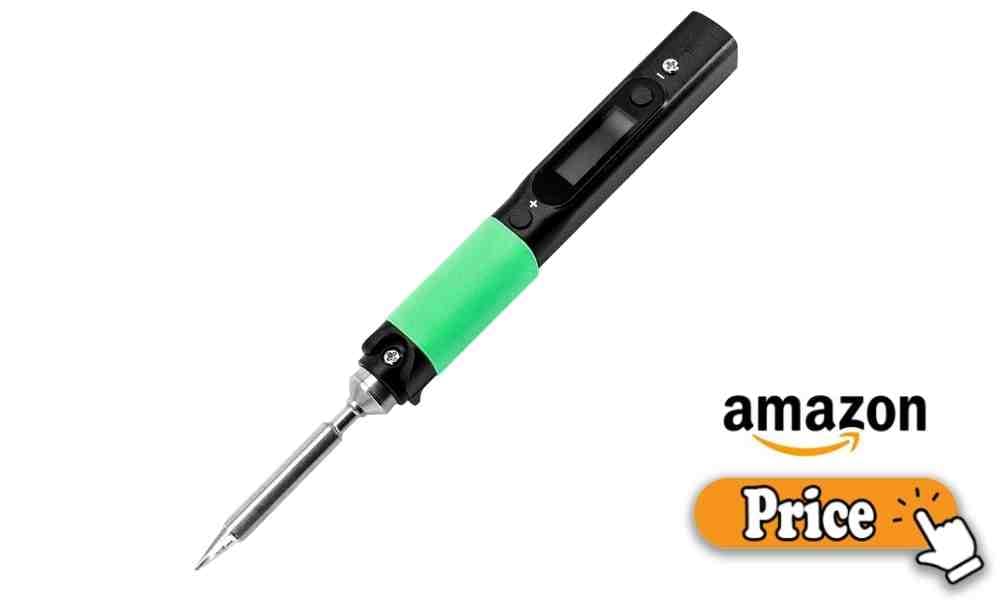
It is light and easy to guide. Heat stays very steady on small joints. The tips are easy to find online. They are cheap to replace. It feels like holding a thick pen.
The body feels a bit like plastic. It is not made for rough use. It also ships without a charger. You need a good USB-C power brick.
Runner-up: Miniware TS101
The TS101 comes after the popular TS100. It feels stronger than the Pinecil. It accepts more power types. This helps when working away from a bench. It feels solid in your hand during fine work.
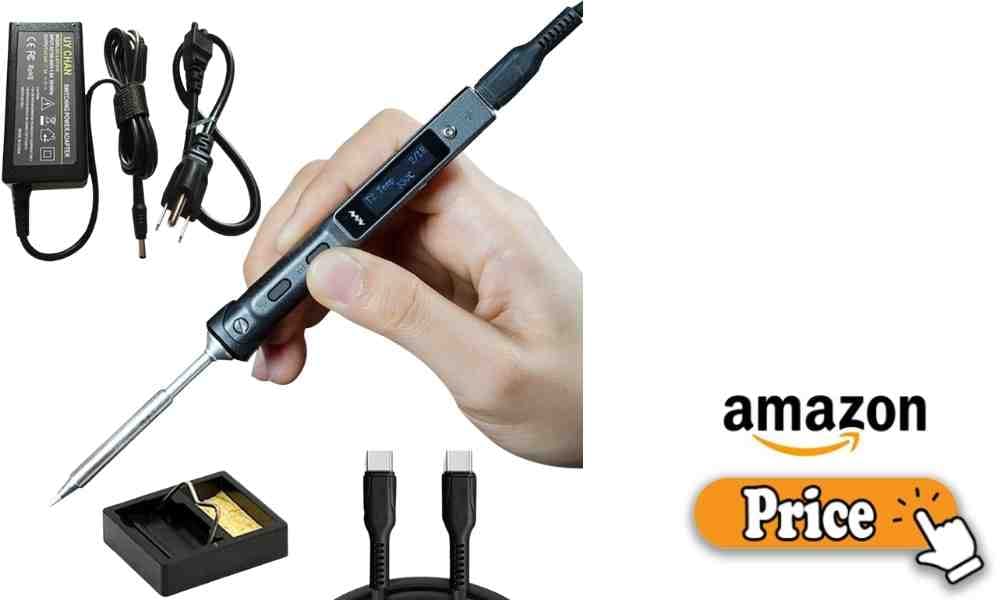
The build feels tougher. The menu is easy to use. Many drone and field techs trust it. It survives life in a tool bag. It is a solid choice for work on the move.
Best Cordless Soldering Iron for Trades & Automotive Work
This group is for wiring jobs. You are often bent over or upside down. You need heat right now. You do not need a screen or deep menus. You need a tool that works. For trailer or car wire fixes, these shine.
Milwaukee M12 Soldering Iron
In the U.S., red tools are everywhere. The Milwaukee M12 iron fits right in. It runs on M12 packs. The head can pivot and lock in place. This helps a lot in tight engine spaces.
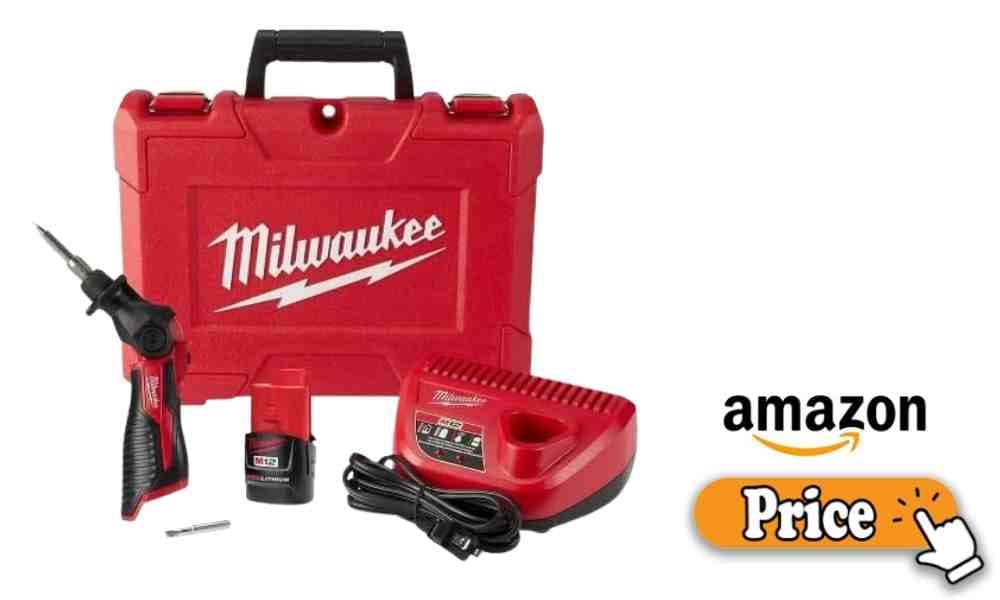
It has strong heat mass. Thick wire heats up fast and stays hot. It can rest on the ground without a stand. The battery keeps it steady. It feels tough and built for job sites.
It drains batteries fast. Keep a spare pack close. The plastic collar can get stiff if left on too long. Do not let it sit hot with no work.
Ryobi 18V One+ Hybrid Station
This Ryobi unit works like a bench station. It can run on a battery or a wall plug. It has a simple heat dial. It also has a safe holder for the hot iron.
This is great for a driveway bench setup. It is not small, but it is comfy for long jobs. If you have room, the steady base is worth it.
Best Cordless Soldering Iron for Off-Grid and Heavy-Duty Use
Sometimes there is no power at all. No charger. No battery. You still need heat. For true off-grid work, gas is hard to beat. It works when power is not an option.
Portasol P2KC (also sold as Weller P2C)
The Portasol P2KC is a butane iron. You fill it with lighter fuel. Press the igniter and it heats up. There are no cords to worry about. If you have butane, it keeps working.
It makes a lot of heat. Thick wire melts fast. Battery irons can struggle here. Remove the tip and it acts like a hot air torch. This is great for heat shrink. It is a solid tool for remote jobs.
There is no exact heat control. You set the flame by feel. Hot air vents from the side. Be careful around nearby wires.
Small Choices That Matter More Than the Iron
These are small details you learn the hard way. A few bad nights in the shop teach them fast. The iron is only part of the job. The right extras can change everything. Ignore them and soldering feels awful.
Tip shape and quality
Chisel tips move heat better than point tips. They touch more metal at once. Sharp tips look precise, but they heat poorly. Buy good tips. Cheap ones rust fast and stop melting solder.
Power accessories
If you use a USB-C iron, get a soft cable. Silicone cables bend easily and stay out of your way. Stiff plastic cables fight your hand. Your power bank must support PD. Basic phone chargers are too weak.
Storage and safety habits
Let the iron cool before packing it up. A hot iron can melt tools and bags. I learned this the hard way. Leave a small blob of solder on the tip after use. It helps prevent rust.
Choosing the Best Cordless Soldering Iron for You
Most people buy the wrong tool. They copy someone else and ignore their own work. Do not use a car iron on a computer board. Do not take a USB iron to a boat yard.
For PCBs, drones, and small electronics
Pick the Pinecil V2 or the TS101. They are light and very precise. Heat stays steady, which protects small parts. Fine work feels easy with these tools. You can work almost anywhere.
For cars, boats, and trailers
If you own the batteries, choose the Milwaukee M12. It is tough and made for heavy wire. For long jobs, the Ryobi Hybrid feels better in the hand. These irons handle thick wire with no trouble.
For remote or outdoor work
Choose the Portasol P2KC. It is simple and very strong. It works even with no power at all. When all else fails, this one still runs.
FAQs – Best Cordless Soldering Iron
Are cordless soldering irons any good?
New cordless soldering irons are strong. They heat up very fast. You can fix wires anywhere now. It works just like a plug-in tool. They are great for quick fixes.
How long does the battery last?
A battery powered soldering iron lasts long. You get about 40 minutes of use. This is plenty for most jobs. It is easy to swap the pack out. It keeps you working.
Is butane or electric better?
Gas is good for thick wires. A USB-C soldering iron is safe for chips. Gas gets hot but is hard to set. Electric tools are best for exact work.
Can I take my iron on a plane?
Yes, you can bring them. Keep batteries in your hand bag. Empty all gas from the tank first. This follows the rules for safe air travel.