
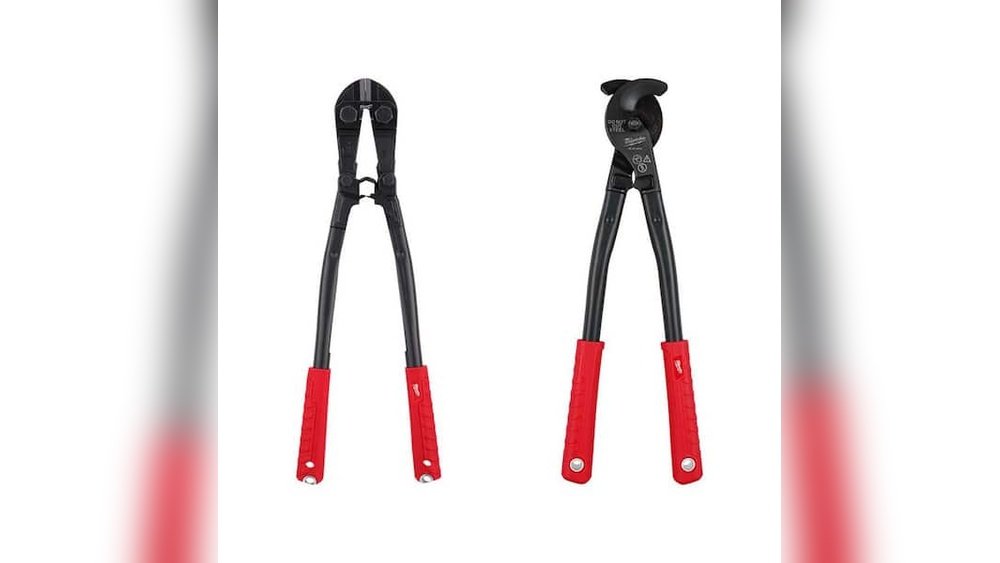
When you need to cut something tough—like thick wires, chains, or cables—it’s important to pick the right tool. Two common options are bolt cutters and cable cutters. At first glance, they might look similar, but they are made for different jobs. Choosing the wrong one can make your work harder, damage your tool, or even be unsafe. This article will help you understand the differences, uses, strengths, and weaknesses of each. By the end, you’ll know exactly when to use a bolt cutter, when to grab a cable cutter, and how to avoid common mistakes.
What Is A Bolt Cutter?
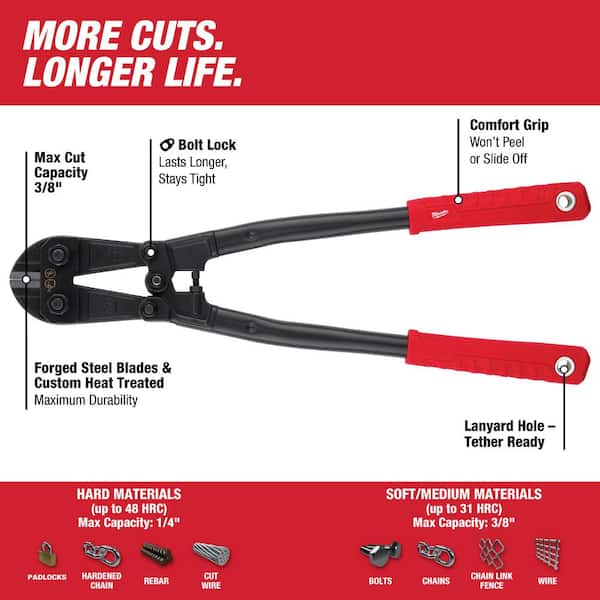
A bolt cutter is a hand tool designed to cut through hard metals. You might see them with long handles and strong jaws. They use leverage to multiply your hand strength. That means you can cut very tough materials with less effort. Most bolt cutters are between 12 and 42 inches long. The bigger the cutter, the more power you get.
Bolt cutters are usually used for:
- Cutting bolts and locks
- Breaking chains and padlocks
- Snapping rods and thick wires
- Removing fencing or rebar
The jaws are made from hardened steel, which helps them cut through metal. Some bolt cutters have angled jaws for tight spaces, while others have straight jaws for more power.
Key Features
- Long handles: Give you more cutting force
- Strong jaws: Made for hard metals
- Replaceable blades: Some models allow changing jaws after wear
- Multiple jaw types: Center cut, angle cut, and shear cut
When To Use A Bolt Cutter
Use a bolt cutter when you need to cut hard, thick metal. For example, if you lose the key to a padlock, a bolt cutter can cut it off. They are also used in construction to cut rebar or metal fencing. But if you try to cut something soft, like a thin cable, the jaws can crush rather than slice, making a messy cut.
What Is A Cable Cutter?
A cable cutter is designed for cutting cables, wires, and other softer materials. These tools have short handles (usually 6 to 14 inches) and curved blades. The curved shape helps the blades wrap around a cable, making a clean, smooth cut. Most cable cutters can cut copper or aluminum wires, bicycle cables, and electrical cords.
Cable cutters are used for:
- Cutting electrical cables
- Trimming bike brake cables
- Cutting rope or cable seals
The blades are usually sharp but not as hard as bolt cutters. They are designed to slice rather than crush. Using a cable cutter on hard metal can damage the blades.
Key Features
- Curved blades: Make clean, round cuts
- Short handles: Easy to control with one hand
- Sharp edges: Slice rather than crush
- Lightweight: Suitable for delicate work
When To Use A Cable Cutter
Use a cable cutter when you need precision and a clean cut on softer metals or wires. For example, when installing an electrical system, a cable cutter can neatly trim each wire. If you use bolt cutters, you might flatten or fray the wire, making it hard to connect.

Side-by-side Comparison
Let’s compare the main differences and uses of both tools in a simple table.
| Feature | Bolt Cutter | Cable Cutter |
|---|---|---|
| Main Use | Cutting hard metals | Cutting cables and wires |
| Blade Shape | Straight or angled | Curved |
| Handle Length | 12–42 inches | 6–14 inches |
| Cutting Action | Crushes metal | Slices cleanly |
| Typical Materials | Bolt, chain, rebar | Copper, aluminum, cable |
| Precision | Low | High |
| Weight | Heavy | Light |
| Blade Hardness | Very hard | Sharp but less hard |
How Bolt Cutters Work
Bolt cutters use the principle of leverage. The long handles let you use your body weight to press the jaws together. The force multiplies at the jaws, allowing them to cut through thick metal. For example, a 36-inch bolt cutter can generate over 4,000 pounds of force at the tip.
Types Of Bolt Cutter Jaws
- Center Cut: Jaws meet in the middle. Good for most metal cutting.
- Angle Cut: Jaws are angled (usually 25–35 degrees). Useful for flat surfaces.
- Shear Cut: Like scissors, blades pass each other. Makes a neater cut.
- Clipper Cut: Blades are flush on one side. Good for close cuts.
Real-world Example
A construction worker needs to cut through a steel chain-link fence. He uses a 24-inch bolt cutter. The handles give him enough leverage to snap the links in a few seconds. If he tried a cable cutter, the blades would quickly dull or break.
Non-obvious Insight
Many beginners think bigger is always better. But a very large bolt cutter is heavy and hard to control in tight spaces. For home use, a 14- to 24-inch model is usually enough.
How Cable Cutters Work
Cable cutters rely on sharp, curved blades that wrap around the cable and slice through it. The curved design prevents the wire from slipping and keeps the cut smooth. This is important for electrical work, where a clean cut ensures a good connection.
Types Of Cable Cutters
- Standard Cable Cutters: For copper, aluminum, and soft wire.
- Ratchet Cable Cutters: For thick cables (up to 750 MCM). These have a ratchet to cut in stages.
- Mini Cable Cutters: Small, for tight spaces or light work.
- Heavy-Duty Cable Cutters: Can handle armored cable but not hard steel.
Real-world Example
An electrician installs a new light fixture. He needs to strip and cut electrical wires. He uses a 7-inch cable cutter to trim each wire. The cuts are clean, making it easy to attach to the fixture.
Non-obvious Insight
People sometimes use pliers or regular wire cutters on thick cables. This can crush the strands, making the wire hard to work with. A proper cable cutter prevents this problem.
Key Differences In Design And Function
While both tools cut, they do so in different ways.
- Bolt cutters multiply force for hard metals. Their jaws are thicker and less sharp.
- Cable cutters focus on sharpness and blade shape for a neat cut.
Using the wrong tool not only makes the job harder but can also damage the tool or the material.
| Scenario | Best Tool | Why |
|---|---|---|
| Cutting a padlock | Bolt Cutter | Strong enough for hardened steel |
| Trimming speaker wire | Cable Cutter | Gives a clean cut, no fraying |
| Cutting steel rebar | Bolt Cutter | High leverage and strong jaws |
| Cutting bicycle brake cable | Cable Cutter | Prevents crushing the inner wires |
| Removing a metal seal | Bolt Cutter | Can handle thick, hard seals |
| Cutting soft copper wire | Cable Cutter | Provides a smooth finish |
Safety Considerations
Both tools are powerful and must be used with care.
Bolt Cutter Safety
- Wear eye protection: Metal shards can fly.
- Use two hands: Keeps control and balance.
- Do not cut live wires: Bolt cutters are not insulated.
- Check blade alignment: Misaligned jaws can slip or twist.
Cable Cutter Safety
- Cut only non-energized wires: Risk of electric shock.
- Use insulated handles: For electrical work, pick cutters rated for voltage.
- Do not cut hard steel: Can chip or dull the blades.
- Keep blades sharp: Dull blades crush instead of cut.
Common Mistakes To Avoid
- Using a bolt cutter on small cables—this flattens and frays them.
- Trying to cut locks or rebar with a cable cutter—this ruins the blades.
- Not checking the tool’s maximum capacity—both tools have limits.
- Ignoring maintenance—clean and oil the tools after use for longer life.
Choosing The Right Tool For Your Needs
Picking between a bolt cutter and a cable cutter depends on what you need to cut. Ask yourself:
- What material am I cutting? (Hard steel or soft cable?)
- How thick is the material?
- Do I need a clean cut or just to break the material?
- Do I need to work in a tight space?
- How often will I use this tool?
Bolt Cutter Buying Tips
- Jaw type: Choose based on your main use.
- Handle length: Longer handles for more power, but harder to use in small areas.
- Cutting capacity: Always check the maximum thickness.
- Build quality: Look for strong steel and solid handles.
- Replaceable parts: Some cutters let you change blades.
Cable Cutter Buying Tips
- Blade sharpness: Essential for clean cuts.
- Handle comfort: For frequent use, padded handles help.
- Cutting range: Check the max cable size.
- Insulation: Needed for electrical work.
- Ratchet mechanism: Helps cut thicker cables without much force.
Example: Home Garage
If you mostly work with bike cables or electric wires, a cable cutter is best. If you need to cut off old padlocks, fence wire, or bolts, keep a bolt cutter handy.
Cost Comparison
The price of these tools varies based on size, brand, and quality.
- Bolt cutters: $20 (small) to $100+ (large, pro-grade)
- Cable cutters: $10 (basic) to $80 (ratchet, heavy-duty)
For most homeowners, a mid-range tool is enough. Professionals might invest in higher-end versions for daily use.
Maintenance And Longevity
Good maintenance keeps your tools safe and effective.
Bolt Cutter Care
- Clean after use: Remove dirt and metal shavings.
- Oil the joints: Keeps action smooth.
- Check blade sharpness: Dull blades slip.
- Store dry: Prevents rust.
Cable Cutter Care
- Wipe blades clean: Stops sticky residue.
- Sharpen as needed: Some can be sharpened with a file.
- Lubricate pivot: Keeps blades moving freely.
- Store with blades closed: Prevents damage.
A well-cared-for tool can last many years. Poor maintenance is a common reason tools fail.
Bolt Cutter Vs Cable Cutter: Which Is More Versatile?
It depends on your needs.
- Bolt cutters are versatile for cutting hard, thick materials in construction, security, and demolition.
- Cable cutters are essential for electrical work, bike repair, and any job needing clean, precise cuts.
For most homeowners, having both gives the most flexibility. If you must pick one, match it to your main task. For example, if you only cut wires, a cable cutter is enough. If you deal with chains or locks, a bolt cutter is required.
Real-world Use Cases
Bolt Cutter
- A security guard needs to remove an abandoned bicycle from a railing. The lock is old and rusted. A bolt cutter breaks the lock quickly.
- In disaster relief, rescuers use bolt cutters to open gates or cut through debris to reach people.
- Metal workers use bolt cutters for rebar at construction sites.
Cable Cutter
- A car mechanic trims battery cables for a new installation. A cable cutter provides smooth ends.
- An audio technician cuts and prepares speaker wires for a large event.
- A cyclist replaces a brake cable, needing a clean cut to fit the new cable into the housing.
Environmental Impact
Both tools have a small environmental footprint if well maintained. However, cheap cutters often break and end up as waste. Investing in quality tools reduces landfill and saves money over time. Also, using the right tool prevents damage and reduces the need for replacements.
Professional Vs Diy Use
Professionals often use both tools. For example, electricians, construction workers, and security personnel might need both on the job. For DIYers, think about frequency and main uses.
- Professionals: Should invest in high-quality, durable tools. Time saved is money earned.
- Homeowners/DIYers: Mid-range tools are usually enough. Focus on comfort and reliability.
Common Myths And Misunderstandings
- “A bolt cutter can cut anything.” Not true. Very hard materials (like high-security locks) may need specialized tools.
- “Cable cutters are only for electricians.” False. They are useful for bikes, cars, and hobbies.
- “All wire cutters are the same.” No. Precision and blade shape matter a lot.
- “Bigger is always better.” Large tools are hard to use in small spaces and can be dangerous if not controlled.
The Bottom Line
Both bolt cutters and cable cutters are important tools. They do different jobs. Bolt cutters are for power and tough materials. Cable cutters are for clean, precise cuts on softer wires. Using the right tool saves time, money, and frustration. Professionals often need both. For home use, choose based on your most common tasks. Remember to maintain your tools for a longer life.
If you’re still unsure, check guides from trusted sources like Wikipedia for more technical details.

Frequently Asked Questions
What Is The Main Difference Between A Bolt Cutter And A Cable Cutter?
The main difference is that bolt cutters are designed for cutting hard, thick metals like bolts, chains, and rebar, using crushing force. Cable cutters have sharp, curved blades for making clean cuts in softer wires and cables.
Can I Use A Bolt Cutter To Cut Electrical Wire?
You can, but it’s not recommended. Bolt cutters often crush and fray wires, making a messy cut. It’s better to use a cable cutter for electrical work.
How Do I Choose The Right Size Bolt Or Cable Cutter?
Choose based on what you need to cut. For bolt cutters, pick a length that matches the thickness of the metal. For cable cutters, check the maximum wire or cable size the tool can handle. If you’re unsure, a mid-sized tool is a good start.
How Do I Keep My Cutters In Good Shape?
Clean the blades after use, oil moving parts, and store them in a dry place. For cable cutters, keep the blades sharp. For bolt cutters, check blade alignment regularly. Proper care extends tool life.
What Should I Do If My Tool Gets Damaged?
Stop using it right away. Damaged tools can slip or break. Replace worn parts if possible, or buy a new tool. Using a broken tool can be dangerous.
With the right knowledge, you can pick the perfect cutter for any job. Choose wisely, maintain your tools, and they’ll serve you well for years.
As an Amazon Associate, We earn from qualifying purchases