
Choosing the right air compressor can be confusing, especially when you have to decide between a single stage and a two stage air compressor. This decision matters whether you are setting up a home garage, running a small workshop, or managing a large industrial site. The compressor you pick will affect your tools’ performance, energy costs, and even how often you need to do maintenance. Many people think all air compressors work the same, but the way they compress air changes everything—from how much pressure you get to how long the machine lasts.
In this guide, you will learn what single stage and two stage air compressors really are, how they work, and why these differences matter. We’ll explore their benefits, drawbacks, and typical uses. You’ll also see real-world comparisons, key performance numbers, and expert tips that most beginners overlook.
By the end, you’ll have a clear picture of which type fits your needs best, so you can make a confident and informed choice.
What Is A Single Stage Air Compressor?
A single stage air compressor is often the first choice for many home users and small businesses. But what does “single stage” really mean? In simple terms, it describes how many times the air is compressed before it goes into the storage tank.
In a single stage compressor:
- Air is drawn in through a filter.
- The piston moves down, pulling air inside the cylinder.
- The piston then moves up, compressing the air in one motion.
- The compressed air is pushed into the storage tank.
This entire process happens in just one step, or “stage.” The air reaches a pressure of about 120 PSI (pounds per square inch), which is enough for many light to medium-duty tasks.
Single stage compressors usually have one piston, but some have two pistons working together, both compressing air in a single motion. This design keeps things simple, making these compressors easier to maintain and repair.
Key Features Of Single Stage Compressors
- Simple design: Fewer moving parts mean less to go wrong.
- Lower maximum pressure: Usually up to 120 PSI.
- Smaller size: Compact and portable, ideal for small spaces.
- Lower cost: More affordable to buy and maintain.
Common Uses
Single stage compressors are best for tasks like:
- Inflating tires
- Using brad nailers or staple guns
- Airbrushing
- Light-duty tools (ratchets, impact wrenches under ½”)
- Home garages and small workshops
Example
If you’re running a home garage to inflate car tires, blow dust, or use a small nail gun, a single stage compressor will likely meet all your needs. Its simplicity and lower price make it perfect for beginners.
What Is A Two Stage Air Compressor?
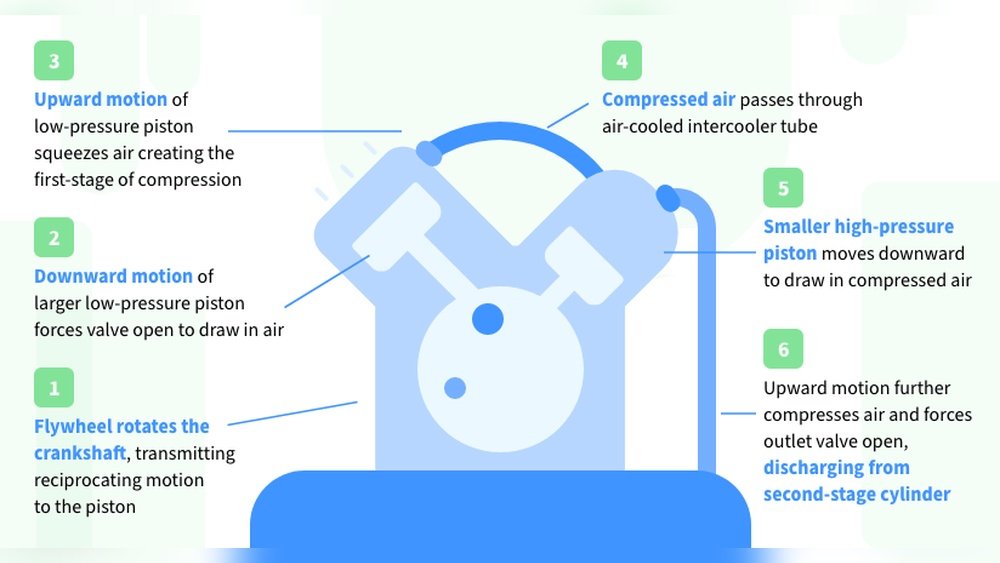
A two stage air compressor goes a step further in how it compresses air. The word “two stage” means the air is compressed twice before it reaches the storage tank.
Here’s how it works:
- First Compression: The piston draws in air and compresses it, just like in a single stage compressor. But instead of sending this air straight to the tank, it goes to a small tube called an intercooler.
- Cooling: The air cools down slightly in the intercooler. Cooler air is easier to compress.
- Second Compression: A second, smaller piston compresses the air again, pushing it to an even higher pressure—often up to 175 PSI.
- Storage: The now fully compressed air moves into the storage tank, ready for heavy-duty tools.
This two-step process produces air at higher pressure and with less heat, which is important for big jobs.
Key Features Of Two Stage Compressors
- Higher maximum pressure: Usually up to 175 PSI.
- Two pistons: One for each stage of compression.
- Larger size: Heavier and often fixed in place.
- More efficient for long runs: Handles heavy, continuous use with less wear.
Common Uses
Two stage compressors are chosen for:
- Automotive repair shops
- Manufacturing plants
- Sandblasting
- Industrial painting
- Running multiple air tools at once
Example
If you operate a body shop using impact wrenches, sanders, and spray guns all day, a two stage compressor is the smart choice. The higher pressure and steady flow keep all your tools running without delay.
The Core Differences Between Single Stage And Two Stage Compressors
It’s easy to confuse the two, but the differences matter a lot in real use. Let’s break down what sets them apart.
Compression Process
- Single Stage: Compresses air one time, directly into the tank.
- Two Stage: Compresses air twice, increasing pressure and efficiency.
Maximum Pressure
- Single Stage: Typically up to 120 PSI.
- Two Stage: Up to 175 PSI or more.
Number Of Pistons
- Single Stage: One or two pistons, both compressing air in one step.
- Two Stage: Two pistons—one for each stage.
Cooling
- Single Stage: Air is hotter when it enters the tank.
- Two Stage: Air is cooled between stages, which reduces heat and moisture.
Size And Portability
- Single Stage: Smaller, lighter, often portable.
- Two Stage: Larger, heavier, usually stationary.
Cost
- Single Stage: Lower purchase and maintenance cost.
- Two Stage: Higher upfront cost, but more durable for demanding use.
Table: Key Technical Differences
| Feature | Single Stage | Two Stage |
|---|---|---|
| Max Pressure | ~120 PSI | ~175 PSI |
| Compression Steps | 1 | 2 |
| Best For | Home & Light Duty | Industrial & Heavy Duty |
| Portability | High | Low |
| Price | Lower | Higher |
| Noise Level | Usually higher | Usually quieter |
| Life Span | Shorter (if overworked) | Longer (with heavy use) |
How Each Compressor Works: Step-by-step
Understanding the actual mechanics helps you see why the differences matter. Here’s a closer look at each type in action.
Single Stage Air Compressor: The Cycle
- Intake Stroke: The piston moves down, drawing air into the cylinder.
- Compression Stroke: The piston moves up, compressing the air to about 120 PSI.
- Discharge: The compressed air moves through a check valve into the storage tank.
- Repeat: The cycle continues until the tank is full.
Two Stage Air Compressor: The Cycle
- First Stage Intake: The large piston draws in air and compresses it to about 90 PSI.
- Intercooling: The air passes through an intercooler, cooling it down.
- Second Stage Compression: A smaller piston compresses the cooled air to around 175 PSI.
- Discharge: The highly compressed air enters the storage tank.
- Repeat: The process cycles as needed.
Why Intercooling Matters
When air is compressed, it gets hot. Hot air holds more moisture, which can damage tools and cause rust in the tank. Two stage compressors use an intercooler to cool air between stages. This reduces moisture, making air tools last longer and perform better.
Performance: Power, Pressure, And Air Delivery
Choosing the right compressor is about more than just max PSI. You also need to consider CFM (cubic feet per minute), which tells you how much air the compressor can deliver. This number is critical for running air tools.
Typical Performance Numbers
- Single Stage: 2–20 CFM at 90 PSI
- Two Stage: 10–50+ CFM at 175 PSI
A two stage compressor not only delivers higher pressure, but also keeps up with tools that need lots of air, like sanders or grinders.
Table: Example Cfm Needs For Common Tools
| Tool | CFM Needed | Single Stage OK? | Two Stage Needed? |
|---|---|---|---|
| Brad Nailer | 0.5 – 1.0 | Yes | No |
| Impact Wrench (1/2″) | 4.0 – 5.0 | Yes | No |
| Paint Sprayer | 6.0 – 12.0 | Maybe | Yes |
| Sandblaster | 10.0 – 20.0 | No | Yes |
| Grinder | 8.0 – 12.0 | Maybe | Yes |
Not-so-obvious Insight
Many beginners only check the PSI rating, but CFM matters more for most tools. A compressor with high PSI but low CFM will not keep up if you use air tools for long periods.
Energy Efficiency And Operating Costs
A compressor’s efficiency affects your power bill and tool performance. Here’s what to expect from each type.
Single Stage
- Short duty cycles: Good for quick bursts of use.
- More heat: Less efficient if used all day.
- Best for occasional use: Lower energy use when not running constantly.
Two Stage
- Long duty cycles: Designed for continuous operation.
- Less heat: Intercooling improves efficiency.
- Lower energy cost per CFM: More efficient in high-demand settings.
Example
A home user who inflates tires once a week will save money with a single stage compressor. But a shop running multiple air tools all day will spend less on electricity with a two stage unit.
Durability And Maintenance
How long a compressor lasts depends on how hard you work it and how well you maintain it.
Single Stage
- Simple design: Fewer parts to maintain.
- Shorter lifespan if used for heavy-duty work.
- Easy to service: Most repairs can be done by the owner.
Two Stage
- Built for tough jobs: Handles long hours and heavy loads.
- More parts: Slightly more complex to maintain.
- Longer lifespan: Designed for industrial use.
Important Insight
Many people overwork single stage compressors, causing them to fail early. Always match the compressor to your needs to avoid costly breakdowns.
Cost Breakdown: Purchase Price And Long-term Value
Money matters, so let’s compare the costs you’ll face with each type.
Upfront Price
- Single Stage: $150–$1,000 for most home and small shop models.
- Two Stage: $800–$3,000+ for professional and industrial models.
Operating Costs
- Single Stage: Lower if used occasionally.
- Two Stage: Lower if used heavily, thanks to greater efficiency.
Maintenance Costs
- Single Stage: Lower parts cost, simple repairs.
- Two Stage: Slightly higher, but longer lifespan offsets this.
Table: Cost Comparison Over 5 Years
| Compressor Type | Purchase Price | Estimated Maintenance | Estimated Energy Use | Total 5-Year Cost |
|---|---|---|---|---|
| Single Stage | $500 | $100 | $250 | $850 |
| Two Stage | $1,500 | $250 | $200 | $1,950 |
Note: Actual numbers depend on your usage and local energy prices.

Pros And Cons: A Balanced View
It’s easy to focus on the benefits, but every tool has its drawbacks. Here’s what you should know.
Single Stage Air Compressors
Pros:
- Lower price
- Easier to move and store
- Simple to maintain
- Perfect for home and DIY use
Cons:
- Limited to lower PSI and CFM
- Can overheat with heavy use
- Shorter lifespan if pushed too hard
Two Stage Air Compressors
Pros:
- High pressure and CFM for demanding tools
- Runs cooler and more efficiently
- Designed for long, continuous use
- Longer lifespan
Cons:
- Higher upfront cost
- Larger and heavier—usually not portable
- More complex maintenance
Which Should You Choose? Key Decision Factors
There’s no single answer that fits everyone. Use these factors to help you decide:
- What tools will you run?
- Light-duty tools? Go single stage.
- Heavy-duty or multiple tools? Choose two stage.
- How often will you use it?
- Occasional use? Single stage is enough.
- Daily or all-day use? Two stage is better.
- Is portability important?
- Need to move it around? Single stage.
- Fixed in one place? Two stage.
- Budget
- Tight budget? Single stage.
- Willing to invest for the long-term? Two stage.
- Space
- Limited space? Single stage fits better.
- Plenty of room? Two stage is fine.
Non-obvious Insight: Plan For Growth
Many users buy a single stage compressor, only to outgrow it as their needs expand. If you think you might add more tools or use your compressor more in the future, it’s often smarter to buy a two stage model from the start.
Real World Examples
Let’s look at how different users benefit from each type.
Home Garage User: Single Stage
John has a small garage. He uses his compressor to inflate tires, clean dust, and run a nail gun for woodworking. He picked a 6-gallon single stage compressor. It’s light, easy to move, and meets all his needs for under $300.
Auto Shop Owner: Two Stage
Maria runs a busy auto repair shop. Her team uses impact wrenches, sanders, and paint sprayers all day. She invested in a 60-gallon, two stage compressor. It cost more, but it runs quietly, keeps up with demand, and lasts for years with proper care.
Small Manufacturer: Two Stage
A factory uses a two stage compressor to power assembly line tools. It runs 8 hours a day, five days a week. The higher efficiency and lower heat keep downtime to a minimum, saving money in the long run.
Common Mistakes When Choosing
Many buyers make these errors:
- Ignoring CFM requirements: Check your tools’ CFM needs, not just PSI.
- Underestimating future needs: Buying too small leads to frustration later.
- Choosing price over value: A cheap compressor can cost more in repairs and downtime.
- Forgetting about power supply: Larger compressors may need a 220V outlet.

Maintenance Tips For Both Types
No matter which compressor you choose, maintenance is vital for long life.
- Check and change oil (for oil-lubricated models)
- Drain the tank after each use to prevent rust
- Inspect air filters monthly
- Tighten fittings to prevent leaks
- Keep the compressor clean and away from dust
Regular maintenance prevents most breakdowns and keeps your air supply reliable.
Environmental Impact
Two stage compressors are more energy efficient when used for heavy, continuous work. They produce less heat, which means less wasted energy. For light users, single stage compressors use less overall power because they run for shorter periods. Choosing the right size for your needs reduces both energy use and carbon footprint.
Safety Considerations
Air compressors store air at high pressure, which can be dangerous if not handled properly.
- Never exceed rated PSI for your tools or the tank
- Use safety valves and check them regularly
- Release pressure before performing maintenance
- Wear ear and eye protection around running compressors
These safety steps apply to both single stage and two stage units.
Future Trends In Air Compressor Technology
Modern compressors are becoming smarter and more efficient. Features like variable speed motors, digital controllers, and automatic drain systems are now common. These upgrades help reduce energy use and make maintenance easier. Advanced models can even send maintenance reminders to your phone.
For more on how air compressor technology is evolving, see Wikipedia.

Frequently Asked Questions
What Is The Main Difference Between Single Stage And Two Stage Air Compressors?
The main difference is that a single stage compressor compresses air once before storing it, while a two stage compressor compresses air twice. This second stage creates higher pressure (up to 175 PSI), making two stage models better for heavy-duty and industrial use.
Can I Use A Single Stage Compressor For Industrial Work?
It’s not recommended. Single stage compressors are designed for light to medium tasks. If you run multiple air tools at the same time or need high pressure for long periods, a two stage compressor is more reliable and efficient.
How Do I Know What Size Air Compressor I Need?
Check the CFM rating of your air tools. Add up the CFM for all tools you might use at once. Choose a compressor with a CFM rating at or above that number, and make sure its PSI matches your highest-pressure tool.
Are Two Stage Compressors Always Better?
Not always. Two stage compressors are better for high-demand, continuous use. But if you only use air tools occasionally or need a portable unit, a single stage compressor is more practical and cost-effective.
How Often Should I Maintain My Air Compressor?
Perform basic maintenance—like draining the tank, checking oil, and cleaning filters—every month or after every 20 hours of use. Full service (changing oil, inspecting belts, etc. ) Should be done at least once a year or as recommended by the manufacturer.
—
Understanding the real differences between single stage and two stage air compressors is the key to picking the right machine for your needs. Consider your tools, workload, and budget. Remember, buying a slightly more powerful compressor now can save you time, money, and headaches later.
Whether you’re a weekend hobbyist or running a busy workshop, the right compressor will make every job easier and more efficient.
As an Amazon Associate, We earn from qualifying purchases