
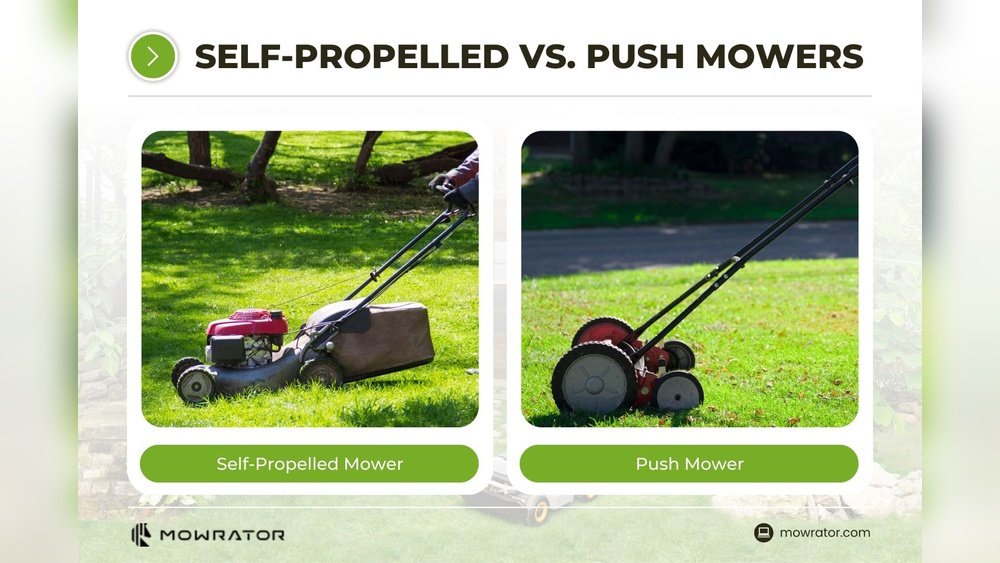
A well-kept lawn is more than just grass—it’s the first thing people see when they visit your home. But behind every green yard is a choice: self propelled lawn mower or push mower? If you’ve ever spent a Saturday sweating behind a mower, you know this decision matters. Each type has its fans and critics, but which one is right for you? Picking the best fit can save you time, energy, and even money over the years.
This article digs deep into the differences between these two popular mower styles. We’ll look at how each works, their strengths and weaknesses, and what real owners say. You’ll learn which mower handles hills better, which saves you cash, and which will leave you wishing you’d chosen differently. If you’re planning to buy a new mower or simply want to understand your options, this guide will give you a clear answer. Get ready to finally settle the debate—self propelled lawn mower vs push—once and for all.
How Each Mower Works
Before you choose, it’s important to know how both mowers operate. While they might look similar, their mechanics and user experience are quite different.
Self Propelled Lawn Mowers
A self propelled mower uses an engine or motor to turn not just the blades, but also the wheels. You simply walk behind, steering and guiding. When you squeeze a lever or push a handle, the mower moves forward on its own. Most models let you adjust the speed to match your walking pace.
There are two main types:
- Front-wheel drive: Easier for flat lawns.
- Rear-wheel drive: Better for hills and uneven terrain.
Push Lawn Mowers
A push mower is powered only by you. The engine spins the blades, but you provide all the forward motion. You push the mower across your yard, using your own strength. These mowers are simpler in design and often lighter.
Some push mowers are powered by gas or electricity; others are reel mowers, which are completely manual—no engine, just a spinning blade drum.
Key Differences At A Glance
Here’s a quick comparison to help you see the main contrasts.
| Feature | Self Propelled | Push Mower |
|---|---|---|
| Movement Power | Engine/motor drives wheels | User pushes manually |
| User Effort | Low to moderate | Moderate to high |
| Speed Control | Adjustable (most models) | Set by user’s pace |
| Best For | Medium/large or hilly yards | Small, flat lawns |
| Cost | Higher | Lower |
| Maintenance | More complex | Simpler |
Performance On Different Lawn Types
Choosing the right mower depends on your yard. Let’s see how each type handles different situations.
Flat, Small Lawns
For small, flat lawns (under ¼ acre), a push mower is usually enough. These yards don’t need much muscle. In fact, a lightweight push mower can finish the job quickly. Many people also find push mowers easier to turn in tight spaces.
Large Or Hilly Lawns
If your yard is big, uneven, or slopes, a self propelled mower is the clear winner. The engine helps climb hills and cover more ground with less effort. This is especially true if you have back or joint pain, or simply want to avoid tiring yourself out.
Obstacles And Tight Corners
Push mowers often feel more “nimble,” making them great for lawns with lots of flower beds, trees, or curves. Self propelled mowers, especially heavier models, can be harder to maneuver in tight spots. However, some newer self propelled models offer easy-turn features.
Cutting Quality And Versatility
Both mower types can give you a clean, even cut—but there are subtle differences.
- Self propelled mowers maintain a steady speed, which helps cut grass evenly. Some models offer multiple cutting modes (mulching, bagging, side discharge).
- Push mowers depend on your pace. If you walk too fast or slow, the cut can look uneven. Manual reel mowers (a type of push mower) are praised for their scissor-like cut, which is healthier for grass.
For very thick or tall grass, self propelled mowers usually perform better because they don’t slow down when the going gets tough.
Physical Effort And User Experience
One of the biggest differences is how much work you do.
Physical Effort
- Self propelled mowers do most of the heavy lifting. You guide, but the mower moves itself. This is a major benefit for older adults, people with health concerns, or anyone who wants to avoid strain.
- Push mowers require more energy, especially on hills or thick grass. If you enjoy getting exercise while mowing, this might be a plus. But for many, it quickly becomes tiring.
User Experience
Self propelled mowers feel more “luxurious” to use, while push mowers offer a simple, classic experience. Some users find the hum of the self propelled system relaxing—others prefer the quiet control of a basic push mower.
An insight that’s easy to miss: self propelled mowers can sometimes “run away” from you on steep slopes if you’re not careful. Practice using the speed control to avoid this.
Cost: Purchase, Operation, And Maintenance
Money matters—so let’s break down costs.
Initial Purchase
- Self propelled mowers typically cost $300–$800, depending on features and brand.
- Push mowers are more affordable, usually $100–$350. Manual reel mowers can be even less.
Electric models in both categories can cost more, but battery technology has narrowed the price gap.
Running Costs
- Self propelled mowers use more fuel or electricity since the engine powers the wheels. Expect higher gas or battery costs over time.
- Push mowers are more efficient. With reel mowers, there’s almost no operating cost—just your effort.
Maintenance
- Self propelled systems have more moving parts (belts, transmissions). That means more things can break and higher repair costs.
- Push mowers are simpler—less can go wrong, and repairs are cheaper.
Here’s a summary for quick reference:
| Cost Type | Self Propelled | Push Mower |
|---|---|---|
| Purchase Price | $300–$800 | $100–$350 |
| Fuel/Electricity | Moderate to high | Low |
| Maintenance | Moderate to high | Low |

Ease Of Use And Safety
Starting And Operating
Both types can start with a pull cord or push-button (on electric models). Self propelled mowers are heavier, but once moving, they feel lighter because the engine pulls them forward.
Push mowers are often lighter when turned off, making them easier to carry or lift over steps.
Safety
All mowers have risks—blades spin fast, and rocks can fly. But self propelled mowers can “take off” if you’re not paying attention. Always release the handle to stop the wheels before picking up the mower or crossing gravel.
Push mowers give you full control at all times—if you stop, the mower stops. For families with children, this might feel safer.
A detail many overlook: self propelled mowers often have a “blade stop” feature, which lets the blades stop spinning without shutting off the engine. This is handy for emptying the grass bag or moving across a driveway.
Environmental Impact
Lawn mowers can pollute, but some types are greener than others.
Gas Models
Both self propelled and push mowers can run on gas. Gas mowers emit carbon and use oil. Self propelled models burn a bit more fuel due to the extra power needed for the drive system.
Electric And Manual Models
Electric mowers (corded or battery) are much cleaner. Manual reel mowers are the greenest option—no emissions, no electricity, and nearly silent. If you want the lowest carbon footprint, a manual push mower is hard to beat.
One insight: battery-powered self propelled mowers are now strong enough for most lawns, but batteries may need replacing every 3–5 years. This adds some environmental cost.
Features And Options
Modern mowers come loaded with extras. Here’s how the two styles compare.
Self Propelled Mower Features
- Variable speed control
- Electric start
- Bag, mulch, and side discharge modes
- Adjustable cutting height
- Self-cleaning decks (on some models)
- Larger wheels for rough terrain
- Headlights (on some battery models)
Push Mower Features
- Lightweight design
- Simple height adjustment
- Quiet operation (especially reel mowers)
- Easy storage—many fold up or hang on a wall
A feature that surprises many: some self propelled mowers allow you to disengage the drive system, letting you use it as a push mower when needed (for tight spots or tricky turns).
Durability And Longevity
A Mower Is An Investment—so How Long Do They Last?
Self Propelled Mowers
With proper care, self propelled mowers can last 8–12 years. But their complexity means more parts can wear out. Belts, cables, and transmissions may need repair or replacement.
Push Mowers
Because they’re simpler, push mowers often last longer—sometimes 15 years or more. Manual reel mowers, in particular, have very few parts to break.
One thing beginners miss: Self propelled mowers require more frequent servicing (especially the drive system). Neglecting this can lead to expensive repairs.
Noise Levels
Noise is often overlooked, but it matters—especially in quiet neighborhoods.
- Gas self propelled mowers are usually the loudest.
- Electric self propelled mowers are quieter, but still noisier than manual push mowers.
- Manual reel mowers are almost silent—just a gentle snip as they cut the grass.
If early morning mowing is your routine, quieter mowers may keep your neighbors happy.
Storage And Mobility
After Mowing, Where Does The Machine Go?
- Self propelled mowers are heavier and bulkier. You’ll need space in your garage or shed.
- Push mowers are often lighter and more compact. Manual reel mowers can hang on a wall.
If you need to lift or carry the mower (up steps, into a vehicle), push mowers are much easier to manage.
Popular Brands And Model Examples
It helps to know what’s out there. Here are a few trusted brands for each type:
Self Propelled Lawn Mowers
- Honda: Known for reliable engines and smooth drive systems.
- Toro: Variable speed, easy-to-use controls.
- EGO: Battery-powered, powerful and quiet.
- Craftsman: Affordable, with good customer support.
Push Lawn Mowers
- American Lawn Mower Company: Manual reel mowers, classic design.
- Greenworks: Lightweight electric push mowers.
- Sun Joe: Budget-friendly, electric and manual options.
- Husqvarna: Quality build, good for small yards.
Real-world example: The Honda HRX217VKA is a top-rated self propelled mower, praised for its durability and cutting quality. For push mowers, the American Lawn Mower 1204-14 is a favorite for small lawns.
User Reviews And Real-world Feedback
What do actual owners say? Reviews reveal patterns you won’t find in ads.
Self Propelled Mower Owners
- Most love the ease—especially for big yards or hilly terrain.
- Many say mowing is faster and less tiring.
- Complaints focus on the weight (hard to lift or maneuver when off) and the cost of repairs.
- Some owners wish they’d chosen a lighter mower if their yard is small.
Push Mower Owners
- Many enjoy the simplicity—less to break, easy to maintain.
- Owners of manual reel mowers often mention the “quiet, peaceful” mowing experience.
- Some struggle with thick or tall grass.
- A common regret: Underestimating the effort required for larger or sloped yards.
A non-obvious insight: First-time buyers often overlook the effect of grass type. Thick, lush grass is harder to cut with a push mower, while self propelled mowers handle it with ease.

Common Buyer Mistakes
Avoid these errors when choosing your mower:
- Choosing based on price alone. A cheap push mower may cost you more in sweat and frustration.
- Ignoring yard size and slope. Self propelled mowers shine on big or hilly lawns.
- Not considering physical ability. If you have back pain or limited strength, a self propelled mower is worth the extra cost.
- Forgetting about storage. Heavy, bulky mowers are a pain to move and store.
- Overlooking maintenance needs. Complex mowers require regular servicing.
Many buyers regret not testing a mower before buying. If possible, visit a store and push each type to see what feels right.
Which Mower Is Right For You?
Here’s a simple way to decide:
- Choose a self propelled lawn mower if:
- Your yard is larger than ¼ acre.
- You have hills or uneven ground.
- You want to save time and effort.
- You have any physical limitations.
- Choose a push mower if:
- Your yard is small and flat.
- You prefer low maintenance.
- You enjoy quiet, manual work.
- You want to save money and storage space.
A third option: Some households own both—a self propelled mower for main mowing, and a manual push mower for touch-ups or small sections.

Pros And Cons Summary
For a quick review, here’s a side-by-side look:
| Self Propelled | Push Mower | |
|---|---|---|
| Pros |
|
|
| Cons |
|
|
Frequently Asked Questions
What Is The Main Difference Between A Self Propelled And A Push Lawn Mower?
A self propelled mower uses its engine or motor to drive the wheels, so you only need to guide it. A push mower moves only when you push it yourself. This means self propelled mowers require less physical effort, especially on big or hilly lawns.
Are Self Propelled Mowers Worth The Extra Cost?
For many people, yes. If your yard is medium to large or has slopes, the extra cost buys you easier mowing and less fatigue. But for tiny, flat lawns, a push mower may be all you need.
Can I Use A Self Propelled Mower As A Push Mower?
Most self propelled mowers allow you to disengage the drive and push manually if needed. However, they are usually heavier than true push mowers, so pushing them without the drive can be hard work.
Which Type Of Mower Is More Eco-friendly?
Manual push mowers (especially reel mowers) are the most eco-friendly—no gas, oil, or electricity needed. Electric push mowers are also greener than gas models. Self propelled mowers use more energy, but battery-powered options are improving.
How Often Do Self Propelled Mowers Need Maintenance?
Self propelled mowers need regular maintenance: oil changes, air filter cleaning, blade sharpening, and sometimes drive system servicing. Plan for annual tune-ups to keep everything running smoothly. Push mowers are simpler and usually require less maintenance.
For more details on lawn mower types and maintenance, check the Wikipedia Lawn Mower page.
Final Thoughts
Your lawn mower is one of the most important tools for home care. Choosing between self propelled and push comes down to your yard, your body, and your budget. Think about your lawn size, how much work you want to do, and how much you want to spend on maintenance and energy. If you want speed and comfort, self propelled is the way to go. If you want simplicity and savings, a push mower is hard to beat.
Remember, the “best” mower isn’t the most expensive or the fanciest. It’s the one that makes you actually enjoy mowing your lawn—and leaves you more time to relax and enjoy your green space.
As an Amazon Associate, We earn from qualifying purchases