
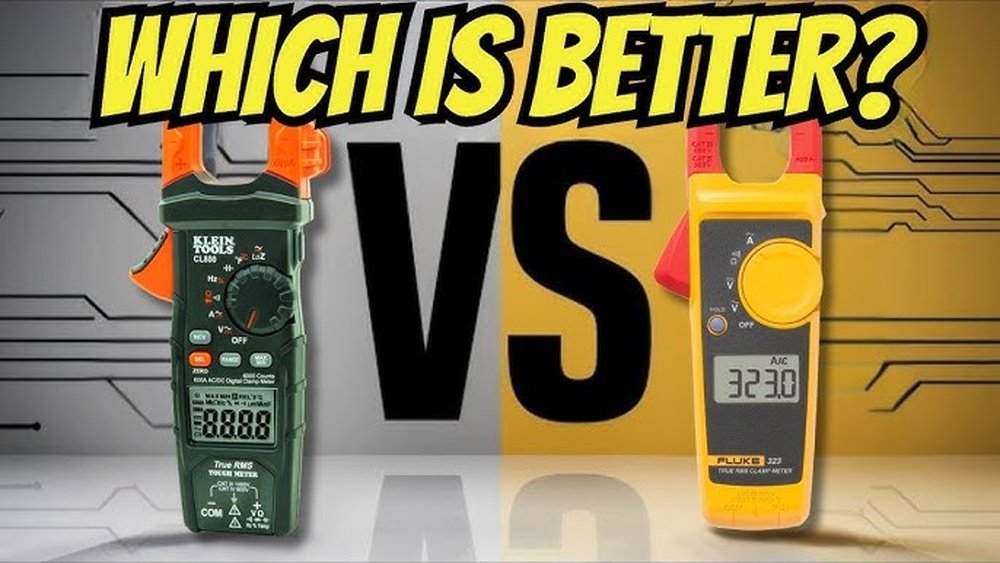
Fluke Vs Klein Multimeter
Choosing the right multimeter can make a big difference in electrical work, whether you are a professional electrician, a hobbyist, or a homeowner. Two names often come up when people talk about multimeters: Fluke and Klein Tools. Both brands have a strong reputation, but they each have their unique strengths, weaknesses, and best-use scenarios. If you are wondering which one fits your needs, this article will help you decide by exploring all the important factors in detail.
People often buy a multimeter expecting it to last for years, so it’s crucial to compare not just the price, but also reliability, accuracy, safety, features, and even customer support. Many buyers focus only on flashy features and forget about long-term durability or repair support.
Others get confused by technical terms, missing out on models that might actually serve them better. Here, you’ll get clear, practical guidance, real-world examples, and a look at hidden differences that most beginners miss. By the end, you’ll have the confidence to choose between Fluke and Klein multimeters based on facts, not just brand loyalty or marketing claims.
Brand Background And Reputation
Fluke
Fluke Corporation is an American company founded in 1948. It is considered the industry gold standard for test and measurement equipment. Fluke multimeters are known for their extreme reliability, safety features, and high accuracy. Many electricians, HVAC technicians, and engineers trust Fluke in demanding industrial environments.
Fluke has developed a reputation for innovation. For example, they introduced the world’s first digital multimeter in 1977. Their products often meet high international safety standards like CAT III and CAT IV ratings, which are important for working in hazardous or high-voltage environments.
Klein Tools
Klein Tools is another American company, started in 1857. While Klein is famous for hand tools like pliers and screwdrivers, they entered the electrical test equipment market later. Klein multimeters are designed with electricians in mind, focusing on practicality, ruggedness, and affordability.
Klein Tools has built a loyal following by offering solid performance at a lower price point. Their multimeters are popular among residential electricians, apprentices, and DIY users who need good reliability without the premium cost of Fluke.
Build Quality And Durability
Fluke Multimeters
Fluke multimeters are famous for their robust build quality. They often use thick, impact-resistant plastics and rubberized corners. Models like the Fluke 87V can survive drops from six feet or more. The buttons and rotary switches are tight, and the LCD screens are clear and easy to read.
Fluke also designs their meters to withstand tough conditions: high temperatures, dust, and even accidental exposure to water. Many professional users report their Fluke meters lasting over a decade with regular use.
Klein Multimeters
Klein Tools multimeters are built with durability in mind but typically use slightly lighter materials. They are rugged enough for most job sites, but they may not survive as many years of harsh industrial abuse as a Fluke. The buttons feel responsive, and the casing is solid.
However, the rotary dials can feel a bit looser on some entry-level models.
Klein meters can handle drops and rough handling, but they may show more wear over time compared to Fluke. For home use or light commercial work, this is rarely an issue, but for heavy-duty industrial work, Fluke has the edge.
Real-world Example
A maintenance technician in a steel plant described dropping his Fluke 179 from a 10-foot ladder onto concrete. The meter continued working perfectly with only a scratch. A similar drop with a Klein MM400 resulted in a cracked case and a loose dial.
This shows the value of Fluke’s extra-tough design, especially in demanding environments.
Accuracy And Measurement Range
Fluke: High Precision
Fluke multimeters are known for superior accuracy. For example, the Fluke 87V offers 0.05% basic DC voltage accuracy—good enough for sensitive electronics work. Many models also include True RMS measurement, which is essential for accurately measuring non-sinusoidal AC signals.
Fluke models usually cover a wide range of measurements:
- AC/DC Voltage: Up to 1000V
- AC/DC Current: Up to 10A or 20A (depending on model)
- Resistance: Up to 50MΩ or more
- Capacitance, frequency, temperature, and more (on advanced models)
Klein: Good For Most Jobs
Klein multimeters offer solid accuracy that’s more than enough for most residential and commercial tasks. For example, the Klein MM600 has a 0.5% basic DC voltage accuracy, which is excellent for checking outlets, wiring, and most troubleshooting. Entry-level models may not have True RMS, but many mid-range and higher Klein meters do.
Klein meters typically measure:
- AC/DC Voltage: Up to 600V or 1000V (on some models)
- AC/DC Current: Up to 10A
- Resistance: Up to 40MΩ
- Additional features like frequency, temperature (on higher models)
Where Accuracy Matters Most
If you work on sensitive electronics, industrial controls, or need lab-grade results, Fluke’s higher accuracy can be critical. For wiring, outlets, appliances, or general electrical troubleshooting, Klein’s accuracy is usually more than enough.
Safety Features
Fluke: Top-tier Protection
Fluke multimeters are designed with advanced safety features. Most models are tested to international standards and carry CAT III or CAT IV ratings, meaning they can be safely used in high-energy environments like industrial panels or utility connections.
Common safety features in Fluke meters:
- High-energy fuse protection
- Input protection circuits to prevent damage from voltage spikes
- Rugged internal shielding
- Clear warning labels and audible alerts for dangerous settings
Fluke meters also frequently pass third-party safety certifications, making them a favorite for safety inspectors.
Klein: Reliable For Everyday Use
Klein offers good safety features, especially in their mid- and high-end models. Many Klein meters are CAT III rated for up to 600V or 1000V and use quality fuses for protection. However, entry-level models may have lower safety ratings, so always check before buying.
Klein’s protection is usually enough for home and commercial electrical work, but for the highest-risk jobs, Fluke is the safer choice.
Common Mistake
Many beginners ignore safety ratings and use cheap meters for high-voltage work. This is dangerous and can lead to electric shock or equipment damage. Always check the CAT rating and use the right meter for the job.

Features And Functions
Both brands offer a range of features, but there are some key differences.
Fluke Multimeter Features
Fluke meters often include:
- True RMS measurement (for more accurate AC readings)
- Min/Max/Average logging
- Auto-ranging (automatically selects the correct range)
- Backlit displays
- Temperature measurement
- Low-pass filter (for variable frequency drives)
- Data hold and recording
- Advanced diagnostics (on top-end models)
Some Fluke models also support remote display, Bluetooth connectivity, or logging to a PC, which is useful for advanced work.
Klein Multimeter Features
Klein offers many practical features, especially in the MM600 and MM700 series:
- Auto-ranging
- Backlit displays
- Temperature measurement (on some models)
- Non-contact voltage detection (on combo tools)
- Low-battery indicators
- Data hold
High-end Klein models now include True RMS, but not all basic models do. Advanced diagnostics and PC connectivity are rare in Klein meters.
Feature Comparison Table
Here’s a side-by-side look at typical features:
| Feature | Fluke | Klein |
|---|---|---|
| True RMS | Yes (most models) | Yes (some models) |
| Auto-Ranging | Yes | Yes |
| Temperature | Yes (selected models) | Yes (selected models) |
| PC Connectivity | Yes (advanced models) | Rare |
| Non-Contact Voltage | No (usually separate tool) | Yes (combo models) |
| Data Logging | Yes (advanced models) | No |
Non-obvious Insight
A common mistake is to assume more features are always better. In reality, simple meters are often more reliable and easier to use in the field. Only buy extra features if you actually need them for your work.
Price And Value
Fluke: Premium Cost
Fluke multimeters are significantly more expensive than Klein. Entry-level Fluke models start around $80–$100. Professional models can cost $300 or more. However, the higher price reflects quality, accuracy, safety, and durability. Many professionals see it as an investment that pays off over many years.
Klein: Budget-friendly
Klein multimeters offer excellent value. Basic models start at $25–$40, and even high-end models rarely exceed $120. This makes Klein a great choice for students, apprentices, or anyone who needs a reliable meter without a large upfront cost.
Price Comparison Table
A look at typical street prices (as of 2024):
| Model | Fluke Price | Klein Price |
|---|---|---|
| Entry-Level | $100 (Fluke 101) | $35 (Klein MM300) |
| Mid-Range | $250 (Fluke 115) | $75 (Klein MM600) |
| High-End | $400 (Fluke 87V) | $110 (Klein MM700) |
Value Over Time
One non-obvious advantage of Fluke is the resale value. Used Fluke meters often sell for 50–70% of their original price, while used Klein meters drop in value much faster. For professionals who upgrade regularly, this can offset the initial higher cost.
Ease Of Use
Fluke: Designed For Pros
Fluke meters are built for professionals, but they are surprisingly easy to use. The display is clear, the buttons are logically arranged, and the rotary dial is precise. Documentation is excellent, with clear instructions and diagrams. Many Fluke models have a “one-hand” design for use in tight spaces.
Klein: Great For Beginners
Klein multimeters are also easy to use, with large buttons and clear, simple displays. The layout is less intimidating for beginners, and the screens are easy to read in different lighting conditions. Instruction manuals are straightforward, and many models have visual prompts to help with settings.
Practical Example
A student electrician who tried both brands found that the Fluke 117’s interface made advanced measurements easy, while the Klein MM400 was less overwhelming for basic tasks. If you’re just starting out, Klein might feel more comfortable, but if you plan to advance, Fluke’s interface will become valuable.
Warranty And Customer Support
Fluke: Industry-leading Support
Fluke offers long warranties—often three years, five years, or even lifetime on some models. Their customer support is responsive, and replacement parts are widely available. Many repair shops can fix Fluke meters, and the company provides calibration services.
Klein: Good, But Shorter
Klein multimeters usually come with a two- or three-year warranty. Customer service is known to be friendly, but options for repair and calibration are more limited. If your Klein meter breaks after the warranty, it’s often cheaper to replace than repair.
Why This Matters
Professionals who rely on their tools every day benefit from the longer warranty and easier repairs that Fluke offers. For casual or occasional users, Klein’s support is usually enough.
Common Buyer Mistakes
- Ignoring Safety Ratings: Using a low-rated meter for high-voltage work can be dangerous.
- Overbuying Features: Many users buy meters with advanced features they never use, wasting money.
- Underestimating Durability: Cheap meters can fail at the worst moment—sometimes in dangerous ways.
- Not Considering Future Needs: If you plan to move into more advanced electrical work, investing in a better meter now can save money later.
- Forgetting About Accessories: Test leads and cases matter. Fluke leads are often higher quality, but Klein leads are easier to replace.
Which Should You Choose?
Choose Fluke If…
- You work in industrial or high-voltage environments
- Accuracy and safety are top priorities
- You need a tool that will last 10+ years
- You want strong resale value and repair options
- You often use advanced features like logging or PC connectivity
Choose Klein If…
- You do home, residential, or light commercial work
- You want good reliability at a lower price
- You are a student, apprentice, or DIY user
- You don’t need advanced features or ultra-high accuracy
- You prefer a simpler, easier-to-use meter
Hidden Factors Most People Miss
- Calibration: Fluke meters hold calibration longer, which matters for critical measurements.
- Lead Quality: Fluke test leads are more robust and less likely to fail.
- Third-Party Accessories: Fluke meters have more compatible accessories on the market.
- Battery Life: Fluke’s power management is typically better, so batteries last longer.
- Support Network: Fluke has a larger network of service centers and calibration labs.
Real User Reviews And Reliability
User feedback on forums and retailer websites shows high satisfaction for both brands, but the context matters. Professionals in heavy industry almost always recommend Fluke. Homeowners and non-technical users often praise Klein for value and ease of use.
One common thread: Fluke meters are often described as “the last meter you’ll ever need,” while Klein is described as “the best meter for the money.” Both have their place, but knowing your real needs is key.
Fluke Vs Klein: Quick Model Comparison
Here’s a direct look at two popular models: the Fluke 115 and the Klein MM600.
| Specification | Fluke 115 | Klein MM600 |
|---|---|---|
| Basic DC Accuracy | 0.5% | 0.5% |
| CAT Rating | CAT III 600V | CAT IV 600V |
| True RMS | Yes | Yes |
| Auto-Ranging | Yes | Yes |
| Temperature Measurement | No | Yes |
| Warranty | 3 years | 3 years |
| Price (2024) | $250 | $75 |
As you can see, both offer good accuracy and features, but Fluke is much more expensive—mainly due to its brand reputation, build, and long-term reliability.
Where To Buy And Additional Resources
Both Fluke and Klein multimeters are widely available at hardware stores, electrical supply shops, and online retailers. It’s best to buy from authorized dealers to ensure you get a genuine product and full warranty support.
For more detailed technical comparisons, check the manufacturers’ official sites:
For an in-depth look at CAT safety ratings and multimeter safety, the Wikipedia Multimeter Article is helpful.

Frequently Asked Questions
What Does True Rms Mean, And Why Does It Matter?
True RMS stands for “Root Mean Square.” It means the multimeter gives accurate readings even for non-standard (non-sinusoidal) AC signals, such as those from variable speed drives or modern lighting. If you work with these devices, True RMS is important for safety and accuracy.
Are Fluke Multimeters Really Worth The Higher Price?
For professionals, Fluke is often worth it because of better durability, safety, accuracy, and long-term support. For basic home use, Klein or other brands may be all you need. Consider how often you’ll use the meter and the environments you’ll face.
Can I Use A Klein Multimeter For Automotive Work?
Yes, many Klein multimeters can handle automotive tasks like checking voltage, continuity, and resistance. Just make sure the meter has the functions you need, such as DC voltage and current. For advanced diagnostics, a Fluke may offer more precision.
How Do I Know If A Multimeter Is Safe For High-voltage Work?
Check the CAT rating (e.g., CAT III or CAT IV) on the meter and the manual. CAT IV is the safest for high-energy environments. Never use a meter with a lower rating than your work demands.
How Long Do Fluke And Klein Multimeters Typically Last?
With normal use, a Fluke multimeter can easily last 10–20 years or more. Klein meters also last a long time, often 5–10 years, but may wear out faster in tough environments. Proper storage, handling, and regular battery changes can extend any meter’s life.
Making the right choice between Fluke and Klein multimeters comes down to your real needs, your budget, and how you plan to use the tool. Both brands offer excellent value in their own ways. For professionals who demand the best, Fluke is hard to beat.
For value-focused users, Klein is a smart, reliable pick. Take your time, compare your options, and you’ll find the meter that’s right for you.
As an Amazon Associate, We earn from qualifying purchases