
When working with electronics, choosing the right test instrument can make a huge difference. Two of the most common tools are the LCR meter and the multimeter. Both are used to measure electrical properties, but they serve different purposes and excel in different areas. Many beginners often assume these instruments are interchangeable. However, each tool has unique strengths, limitations, and use cases. Understanding these differences is key to working efficiently and avoiding mistakes in electronics projects.
Whether you are a hobbyist, a student, or a technician, making the right choice between an LCR meter and a multimeter can save you time, money, and frustration. This guide breaks down every important aspect of these tools. We’ll cover how they work, what they measure, their accuracy, practical uses, price ranges, and even common buying mistakes.
After reading, you’ll know exactly which tool fits your needs—and how to get the most from it.
What Is An Lcr Meter?
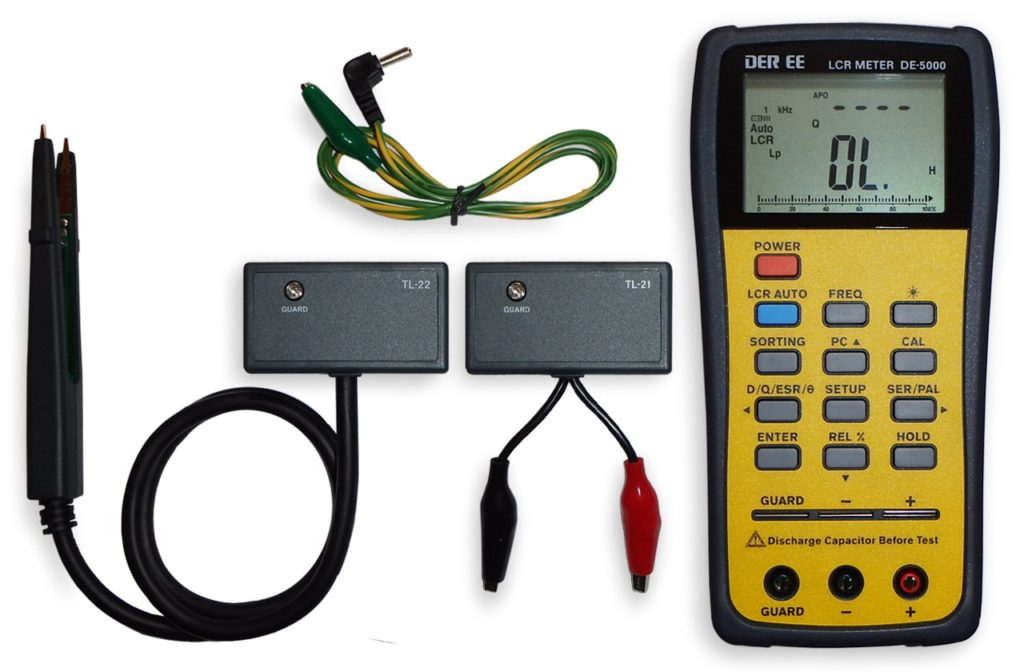
An LCR meter is a specialized electronic device used to measure three main properties: inductance (L), capacitance (C), and resistance (R). These are essential properties for many electronic components, especially in AC (alternating current) circuits. LCR meters are widely used in quality control, component testing, and circuit design.
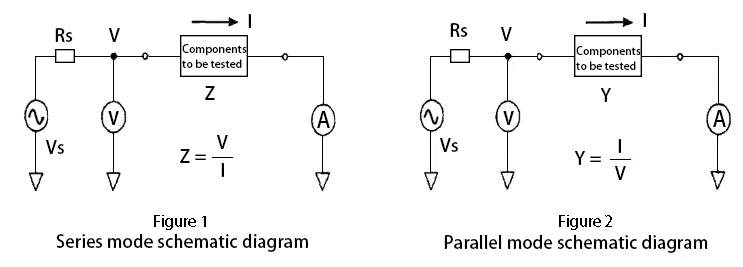
Most LCR meters apply a small AC signal to the component under test. The device then analyzes the response and calculates the value of L, C, or R. Advanced models can also measure additional parameters like dissipation factor (D), quality factor (Q), and equivalent series resistance (ESR).
LCR meters are usually found on electronics workbenches, repair shops, and in manufacturing. Unlike a standard multimeter, an LCR meter is designed for more precise and detailed analysis of passive components. This makes it a go-to tool for anyone who needs accurate measurements of inductors, capacitors, or resistors.
Key Features Of An Lcr Meter
- Measures inductance, capacitance, and resistance
- Some models offer ESR, D, and Q measurements
- High accuracy, especially for low-value components
- Usually offers multiple test frequencies (e.g., 100 Hz, 1 kHz, 10 kHz)
- Often includes both manual and auto-ranging modes
Practical Examples
Suppose you want to check if a capacitor is still good. A standard multimeter only tells you if it’s open or shorted, but an LCR meter gives you the actual capacitance value. If you’re designing a filter circuit, you’ll need to match inductor and capacitor values closely.
An LCR meter lets you do that with confidence.
Some advanced LCR meters can even test components in-circuit, saving time during troubleshooting.
What Is A Multimeter?
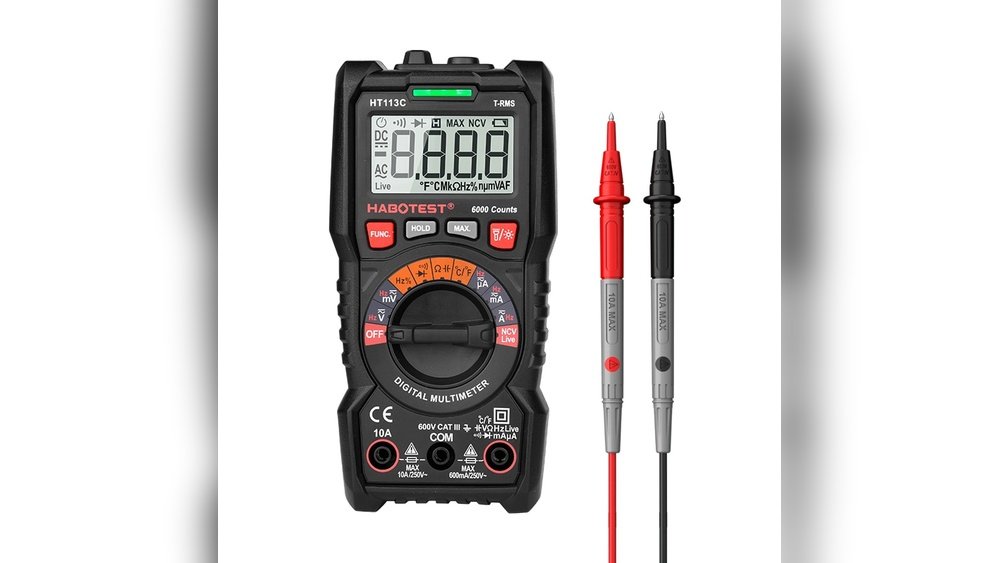
A multimeter is a versatile, all-in-one device for basic electrical measurements. Most multimeters can measure:
- Voltage (AC and DC)
- Current (AC and DC)
- Resistance
Many digital multimeters (DMMs) also offer extra features like:
- Diode testing
- Continuity check
- Capacitance (basic level)
- Frequency
- Temperature (with a thermocouple)
Multimeters are the most commonly used test tools in electronics. They are found in every toolbox, from homes to labs and factories. Multimeters are essential for general troubleshooting, safety checks, and basic circuit analysis.
Key Features Of A Multimeter
- Measures voltage, current, and resistance
- Often includes continuity and diode test
- Some models can measure capacitance and frequency
- Portable, battery-powered, and easy to use
- Available in analog and digital versions
Practical Examples
If you want to check if a battery is charged, a multimeter can measure the voltage directly. If a device is not working, you can use the continuity function to check if a wire is broken. For basic repairs and quick troubleshooting, a multimeter is the go-to tool.
Lcr Meter Vs Multimeter: Core Differences
While both instruments can measure resistance, their similarities mostly end there. Here are the main differences between an LCR meter and a multimeter:
| Feature | LCR Meter | Multimeter |
|---|---|---|
| Main Purpose | Measures L, C, R of components precisely | General-purpose electrical measurements (V, I, R) |
| Component Testing | High accuracy, especially for capacitors and inductors | Basic testing; not accurate for L and C |
| Measurement Frequency | Uses selectable AC test frequencies | DC or fixed AC frequency only |
| Advanced Parameters | Can measure ESR, Q, D, phase angle | Usually limited to basic measurements |
| Price | Generally higher ($100–$2000+) | Affordable ($10–$300) |
| Size and Portability | Often bench-top or handheld | Handheld and very portable |
Non-obvious Insight 1
Many beginners believe that the capacitance feature on a multimeter is as accurate as an LCR meter. In reality, a multimeter’s capacitance test is only suitable for quick checks and may not be reliable for low-value or high-precision components.
Non-obvious Insight 2
LCR meters can measure component values at different frequencies, which is critical because capacitance and inductance can change with frequency. Multimeters lack this feature entirely, leading to less accurate or misleading results in some circuits.
Measurement Accuracy: How They Compare
Accuracy is one of the most important differences between these two instruments. Let’s look closer at how each performs in practice.
Lcr Meter Accuracy
LCR meters are built for precision. Most quality LCR meters offer accuracy within 0. 1% to 2% for resistance, capacitance, and inductance. They use AC signals at multiple frequencies, which helps avoid errors caused by things like leakage current or stray capacitance.
For example, a typical LCR meter can measure a 100 nF capacitor with a tolerance of ±0. 2 nF at 1 kHz. This is extremely useful in manufacturing or repair settings, where knowing the exact value is crucial.
Multimeter Accuracy
Multimeters are designed for general-purpose use, so their accuracy is lower. A good digital multimeter might offer 0. 5% accuracy for voltage and resistance. When it comes to capacitance, the tolerance is often much wider (±2% to ±10%), and many cannot measure inductance at all.
This means that for detailed component testing, a multimeter can give a rough estimate but not a precise value.
Example Comparison
Suppose you have a capacitor marked 47 µF. An LCR meter might show 46. 8 µF, confirming it is within tolerance. A multimeter might read anywhere from 45 µF to 50 µF, or sometimes not measure at all if the value is out of its range.
What Can Each Tool Measure?
Understanding the measurement capabilities helps you decide which instrument you really need.
Lcr Meter Measurement Capabilities
- Inductance (L): Measures a wide range, from microhenries (µH) to henries (H)
- Capacitance (C): Measures from picofarads (pF) to farads (F)
- Resistance (R): Accurate, especially for small values (milliohms)
- ESR (Equivalent Series Resistance): Useful for analyzing capacitors’ health
- Quality Factor (Q), Dissipation Factor (D): Important for component quality analysis
- Phase Angle: Advanced models
Multimeter Measurement Capabilities
- Voltage (V): AC and DC, usually up to 1000V
- Current (I): AC and DC, up to 10A or more
- Resistance (R): Up to several megaohms (MΩ)
- Continuity and Diode Test: Audible beep for circuit checks
- Capacitance: Basic, often limited to 2 µF – 2000 µF
- Frequency: Some models
Not all multimeters include capacitance or frequency features. Inductance is almost never available on standard models.
Data Table: Measurement Ranges
Here’s a quick look at the measurement ranges of typical models:
| Measurement | LCR Meter Range | Multimeter Range |
|---|---|---|
| Inductance | 0.1 µH – 10 H (or more) | Not available |
| Capacitance | 0.01 pF – 100 F | ~2 nF – 2 mF (less precise) |
| Resistance | 0.01 Ω – 100 MΩ | 0.1 Ω – 40 MΩ |
| Voltage | Not typical | 0.1 mV – 1000 V |
| Current | Not typical | 0.1 µA – 10 A |
Use Cases: When To Use An Lcr Meter
LCR meters shine in situations where you need detailed information about passive components.
Common Lcr Meter Applications
- Component Quality Control: Manufacturing lines use LCR meters to check that capacitors, inductors, and resistors meet specification.
- Repairing Electronics: Quickly identify faulty capacitors or coils without desoldering.
- Design and Prototyping: Fine-tune filter circuits, oscillators, and resonators.
- Educational Labs: Teaching about AC circuit properties and component behavior.
- ESR Testing: Diagnose “bad cap” problems in power supplies and audio equipment.
Real Example
Suppose you repair audio amplifiers. A common issue is “capacitor plague,” where electrolytic capacitors fail but do not look damaged. With an LCR meter, you can measure the ESR and spot failing capacitors before they cause bigger problems.
Use Cases: When To Use A Multimeter
Multimeters are ideal for general electrical troubleshooting.
Common Multimeter Applications
- Checking Power Supplies: Verify voltage and current at various points.
- Testing Batteries: Measure battery voltage to check charge or health.
- Finding Broken Wires: Continuity test for open circuits.
- Home Repairs: Check wall outlets, switches, and fuses.
- Automotive Work: Diagnose electrical faults in cars and motorcycles.
- Quick Capacitance Checks: Some multimeters can give a rough value for large capacitors.
Real Example
If your desk lamp won’t turn on, you can use a multimeter to check the outlet, the lamp’s switch, and the wiring. You don’t need an LCR meter for this job—just a reliable multimeter.
Advantages And Disadvantages
Each tool has unique strengths and weaknesses.
Lcr Meter: Advantages
- High accuracy for L, C, and R
- Measures at different frequencies
- Can analyze component quality (ESR, Q, D)
- Some models test in-circuit
Lcr Meter: Disadvantages
- Expensive compared to multimeters
- Bulky (bench models)
- Not designed for voltage/current measurements
Multimeter: Advantages
- Affordable and widely available
- Very portable
- Essential for voltage, current, resistance
- Fast for basic troubleshooting
Multimeter: Disadvantages
- Limited accuracy for capacitance
- Usually cannot measure inductance
- No advanced parameters like ESR or Q
Price Comparison And Value For Money
Price is an important factor for most users. Both tools come in a wide range of prices, but their value depends on your needs.
Lcr Meter Price Range
- Entry-level handheld: $80–$200 (suitable for hobbyists)
- Benchtop professional: $300–$2000+ (for labs, industry)
- Used/refurbished models: Sometimes available for less
Multimeter Price Range
- Basic analog models: $10–$30
- Digital meters: $20–$150 (good for most users)
- Advanced meters: $150–$300+ (with data logging, True RMS, etc.)
Which Offers Better Value?
If you only need to measure voltage, current, and resistance, a multimeter is the better value. If you deal with component-level testing or design, an LCR meter’s extra cost is justified by its advanced measurement features.
How To Choose: Key Factors To Consider
If you’re trying to decide which tool to buy, focus on these factors:
- Your Typical Projects: Are you mostly fixing appliances, or designing circuits?
- Required Measurements: Do you need accurate L and C values, or just V and I?
- Budget: LCR meters cost more, but may be necessary for precision work.
- Portability: Do you need a bench tool or something for field use?
- Advanced Features: Consider ESR, Q, D, and test frequencies.
- Brand and Support: Choose reputable brands for accuracy and service.
Common Buyer Mistakes
- Assuming all multimeters measure capacitance and inductance: Many do not, and those that do are often inaccurate.
- Overpaying for features you won’t use: Buy what matches your actual needs.
- Ignoring test frequency: For LCR meters, more frequencies give more accurate and useful results.

Lcr Meter Or Multimeter: Which Should You Buy?
Here’s a summary to help you decide:
- Choose a multimeter if you want a general-purpose tool for electrical work, battery testing, and home or car repairs.
- Choose an LCR meter if you need to test, match, or select capacitors, inductors, or resistors with high precision.
- Many professionals own both, using each as needed.
Advanced Features: What To Look For
If you’re buying an LCR meter, consider these features:
- Multiple test frequencies: More frequencies = more accurate measurements.
- ESR and D/Q measurements: Useful for analyzing capacitors and inductors.
- Data logging: Save and review measurements.
- PC connectivity: Export data for reports.
- In-circuit testing: Some models can measure without desoldering.
For multimeters:
- True RMS measurement: For accurate AC readings.
- Auto-ranging: Faster and safer.
- Backlit display: For dark environments.
- Durability: Drop-proof and water-resistant designs.
Practical Tips For Using Lcr Meters And Multimeters
- Zero before measuring: On LCR meters, always zero the leads before measuring small values.
- Discharge capacitors: Before measuring, make sure capacitors are fully discharged.
- Avoid in-circuit measurements unless your device supports it.
- Check battery level: Low batteries can cause inaccurate readings.
- Use proper test leads: For small values, high-quality leads reduce errors.
Future Trends: Where Are These Tools Heading?
Test instruments are evolving rapidly. Here’s what to expect:
- Smart meters: Some new devices combine LCR and multimeter functions.
- Wireless connectivity: Bluetooth and Wi-Fi for remote monitoring.
- Miniaturization: More powerful handheld models.
- Integration with smartphones: Apps for data analysis and logging.
If you want to stay ahead, keep an eye on product announcements from leading brands like Fluke, Keysight, and Extech.
Frequently Asked Questions
What Is The Main Difference Between An Lcr Meter And A Multimeter?
The main difference is their purpose and measurement accuracy. An LCR meter specializes in accurately measuring inductance, capacitance, and resistance, often with advanced features like ESR and multiple test frequencies. A multimeter is a general-purpose tool for measuring voltage, current, and resistance, with only basic L and C functions (if any).
Can A Multimeter Replace An Lcr Meter?
No, a multimeter cannot fully replace an LCR meter. While some multimeters can measure capacitance, their accuracy is low, and most cannot measure inductance at all. For detailed component analysis, you need an LCR meter.
Why Do Lcr Meters Use Different Test Frequencies?
LCR meters use different frequencies because component values can change with frequency. For example, a capacitor’s measured value may be different at 100 Hz versus 1 kHz. Multiple frequencies let you measure components as they behave in real circuits.
Are Lcr Meters Worth The Extra Cost?
If you work with electronics design, repair, or quality control, LCR meters are worth the investment for their accuracy and advanced features. For basic home or automotive work, a multimeter is enough.
Can I Damage A Component With An Lcr Meter Or Multimeter?
Both tools are generally safe, but you should always discharge capacitors before testing and avoid applying voltage to sensitive components. Always read the manual to prevent accidental damage.
For more details on test instruments, you can also visit the LCR meter Wikipedia page.
Choosing the right tool can make your work easier, safer, and more accurate. Whether you’re building, repairing, or learning, understanding the difference between an LCR meter and a multimeter ensures you get the results you need every time.
As an Amazon Associate, We earn from qualifying purchases