
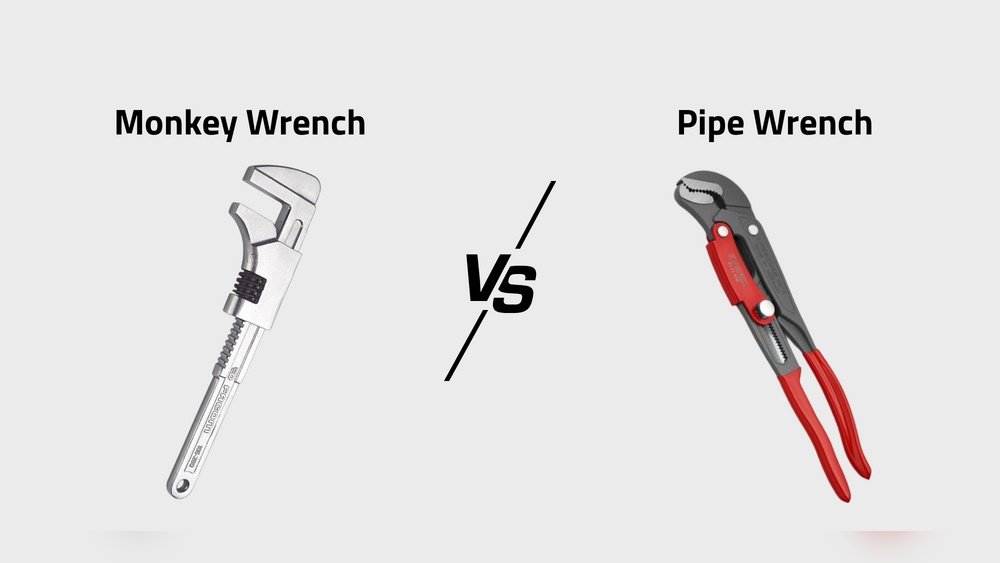
A wrench is one of the most common hand tools in any toolkit, but not all wrenches are the same. If you have ever worked with plumbing or heavy-duty pipes, you have probably seen both monkey wrenches and pipe wrenches. They may look similar at first glance, but their design, uses, and strengths are quite different. Choosing the wrong tool can damage materials, slow down your work, or even cause injuries. This article will help you understand the real differences between a monkey wrench and a pipe wrench, so you can make the right choice for your next job.
What Is A Monkey Wrench?
The monkey wrench is a classic hand tool that has been around since the 19th century. It is a type of adjustable wrench with smooth jaws and a straight handle. The jaws can be widened or narrowed by turning a screw mechanism near the handle.
Monkey wrenches were once a standard tool for mechanics, carpenters, and even early automobile workers. They are made to grip flat-sided objects, like nuts and bolts, instead of round pipes.
The name “monkey wrench” has an unclear origin. Some say it comes from the tool’s “monkey face” appearance when open. Others believe it was named after Charles Moncky, who is sometimes credited with inventing the wrench, but this story is likely a myth.
What Is A Pipe Wrench?
The pipe wrench is designed for a very different purpose. It was invented in 1869 by Daniel Stillson, a mechanic from Massachusetts. The pipe wrench has a distinctive design: it features two serrated, or toothed, jaws, and the upper jaw is attached to a spring-loaded pivot.
This wrench is made to grip and turn round metal pipes. The teeth bite into the pipe’s surface, giving you extra grip. As you apply force, the jaws tighten, which reduces slippage and makes it easier to turn stubborn pipes.
Pipe wrenches come in many sizes, from small hand tools to giant wrenches for industrial pipes. The most common type is the Stillson wrench, but there are also chain, strap, and end pipe wrenches for special needs.
Key Design Differences
At a glance, the monkey wrench and pipe wrench might look similar. But if you look closely, their key design features are quite distinct.
| Feature | Monkey Wrench | Pipe Wrench |
|---|---|---|
| Jaw Shape | Smooth, flat | Serrated, angled |
| Jaw Movement | Parallel to handle | Upper jaw pivots |
| Grip Type | Flat surfaces | Round pipes |
| Material Contact | Does not mar surfaces | May leave teeth marks |
| Handle Design | Straight, heavy | Often curved, sometimes with grip |
Non-obvious Insight: Jaws And Damage
Many beginners think both wrenches can be used interchangeably. However, the smooth jaws of a monkey wrench are specifically made to avoid damaging flat surfaces. The serrated jaws of a pipe wrench are aggressive—they will almost always leave marks on whatever you are turning.
When Should You Use A Monkey Wrench?
The monkey wrench is best for mechanical or construction work where you need to turn nuts, bolts, or other flat-sided objects. Here’s when you should reach for a monkey wrench:
- Adjusting large bolts and nuts: Monkey wrenches can handle large sizes, which is useful for old machinery or heavy construction.
- Working with soft metals: If you’re dealing with brass, copper, or aluminum, the smooth jaws won’t scratch or deform the surface.
- Flat-sided fittings: Use a monkey wrench on square or hex-shaped fittings—never on round pipes.
- Antique restoration: Many vintage tools and vehicles were built with large nuts and bolts. A monkey wrench is often a safer choice for these jobs.
While the monkey wrench is versatile, it’s less common today because other adjustable wrenches (like the Crescent wrench) are lighter and easier to use. Still, it remains valuable for heavy-duty tasks.
Practical Tip
If you are working on an old car, steam engine, or farm equipment, keep a monkey wrench in your toolbox. Sometimes, nothing else will fit large, flat fasteners.
When Should You Use A Pipe Wrench?
A pipe wrench is the tool of choice for most plumbing jobs. It is made to turn and hold pipes and pipe fittings. Here are the best situations to use a pipe wrench:
- Turning threaded pipes: The pipe wrench grips round metal pipes tightly, even if they are slippery or stuck.
- Loosening rusted pipes: The sharp teeth dig in, giving you extra leverage and preventing slips.
- Tightening pipe joints: When connecting or disconnecting plumbing, a pipe wrench is essential.
- Working on iron or steel pipes: These tough metals can handle the wrench’s teeth without serious damage.
However, pipe wrenches are not suitable for nuts, bolts, or fittings with flat sides. The teeth will slip or cause damage.
Non-obvious Insight: Pipe Wrench Size Matters
Many beginners buy only a medium-sized pipe wrench. In reality, you should have at least two sizes: one for holding the pipe and one for turning. Using two wrenches at once gives you better control and prevents twisting or bending the pipes.
Pros And Cons Of Monkey Wrench
Understanding the strengths and weaknesses of the monkey wrench will help you decide if it’s right for your work.
| Pros | Cons |
|---|---|
| Does not damage flat surfaces | Heavy and bulky |
| Handles large nuts and bolts | Not good for round pipes |
| Simple to adjust | Less grip compared to pipe wrench |
| Durable for heavy-duty work | Can slip if not tightened well |
Example
If you are fixing a large, square-headed bolt on an old water pump, a monkey wrench will let you grip tightly without crushing the corners.
Pros And Cons Of Pipe Wrench
Pipe wrenches are powerful, but they also have limitations you should understand.
| Pros | Cons |
|---|---|
| Excellent grip on round pipes | Leaves teeth marks |
| Works well on stuck pipes | Not for nuts or bolts |
| Many sizes available | Can crush thin-walled pipes |
| Easy to adjust jaw size | Heavier models can be tiring |
Example
When replacing a rusted steel pipe under a kitchen sink, a pipe wrench will bite into the pipe and allow you to turn it, even if it is corroded or oily.
Common Mistakes And How To Avoid Them
Many users—especially beginners—make mistakes when choosing or using these wrenches. Here’s what to watch out for:
- Using a pipe wrench on nuts or bolts: This will likely strip or round off the corners, making the fastener useless.
- Using a monkey wrench on pipes: The smooth jaws will slip, and you may hurt your knuckles or damage the pipe.
- Applying too much force: Both tools can break or deform materials if you apply more force than necessary.
- Not adjusting the wrench properly: If the jaws are not tight, you can slip and lose control.
- Using a single wrench: For plumbing, always use two wrenches—one to hold and one to turn.
Non-obvious Insight: Tooth Wear
Pipe wrenches depend on sharp, clean teeth. Over time, the teeth can dull or fill with debris, which reduces grip. Check and clean the teeth regularly. If they are very worn, replace the jaw.

Side-by-side Comparison
To make things even clearer, here’s a direct comparison of monkey wrench vs pipe wrench in various categories:
| Category | Monkey Wrench | Pipe Wrench |
|---|---|---|
| Best Use | Nuts, bolts, flat fittings | Metal pipes, round fittings |
| Jaw Type | Smooth, parallel | Serrated, angled |
| Surface Damage | Minimal | Likely (teeth marks) |
| Common Sizes | 10–24 inches | 8–48 inches or more |
| Material Compatibility | Steel, brass, copper | Iron, steel |
| Availability | Becoming rare | Very common |
Different Types And Variations
Both monkey wrenches and pipe wrenches have their own variations. Knowing them can help you pick the best tool for a special job.
Monkey Wrench Variations
- Standard monkey wrench: The classic, heavy-duty model used for large nuts and bolts.
- Lightweight monkey wrench: Made with aluminum or lighter steel, easier to carry.
- Antique/collectible monkey wrench: Some old wrenches are valuable to collectors.
Pipe Wrench Variations
- Stillson wrench: The original, most common pipe wrench.
- Offset pipe wrench: Jaws are angled for hard-to-reach places.
- Chain pipe wrench: Uses a chain instead of jaws for large pipes.
- Strap wrench: Uses a fabric or rubber strap, great for polished pipes or delicate finishes.
- End pipe wrench: Jaws at the end for close-quarters work.
Practical Example
If you need to turn a large, painted pipe without damaging the paint, use a strap wrench. For a rusted pipe behind a water heater, an offset pipe wrench can reach where straight wrenches cannot.
Materials And Build Quality
The quality of the wrench matters for safety and performance.
- Monkey wrenches are usually made from heavy forged steel. Older models can weigh several pounds.
- Pipe wrenches are made from cast iron or aluminum. Aluminum versions are lighter but just as strong.
The adjustment mechanisms must be smooth and solid. Cheap wrenches may slip or break, which is dangerous.
Non-obvious Insight: Handle Length
Longer handles give more leverage but can be harder to control. For tight spaces, a shorter handle is safer, even if it means using more force.
Price Range And Availability
You can find both types of wrenches at hardware stores, but pipe wrenches are much more common today.
- Monkey wrenches: Prices range from $20 to $80 for new models. Antique or collectible versions can cost much more.
- Pipe wrenches: Small sizes start at $15. Large, professional models can cost $100 or more.
Quality brands include Ridgid, Crescent, and Bahco. Always check reviews and buy from trusted sellers.
Which Wrench Should You Buy?
If you are building your tool collection, here’s my advice:
- For plumbing and pipe work, get at least two pipe wrenches in different sizes.
- For machinery or restoration, add a monkey wrench for large fasteners.
- For general home repairs, you may use an adjustable wrench (Crescent) more often than a monkey wrench, but a pipe wrench is still essential for plumbing emergencies.
Common Buyer Mistakes
- Buying only the cheapest wrench: Low-quality tools can fail under pressure.
- Ignoring handle length: Too long is awkward; too short gives less power.
- Not checking jaw condition: Worn or damaged jaws reduce grip and safety.
- Not thinking about space: Choose a wrench size that fits your work area.
How To Use Each Wrench Safely
Safety is often overlooked, but both tools can be dangerous if not used correctly.
Safe Use Of A Monkey Wrench
- Adjust the jaws until they fit snugly on the nut or bolt.
- Keep your hand away from the moving jaw to avoid pinching.
- Pull, don’t push, to avoid losing control.
- Do not use a cheater bar (pipe for extra leverage)—it can break the wrench.
Safe Use Of A Pipe Wrench
- Place the wrench so the force tightens the jaw around the pipe.
- Use two hands for better control, if possible.
- Do not overtighten—this can crush the pipe.
- Clean the teeth regularly to maintain grip.
- Wear gloves if working with oily or rusty pipes.

Real-world Scenarios
Let’s look at a few examples where the choice matters:
- Replacing a steel water pipe: Always use a pipe wrench, preferably two (one to hold, one to turn).
- Tightening a large square nut on an old press: Use a monkey wrench to avoid damaging the edges.
- Fixing a leaking sink trap: Pipe wrenches are best, but for plastic pipes, use a strap wrench to prevent cracks.
- Building a metal sculpture with threaded rods: Monkey wrenches are perfect for large nuts.
- Loosening a garden hose stuck on a spigot: A pipe wrench can help, but protect the hose fitting with a cloth to avoid teeth marks.
Maintenance And Care
Taking care of your wrenches will make them last for years.
- Clean after use: Wipe off dirt, grease, and rust.
- Lubricate moving parts: Use light oil to keep the adjustment screw smooth.
- Store dry: Moisture causes rust and weakens the tool.
- Check for wear: Replace jaws or the entire wrench if parts become loose or teeth are worn down.
Modern Alternatives
Today, there are many types of adjustable wrenches. The Crescent wrench (adjustable spanner) is more common than the monkey wrench for most jobs. For plumbing, the pipe wrench remains unbeatable for metal pipes, but strap wrenches and locking pliers (like Vise-Grips) are sometimes used for special tasks.
For more details on wrench types, see this Wikipedia article.
Frequently Asked Questions
What Is The Main Difference Between A Monkey Wrench And A Pipe Wrench?
The main difference is the jaw design and what they grip. A monkey wrench has smooth jaws for flat-sided nuts and bolts. A pipe wrench has serrated jaws that grip round pipes tightly.
Can I Use A Pipe Wrench On Bolts Or Nuts?
No, using a pipe wrench on bolts or nuts will likely damage them. The teeth are designed for pipes and will round off the corners of nuts and bolts, making them unusable.
Why Does My Pipe Wrench Slip Sometimes?
Slipping usually means the teeth are worn, dirty, or the wrench is not adjusted properly. Clean the jaws and make sure the wrench is tight before applying force. Replace the jaw if the teeth are very worn down.
Which Wrench Is Better For Plumbing?
For most plumbing jobs with metal pipes, the pipe wrench is the best tool. For plastic pipes, use a strap wrench to avoid crushing or marking the pipe.
Are Monkey Wrenches Still Used Today?
Monkey wrenches are less common today, replaced by lighter and more versatile adjustable wrenches. However, they are still used in restoration work, heavy equipment maintenance, and by collectors of vintage tools.
A good understanding of both the monkey wrench and pipe wrench will help you work faster, safer, and with better results. The right tool makes all the difference, so choose wisely—and take care of your wrenches so they will take care of you for years to come.
As an Amazon Associate, We earn from qualifying purchases