
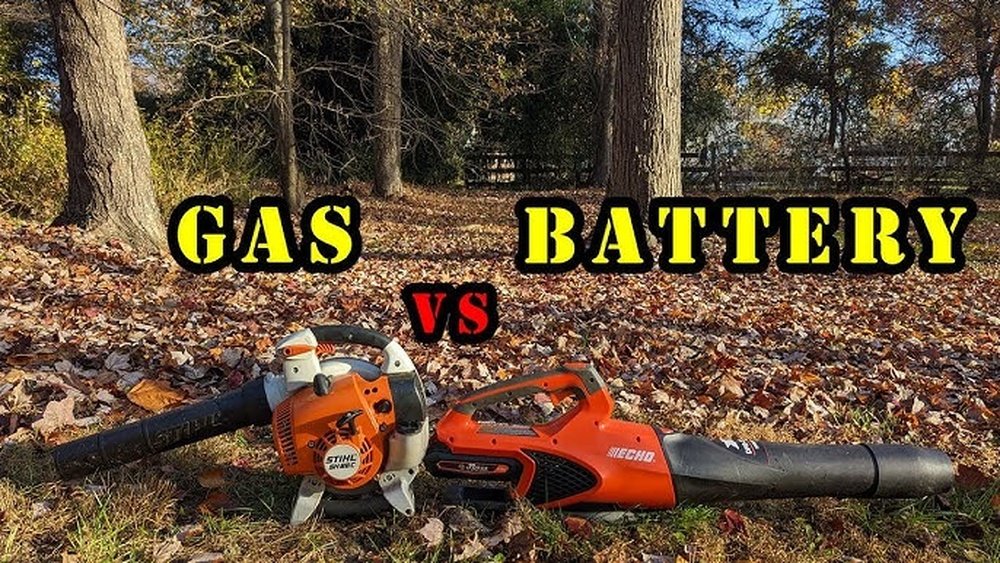
Choosing between a gas and battery leaf blower can be tricky. Both types clear leaves and debris, but their features, costs, and performance are very different. If you want to keep your yard clean, knowing these differences will help you pick the right machine for your needs.
This guide breaks down everything you need to know, from power and runtime to noise, costs, and environmental impact. Whether you care about speed, convenience, or just want a tool that’s easy to handle, you’ll find clear answers here.
How Gas Leaf Blowers Work
Gas leaf blowers use small engines powered by gasoline (sometimes mixed with oil). When started, the engine spins a fan at high speed, pushing air out through a nozzle. This strong air stream moves leaves, grass clippings, and even small sticks.
Most gas blowers have a pull-cord start, similar to a lawn mower.
There are two main types:
- 2-stroke engines: Lighter, but require a mix of gas and oil.
- 4-stroke engines: Heavier, but use straight gasoline and are a bit quieter.
Gas blowers are available as handheld or backpack models. Backpack versions are popular for large yards because they are more powerful and easier to carry for long periods.
How Battery Leaf Blowers Work
Battery-powered leaf blowers use an electric motor fueled by a rechargeable battery, usually lithium-ion. These motors spin a fan, just like gas models, but they are much quieter. You turn them on with a simple button or trigger—no pull cords needed.
Most modern battery blowers use 40V, 56V, or even 80V batteries for more power. They can be handheld or backpack style, but the handhelds are more common. Battery size and motor efficiency control how long the blower runs before you need to recharge.

Comparing Power And Performance
One of the first things people ask is, “Which one is stronger?” Power is measured in two main ways:
- CFM (Cubic Feet per Minute): How much air comes out.
- MPH (Miles per Hour): How fast the air moves.
Gas leaf blowers usually offer higher CFM and MPH. Many gas models produce 400–700 CFM and 150–250 MPH. This means they move more debris, especially wet leaves and small branches. Some backpack gas blowers for professionals reach even higher levels.
Battery blowers have improved a lot. Good models now reach 300–600 CFM and 90–180 MPH. For regular yards and dry leaves, this is usually enough. However, very thick or wet debris might still need gas-level power.
Example: Clearing Wet Leaves
Wet leaves are heavy and stick to the ground. Gas blowers with 600+ CFM can move these more easily. Most battery blowers will struggle unless they are high-end models with big batteries.
Runtime And Refueling
How long can you use each type before stopping? Here’s what you should know:
- Gas blowers: Can run as long as you have fuel. A full tank may last 30–90 minutes. You can refill and keep going.
- Battery blowers: Run for 15–60 minutes on a charge, depending on the battery size and speed setting. If you have extra batteries, you can swap them out for longer jobs.
Swapping batteries is fast, but charging takes 30 minutes to several hours. For very large yards, you may need extra batteries to finish in one go.
| Blower Type | Average Runtime | Refueling/Recharge Time |
|---|---|---|
| Gas | 30–90 min per tank | 1–2 min to refill |
| Battery | 15–60 min per charge | 30–120 min to recharge |
Non-obvious insight: Many users forget that using a blower on the highest speed drains the battery much faster—sometimes cutting runtime in half.
Noise And Neighborhood Impact
Noise is a big concern, especially in cities and suburbs. Gas blowers are loud, often reaching 85–100 decibels at the user’s ear. This is about as loud as a motorcycle and can be harmful with long use. Some areas even ban or restrict gas blowers due to noise.
Battery blowers are much quieter, usually 60–75 decibels. They are less likely to disturb neighbors or break local noise laws.
Tip: Always wear hearing protection with gas blowers. Even quieter battery models can be uncomfortable after a while.
Maintenance Needs
Gas leaf blowers need more care to stay reliable:
- Mix fuel and oil (for 2-stroke)
- Check and replace spark plugs
- Clean air filters
- Store fuel safely
Battery blowers are easier. You just charge the battery and keep the unit clean. There’s no fuel to spill, no oil to mix, and fewer parts that can break.
Hidden cost: Over years, buying oil, spark plugs, and filters for gas blowers adds up. Battery units have fewer ongoing costs, though replacing batteries after several years is likely.
Portability And Weight
How Heavy And Easy To Carry Is Each Type?
- Gas handheld blowers: Usually 8–12 lbs
- Gas backpack blowers: 15–25 lbs
- Battery handheld blowers: 5–10 lbs (battery adds weight)
- Battery backpack blowers: 12–18 lbs
Battery blowers tend to be lighter, especially for handheld models. This makes them easier for anyone to use, especially for longer periods.
Non-obvious insight: Gas blowers feel heavier as you use them because fuel is sloshing around and the vibration is stronger. Battery blowers have less vibration, reducing hand fatigue.
Environmental Impact
Gas blowers burn fuel, releasing exhaust fumes and pollution. Even newer models can produce high levels of carbon monoxide, nitrogen oxides, and hydrocarbons. Studies show that a gas blower used for one hour can produce as much smog-forming pollution as driving a car for hundreds of miles.
Battery blowers are cleaner. They don’t produce local emissions, and modern batteries are more eco-friendly than in the past. However, electricity generation and battery production have their own environmental costs. Still, for most homeowners, battery blowers are the greener choice.
If you want the lowest environmental impact, look for battery blowers with Energy Star certified chargers and recycle batteries responsibly.
Cost: Initial And Long-term
Price is a big factor for many buyers. Here’s a realistic breakdown:
- Gas blowers: $120–$500+ for new models. Backpack and pro models are more expensive.
- Battery blowers: $80–$400+ for the blower. Batteries and chargers are often sold separately. Each battery costs $50–$200.
A powerful battery blower with two batteries can cost as much as a good gas model. However, battery blowers have lower ongoing costs, since you don’t need to buy fuel, oil, or as many replacement parts.
| Type | Initial Cost | Ongoing Costs (5 Years) | Notes |
|---|---|---|---|
| Gas | $120–$500 | $100–$300 | Fuel, oil, tune-ups |
| Battery | $80–$400 (plus battery/charger) | $80–$200 | Replacement battery |
Example: If you use a blower often, a battery unit with two batteries may cost less to own after a few years, despite a higher upfront price.
Ease Of Use
Battery blowers win for convenience. Starting is simple—just press a button. They’re lighter, quieter, and need almost no maintenance. This is ideal for people who want to grab the blower and go.
Gas blowers can be harder to start, especially in cold weather. Mixing fuel and pulling cords takes more effort. However, for big jobs, the power and unlimited runtime are worth it for some users.
Storage
Battery blowers can be stored anywhere safe from weather. You just remove the battery. Gas blowers must be stored with care—never indoors with fuel, and always away from flames or sparks.
When To Choose Gas Leaf Blower
A gas leaf blower is best if you:
- Have a very large yard or property
- Need to clear wet, heavy debris often
- Do long jobs where stopping to recharge is a problem
- Don’t mind extra noise and maintenance
Professional landscapers and people with large lots usually prefer gas models for their raw power and all-day runtime.
When To Choose Battery Leaf Blower
A battery leaf blower is ideal if you:
- Have a small to medium yard
- Mostly deal with dry leaves and light debris
- Want a quiet, easy-to-use tool
- Need low maintenance and easy storage
- Want to reduce pollution
Many newer battery models are now strong enough for most homeowners, even those with moderate leaf fall.
Common Mistakes When Choosing
- Ignoring runtime: Many buyers don’t check how long a battery lasts at full power. Always look for real-world runtimes, not just the “up to” numbers on the box.
- Underestimating noise: Gas blowers can be much louder than you think. If you have close neighbors, check your local rules.
- Overbuying power: For small yards, a huge gas blower is overkill. Lighter battery models are easier to use and store.
- Forgetting about battery cost: Some battery blowers are sold without a battery or charger. Always check what’s included.
- Skipping maintenance: Gas blowers need regular care. Skipping oil changes or using old fuel can cause problems.
Real-world Examples
- Suburban homeowner: Jane has a small backyard and a few trees. She chose a battery blower because it’s light, starts fast, and is quiet enough to use early in the morning. One battery covers her whole yard.
- Landscaping business: Mike’s team clears leaves from parks and large properties. They use backpack gas blowers for up to eight hours a day. The power and quick refueling keep them working all day.
- City dweller: Carlos wanted a blower for his sidewalk and small front garden. A compact battery unit does the job, and he never worries about fumes or storing gas.
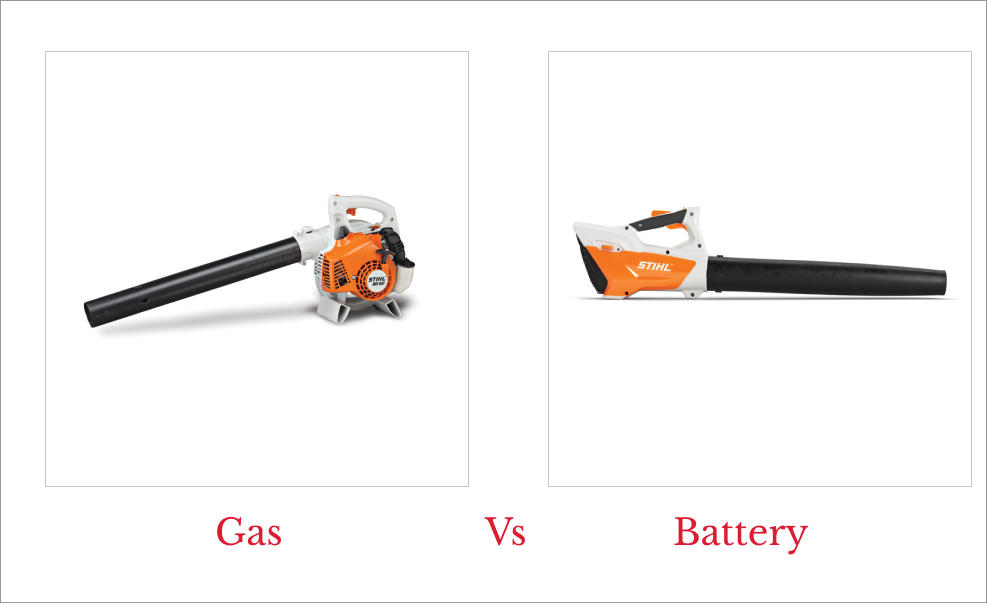
Practical Buying Tips
- Test the weight in-store, if possible. What seems light on paper may feel heavy after 20 minutes.
- Check if the battery system is shared with other tools (some brands let you use the same battery for trimmers or mowers).
- Read reviews for real-life battery life and durability.
- If you have a large property but want a battery model, budget for two or more batteries.
- Consider local rules—some towns ban gas blowers during certain hours or seasons.
Latest Innovations
Battery blowers are getting better each year. Newer models have brushless motors, which last longer and give more power. Some have turbo buttons for short bursts of extra airflow. Fast chargers can get you back to work in under an hour.
Gas blowers now use cleaner engines and better mufflers to reduce emissions and noise, but they still can’t match battery models for quiet operation.
Expert tip: If you want the best of both worlds, some brands offer hybrid systems that can run on battery or plug into an outlet for longer jobs.

Side-by-side Feature Comparison
Here’s a quick look at how the two types stack up:
| Feature | Gas Leaf Blower | Battery Leaf Blower |
|---|---|---|
| Power (CFM/MPH) | 400–700 / 150–250 | 300–600 / 90–180 |
| Runtime | 30–90 min/tank (refill to continue) | 15–60 min/charge (swap batteries) |
| Noise Level | 85–100 dB | 60–75 dB |
| Maintenance | High | Low |
| Emissions | High | None (local) |
| Weight | 8–25 lbs | 5–18 lbs |
| Initial Cost | $120–$500+ | $80–$400+ (plus battery) |
Which Leaf Blower Is Right For You?
If you have a large yard, need lots of power, and don’t mind the noise or upkeep, a gas leaf blower is still the top choice. If you have a smaller space, want something quiet and easy, or care about the environment, a battery leaf blower is likely a better fit.
Remember, no tool is perfect for every person. The best choice depends on your property size, noise rules, budget, and how much work you want to do on maintenance.
For more details on leaf blower technology and environmental effects, you can visit the Wikipedia page on leaf blowers.
Frequently Asked Questions
What Is The Main Difference Between A Gas And Battery Leaf Blower?
The main difference is the power source. Gas blowers use gasoline engines and are more powerful, but are noisier and need more maintenance. Battery blowers use rechargeable batteries, are lighter and quieter, but may have shorter runtimes.
How Long Does A Battery Leaf Blower Last On A Single Charge?
Most battery blowers run for 15 to 60 minutes per charge, depending on the battery size and how hard you use it. Using the highest speed will use up the battery faster.
Are Gas Leaf Blowers Banned In Some Areas?
Yes, some cities and neighborhoods ban or limit gas blowers because of noise and air pollution. Always check your local rules before buying a gas model.
Can I Use The Same Battery For Other Tools?
Many brands now make battery systems that work with multiple tools, like trimmers, mowers, and saws. This can save money and make yard work simpler.
Which Type Is Easier To Maintain?
Battery leaf blowers are much easier to maintain. There’s no fuel, oil, or spark plugs to worry about. Just keep the battery charged and the blower clean for best results.
Finding the right leaf blower can make your yard work faster, easier, and even a bit more enjoyable. Whether you choose gas or battery, understanding these key points will help you make a smart, long-lasting choice.
As an Amazon Associate, We earn from qualifying purchases