
Cut Off Tool Vs Angle Grinder: What’s The Real Difference?
If you work with metal, wood, or DIY projects, you’ve probably heard about cut off tools and angle grinders. Many people get confused because these tools look alike and sometimes do similar jobs. But choosing the right one can make your work faster, safer, and more accurate.
Maybe you want to cut a bolt, slice through metal, or shape a piece of tile. Which tool is better? The answer depends on more than just size or price. Both tools have special strengths, and knowing the difference helps you save money and avoid mistakes.
In this guide, you’ll learn how cut off tools and angle grinders compare. You’ll see their uses, strengths, weaknesses, and find clear advice for your needs—even if you’re a complete beginner.
What Is A Cut Off Tool?
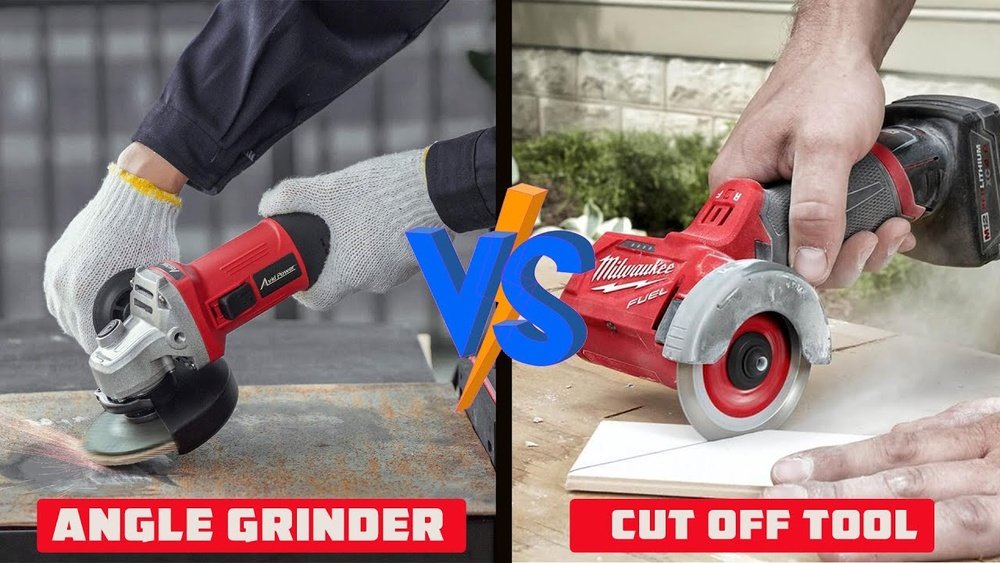
A cut off tool is a compact, handheld power tool designed mainly for cutting. It uses a small, round disc—usually 3 to 4 inches in diameter. You’ll often see cut off tools in auto shops, metal workshops, and by DIY fans who need quick, straight cuts.
Cut off tools can be powered by air (pneumatic), electricity (corded), or battery (cordless). The motor spins the disc at very high speeds (often 20,000+ RPM). But the cutting depth is shallow, and the tool is light.
Common Uses Of Cut Off Tools
- Cutting bolts and rods: Fast and clean cuts in metal.
- Slicing exhaust pipes: Auto mechanics use them for quick pipe work.
- Trimming sheet metal: Great for HVAC, roofing, or bodywork.
- Removing rusted fasteners: Where a saw won’t fit.
Most cut off tools are used for precision jobs where you need to reach tight spaces.
What Is An Angle Grinder?
An angle grinder is a versatile, powerful tool that uses larger discs—usually 4.5 inches to 9 inches. The motor sits at a right angle to the disc, which is where the name comes from. These tools are found on construction sites, in metal shops, and with serious DIYers.
Angle grinders work with many attachments, such as cutting discs, grinding wheels, sanding pads, and wire brushes. This makes them much more flexible than cut off tools.
Common Uses Of Angle Grinders
- Cutting metal, tile, and masonry: With the right disc, you can slice through almost anything.
- Grinding welds: Smoothing sharp edges or rough welds.
- Surface preparation: Removing paint, rust, or old mortar.
- Polishing and sanding: With special pads.
Angle grinders are known for their power and versatility.
Key Differences At A Glance
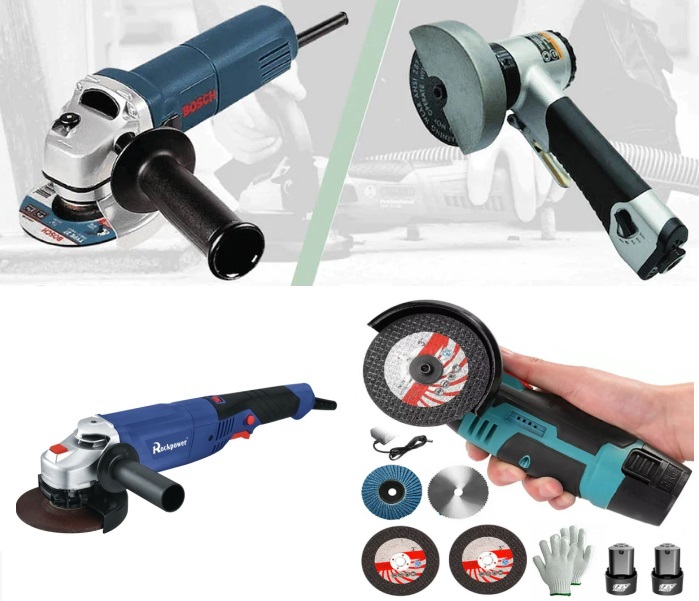
It’s easy to mix up these two tools, but they’re quite different in how they work and what they do best. Here’s a quick look at the main differences:
| Feature | Cut Off Tool | Angle Grinder |
|---|---|---|
| Disc Size | 3–4 inches | 4.5–9 inches |
| Power | Less powerful (3–6 amps typical) | More powerful (7–15 amps typical) |
| Main Purpose | Cutting only | Cutting, grinding, sanding, polishing |
| Weight | Light (1–3 lbs) | Heavier (4–10 lbs) |
| Speed (RPM) | 20,000–25,000 | 8,000–12,000 |
| Control | One hand | Two hands (usually) |
Detailed Comparison: Cut Off Tool Vs Angle Grinder
Let’s break down the differences in more detail, so you’ll know which tool fits your project.
Power And Performance
Cut off tools are compact and less powerful. They’re perfect for small, quick jobs—like cutting a bolt or trimming a piece of metal in a tight spot. Because they spin so fast, they can make clean, precise cuts in thin materials.
Angle grinders are built for heavy-duty work. They can cut, grind, and polish for hours without trouble. The higher power means you can cut thicker materials, like rebar or tile. But they’re bigger and heavier, so using them for small jobs can be tricky.
Versatility
Cut off tools are very focused. They’re made for cutting only. You can’t use them for grinding, sanding, or polishing. This is great if you want a tool that does one job well.
Angle grinders win when it comes to versatility. You can swap out different wheels and attachments for all kinds of tasks. If you want one tool for cutting, grinding, and cleaning up surfaces, an angle grinder is the better choice.
Size And Handling
Cut off tools are small and light, often used with one hand. This makes them great for working in tight spaces, overhead, or on a ladder. You can cut a bolt flush against a surface with little effort.
Angle grinders are larger and heavier. Most require two hands for safe use. This gives you more control for big jobs, but it’s harder to use in cramped spaces.
Safety
Both tools can be dangerous if not used correctly. But there are some differences:
- Cut off tools: The smaller disc and lighter weight make them less likely to kick back or cause major injury. Still, sparks and flying metal can be a problem.
- Angle grinders: More powerful, with bigger discs that can shatter if misused. Always use the safety guard and wear eye and hand protection.
Non-obvious tip: Many beginners forget to check disc compatibility. Using the wrong disc for either tool can be dangerous and damage the tool.
Cost
Cut off tools are usually cheaper, costing between $30 and $80 for a basic electric model. Pneumatic models may need an air compressor, which adds to the price.
Angle grinders range from $40 for small models up to $200 for heavy-duty ones. Attachments and discs also cost extra.
Important insight: If you already own an air compressor, a pneumatic cut off tool may be the best value for you.
When To Use A Cut Off Tool
- Working in tight spots: Under a car or inside a machine.
- Making fast, precise cuts: Cutting bolts, rods, or small pipes.
- Light material: Sheet metal, thin steel, or aluminum.
- One-handed operation: When you need your other hand free.
Example: An auto mechanic needs to remove a rusted bolt deep inside an engine compartment. A cut off tool reaches the spot easily, cuts quickly, and doesn’t damage nearby parts.
When To Use An Angle Grinder
- Heavy-duty cutting: Thick pipes, rebar, stone, or tile.
- Grinding and shaping: Smoothing welds or shaping metal corners.
- Surface prep: Removing paint, rust, or old mortar.
- Multiple jobs: When you need a tool for cutting, grinding, and sanding.
Example: A construction worker needs to cut through a steel bar, grind down a rough weld, and remove paint from a metal door. An angle grinder, with different wheels, does all three jobs.

Real-world Scenarios
Let’s look at a few real-life situations where your choice matters.
Auto Repair
Cut off tools are ideal for mechanics. They’re small enough to fit between car parts and cut bolts, brackets, or exhaust pipes without removing other parts. Angle grinders are too bulky here.
Home Renovation
If you need to cut ceramic tile, remove old mortar, or grind concrete, an angle grinder is much better. The larger disc and more powerful motor make tough jobs faster.
Metal Fabrication
Welders and metalworkers often use both tools. A cut off tool is handy for detail work or cutting small pieces. Angle grinders handle the heavy grinding and cleanup.
Pros And Cons Of Each Tool
Here’s a summary to help you decide:
| Tool | Pros | Cons |
|---|---|---|
| Cut Off Tool | – Lightweight, easy to handle – Fits tight spaces – Great for quick, clean cuts | – Limited to cutting only – Can’t handle thick materials – Not as versatile |
| Angle Grinder | – Very versatile – Cuts, grinds, sands, polishes – Handles thick materials | – Heavier, more tiring to use – Less precise in tight spots – More expensive |
How To Choose The Right Tool For Your Needs
Before you buy, ask yourself:
- What will you cut most often?
- Thin metal, bolts, or rods? Choose a cut off tool.
- Thick metal, stone, tile, or need grinding? Go for an angle grinder.
- Do you need versatility or precision?
- For multiple tasks, an angle grinder wins.
- For clean, accurate cuts in tight spaces, a cut off tool is best.
- Do you have space or weight limits?
- Working overhead or in small places? Cut off tools are safer and easier.
- What is your budget?
- Cut off tools are less expensive.
- Angle grinders cost more but do more jobs.
- Do you already own any compatible tools?
- If you have an air compressor, a pneumatic cut off tool could be the cheapest solution.
Beginner’s mistake: Many first-time users buy an angle grinder for small jobs and find it too big to control safely. Always match the tool to your main task.
Practical Safety Tips
Both tools can cause injury if used wrong. Here’s what many beginners miss:
- Check disc condition: Never use cracked or damaged discs.
- Wear safety gear: Always wear eye protection, gloves, and hearing protection.
- Let the tool stop fully: Wait for the disc to stop spinning before setting the tool down.
- Use the guard: Never remove the safety guard, especially on angle grinders.
For more safety guidance, the OSHA PPE Guide is a trusted resource.

Maintenance And Care
Good maintenance keeps your tools safe and working longer.
- Clean after each use: Remove metal dust and debris.
- Inspect discs and attachments: Replace when worn.
- Lubricate moving parts: Especially for pneumatic tools.
- Store dry and safe: Moisture can rust parts.
Which Tool Is Right For You? Quick Decision Guide
If you’re still unsure, here’s a quick reference:
- Use a cut off tool if: You need to cut metal in tight spaces, want a light tool, and only plan to cut (not grind or polish).
- Use an angle grinder if: You need to cut, grind, sand, or polish various materials, and aren’t limited by space or tool weight.
Frequently Asked Questions
What Is The Main Difference Between A Cut Off Tool And An Angle Grinder?
The main difference is purpose and versatility. A cut off tool is mainly for precise cutting in tight spaces, while an angle grinder can cut, grind, sand, and polish a wide range of materials.
Can You Use A Cut Off Wheel On An Angle Grinder?
Yes, you can use a cut off wheel on an angle grinder. But always check that the wheel fits the grinder size and speed rating. Never use a wheel meant for a small cut off tool on a large angle grinder.
Which Tool Is Safer For Beginners?
A cut off tool is usually safer for beginners because it’s lighter and less powerful, making it easier to control. However, both tools need proper safety gear and respect for their power.
What Materials Can An Angle Grinder Cut That A Cut Off Tool Cannot?
An angle grinder can cut thicker metal, stone, concrete, and tile—jobs that would be too slow or impossible for a cut off tool.
Is It Worth Owning Both Tools?
For professionals and serious DIYers, owning both tools makes sense. Each has unique strengths. For casual or small jobs, one tool is often enough.
Choosing between a cut off tool and an angle grinder is about matching the tool to your main tasks. With the right tool, you’ll work faster, safer, and get better results. Whether you’re building, fixing, or creating, knowing the difference helps you work smarter every time.
As an Amazon Associate, We earn from qualifying purchases