
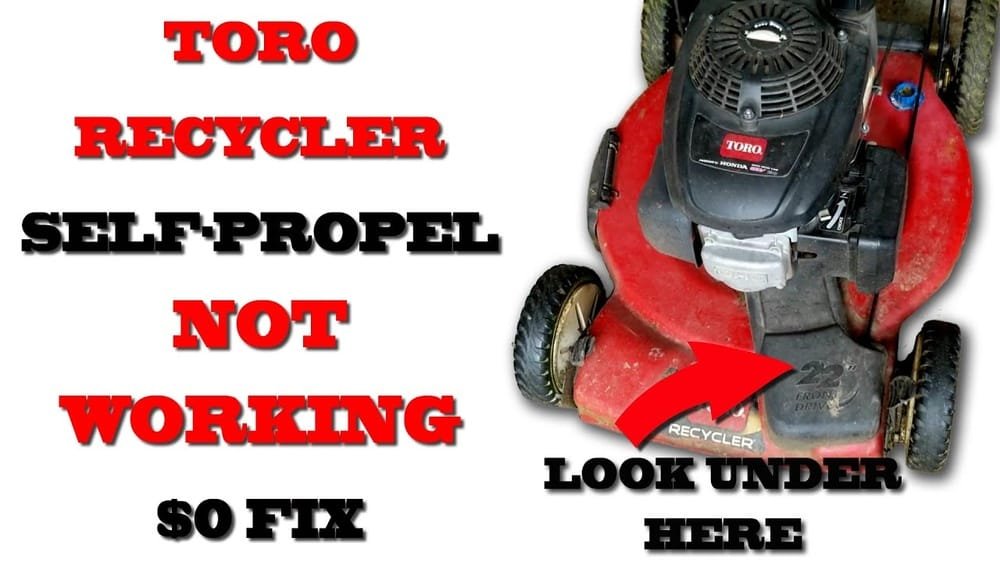
If you’ve ever pushed your Toro self-propelled lawn mower and felt it fight back—or worse, not move at all—you’re not alone. I’ve been there too. That sudden moment when the mower just won’t help, leaving you sweating and frustrated, is something I know well. In this article, I’ll walk you through everything I’ve learned about why a Toro lawn mower self propel feature might stop working, and most importantly, how you can fix it. My hope is that you’ll save time, money, and a lot of headaches by learning from my experience.
How The Toro Self Propel System Works
When I first got my Toro mower, I didn’t think much about how the self-propel feature actually worked. But once it failed, I realized understanding the basics helps a lot with troubleshooting. The self-propel system uses a drive belt, a transmission, control cables, and wheels.
When you pull the handle, a cable pulls the transmission, which turns the wheels. If any part of this chain breaks or slips, the mower won’t move by itself.
Common Reasons Toro Self Propel Stops Working
Over the years, I’ve dealt with several causes for this problem. Some are simple, some need tools, and a few require a bit of patience.
1. Drive Cable Issues
The drive cable connects the handle to the transmission. If it’s loose, stretched, or broken, the mower won’t move. I once noticed my mower’s cable had too much slack. Tightening it fixed the problem. Sometimes, though, the cable actually snaps. When that happened, I replaced it myself with a new one ordered online.
2. Drive Belt Problems
The drive belt transfers power from the engine to the wheels. If the belt slips off, wears out, or breaks, the self-propel feature stops. I remember my mower making a strange squealing noise before the belt finally gave out. Replacing the belt wasn’t hard, but it was a bit messy.
3. Transmission Failure
The transmission is the heart of the self-propel system. If it fails, the wheels won’t turn, even if the cable and belt are fine. I once had a transmission seize up because I ignored a clicking sound. I learned the hard way—check for strange noises early.
4. Worn Or Damaged Wheels
Toro mowers have gears inside the wheels. If these gears strip or fill with grass, the wheels won’t grip. I noticed my mower would move, but only on one side. Cleaning the gears and replacing a wheel solved the issue.
5. Control Handle Or Lever Problems
Sometimes, the handle or lever can bend or break. One time, my handle’s mounting bracket broke, so pulling the lever did nothing. A new bracket from the hardware store fixed it quickly.
6. Obstructions And Debris
It’s common for grass, sticks, or dirt to get stuck in the drive system. I once found a small rock jammed near the transmission. Removing it restored the self-propel function right away.
7. Engine Speed Too Low
Toro mowers need the engine running at full speed for self-propel to work. If the engine bogs down, the drive system loses power. After cleaning my air filter and spark plug, my mower ran better and the self-propel worked again.
Step-by-step Troubleshooting Guide
If your Toro self-propel isn’t working, here’s what I do, step by step.
- Check the drive cable. Squeeze the handle and watch the cable. If it’s loose or doesn’t move, adjust or replace it.
- Inspect the drive belt. Look under the mower deck for a loose or broken belt. If it’s worn or off the pulleys, replace it.
- Test the wheels. Tip the mower (spark plug wire removed for safety). Spin the wheels by hand. If they don’t turn or slip, check for gear damage or debris.
- Look at the transmission. If everything else looks fine but the wheels still don’t turn when you engage the handle, the transmission might be the problem.
- Clean out debris. Make sure no grass, sticks, or mud are clogging the drive system.
- Check engine speed. Make sure the engine is running smoothly. If not, clean or replace the air filter and spark plug.
When To Repair And When To Replace Parts
Sometimes a quick fix works, but other times you’ll need to replace a part. Here’s what I’ve learned:
- Drive cables are easy to adjust and usually cheap to replace.
- Drive belts can be replaced at home with some basic tools.
- Transmissions are expensive and harder to replace, but if you’re handy, it’s doable.
- Wheels often pop off with a simple tool. If the gears inside are stripped, just swap the wheel.
Here’s a simple comparison of repair vs. replacement cost and effort for common parts:
| Part | DIY Difficulty | Average Cost | Time Needed |
|---|---|---|---|
| Drive Cable | Easy | $15-$25 | 10-20 minutes |
| Drive Belt | Medium | $10-$20 | 20-40 minutes |
| Wheel | Easy | $12-$30 | 5-15 minutes |
| Transmission | Hard | $60-$90 | 1-2 hours |
Tools And Supplies I Always Keep On Hand
After fixing my own mower several times, I’ve learned to keep a few things ready:
- Screwdrivers (flat and Phillips)
- Socket set or wrench
- Needle-nose pliers
- New drive cable and belt (I keep spares)
- Gloves and safety glasses
Having these nearby means I can fix most problems without a trip to the store.
Mistakes I Made (so You Don’t Have To)
I’ve learned a lot from doing things the wrong way first. Here are some mistakes to avoid:
- Forgetting to disconnect the spark plug before working under the mower. Safety first!
- Not cleaning the mower deck before checking the belt. Grass can hide problems.
- Ignoring small noises. A clicking or grinding sound usually means a part is wearing out.
- Using the wrong replacement part. Always check your Toro model number.

Preventing Self Propel Problems
You can avoid many problems with a bit of routine care. I now spend a few minutes after each mow to:
- Brush off grass from the wheels and deck.
- Spray a little lubricant on the wheel gears.
- Check the cable for slack.
- Listen for new noises.
A little effort goes a long way. My mower has lasted years longer because I do this.
Signs You Need Professional Help
Most problems are easy to fix, but sometimes you need an expert. I look for these signs:
- The transmission is leaking oil or locked up.
- The engine won’t run at full speed, even after basic maintenance.
- The drive system fails right after you fix it.
In those cases, I call a local Toro service center. They have special tools and parts I don’t.
How To Find Your Toro Model Number
Getting the right parts is easier if you know your mower’s model number. Toro puts this number on a sticker, usually on the deck or behind the engine. I once ordered the wrong belt because I guessed. Now, I always double-check the model before buying anything.
Here’s a quick reference for where to look:
| Location | What to Look For |
|---|---|
| Deck (side or rear) | White sticker with numbers |
| Behind engine | Metal plate or sticker |
| Under seat (for riders) | Label or plate |
Real-world Example: My Repair Story
Last spring, my Toro mower’s self-propel just quit. The handle felt loose, and the mower wouldn’t help at all. I checked the cable first and saw it had snapped near the handle. I ordered a new one online (using my model number this time! ), and it arrived in two days.
Replacing the cable was much easier than I expected. I removed a few screws, hooked the new cable in place, and tightened everything up. The whole job took about 15 minutes. After that, my mower felt brand new again.
If I had taken it to the shop, it would have cost much more and taken days to get back. Doing it myself saved time and money—and made me feel pretty proud.
When The Problem Is Still There
Sometimes, even after you check the cable, belt, and wheels, the self-propel still won’t work. This happened to me once. The issue turned out to be a small rock wedged in the transmission gears. I found it only after removing the wheel and cleaning everything carefully.
It taught me not to overlook simple solutions. Often, the fix is just cleaning out debris or tightening a loose part.
Key Lessons I’ve Learned
- Always start with the simple checks—cable, belt, wheels.
- Don’t ignore noises or changes in how the mower feels.
- Keep your model number handy for ordering the right parts.
- Routine cleaning and care prevent most problems.
If you’re willing to get your hands a little dirty, you can fix most Toro self-propel problems yourself. It saves money and feels great.
For more technical details, I found Toro’s official support guides helpful. Here’s a link to the official Toro Customer Support page.

Frequently Asked Questions
Why Does My Toro Self-propel Mower Stop Moving Suddenly?
Usually, a loose or broken drive cable, a worn belt, or debris in the wheels can cause this. Check each part step by step. In my case, it was often the cable or belt.
How Do I Adjust The Self-propel Cable On A Toro Mower?
You’ll see an adjustment nut near the handle. Turn it to tighten or loosen the cable. I found that a small adjustment can make a big difference in how the mower feels.
Can I Replace A Toro Drive Belt Myself?
Yes, if you have basic tools. I replaced mine in about 30 minutes. Just remember to disconnect the spark plug for safety and check your model number for the correct belt.
What If The Wheels Spin But The Mower Doesn’t Move?
This usually means the wheel gears are stripped or filled with debris. I once fixed this by cleaning out grass and replacing a worn wheel.
Is It Worth Fixing The Self-propel System Or Should I Buy A New Mower?
Most repairs are cheap and easy. Unless your transmission is completely shot, I think fixing it is usually worth it. I’ve kept my Toro running strong for years with small repairs.
With the right steps and a bit of patience, you can solve most self-propel problems at home. If you ever get stuck, don’t be afraid to ask for help or check the Toro support site. Happy mowing!
As an Amazon Associate, We earn from qualifying purchases