
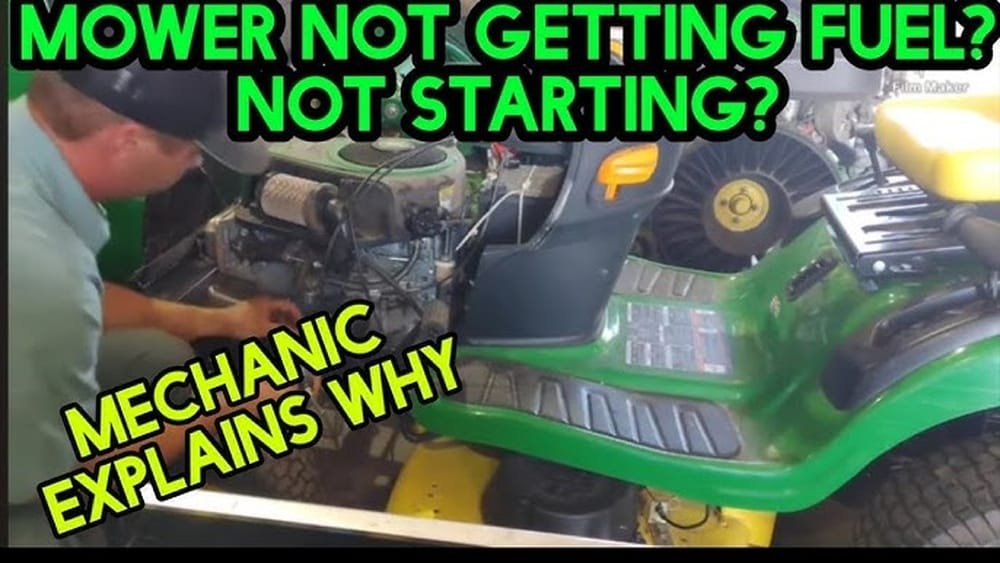
I remember the first time my lawn mower wouldn’t start. I pulled the cord again and again, but nothing happened. The engine sounded like it wanted to run, but it just wouldn’t catch. I was frustrated and a little embarrassed. My neighbor was watching, and I felt clueless. If you’re here because your lawn mower is not getting fuel, you’re not alone. I’ve been through this more than once, and I’ve learned a lot each time. Let me walk you through everything I know, in plain language, so you can get your mower running again without wasting hours (or pulling your hair out).
How A Lawn Mower Gets Fuel
Before we dive into fixing things, let’s talk about how a lawn mower actually gets fuel. This part is simple but important. When you pull the cord, the engine creates suction. This pulls gasoline from the tank, through a fuel line, and into the carburetor. The carburetor mixes the gas with air, and then the engine burns this mixture to make power. If fuel is blocked anywhere along this path, the engine can’t run.
That means if your mower isn’t getting fuel, the problem could be in the tank, fuel line, filter, carburetor, or even the gas itself. I learned the hard way that even a tiny piece of dirt can stop everything.
The Most Common Reasons A Lawn Mower Is Not Getting Fuel
I’ve fixed a lot of mowers—my own and a few for family and friends. Here are the main things I check, every single time:
- Empty gas tank (it happens more than you think)
- Bad or old gasoline
- Clogged fuel filter
- Blocked or kinked fuel line
- Dirty or gummed-up carburetor
- Faulty fuel cap (vent blocked)
- Stuck or damaged float needle
- Fuel shut-off valve closed
- Carburetor bowl not filling
- Primer bulb problems
- Air leaks in the fuel system
- Broken fuel pump (on some mowers)
- Clogged jets in the carburetor
- Water in the fuel
- Faulty or stuck choke
Let’s go through each one, with my best tips and real-life stories.
Empty Gas Tank And Bad Gasoline
I know this sounds obvious, but I’ve made this mistake myself. Sometimes I was sure there was gas left, but the tank was nearly dry. Always check the gas tank first. If you see old, dark, or smelly fuel, dump it out.
Old gas can go bad in as little as one month. I once tried to run my mower on gas that sat all winter. It just wouldn’t start. Fresh gas fixed the problem right away.
Clogged Fuel Filter
Most mowers have a small fuel filter. This filter keeps dirt and debris out of the carburetor. Over time, it can get clogged. I like to check mine at the start of every season. If it looks dirty, I replace it.
It’s cheap, and a new filter can make a big difference. The engine won’t get fuel if the filter is blocked, and you’ll just waste energy pulling the cord.
Blocked Or Kinked Fuel Line
A bent or squished fuel line can stop gas from reaching the engine. I once found a mouse nest under my mower’s deck. The little guys chewed on the fuel line, and it collapsed. I replaced it with a new piece of hose, and the mower started right up.
Always look for pinched, cracked, or leaking fuel lines.
Here’s a quick look at how fuel line problems compare to filter and carb issues:
| Problem | Symptom | Quick Fix |
|---|---|---|
| Fuel line | No fuel flow, visible damage | Replace hose |
| Fuel filter | No fuel, filter looks dirty | Replace filter |
| Carburetor | Engine sputters, won’t start | Clean carburetor |
Dirty Or Gummed-up Carburetor
If your mower sits for a while, fuel can dry up and leave sticky stuff inside the carburetor. This sticky stuff is called varnish, and it blocks the tiny passages. I once spent two hours cleaning a carburetor with a toothbrush and some carb cleaner.
It was worth it—the mower ran like new. If you’re not comfortable taking the carburetor apart, most shops will clean it for you.

Faulty Fuel Cap (vent Blocked)
This is something I learned from a friend who works on small engines. The fuel cap on your mower has a tiny hole that lets air in as fuel leaves. If this vent gets blocked, a vacuum forms, and fuel won’t flow.
Try loosening the cap slightly and starting the mower. If it starts, you need a new cap or to clean the vent. I was shocked the first time I saw this work.
Stuck Or Damaged Float Needle
Inside the carburetor, there’s a float that controls fuel flow. If the float needle gets stuck, fuel stops moving. I had this happen after running my mower on dirty gas. I had to open the carburetor and free the stuck needle. It’s a small part, but it can cause big trouble.
Fuel Shut-off Valve Closed
Some mowers have a little valve on the fuel line. This shuts off gas for storage or repair. I’ve forgotten to open mine more than once. If your mower has a fuel shut-off, make sure it’s open. It’s a simple thing, but easy to overlook.
Carburetor Bowl Not Filling
The carburetor has a small bowl that holds fuel. If it’s not filling, the engine can’t get gas. This can be caused by dirt, a stuck float, or a clogged inlet. I once tapped my carburetor gently with a screwdriver handle, and the float dropped, letting fuel in.
Sometimes a gentle tap is all it takes.
Primer Bulb Problems
Some mowers have a primer bulb that helps start the engine. If the bulb is cracked, leaking, or not working, the engine won’t get fuel. I replaced a broken primer bulb last summer, and my mower started on the first pull.
Check for cracks or stiffness, and replace if needed.
Air Leaks In The Fuel System
If there’s a leak in the fuel line or carburetor gasket, air can get in. This messes up the fuel mixture. Look for wet spots, drips, or a smell of gasoline. I once found a loose clamp on the fuel line.
Tightening it fixed the problem.
Broken Fuel Pump
Some riding mowers have a small fuel pump. If this pump fails, fuel can’t move from the tank to the engine. I haven’t had this problem myself, but a friend did. He replaced the pump, and his mower was back in action.
If you have a riding mower, keep this in mind.
Clogged Jets In The Carburetor
Inside the carburetor, there are tiny holes called jets. These jets can clog with dirt or old fuel. I had to use a thin wire and carb cleaner to clear mine. It took patience, but it worked. If you clean the jets, be gentle—they’re easy to damage.

Water In The Fuel
If water gets in the gas tank (rain, condensation, or bad storage), it can stop your mower cold. Water sinks to the bottom and blocks the carburetor. I found this out after leaving my mower outside in a rainstorm. Draining the tank and refilling with fresh gas solved the problem.
Faulty Or Stuck Choke
The choke helps start the engine by making the fuel mixture richer. If the choke is stuck closed or open, the engine can’t run right. I once had a choke lever break, and the engine would only run for a few seconds.
Check that the choke moves freely.
Here’s a handy chart for quick reference on the main causes and fixes:
| Cause | What to Check | Easy Fix |
|---|---|---|
| Old/bad gas | Smell, color | Replace with fresh fuel |
| Fuel filter | Dirty or blocked | Change filter |
| Fuel line | Kinks, leaks | Replace line |
| Carburetor | Stale smell, won’t start | Clean carb |
| Choke | Stuck lever | Free or replace |
Step-by-step: How I Troubleshoot A Fuel Issue
Let me walk you through what I actually do when my mower doesn’t get fuel. I’ve used this method many times, and it saves me time.
- Check the fuel tank. Is there enough gas? Is it fresh?
- Inspect the fuel filter. I look for dirt, water, or clogs.
- Squeeze the fuel line. If it’s soft, cracked, or smells like gas, I replace it.
- Look for leaks. I check under the mower for wet spots or drips.
- Open the fuel cap. If I hear a hiss or the mower starts, the vent was blocked.
- Prime the engine. If it has a primer bulb, I make sure it’s working.
- Check the carburetor. If the above steps fail, I remove and clean it.
This order helps me find the problem fast, and I never skip steps.
Non-obvious Tips You Should Know
Most guides skip these, but I learned them the hard way.
- Use fuel stabilizer if you store your mower over winter. This prevents gas from going bad and clogging the carburetor.
- Change your fuel filter every season even if it looks clean. Some dirt is too small to see, but it still blocks fuel.
- Never use old gas from a can that sat all winter. It can cause more problems than it’s worth.
- Label your gas can with the date you filled it. I started doing this, and now I never use old fuel by mistake.

When To Call A Pro
Most fuel problems are easy to fix. But if you’ve checked everything and your mower still won’t run, don’t be afraid to ask for help. Carburetor rebuilds, deep cleaning, or electrical issues can be tricky. I once took my mower to a shop after hours of frustration.
They fixed it in a day, and I learned a lot by watching.
Preventing Future Fuel Problems
After a few bad experiences, I now do these things every year:
- Drain the fuel tank before winter.
- Run the engine dry so no gas is left in the carburetor.
- Store my gas can away from rain and sunlight.
- Use fresh fuel every season.
- Check fuel lines for cracks or leaks at the start of mowing season.
These small steps save me from big headaches.
Useful Resources
If you want more details or repair guides, check out the Family Handyman carburetor cleaning guide. I found their step-by-step photos super helpful when I was just starting out.
Frequently Asked Questions
Why Does My Lawn Mower Start And Then Die Right Away?
This usually means your engine gets a little fuel, but not enough to keep running. I’ve fixed this by cleaning the carburetor and replacing the fuel filter. Sometimes, a blocked fuel cap vent is the reason.
How Do I Know If My Carburetor Is Clogged?
If your mower cranks but doesn’t fire, or it runs rough, the carburetor may be dirty. I check for old gas, sticky residue, or a strong fuel smell. Cleaning the carburetor often solves the problem.
Can I Use Starting Fluid If My Mower Isn’t Getting Fuel?
I’ve used starting fluid before to see if the engine will run at all. If it fires up for a second, your ignition is fine, but you have a fuel issue. Don’t use starting fluid often—it’s just for testing.
What Is The Best Way To Prevent Fuel Problems?
Always use fresh gas, add fuel stabilizer before winter, and change your fuel filter each year. These steps have saved me lots of time and money.
Is It Safe To Clean A Carburetor Myself?
Yes, if you’re careful. I always wear gloves and use carburetor cleaner in a well-ventilated area. If you’re unsure, ask a friend or take it to a shop.
I hope my experiences help you fix your own lawn mower not getting fuel. Remember, most problems are simple and easy to solve with a little patience. Good luck, and happy mowing!
As an Amazon Associate, We earn from qualifying purchases