
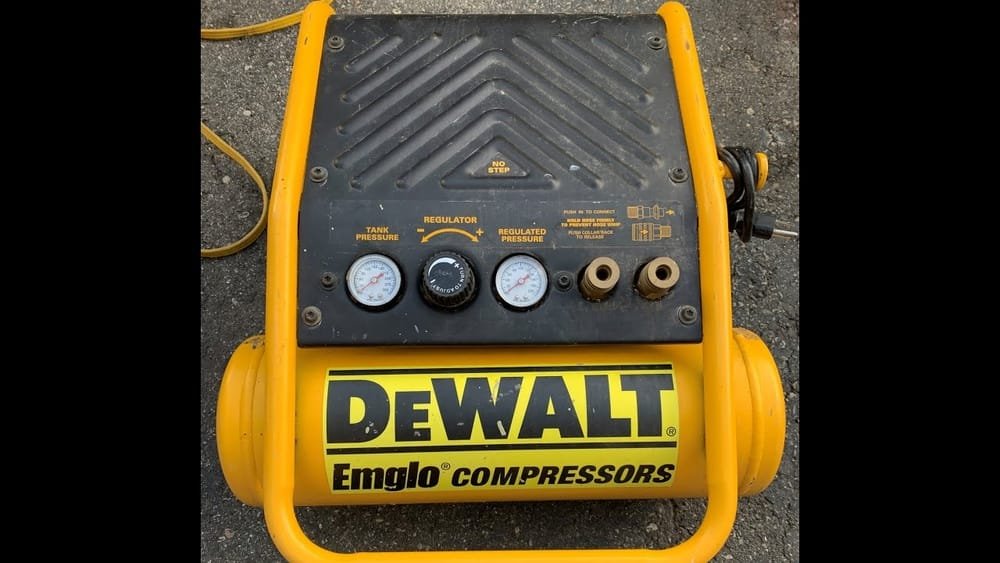
If you’ve ever had your Dewalt air compressor refuse to build pressure, you know the feeling. That mix of confusion, frustration, and maybe a little panic if you’re in the middle of a project. I’ve been there. I remember standing in my garage, waiting for the tank to fill, listening to the motor run…and run…and run. But the needle on the pressure gauge just wouldn’t move. Sound familiar? Let me walk you through everything I’ve learned about this problem, what causes it, and how I finally fixed mine. I’ll keep things easy to follow, so you won’t need to be a pro to get your compressor working again.
What Happens When Your Dewalt Air Compressor Won’t Build Pressure
The first time it happened to me, I thought maybe I just needed to wait. But after ten minutes, I realized something was wrong. The compressor would turn on, but the air tank just didn’t fill up. No pressure, no tools working, and no quick fix in sight.
When a compressor runs but doesn’t build pressure, it means air is escaping, or it’s not getting compressed right. Sometimes, the compressor shuts off after a while to avoid overheating. Other times, it just keeps going, wasting power and making noise.
I’ll break down all the causes I found, and how I tackled each one.
Common Causes For No Pressure Build-up
There’s no single reason for this issue, but I learned there are a few very common ones. Here’s what I discovered:
1. Air Leaks
Most times, air leaks are the main culprit. I once found a tiny crack in a hose that was barely visible but leaked enough air to stop any pressure from building. I’ve also had leaks at the fittings where the hose connects to the tank.
You can check for leaks by spraying a little soapy water around the connections and hoses while the compressor is running. If you see bubbles forming, there’s your leak. It sounds simple, but it took me a while to learn this trick.
2. Faulty Check Valve
The check valve keeps air from flowing back out of the tank when the compressor shuts off. If this part fails, air can escape as fast as the compressor pumps it in. I once had to remove mine and found a bit of debris stuck inside, stopping it from sealing.
The check valve is usually where the compressor’s main line connects to the tank. If you hear air hissing back into the pump after it stops, the check valve might be the issue.
3. Worn Piston Rings Or Cylinder
Inside the pump, the piston rings and cylinder create pressure. Over time, they wear out, especially if you use your compressor a lot. When this happens, air slips past the piston instead of being trapped and compressed.
I noticed my compressor getting weaker over several months before it stopped building pressure completely. Replacing the piston rings took some time, but it made a huge difference.
4. Broken Reed Or Flapper Valves
The reed valves control air flow inside the pump head. If one breaks or bends, air just cycles back and forth without building pressure. I once opened my pump head and found a broken reed valve—a cheap part, but a major headache.
5. Dirty Or Blocked Air Filter
A clogged air filter will reduce airflow into the pump. Less air going in means less air to compress. I sometimes forget to check my filter until the compressor starts acting up.
Cleaning or replacing the air filter can sometimes solve the problem right away.
6. Failing Pressure Switch
The pressure switch tells the compressor when to start and stop. If it’s faulty, your compressor may not reach the pressure it’s supposed to, or it could shut off too soon. I once replaced a faulty switch, and my compressor worked like new.
7. Loose Or Damaged Fittings
Even a slightly loose fitting can cause enough air loss to keep pressure from building. I’ve found it’s a good idea to check all connections with a wrench now and then.

How I Troubleshot My Dewalt Air Compressor
Let me share how I went step by step to find and fix the problem. I hope this helps you avoid some of the confusion I had at first.
Step 1: Listen And Look For Obvious Leaks
The first thing I did was listen for any hissing sounds. Sometimes air leaks are loud enough to hear. I checked the drain valve at the bottom of the tank, all hose connections, and around the regulator.
Step 2: Use Soapy Water
Next, I mixed some dish soap with water and sprayed it on every joint and fitting. Sure enough, bubbles formed at one of the quick-connects. Tightening it with a wrench stopped the leak. That alone fixed my problem once, but not every time.
Step 3: Check The Air Filter
I unscrewed the air filter and saw it was packed with dust and debris. After replacing it, the compressor ran quieter and built pressure faster. It’s such a simple fix, but easy to miss.
Step 4: Inspect The Check Valve
When leaks and filters weren’t the issue, I removed the check valve. I found a small piece of dirt jammed inside. After cleaning and reinstalling it, the compressor finally held pressure.
Step 5: Open The Pump Head
If nothing else works, I open the pump head to inspect the reed valves and piston rings. I once found a bent reed valve and replaced it with a new one. Another time, the piston rings were so worn, I could see scratches inside the cylinder.
Here’s a quick comparison of the most common causes and how to check for each:
| Problem | How to Check | Easy to Fix? |
|---|---|---|
| Air Leaks | Listen, use soapy water | Yes (usually) |
| Check Valve | Remove and inspect | Yes |
| Piston Rings/Cylinder | Open pump head, look for wear | No (needs parts) |
| Reed Valves | Open pump head, check if bent/broken | No (needs parts) |
| Air Filter | Remove and inspect | Yes |
| Pressure Switch | Check with multimeter | Maybe |
| Loose Fittings | Tighten with wrench | Yes |
Deeper Issues I Ran Into
Sometimes the problem isn’t obvious. I’ve had times where I fixed one thing, only to find another problem lurking. Here’s what I wish I’d known early on:
- Multiple small leaks can add up. Don’t stop after finding just one.
- Old compressors often have more than one worn part.
- Cheap replacement parts can fail fast. I learned to buy quality parts, even if they cost a bit more.
Here’s a quick look at what usually needs professional help, versus what you can fix yourself:
| DIY Fix | Pro Needed |
|---|---|
| Replace air filter | Replace cylinder or piston |
| Tighten fittings | Rebuild pump head |
| Clean/replace check valve | Electrical problems inside motor |
| Replace pressure switch | Major air tank leaks |
| Replace reed valves | Full system replacement |

Mistakes I Made (so You Don’t Have To)
I’ll admit, I made a few mistakes along the way. Here are two things I wish I’d done differently:
- Ignoring small leaks: I used to think a little hiss wasn’t a big deal. But even a tiny leak can stop the tank from building pressure.
- Delaying filter changes: I used my compressor for years before changing the air filter. That made the pump work harder and wear out faster.
Another thing: I once opened the pump head without draining the air tank. Not my smartest move! Always unplug and depressurize everything before opening up your compressor.
How To Prevent Pressure Problems In The Future
After fixing my Dewalt, I changed how I take care of it. Here’s what I do now to avoid the same problem coming back:
- Check for leaks every month with soapy water.
- Replace the air filter at least once a year (more if used a lot).
- Drain the tank after every use to prevent rust and internal leaks.
- Tighten fittings with a wrench every few months.
- Listen for new sounds—squeaks or hisses usually mean a problem is starting.
These steps take just a few minutes but have saved me a lot of headaches.

When To Call A Professional
Some fixes are easy. But if you’ve tried everything, and your compressor still won’t build pressure, it might be time for help. Signs you need a pro:
- The motor won’t run at all
- You hear grinding or metal sounds from the pump
- The tank leaks or has visible rust holes
- Nothing changes after replacing obvious parts
Don’t risk your safety. Compressed air is powerful, and a damaged tank or motor can be dangerous.
For more detailed technical info and diagrams, the official Dewalt site has great resources. You can check out Dewalt Support for manuals and troubleshooting.
Frequently Asked Questions
Why Does My Dewalt Air Compressor Run But Not Build Pressure?
Usually, this means there’s an air leak, a faulty check valve, or worn pump parts. Start by checking all connections and the air filter, then move on to the internal parts if needed.
How Do I Find Air Leaks In My Compressor?
Spray soapy water on all hose connections, fittings, and around the tank. If you see bubbles forming while the compressor runs, you’ve found a leak.
Can I Fix A Broken Reed Valve Myself?
Yes, if you’re comfortable opening the pump head. Replacement reed valves are not expensive, but make sure to follow the manual and keep track of all screws and parts.
How Often Should I Replace The Air Filter?
I recommend checking it every few months and replacing it at least once a year. If you use your compressor in a dusty area, do it more often.
What If My Compressor Still Won’t Build Pressure After Trying Everything?
If you’ve checked for leaks, replaced the filter, and checked the check valve and reed valves, but still have no luck, it’s time to call a pro. There may be a deeper electrical or motor issue.
Fixing a Dewalt air compressor that won’t build pressure can be simple, or it might take a little detective work. But with patience and the right steps, you can get your tools running again—just like I did. Good luck, and don’t be afraid to get your hands a little dirty!
As an Amazon Associate, We earn from qualifying purchases