
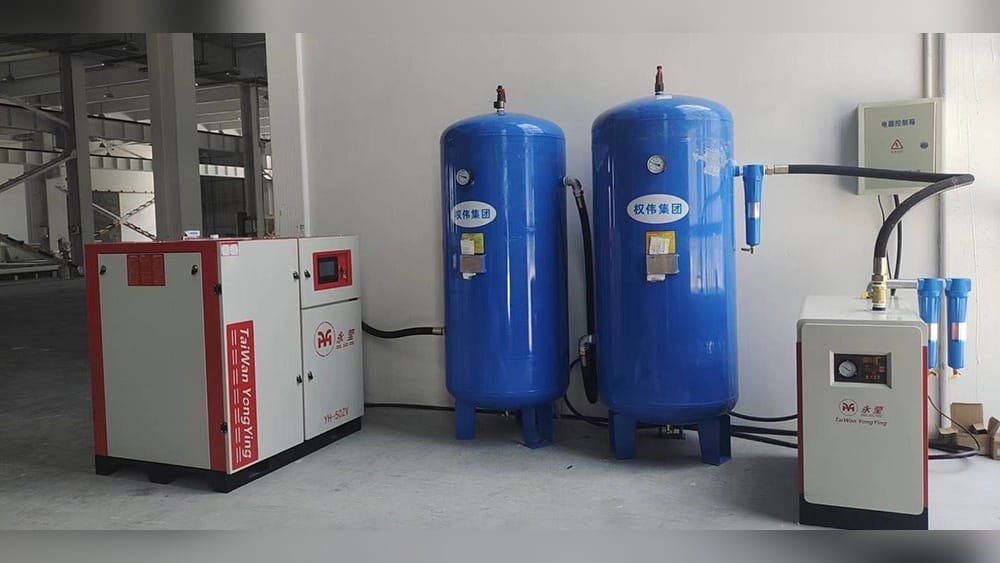
If you’re like me, you probably wondered how much power your air compressor really uses. When I first bought mine for the garage, I had no idea how many watts it needed or what that meant for my electricity bill.
I made some mistakes, learned from them, and now I want to share everything I discovered with you.
I’ll break down what affects air compressor wattage, how different sizes compare, and how to figure out what yours needs. Whether you’re planning to buy your first unit or just want to run it more efficiently, you’ll find real numbers, easy tables, and practical tips here.
I’ll even share a couple of things I wish someone had told me before I started.
What Does “wattage” Mean For Air Compressors?
Before I got hands-on with my first compressor, the word “wattage” felt confusing. Simply put, watts measure how much electrical power something uses. For an air compressor, wattage tells you how much electricity it needs to run.
Why does this matter? If your air compressor needs more watts than your outlet or generator can give, it won’t work right. Also, more watts means a higher power bill. Knowing the watts helps you plan, save money, and avoid tripped breakers or burned-out motors.
Key Factors That Affect How Many Watts An Air Compressor Uses
After using different compressors at home and at work, I noticed that wattage isn’t the same for every model. Here’s what really changes the number:
- Motor Size: Bigger motors need more power. A small pancake compressor for nail guns uses less than a big shop compressor.
- Start-Up vs Running Power: When you first turn it on, a compressor “surges” and uses more watts for a few seconds. Running watts are lower.
- Voltage and Amps: Most home units are 120V, but big ones might be 240V. Amps (current) also matter.
- Duty Cycle: If you run your compressor nonstop, it uses more power over time.
- Compressor Type: Oil-free models sometimes use less power than oil-lubed ones.
- Air Delivery (CFM & PSI): Compressors that fill tanks faster or reach higher pressures often need more power.
Many beginners miss the difference between start-up watts and running watts. I learned this the hard way when my garage breaker kept tripping. Most compressors need 2-3 times more power at start-up than during normal use.
Typical Wattage For Common Air Compressor Sizes
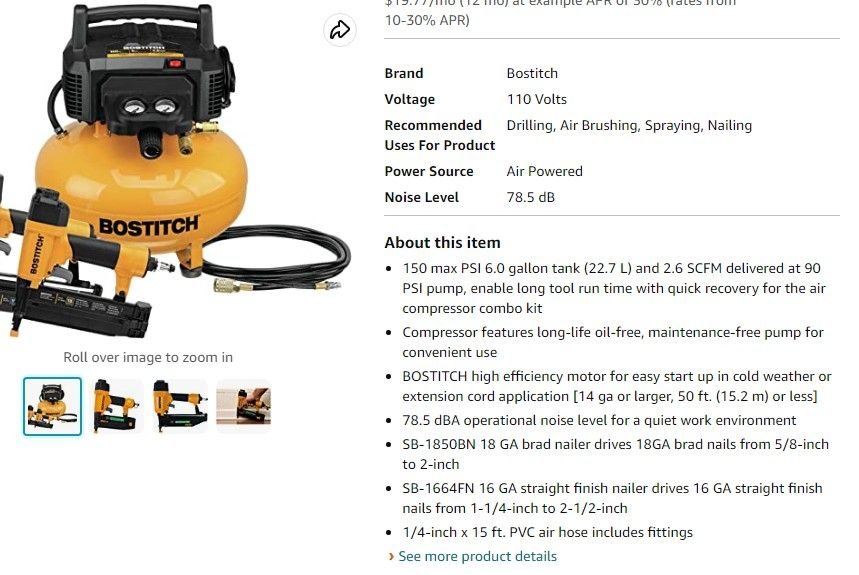
I spent a lot of time looking up specs and testing compressors with a watt meter. Here’s what I found for the most common types:
| Compressor Size | Motor (HP) | Running Watts | Start-Up Watts |
|---|---|---|---|
| Small (Pancake/Trim) | 0.5 – 1 HP | 900 – 1,200 W | 2,000 – 2,400 W |
| Medium (Hot Dog/Portable) | 1 – 2 HP | 1,200 – 2,000 W | 2,400 – 4,000 W |
| Large (Stationary) | 3 – 5 HP | 2,200 – 5,000 W | 5,000 – 11,000 W |
These are averages. Always check your actual compressor’s label or manual for the real numbers.
How To Calculate Your Air Compressor’s Wattage
If you want to know the exact watts your compressor uses, here’s what worked for me:
- Find the Amps and Voltage: Look for a sticker or plate on your compressor. It usually lists amps (A) and voltage (V).
- Use the Simple Formula: Watts = Amps × Volts
For example, if your compressor says “12A, 120V”:
12 (amps) × 120 (volts) = 1,440 Watts
Remember, this is running watts. For start-up, multiply by 2 or 3 to be safe.
Real Example
My friend’s 2 HP portable compressor says “15A, 120V”:
15 × 120 = 1,800 Watts (running)
Start-up could spike to 3,600 – 5,400 watts.
Why The Start-up Surge Matters
When I tried to use my compressor with a small generator, it wouldn’t start. I only looked at the running watts, not the start-up surge. Many air compressors need double or triple their running power for a few seconds when the motor kicks in.
If your power source can’t handle the surge, the compressor won’t work—even if the running watts are okay.
So, always check both numbers, especially if you’re using an extension cord or generator.
Comparing Popular Compressor Types By Power Use
Let’s break down the wattage for the types I’ve owned or used at work. This will help if you’re shopping or comparing models.
| Type | Typical Use | Motor HP | Running Watts | Start-Up Watts |
|---|---|---|---|---|
| Pancake | Home, nail guns, tires | 0.5 – 1 HP | 900 – 1,200 | 2,000 – 2,400 |
| Hot Dog | DIY, small tools | 1 – 2 HP | 1,200 – 2,000 | 2,400 – 4,000 |
| Twin Stack | Framing, roofing | 2 – 3 HP | 1,800 – 2,400 | 3,600 – 7,200 |
| Wheelbarrow | Contractor, jobsite | 3 – 4 HP | 2,400 – 3,500 | 5,000 – 8,000 |
| Stationary | Shop, spray painting | 5 HP+ | 4,000 – 5,000 | 8,000 – 11,000 |
Real-world Examples From My Garage
I’ve owned three air compressors. Here’s what I measured with a plug-in watt meter:
- Pancake compressor (0.8 HP, 120V): Used about 950 watts running, but spiked to 2,100 on start-up.
- Portable twin-stack (2 HP, 120V): Used 1,700 running, jumped to 3,900 at start.
- Large stationary (5 HP, 240V): Used 4,600 running, and the start-up surge hit 10,200 watts.
The difference between small and big units is huge. My old pancake compressor never tripped a breaker. The 5 HP shop unit needed a special 20A 240V circuit.
How Air Compressor Power Use Affects Your Electricity Bill
This is something I didn’t think about at first. If you use your compressor a lot, the power adds up. Here’s a simple way to estimate your monthly cost:
- Find the running wattage.
- Convert watts to kilowatts (kW): Divide by 1,000.
- Estimate your use (hours per month).
- Multiply by your local electricity rate (kWh).
For example, my portable compressor uses 1,700 watts (1.7 kW). If I run it for 10 hours a month and my electricity is $0.15 per kWh:
1.7 Kw × 10 Hours = 17 Kwh
17 Kwh × $0.15 = $2.55 Per Month
Not bad for light use. But if you have a big shop compressor and run it all day, costs can rise fast.
Mistakes I Made (so You Don’t Have To)
I learned a few lessons the hard way. Here are two big ones:
- Using a Cheap Extension Cord: My first compressor kept shutting off. I was using a long, skinny extension cord. It couldn’t handle the start-up watts. Always use a thick, heavy-duty cord, or plug the compressor straight into the wall.
- Ignoring the Circuit Limit: My 2 HP unit tripped the breaker if I ran other tools at the same time. Check what else is on your circuit. You may need to run your compressor on its own line.
How To Lower Your Air Compressor’s Power Use
If you want to save electricity, here’s what actually works:
- Keep filters and valves clean. Dirty filters make the motor work harder.
- Fix air leaks. Leaks waste power because the compressor runs more.
- Buy the right size. Don’t get a 5 HP unit if a 1 HP will do.
- Use proper pressure. Set your regulator only as high as needed.
I was surprised how much a simple leak could add to my power bill. Once I fixed a worn hose, my compressor stopped cycling so often.
How To Choose The Right Size Air Compressor For Your Power Supply
This can be tricky, but here’s what I recommend:
- Check your power supply. Most home outlets are 15A, 120V. That limits you to about 1,800 watts safely.
- Know your start-up surge. If your generator or outlet can’t handle the spike, go smaller or find a dedicated circuit.
- Balance power and need. Get a compressor just big enough for your tools, not oversized.
If you’re not sure, ask the store to plug in the compressor for you. Or use a watt meter at home. It’s better to check before you buy.
Are There Energy-efficient Air Compressors?
Yes! Some newer models use brushless motors or are rated “energy efficient.” They use less power for the same air output. I tested one at a friend’s shop and it ran smoother and quieter than my old oil-lubed model. They might cost more upfront, but they can save money over time.
Comparing Air Compressor Power Use With Other Tools
This was eye-opening for me. Here’s how my 2 HP compressor stacks up against other common garage tools:
| Tool | Average Running Watts |
|---|---|
| Air Compressor (2 HP) | 1,700 |
| Shop Vacuum | 1,200 |
| Angle Grinder | 900 |
| Space Heater | 1,500 |
| Microwave | 1,000 |
So, a medium air compressor can use as much or more power than a space heater or microwave.
Non-obvious Insights Most People Miss
From my experience, here are two things many overlook:
- Ambient Temperature Matters: If your garage is very cold or hot, the motor can draw more power. My compressor started slower on cold mornings and spiked higher watts.
- Voltage Drop Over Distance: If your compressor is far from the breaker box, long wires can reduce voltage. This makes the motor pull more amps, heating the wires and wasting power. Try to keep your compressor close to the outlet.
Where To Find Official Specs
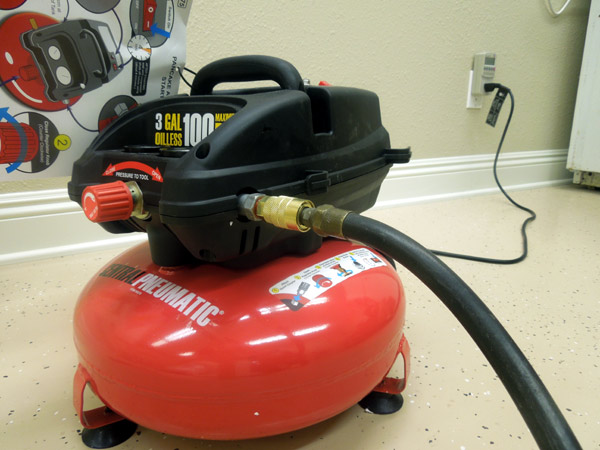
If you want to check a model before buying, most brands list amps, volts, and sometimes watts in their manuals or on their websites. For technical standards, I like to check Wikipedia for a good overview.
Frequently Asked Questions
How Do I Know What Size Generator I Need For My Air Compressor?
Add up your compressor’s running watts and multiply by 2–3 for start-up. Choose a generator that can handle at least that much surge wattage. For a 1,500W running compressor, I’d want a 4,500W generator.
Can I Run An Air Compressor On A Regular Home Outlet?
Yes, for small to medium units (up to about 1. 5 HP, 15A, 120V). Big compressors often need 20A or 240V outlets. Always check your circuit and use a heavy-duty cord.
Why Does My Compressor Trip The Breaker When It Starts?
This is usually from the start-up surge. The motor pulls more current at start than when running. You might need a dedicated circuit or a lower-power compressor.
How Much Does It Cost To Run An Air Compressor For An Hour?
Multiply the running watts by your electricity cost. For example, a 1,500-watt compressor at $0. 15 per kWh costs about $0. 23 per hour (1. 5 × $0. 15).
Are Oil-free Compressors More Energy Efficient?
Often, yes. They have less friction and sometimes better motor designs. But always check the label—some oil-lubed models are very efficient too.
I hope sharing my experience helps you pick the right air compressor and avoid the mistakes I made. If you know your watts, you’ll have no surprises with power or costs. And you’ll keep your projects running smooth and safe.
As an Amazon Associate, We earn from qualifying purchases