
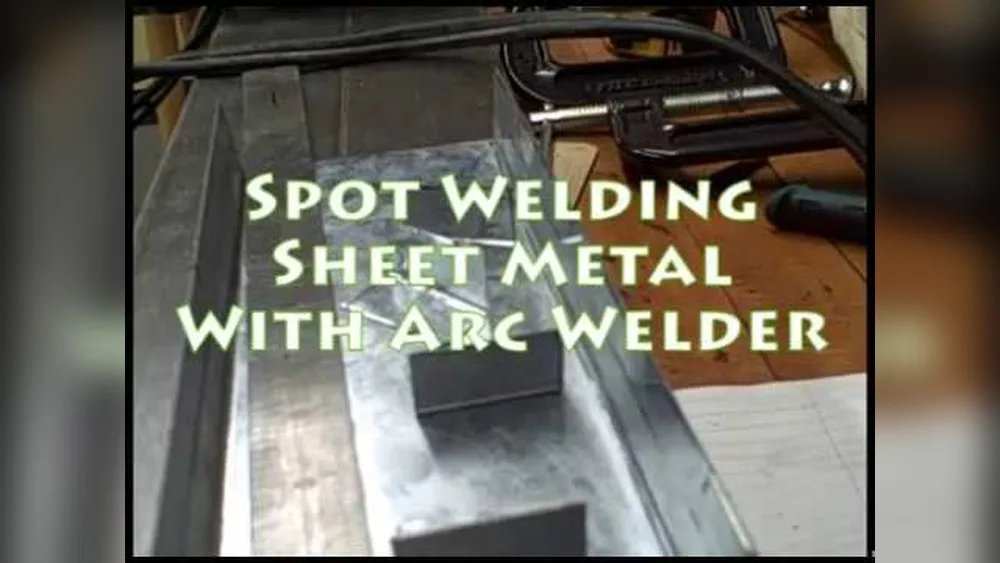
Have you ever stared at a pile of metal and thought, “Can I spot weld this with just my stick welder? ” I know I have. Years ago, I needed to join two thin sheets for a quick car patch.
I didn’t have a fancy spot welder. All I had was my trusty stick welder, a handful of rods, and a lot of curiosity. If you’ve ever wondered the same, let me walk you through what I learned—the good, the bad, and the surprisingly possible.
What Is Spot Welding?
Before we jump in, let’s get clear on spot welding. This is a process you see in car factories and sheet metal work. Two metal pieces are clamped together and an electric current zaps a “spot.” The heat melts the metal only in that small area. The result? A fast, strong, and neat weld.
Spot welders are made for thin metal, like car panels. They use a pair of copper electrodes, not welding rods. And the best part—there’s no filler rod, and the whole process is over in seconds.
What Makes A Stick Welder Different?
When I first tried, I was using a stick welder (also called Shielded Metal Arc Welding or SMAW). This is the classic welder that uses a metal rod wrapped in flux. The rod melts, joins the metal, and leaves a coating (slag) to protect the weld. Stick welding is tough and works almost anywhere.
But stick welders have a few big differences compared to spot welders:
- They use a welding rod, not just clamped electrodes.
- The arc is much hotter and less focused.
- They work on all sorts of thick metal, not just sheet metal.
- You have to control the arc and move the rod by hand.
So, can you use a stick welder to spot weld? The short answer: Not exactly—but you can get close, and sometimes that’s enough.

Why Would You Want To Spot Weld With A Stick Welder?
I’ve been there. Maybe you:
- Don’t own a spot welder (they’re expensive and specialized).
- Have a stick welder already (they’re common in home garages).
- Need to join thin sheet metal quickly.
- Want a strong, hidden weld (no bead showing on the outside).
Maybe you’re repairing a car, building a trailer, or fixing a toolbox. Sometimes, you just want to try something new and see if it works.
Can You Really Spot Weld With A Stick Welder?
Let me be honest—I’ve tried this more than once, and it’s not the same as using a real spot welder. But with a little patience, you can create a strong weld that’s close to a spot weld.
The method I use is sometimes called plug welding or rosette welding. Here’s how it works:
- Drill a small hole (about 1/4 inch) in the top sheet of metal.
- Clamp both sheets tightly together.
- Strike the arc with your stick welder in the hole.
- Fill the hole with weld metal, fusing both sheets.
- Chip away the slag when finished.
This isn’t true spot welding, but it does join two sheets in a small, strong area. I’ve used this method for floor patches, frame repairs, and even some fence work.
How I Plug Welded With My Stick Welder
I remember my first attempt was on a rusty car floor. I didn’t want to warp the metal or leave a big weld bead. Here’s what I did:
- Cleaned both metal pieces with a wire brush.
- Drilled quarter-inch holes, spaced about every two inches.
- Clamped everything tight (no gaps! ).
- Used a 3/32” E6013 rod at about 70 amps.
- Struck my arc in the middle of the hole.
- Moved in small circles to fill the hole.
- Let it cool before unclamping.
The result wasn’t as neat as a factory spot weld, but it held strong. After a little grinding, you couldn’t tell the difference under paint.
Key Differences: Spot Weld Vs. Plug Weld With Stick Welder
Here’s a quick look at how the two methods compare:
| Feature | Spot Welder | Stick Welder (Plug Weld) |
|---|---|---|
| Equipment | Specialized spot welder | Common stick welder |
| Material Thickness | Very thin sheet | Thin to medium sheets |
| Weld Appearance | Clean, small dimple | Small filled hole |
| Skill Needed | Low (machine does the work) | Medium (manual control) |
| Speed | Very fast | Slower (drilling + welding) |
What You Need Before Trying
If you want to give this a shot, here’s what you’ll need:
- Stick welder (even a small 110V model works)
- Welding rods (I like E6013 or E7014 for thin metal)
- Drill and bits (1/4” or 6mm size)
- Clamps (the more, the better)
- Wire brush (for cleaning metal)
- Safety gear (helmet, gloves, and long sleeves)
I learned quickly that clean metal makes all the difference. Rust, paint, or oil will ruin your weld.
Step-by-step: How To Plug Weld With A Stick Welder
Here’s the step-by-step process I follow. If you’re new, take it slow and do a test piece first.
- Clean both surfaces until you see shiny bare metal.
- Drill holes in the top piece. Space them 2–3 inches apart for strength.
- Clamp the pieces tightly together. No gaps!
- Set your welder to a low-to-medium amp range (60–80 amps for thin steel).
- Hold the rod at a slight angle and strike an arc in the center of the hole.
- Move in small circles to fill the hole. You want to fuse the bottom piece too.
- Stop before you burn through. Let it cool a bit between welds.
- Chip off the slag and check for full fusion.
- Grind smooth if needed, or leave as-is for hidden welds.
When I started, I made the mistake of using too much heat. This warped the metal and left a big, ugly hole. After a few tries, I found that less heat and more clamps gave the best results.

Common Problems And How I Fixed Them
Welding thin sheet with a stick welder is not easy. Here are some problems I ran into (and how I fixed them):
- Burning through the metal: Turn down the amps, use a smaller rod, and move faster.
- Porosity (little holes in the weld): Clean the metal better and try a different rod.
- Warped metal: Clamp tightly and let each weld cool before moving on.
- Weak welds: Make sure both pieces are fusing, not just filling the hole.
I also learned that practice is everything. My first attempts looked rough, but after a few panels, the welds were much neater.
When Should You Not Try This?
While plug welding with a stick welder can work, there are times it’s a bad idea:
- Very thin metal: Under 1mm, it’s easy to burn right through.
- Visible, finished surfaces: It’s hard to hide the welds perfectly.
- High-stress areas: If the joint will hold a lot of weight, use a proper welding method.
If you need a neat look or factory-quality strength, a real spot welder or MIG welder is better. For patching floors or hidden joints, the stick welder trick is a lifesaver.
Is Plug Welding As Strong As Real Spot Welding?
This question bugged me for a long time. I did a few tests—beating on scrap metal, bending, and even trying to break welds with a hammer.
In my experience, a plug weld with full fusion is usually stronger than the surrounding sheet metal. The weld itself won’t fail before the metal tears. But there are limits:
- If you don’t fuse both layers, the weld will pop off.
- Too much heat will weaken the area.
- Poor cleaning leads to weak, brittle welds.
A real spot weld is more consistent, but a good plug weld is plenty strong for most repairs.
Plug Weld Vs. Other Diy Welding Methods
If you’re a home welder like me, you might wonder how plug welding compares to other tricks. Here’s a quick comparison:
| Method | Best For | Ease | Equipment Needed |
|---|---|---|---|
| Plug Weld (Stick) | Sheet metal, patch panels | Medium | Stick welder, drill |
| Butt Weld (Stick) | Thicker metal, frame | Hard | Stick welder |
| MIG Spot Weld | Car panels, thin sheet | Easy | MIG welder |
| Brazing | Thin, non-structural | Easy | Gas torch |

Essential Tips For Success
Here are a few things I wish I’d known before I started:
- Clamp everything tightly. Even a tiny gap will ruin the weld.
- Use short weld times. Don’t hold the arc too long, or you’ll burn through.
- Practice on scrap first. Every metal behaves a little differently.
- Drill clean holes. Jagged holes make it harder to fill neatly.
- Let the weld cool. Rushing will warp the metal.
One thing that surprised me: using a small-diameter rod (like 3/32”) gave much better control. Big rods were too hot for thin steel.
Safety First
Stick welding throws off sparks, UV light, and fumes. I always wear:
- A full helmet (auto-darkening if you have it)
- Heavy gloves and a welding jacket
- Hearing protection if I’m drilling a lot
Keep a fire extinguisher nearby. I once caught a rag on fire under the car—lesson learned! Don’t weld near gasoline, paint, or anything flammable.
When A Real Spot Welder Is Better
As much as I love DIY, sometimes you just need the right tool. If you’re making many welds, or working on a nice car, renting or borrowing a real spot welder is smart. It’s faster, cleaner, and you won’t risk warping panels.
If you want to see how real spot welding works, check out this Wikipedia page for a deeper dive.
Frequently Asked Questions
Can I Spot Weld Aluminum With A Stick Welder?
No, not really. Aluminum melts at a lower temperature and stick welding is too hot and imprecise. You’ll burn through thin aluminum fast. For aluminum sheets, try a MIG or TIG welder.
What’s The Best Rod For Plug Welding Thin Steel?
I’ve had the best luck with E6013 or E7014 rods, 3/32” diameter. They give a smooth arc and aren’t too aggressive for thin metal.
How Do I Avoid Warping Sheet Metal?
Keep the metal clamped tight, use low amps, and let each weld cool before starting the next. Don’t rush—heat is your enemy with thin metal.
Is A Plug Weld As Strong As A Spot Weld?
In most cases, yes. As long as you get good fusion to both pieces, plug welds are very strong. For structural or safety-critical parts, always follow the manufacturer’s recommendations.
Can I Do This With A Cheap Stick Welder?
Yes! Even a small, basic stick welder works for plug welding. Just practice your settings, keep everything clean, and don’t get discouraged if your first welds aren’t perfect.
—
Trying to spot weld with a stick welder isn’t “by the book,” but it’s a skill that saved me time and money. With a little practice, you can make strong, neat welds for all sorts of projects. Don’t be afraid to experiment—you’ll learn more by doing.
If you have a stick welder and a project in mind, give plug welding a shot. You might be surprised how well it works.
As an Amazon Associate, We earn from qualifying purchases