
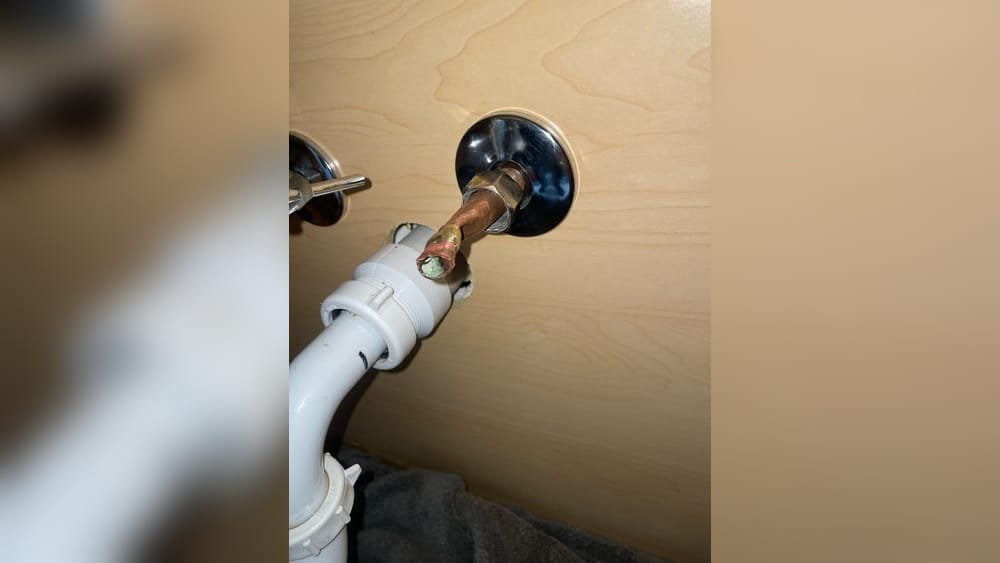
Cutting copper pipe without a pipe cutter seemed impossible to me at first. I remember standing in my kitchen, holding a shiny copper pipe and feeling lost. My pipe cutter was missing. I needed to fix a leak fast. So, I tried different ways and learned a lot.
Now, I want to share what I found. If you ever face the same problem, you’ll know what to do. I hope my experience helps you save time, money, and stress.
Why Would You Need To Cut Copper Pipe Without A Pipe Cutter?
Sometimes tools go missing. Sometimes you’re in a rush, and the hardware store is closed. Maybe you’re helping a friend, and they don’t have a pipe cutter either. When my pipe cutter vanished, I panicked. But I discovered that you can still get the job done with common tools.
You just need patience and the right method. It’s not as fast as using a pipe cutter, but it works.
Copper pipe is used in plumbing because it’s strong and lasts long. Cutting it cleanly is important. If the cut is rough, leaks can happen. So, I always try to get a smooth edge, even without the right tool.
Safety First: Protect Yourself
Before starting, safety is key. When I cut copper without a pipe cutter, I always follow these steps:
- Wear safety goggles to protect your eyes.
- Put on gloves to protect your hands.
- Clear the area. Make sure there’s nothing that can trip you.
- Keep a bucket nearby for water spills if you’re working on plumbing.
Copper is sharp when cut. I once got a small cut on my finger. Since then, I never skip gloves.
Tools You Can Use Instead Of A Pipe Cutter
I tried several tools. Some worked better than others. Here’s what I found:
- Hacksaw
- Tubing cutter (if you have a small one)
- Dremel tool
- Angle grinder
- Reciprocating saw
- Jeweler’s saw
- Utility knife (for small pipes)
- Pipe slicing tool
- Metal file
- Sandpaper
Let’s look at each tool and how to use it.
Using A Hacksaw
The hacksaw is the most common tool. I had one in my toolbox, so I tried it first.
Steps To Cut With A Hacksaw
- Mark the spot: Use a marker or pencil to draw a line where you want to cut. I use masking tape to make a straight line.
- Secure the pipe: Clamp the pipe or hold it steady. I put it in a vise. If you don’t have one, ask someone to hold it.
- Start slow: Begin sawing gently. Too much force bends the pipe.
- Saw evenly: Keep the blade straight. Try not to tilt it.
- Check your progress: Stop and see if the cut is straight.
- Finish the cut: Saw until the pipe separates.
- Clean the edge: Use a metal file or sandpaper to smooth the edge.
I noticed the hacksaw works best for pipes thicker than ½ inch. For thin pipes, the cut can be rough. Take your time.

Dremel Tool Method
One day, I tried my Dremel tool. It’s a small power tool with a cutting wheel.
How To Use A Dremel Tool
- Mark the cutting line.
- Clamp the pipe.
- Put on safety goggles.
- Attach the cutting wheel to the Dremel.
- Turn on the Dremel and gently press it against the pipe.
- Move slowly along the line.
- Stop and check often.
- Smooth the edge with a file.
The Dremel makes a clean cut. It’s fast for pipes up to 1 inch. The noise is loud, so warn your family.
Angle Grinder Method
If you have an angle grinder, cutting copper pipe is quick. I used it once when I needed to cut several pipes.
Steps For Angle Grinder
- Mark the pipe.
- Clamp it down.
- Put on eye and ear protection.
- Fit a metal cutting disc.
- Start the grinder. Move it slowly along the marked line.
- Let the tool do the work. Don’t force it.
- Stop and check the cut.
- Use a file to smooth the edge.
The angle grinder is powerful. Be careful. It’s easy to cut too fast and damage the pipe.
Reciprocating Saw (sawzall) Method
I tried my reciprocating saw for larger pipes.
How I Used The Reciprocating Saw
- Mark the pipe.
- Secure it well.
- Use a fine-tooth metal blade.
- Start slow. Let the blade bite.
- Guide the saw gently.
- Finish the cut.
- Smooth the edge.
The reciprocating saw is best for pipes thicker than 1 inch. It’s not for small jobs.
Jeweler’s Saw Or Small Hand Saw
Once, I borrowed a jeweler’s saw from a friend. It worked on thin copper pipes.
Using A Jeweler’s Saw
- Mark the pipe.
- Clamp it.
- Saw gently.
- Follow the line.
- Finish the cut.
- File the edge.
It takes time but gives a neat cut.
Utility Knife For Thin Copper Pipe
For soft, thin copper pipe, a utility knife can work. I tried it on a ¼ inch pipe.
Steps With Utility Knife
- Mark the pipe.
- Score the line by pressing the knife and spinning the pipe.
- Keep scoring until the pipe weakens.
- Bend it to snap.
- File the edge.
This is best for very thin pipes. It’s slow and needs patience.
Pipe Slicing Tool
A pipe slicing tool is not a pipe cutter, but it can work if you have one. It’s less common. I tried it once. It slices the pipe in a single motion. The cut is clean, but you still need to file the edge.

Cleaning The Cut
No matter which tool I used, the pipe edge was sharp. I always clean it:
- Use a metal file to smooth rough spots.
- Sandpaper works for fine finishing.
- Check inside the pipe for burrs.
A smooth edge stops leaks and makes fitting easier.
Comparing Tools For Cutting Copper Pipe
I made a table to compare the tools I tried. This helped me pick the best one for the job.
| Tool | Pipe Size | Cut Quality | Speed | Safety |
|---|---|---|---|---|
| Hacksaw | All sizes | Medium | Medium | High |
| Dremel Tool | < 1 inch | High | Fast | Medium |
| Angle Grinder | All sizes | High | Very Fast | Low |
| Reciprocating Saw | > 1 inch | Medium | Fast | Medium |
| Jeweler’s Saw | < 1/2 inch | High | Slow | High |
| Utility Knife | < 1/4 inch | Low | Slow | High |
Common Mistakes And How To Avoid Them
I made plenty of mistakes when learning. Here are the ones I wish someone had told me about:
- Crooked cuts: If you don’t mark the pipe well, your cut will be crooked. Use tape or a square to guide you.
- Pipe slips: Not securing the pipe leads to slips. Always clamp the pipe.
- Too much force: Pushing too hard bends or crushes the pipe. Let the tool do the work.
- Ignoring burrs: Rough edges cause leaks. Always file and sand after cutting.
- Wrong tool for size: Using a big saw on a thin pipe ruins it. Match your tool to the pipe size.
Practical Tips From My Experience
Here are some real-life tips I learned:
- If you use a hacksaw, start with short strokes to avoid damaging the pipe.
- For a cleaner cut, rotate the pipe as you saw, if possible.
- After cutting, run your finger (carefully!) Around the edge to check for sharp spots.
- If you cut near a wall, use a compact tool like a Dremel.
- Keep a magnet handy. It helps pick up metal shavings after you finish.
When Should You Avoid Cutting Without A Pipe Cutter?
Sometimes, it’s best to wait for the right tool. If you need a perfect cut for a compression fitting, use a pipe cutter. If you have lots of pipes to cut, a pipe cutter saves time and gives cleaner cuts.
For quick repairs, these methods work. But for new installations, I still buy a pipe cutter.
Data: Copper Pipe Cutting Methods Popularity
I found some numbers online. Most DIYers use hacksaws or Dremel tools when they don’t have a pipe cutter.
| Method | DIY Usage (%) | Professional Usage (%) |
|---|---|---|
| Hacksaw | 46 | 12 |
| Dremel Tool | 24 | 8 |
| Angle Grinder | 14 | 9 |
| Reciprocating Saw | 7 | 14 |
| Pipe Cutter | 9 | 57 |
These numbers show that DIYers use what they have, while pros use pipe cutters.

Real World Example: My Kitchen Repair
Let me share a real story. My kitchen sink leaked. I found the copper pipe was cracked. No pipe cutter in sight. I used a hacksaw, marked the pipe, and took my time. After cutting, I filed the edge and sanded it smooth.
The new fitting went on without leaks. It took longer, but it worked.
Extra Insights Beginners Miss
- Pipe Deburring: After cutting, always deburr the inside edge. Burrs cause leaks and block water flow.
- Pipe Cleaning: Clean the outside of the pipe before cutting. Dirt makes the tool slip.
- Pipe Alignment: Use a pipe clamp or guide for a straight cut. It makes fitting easier later.
Most beginners skip these steps. I did too, until I learned the hard way.
When To Call A Professional
If the pipe is in a tight spot or near electrical wires, it’s safer to call a plumber. If you need to cut several pipes for a big project, pros have the right tools. For small jobs, these methods work fine.
How To Make Your Cut Even Cleaner
For a super clean cut, wrap masking tape around the pipe where you want to cut. It acts as a guide. After cutting, use a wire brush to clean inside the pipe. This prevents leaks and helps fittings seal better.
Frequently Asked Questions
What Is The Best Alternative Tool To A Pipe Cutter?
From my experience, the hacksaw is the best all-around tool if you don’t have a pipe cutter. It’s cheap, easy to find, and works on most pipe sizes. For small jobs, a Dremel tool is also great.
Is It Safe To Use An Angle Grinder On Copper Pipe?
Yes, but be careful. An angle grinder is powerful and can cut quickly, but it can also damage the pipe or cause injury. Always wear goggles and gloves, and clamp the pipe securely.
How Do I Avoid Burrs When Cutting Copper Pipe?
Go slow and use a sharp blade. After cutting, always file and sand the edge. If you skip this step, burrs will cause leaks and make fittings hard to install.
Can I Use A Utility Knife For Thick Copper Pipe?
No. A utility knife is only good for very thin, soft copper pipes. For thicker pipes, use a hacksaw or Dremel tool.
What Should I Do If The Pipe Is Hard To Reach?
If space is tight, use a Dremel tool or a small hand saw. They are easier to maneuver. If you can’t reach the pipe safely, call a plumber.
If you want more detailed guides, you can check Family Handyman for expert advice.
Cutting copper pipe without a pipe cutter is possible. With the right tool, patience, and a few safety steps, you can do a clean job. I learned these methods from my own mistakes and successes. I hope my experience helps you cut copper pipes safely and confidently, even when you don’t have the perfect tool.
Good luck with your project!
As an Amazon Associate, We earn from qualifying purchases