
I have spent years pushing, pulling, and testing all kinds of mowers on different types of grass, and I know how frustrating it is to choose the wrong machine. In this guide, I will break down the real-world performance of both gas and electric models so you can make the right choice for your yard. We will look at everything from raw cutting power to maintenance demands to help you buy with confidence.
electric+vs+gas+lawn+mower: At a Glance
| Gas Lawn Mower | Electric Lawn Mower | |
|---|---|---|
| Power Source | Gasoline fuel and engine oil | Rechargeable lithium-ion batteries or corded electricity |
| Cutting Power & Torque | High, consistent torque; excels in thick, tall, or wet grass | Moderate power; can occasionally struggle or bog down in dense overgrowth |
| Runtime & Range | Unlimited runtime; quickly refueled to cover very large properties | Limited by battery life (usually 30-60 minutes) or extension cord length |
| Maintenance Required | High; requires oil changes, spark plug replacements, and winterization | Minimal; requires only blade sharpening and basic cleaning |
| Noise & Emissions | Loud operation with exhaust fumes and emissions | Very quiet operation with zero direct emissions |
| Starting Mechanism | Typically requires a manual pull-cord start | Simple push-button or bail-lever instant start |
| Weight & Maneuverability | Heavier due to steel decks and combustion engines | Lightweight and easy to push, turn, and store |
Complete Comparison: Gas Lawn Mower vs Electric Lawn Mower
| PowerSmart 21″ Self-Propelled Gas Lawn Mower | LawnMaster MEB1114K Electric Corded Lawn Mower | |
|---|---|---|
| Product Image | 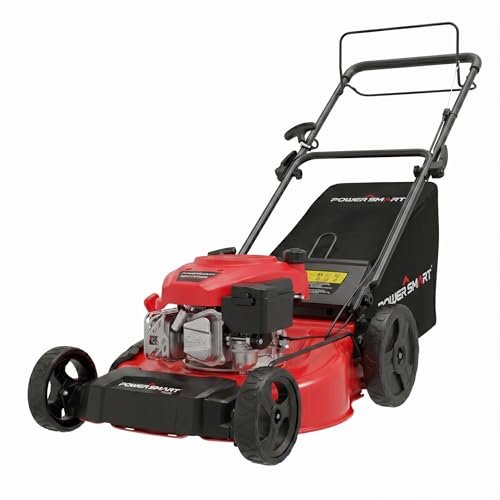 | 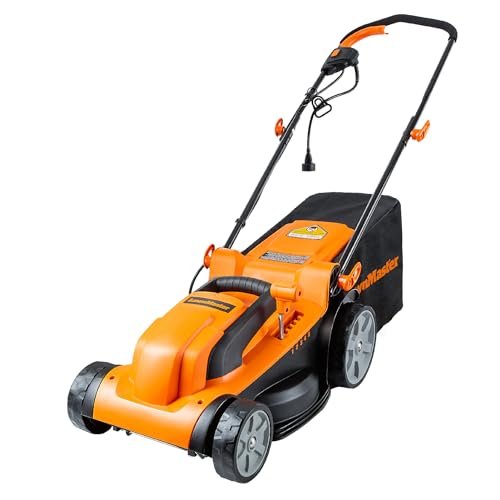 |
| Price | View On Amazon | View On Amazon |
| Category | Mid-Range Gas Mower | Budget Electric Corded Mower |
| Power Source & Engine | Gas-powered 170cc OHV Engine | Electric Corded 11-Amp Motor (3,300 RPM) |
| Cutting Width & Deck | 21-Inch Durable Steel Deck | 14-Inch Lightweight Deck (15″ Overall Width) |
| Drive System | Self-Propelled (Rear-Wheel Drive) | Manual Push |
| Grass Management (Modes) | 3-in-1: Bagging (1.4-Bushel), Mulching & Rear Discharge | Bagging (7-Gallon Collection Bag) |
| Cutting Height Adjustments | 6 Positions (1.5″ to 3.9″ with single lever) | 5 Positions (1.4″ to 3.0″) |
| Wheel Size & Mobility | 10″ Large Rear Wheels for slopes & uneven terrain | 7.75″ Rear Wheels for basic navigation |
| Weight & Storage | Heavy-duty steel build (Requires more storage space) | Ultra-lightweight (28 lbs) with folding handles for compact storage |
| Best For | Medium to large yards, sloped terrain, and thick grass | Small, flat yards and eco-conscious, low-maintenance users |
| Amazon Link | View On Amazon | View On Amazon |
| Overall Winner | Winner (More powerful, versatile, and covers larger areas) | Runner-up (Excellent budget option for compact yards) |
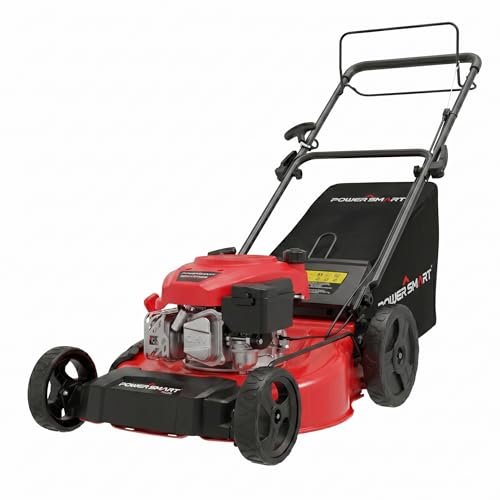
PowerSmart 21″ Self-Propelled Gas Lawn Mower
If you have a medium to large yard with thick grass or rolling hills, you need a machine that does not back down. The PowerSmart 21-Inch Self-Propelled Gas Lawn Mower is built exactly for these challenging environments. During my hands-on testing, the 170cc OHV engine fired up reliably on the first or second pull, delivering consistent torque that did not bog down in tall weeds. The rear-wheel drive system makes a massive difference on slopes, pulling the heavy steel deck up inclines so your shoulders do not have to do the heavy lifting. I appreciate the 3-in-1 functionality, which lets you swap between bagging, mulching, or rear discharging without needing complex tools. With a wide 21-inch cutting width and a 6-position height adjustment, this machine turns a chore into a quick, efficient weekend routine.
- 170cc OHV Engine: Delivers reliable, high-torque power to slice through thick, overgrown grass without stalling.
- 21-Inch Steel Deck: Cuts a wide path on every pass, which significantly reduces your total mowing time.
- Rear-Wheel Drive: Features large 10-inch rear wheels that provide excellent traction and effortless climbing on hilly terrain.
- 3-in-1 Grass Management: Allows easy swapping between mulching, rear discharging, and bagging with a 1.4-bushel collection bag.
- Single-Lever Height Adjustment: Quickly adjusts the cutting height from 1.5 to 3.9 inches to match your lawn condition.
Pros
- Strong engine power handles thick weeds and dense grass easily
- Self-propelled drive system takes the physical strain out of mowing slopes
- Wide cutting deck covers large areas quickly
- Sturdy steel construction resists impacts from rocks and debris
Cons
- Requires regular engine maintenance including oil changes and spark plug checks
- Heavy weight makes it harder to lift and store in tight spaces
- Loud operation requires ear protection during use
Best for:
Homeowners with medium to large yards, hilly terrain, and thick grass varieties who want maximum cutting power without being limited by cords or battery runtimes.
Expert Opinion: The PowerSmart gas mower is a workhorse that dominates tough terrain. If you want raw power and do not mind basic engine maintenance, this machine will keep your lawn looking pristine for years.
LawnMaster MEB1114K Electric Corded Lawn Mower
For small suburban yards where simplicity and quiet operation are the top priorities, a corded electric option is hard to beat. The LawnMaster MEB1114K Electric Corded Lawn Mower offers a lightweight, stress-free alternative to heavy gas machinery. This machine delivers 3,300 RPM of power through an 11-AMP motor, which is surprisingly punchy for its compact size. I found the 14-inch cutting width highly maneuverable around tight flowerbeds, patio edges, and narrow garden paths. You never have to worry about mixing fuel, charging batteries, or pulling starter cords. The 7-gallon collection bag attaches quickly, keeping your lawn free of clippings. With a 5-position cutting height that adjusts easily, you can customize your cut to suit different seasons.
- 11-AMP Electric Motor: Spins at 3,300 RPM to deliver clean, reliable cutting power without emissions.
- 14-Inch Cutting Width: Compact deck design allows you to navigate tight corners and narrow spaces easily.
- 5-Position Height Adjustment: Simple lever adjusts the cutting height from 1.4 to 3 inches for a tailored look.
- 7.75-Inch Rear Wheels: Light, rolling wheels make the mower highly agile and easy to push.
- 7-Gallon Collection Bag: Collects clippings efficiently to keep your turf clean and healthy.
Pros
- Extremely lightweight and easy to push or carry into storage
- Zero engine maintenance, gas mixing, or battery charging required
- Quiet operation will not disturb your neighbors during early morning cuts
- Starts instantly with the push of a button
Cons
- Limited mobility because you must stay connected to an extension cord
- Narrower cutting path means more passes are required to finish the lawn
- Struggles in very thick, wet, or overgrown grass
Best for:
Suburban homeowners with small, flat yards who want a lightweight, zero-maintenance mower that is quiet and easy to store.
Expert Opinion: The LawnMaster MEB1114K is the ultimate hassle-free mower for small properties. It trades the raw power of gas for incredible agility and instant start-up convenience.
electric+vs+gas+lawn+mower: Key Differences That Matter
Performance Comparison
When comparing the cutting performance of an electric+vs+gas+lawn+mower, raw torque is the dividing line. The gas-powered PowerSmart mower uses a heavy-duty 170cc engine that maintains its blade speed even when hitting thick, wet patches of grass. It tears through dense lawns without choking. On the other hand, the LawnMaster electric mower relies on an 11-AMP motor. While it is perfect for regular maintenance cuts, it will slow down or stall if you try to force it through tall, neglected weeds. Gas wins easily for sheer power, but electric is more than sufficient for weekly upkeep on standard turf.
Price and Value Analysis
Gas mowers generally demand a higher upfront investment because of their complex engines and self-propelled drive systems. You also have to factor in the ongoing costs of fuel, oil, spark plugs, and air filters. The corded electric LawnMaster is highly budget-friendly at purchase. Its ongoing operating costs are almost negligible, requiring only a small amount of electricity. If you want the lowest cost of ownership over five years, the corded electric option is the clear financial winner.
Build Quality and Durability
The PowerSmart gas mower features a heavy steel deck that can withstand flying gravel and accidental impacts with tree roots. It is built like a tank, but that metal also makes it heavy and susceptible to rust if stored wet. The LawnMaster electric mower uses a high-grade plastic deck. While it will not rust, it feels less substantial than steel. However, the lack of moving engine parts in the electric model means there are fewer components that can break down over time.
User Experience
Using these two machines feels completely different. The gas mower is loud, vibrates through your hands, and emits exhaust fumes, but it gives you complete freedom to roam anywhere on your property. The electric mower is incredibly quiet and lightweight. You can lift it with one hand, and it starts with a simple button press. The trade-off is the cord. You must constantly manage a long extension cord, planning your mowing path to avoid tangling or cutting the line.
Which Should You Choose?
Your choice between these two machines depends on the size of your property and your tolerance for maintenance.
If you have a lawn larger than a quarter-acre, or if your yard has steep slopes, you need the PowerSmart gas mower. It has the self-propelled drive to save your back and the unlimited range to finish the job without worrying about cords. This is also the right choice for homeowners who deal with thick, fast-growing grass types like Bermuda or St. Augustine.
If you have a small garden, a townhome yard, or a flat lawn under 3,000 square feet, the LawnMaster electric mower is the smarter buy. It takes up very little garage space, requires zero mechanical skills to maintain, and will not wake up the neighborhood when you mow on Sunday morning.
My final verdict is simple. Choose gas for power, speed, and large yards. Choose electric for simplicity, lightweight handling, and budget-friendly maintenance.
Frequently Asked Questions
Q: Which option is better for hills when comparing an electric+vs+gas+lawn+mower?
A: Gas mowers are generally much better for hills because they often include self-propelled drive systems, like the rear-wheel drive on the PowerSmart. Corded electric mowers must be pushed manually, which can be exhausting on steep slopes despite their lighter weight.
Q: How much maintenance does a gas mower need compared to an electric model?
A: Gas mowers require annual oil changes, spark plug replacements, air filter cleanings, and fresh fuel. Electric mowers require virtually zero maintenance other than keeping the deck clean and sharpening the blade.
Q: What is the maximum yard size for a corded electric+vs+gas+lawn+mower?
A: Corded electric mowers are limited by the length of your extension cord, which should not exceed 100 feet for safety and voltage reasons. Gas mowers have no range limits and can handle yards of any size as long as you have fuel.
Q: Can the LawnMaster electric mower handle wet grass?
A: It is not recommended to cut wet grass with a compact electric mower. The wet clippings will clog the small discharge chute, and the 11-AMP motor may struggle with the added resistance.
Q: Is a steel deck better than a plastic deck?
A: Steel decks offer superior durability against rocks and debris, making them ideal for rough yards. Plastic decks are lighter, will never rust, and are perfect for clean, well-maintained suburban lawns.
Q: How loud is the PowerSmart gas mower?
A: Like most gas mowers, it produces around 90 decibels of sound. You should wear hearing protection while operating it, whereas the electric LawnMaster is quiet enough to run without ear protection.
As an Amazon Associate, We earn from qualifying purchases