
Over my years of maintaining various properties, I have tested both of these lawn care approaches extensively to see how they impact turf health and daily maintenance. In this hands-on comparison, we will look at two popular PowerSmart gas models to help you decide which grass clippings management style suits your yard best. You will learn the mechanical differences, the time commitment of each method, and which machine delivers the healthiest lawn for your specific soil type.
mulching mower vs bag: At a Glance
| Mulching Lawn Mower | Rear-Bagging Lawn Mower | |
|---|---|---|
| Clipping Management | Finely chops and recirculates clippings back into the lawn | Collects and stores clippings in an attached rear bag |
| Nutrient Return | High; decomposes quickly to naturally fertilize the soil | None; removes organic matter and nutrients from the turf |
| Disposal Effort | Zero effort; clippings remain on the lawn to decompose | High effort; requires frequent stopping to empty the bag |
| Lawn Appearance | Clean if mowed regularly; can look messy if grass is overgrown | Immaculate and debris-free, leaving no visible clippings behind |
| Thatch Prevention | Minimal risk if clipped finely and mowed frequently | Eliminates thatch buildup risk by removing all cut grass |
| Best Use Cases | Frequent mowing on dry, regularly maintained lawns | Overgrown yards, wet grass, leaves, or weed-infested lawns |
| Blade Design | Specialized curved blades designed to cut grass multiple times | High-lift blades designed to create suction and push clippings backward |
Complete Comparison: Mulching Lawn Mower vs Rear-Bagging Lawn Mower
| PowerSmart 21-Inch Gas Lawn Mower, 144cc | PowerSmart 21″ Self-Propelled Gas Lawn Mower | |
|---|---|---|
| Product Image | 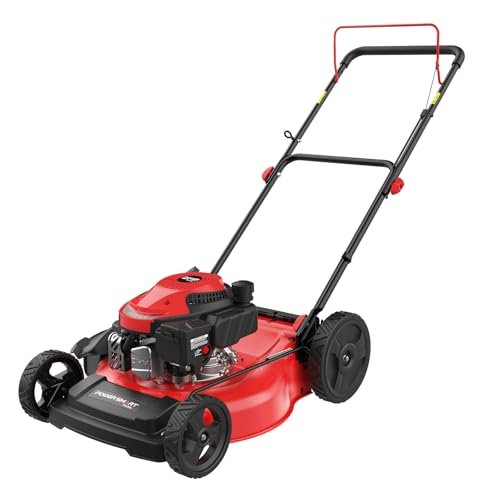 | 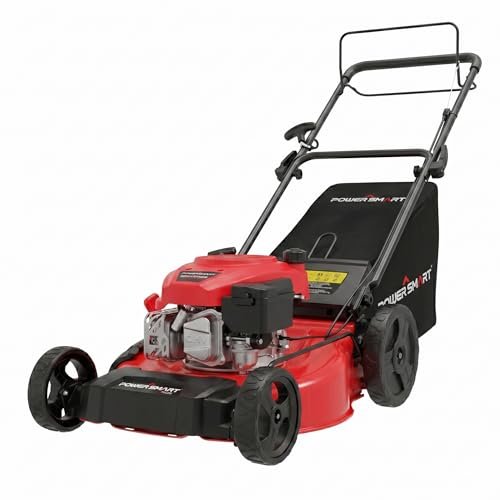 |
| Price | View On Amazon | View On Amazon |
| Category | Budget / Light-Duty Push | Mid-Range / Self-Propelled |
| Engine Displacement | 144cc 4-Stroke OHV Engine with Auto-Choke | 170cc 4-Stroke OHV Engine |
| Drive System | Manual Push Mower | Self-Propelled (Rear-Wheel Drive) |
| Clipping Management | 2-in-1 (Mulching & Side-Discharge) | 3-in-1 (Bagging, Mulching & Rear Discharge with 1.4-Bushel Bag) |
| Cutting Width | 21 Inches | 21 Inches |
| Cutting Height Adjustments | 6 Positions (1.5″ to 3.9″) via Single Lever | 6 Positions (1.5″ to 3.9″) via Single Lever |
| Wheel Sizes | 10″ Rear Wheels / 7″ Front Wheels | 10″ Rear Wheels / 8″ Front Wheels |
| Storage Design | Foldable, Space-Saving Design (Saves up to 70% space) | Standard Foldable Handlebar |
| Best For | Flat lawns, smaller yards, and users seeking a lightweight, compact storage solution | Medium to large yards, sloped terrains, and users wanting grass collection options |
| Amazon Link | View On Amazon | View On Amazon |
| Overall Winner | Runner-up (Best Budget/Space-Saver) | Winner (Best Performance & Versatility) |
PowerSmart 21-Inch Push Mulching Gas Lawn Mower
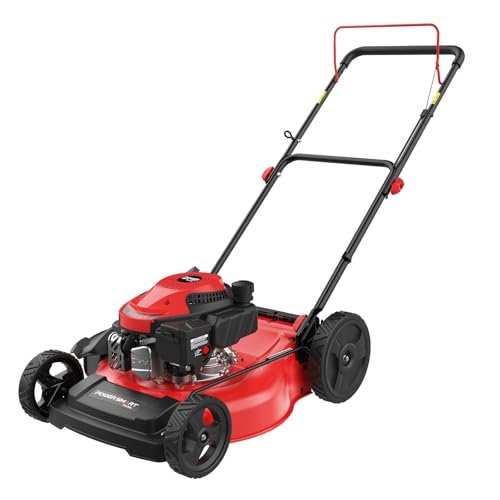
When I first unboxed this unit, the straightforward design immediately stood out to me. This push model relies on a highly capable 144cc 4-cycle OHV engine that fires up reliably without the hassle of priming or choking. It features a heavy-duty 2-in-1 steel deck configured specifically to recirculate clippings under the deck or toss them out of the side chute. The 21-inch cutting path makes quick work of standard suburban lawns, while the adjustable cutting height gives you six distinct positions ranging from 1.5 to 3.9 inches via a single lever. If you have limited garage real estate, you will appreciate the space-saving design that folds down to reclaim valuable floor space.
- 144cc 4-stroke engine: Delivers steady cutting power while burning fuel cleanly and starting up on the first pull.
- 2-in-1 steel deck: Rugged construction configured for dedicated mulching and efficient side-discharge without clogging.
- 21-inch cutting width: Uses a specialized high-lift blade designed to chop grass repeatedly into fine particles.
- Single-lever height adjustment: Quickly alters the deck height across 6 positions to match seasonal growth.
- Foldable storage frame: The handle collapses completely over the engine block, reducing the footprint by up to 70 percent.
Pros
- Exceptionally lightweight and easy to maneuver around tight garden beds.
- No heavy grass bags to empty, which saves your back and speeds up the job.
- Folds down into a highly compact package for tight sheds or garages.
- Simple mechanical design means fewer parts to clean or maintain over time.
Cons
- Lacks a self-propelled drive system, requiring physical effort on sloped yards.
- No bagging option if your grass gets too long or covered in heavy autumn leaves.
Best for:
Homeowners with flat, small-to-medium yards who want a fast, straightforward mow and prefer to naturally fertilize their soil with finely chopped clippings.
Expert Opinion: This machine is a pure mulching workhorse. If you mow regularly and want to skip the chore of bagging while feeding your soil, its lightweight frame makes it an incredibly nimble choice.
PowerSmart 21-Inch Self-Propelled Gas Lawn Mower
This model steps up the utility by offering a robust 170cc OHV engine paired with a rear-wheel-drive system. The extra displacement provides the muscle needed to power through tall weeds and damp grass, driving the rear wheels forward to tackle hilly terrain. Its heavy-duty steel deck features a 3-in-1 function that lets you bag, mulch, or use rear discharge depending on your grass conditions. The 6-position height adjustment allows you to customize your cut height from 1.5 to 3.9 inches instantly. With its self-propelled drive and 10-inch rear wheels, this mower handles slopes and uneven turf with minimal physical strain.
- 170cc OHV engine: Provides excellent torque for handling thick, overgrown patches and powering the self-propelled drive.
- 3-in-1 versatility: Allows you to collect clippings in the 1.4-bushel bag, mulch them back into the lawn, or use rear discharge.
- Rear-wheel drive system: Delivers outstanding traction on hills and damp terrain, pulling the mower forward so you only have to steer.
- 10-inch high rear wheels: Large rear rolling diameter glides over ruts, bumps, and uneven sod smoothly.
- 21-inch steel deck: Durable steel chamber designed to handle high-velocity airflow for clean bagging performance.
Pros
- Rear-wheel drive does the heavy pushing for you on slopes and rough ground.
- The 1.4-bushel bag leaves your lawn pristine and completely free of visible debris.
- Strong engine performance prevents bogging down in tall, thick spring grass.
- Versatile design allows you to switch tasks depending on the season.
Cons
- Notably heavier to lift and push manually when turning in tight corners.
- Bagging requires you to stop frequently to empty the clippings.
Best for:
Property owners with medium to large yards, hilly terrain, or those who demand a spotless lawn finish free of any stray grass clippings.
Expert Opinion: The rear-wheel drive on this machine is excellent for saving your energy on slopes. The bagging capability is highly efficient, pulling every stray blade into the rear collector without leaving messy clumps behind.
Mulching Mower vs Bag: Key Differences That Matter
Performance Comparison
A mulching mower relies on a specialized blade and a closed deck design. The blade keeps the grass clippings suspended in the air chamber, cutting them multiple times until they are tiny flakes. These tiny pieces fall deep into the grass canopy to decompose. When looking at a mulching mower vs bag setup, the bagging system relies on high-velocity airflow to lift the grass straight into the rear hopper. This collection process is perfect if your grass is overly long, damp, or covered in leaves.
Price and Value Analysis
Push mulching mowers are generally more affordable. They have fewer moving parts, no drive belts, and no fabric bags to wear out. Self-propelled bagging mowers carry a higher price tag due to the transmission components, larger engines, and collection bags. If you are on a budget and do not mind pushing, the mulching push mower offers incredible value. The self-propelled bagging model is a larger investment, but it saves your physical energy on larger properties.
Build Quality Comparison
Both models feature rugged steel decks that handle stray twigs and rocks without cracking. The self-propelled bagging unit feels more substantial because of its rear drive axle and larger 10-inch rear wheels. The push mower is lighter and uses simpler wheel mounts, making it less prone to mechanical drive failures over years of operation.
User Experience Differences
Mowing with the push mulching model is a continuous process. You start the engine, walk your lines, and finish without a single pause. The self-propelled bagging mower requires you to stop every few passes to empty the heavy fabric bag. Carrying and dumping these bags adds physical labor to your chore, but it leaves your shoes and patio completely clean. The push model requires more leg muscle on slopes, while the self-propelled unit pulls itself along, requiring only steering guidance from you.
Which Should You Choose?
If you want a low-maintenance lawn care routine, choose the PowerSmart push mulching mower. This choice is ideal for flat yards where you want to return vital nitrogen to your soil automatically. Skipping the bagging process saves time and eliminates green waste disposal hassles.
If your yard has steep slopes, uneven soil, or thick weeds, go with the PowerSmart self-propelled bagging mower. This machine is perfect for homeowners who want a manicured, debris-free finish for outdoor gatherings. It is also the superior tool if you often wait too long between mows and need to clean up tall grass without smothering your lawn.
My personal preference leans toward having both options, but if you must choose one, let your yard topography and physical stamina be your guide. For flat ground and quick mows, mulching wins. For hilly yards and pristine turf, the self-propelled bagging setup is worth every penny.
Frequently Asked Questions
Q: Does a mulching mower vs bag setup help my lawn grow better?
A: Yes, mulching returns nitrogen and moisture directly to your soil, acting as a natural fertilizer. Bagging is better when dealing with lawn diseases or heavy weeds to prevent spreading seeds.
Q: Can I use a bagging mower to mulch my grass?
A: Many 3-in-1 bagging mowers, like the self-propelled model reviewed here, include a mulch plug that blocks the discharge chute, allowing you to switch between the two modes easily.
Q: Is a mulching mower vs bag machine harder to push?
A: Dedicated mulching push mowers are usually lighter and easier to push. Bagging mowers get progressively heavier as the grass bag fills up with moist clippings.
Q: How often do I need to sharpen the blade on a mulching mower?
A: You should sharpen mulching blades at least twice a season. The blade must be very sharp to cleanly slice the grass blades multiple times into fine mulch.
Q: Will mulching cause thatch buildup in my lawn?
A: No, grass clippings are mostly water and break down very quickly without contributing to thatch. Thatch is actually caused by over-fertilizing and over-watering.
Q: What is the main drawback of always bagging my grass clippings?
A: Bagging removes natural nutrients from your lawn, meaning you will need to apply chemical fertilizers more often to keep the grass green and healthy.
As an Amazon Associate, We earn from qualifying purchases