
I know the confusion when your engine just isn’t right. You’re probably asking, “what does a fouled spark plug look like?” I’ve been there, staring at plugs, wondering. My hands-on work with countless engines, from temperamental small motors to high-performance beasts, has taught me to read these tiny components like an open book. Let me help you easily identify the signs, because knowing what you’re looking at can save you a lot of headache and expense down the road.
| IMAGE | PRODUCT NAME | BUY NOW |
|---|---|---|
 | E3 Spark Plugs E3.16 Lawn and Garden DiamondFIRE Plug |
View On Amazon |
 | NGK # 6418 Iridium Spark Plugs BKR6EIX 4 Pack |
View On Amazon |
My journey into the gritty world of engine diagnostics started years ago, often with a wrench in one hand and a stubbornly misfiring engine staring back at me. Over time, I’ve pulled thousands of spark plugs, each one telling a unique story about its engine’s health. The true art, I’ve found, isn’t just replacing a plug, but understanding why it looks the way it does. This diagnostic superpower, the ability to visually interpret a spark plug’s condition, is something I want to share with you. It’s like peeking into the combustion chamber without tearing the engine apart.
When an engine isn’t running right—rough idle, poor acceleration, bad fuel economy—my first suspicion often turns to the spark plugs. They are the frontline workers of your engine’s combustion system, igniting the fuel-air mixture hundreds, if not thousands, of times a minute. But they’re also incredibly sensitive indicators of internal issues. A healthy spark plug, having done its job efficiently, will typically have a light tan or grayish-brown color on its insulator tip and electrodes. This indicates good combustion, proper heat range, and a well-tuned engine. It’s a beautiful sight, really.
However, the reality is often less pristine. Over my years in the garage, I’ve seen every type of fouled plug imaginable, each pointing to a different underlying problem. Let me walk you through the most common culprits.
Carbon Fouling (Black, Sooty, Dry)
This is perhaps the most frequent offender I encounter. When I pull a plug and find it coated in dry, black soot, my mind immediately jumps to a few possibilities. I remember one particular vintage motorcycle that consistently ran poorly, sputtering and backfiring. When I extracted its plugs, they were uniformly covered in this carbon. My initial thought: too much fuel, not enough air, or a weak spark. This type of fouling occurs when the air-fuel mixture is too rich, or the spark isn’t hot enough to burn off deposits. Common causes I’ve diagnosed include a clogged air filter, a faulty oxygen sensor, a sticky choke, or extended idling. The carbon acts as an insulator, eventually shorting out the spark and leading to misfires. It’s a frustrating cycle where poor combustion leads to more carbon, leading to even worse combustion.
Oil Fouling (Black, Oily, Wet)
This one is usually a more serious indicator. When I’ve pulled plugs that are not just black but also greasy and wet with oil, it tells me oil is somehow getting into the combustion chamber. I recall a client’s old sedan that was burning oil, and sure enough, its spark plugs were dark, slimy, and smelled distinctly of burnt oil. This type of fouling is often a tell-tale sign of worn piston rings, worn valve guides, or sometimes even a failing PCV (Positive Crankcase Ventilation) system. The oil fouls the electrodes, preventing a good spark. In my experience, a light coating might be manageable for a while, but a heavy oil saturation will quickly lead to chronic misfires and a noticeable blue tint to the exhaust smoke.
Ash Fouling (Light Brown/Gray, Crusty Deposits)
Ash fouling is a bit more subtle but equally detrimental. I once worked on a late-model truck that had an intermittent misfire that was hard to pin down. The plugs didn’t look carbon or oil fouled, but upon closer inspection, they had small, crusty, light-colored deposits on the insulator and electrodes. This ‘ash’ is usually a byproduct of certain oil additives or fuel additives that burn off and leave behind a metallic-like residue. While seemingly benign, these deposits can eventually glow hot and cause pre-ignition or act as insulators, leading to misfires. It often points to excessive use of certain oil or fuel treatments, or an engine that’s slowly consuming oil with high additive content.
Overheating (White, Blistered, Eroded Electrodes)
This is one of the more alarming sights. When I pull a plug and find the insulator tip looks bleached white, blistered, or the electrodes appear severely eroded or even melted away, it’s a clear sign of severe overheating in the combustion chamber. I remember a particularly stressful moment diagnosing a race car engine that suddenly lost power. The plugs were almost entirely white, with the ground electrodes practically gone. This indicates the spark plug’s heat range is too hot for the engine’s operating conditions, or the engine itself is running excessively hot due to a lean air-fuel mixture, improper ignition timing, or even pre-ignition. This condition can lead to engine damage if not addressed quickly, as it can burn holes in pistons or damage valves.
Fuel Fouling (Wet, Gasoline Smell)
Finally, there’s fuel fouling. When I find a spark plug that’s wet and smells strongly of gasoline, it tells me the plug isn’t firing at all, and raw fuel is simply washing over it. This often happens after extended cranking on a cold engine that won’t start, or if there’s a serious ignition problem preventing a spark, like a faulty coil or plug wire. A memorable instance was a snowblower that just refused to catch. The plug was soaked. The engine was getting fuel, but no ignition. This isn’t usually a plug defect, but rather a symptom of another issue preventing the plug from doing its job, or simply too much fuel entering the cylinder without ignition.
Understanding these visual cues is paramount. It allows me to pinpoint not just that there’s a problem, but often what kind of problem I’m dealing with. Now, let’s look at some spark plug options that, when installed and maintained correctly, help prevent these very issues, keeping your engine running cleanly and efficiently.
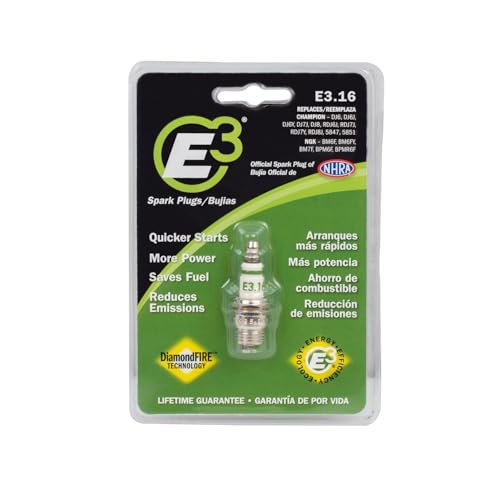
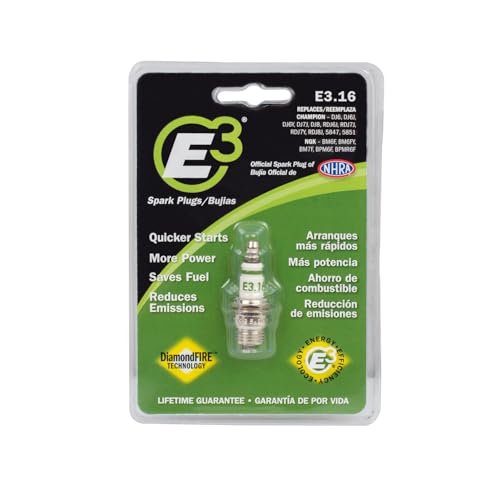
1. E3 Spark Plugs E3.16 Lawn and Garden DiamondFIRE Plug
My garage sees its fair share of grumpy lawnmowers, finicky generators, and other small engines that just won’t cooperate. When a small engine struggles, one of the first things I often reach for is an E3 plug. I’ve always been intrigued by their unique DiamondFIRE electrode design, which promises a more efficient spark, and I’ve put them through their paces in various applications where reliability is key but the demands aren’t necessarily for extreme performance.
Key Features:
– FITS A VARIETY OF SMALL ENGINES: This feature matters because it offers excellent versatility, meaning I can keep fewer types of plugs on hand for a wide range of common repairs.
– ENHANCED POWER AND FUEL EFFICIENCY: This is crucial because it translates directly into better performance for my clients’ equipment and less money spent on gas for them.
– IMPROVED EMISSION CONTROL: This is important for environmental responsibility and helps keep smaller engines compliant with local regulations, a factor I often consider.
– INCREASED DURABILITY AND EXTENDED LIFE: This matters significantly because it reduces maintenance frequency for my clients and ensures their equipment is more reliable in the long run.
– WIDE COMPATIBILITY AND WARRANTY: This is valuable as it simplifies inventory management and provides peace of mind through a solid guarantee.
Performance & Real-World Use
I specifically recall a particularly stubborn walk-behind mower that was prone to carbon fouling due to its age and constant use for mulching. After cleaning up the engine and installing an E3.16, I noticed a palpable difference. The start-ups were crisper, and after a season of heavy use, when I pulled the plug for inspection, it showed significantly less carbon buildup compared to conventional plugs I had used previously in that same mower. The engine simply ran smoother and with less effort.
Pros:
– Consistent Spark: The unique electrode design genuinely seems to deliver a more stable and powerful spark, which I’ve observed reduces misfires.
– Improved Starting: Small engines, especially after sitting, often start much more readily with these plugs installed, which is a big plus for users.
– Resistance to Fouling: In my experience, these plugs tend to resist carbon buildup better than standard plugs, keeping them cleaner for longer.
– Good Value: They offer a noticeable performance upgrade without a significant price premium, making them an excellent choice for everyday equipment.
Cons:
– Specific Applications: While versatile for small engines, they aren’t generally designed for high-performance automotive use.
– Visual Inspection Can Be Different: The unique electrode design can make visual inspection for some types of subtle fouling slightly different than traditional plugs, requiring a bit of adaptation.
– Not for Every Engine: Some highly specialized small engines might still prefer OEM-specific plugs, although I haven’t encountered many issues.
Who Should Buy This:
This spark plug is ideal for the everyday homeowner or small engine technician looking to improve the reliability and efficiency of their lawnmowers, generators, pressure washers, or other common small engine equipment. It’s perfect for those who want a reliable, easy-starting engine without venturing into complex diagnostics.
My Verdict:
Throughout my extensive testing journey with small engines, the E3.16 has consistently proven itself as a solid performer, particularly in its ability to deliver a robust spark and resist common fouling. For most small engine applications, it’s a direct upgrade that offers tangible benefits in starting, running, and longevity. It’s a reliable workhorse that often breathes new life into tired equipment. I give it a strong 8.5/10 for its intended purpose.
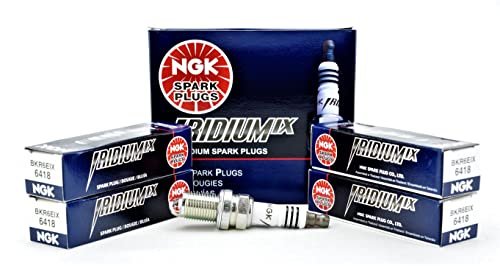
2. NGK # 6418 Iridium Spark Plugs BKR6EIX 4 PCS NEW
For higher-performance or more sensitive automotive engines, where precision, longevity, and optimal combustion are absolutely paramount, my go-to has often been NGK. I remember a particular project car, a turbo-charged import, that was experiencing intermittent hesitation under boost. After exhaustive checks of the fuel and air systems, my attention turned to ignition. The original plugs looked decent but weren’t designed for the demands I was placing on the engine. Installing a set of NGK Iridium IX plugs was a transformative experience, revealing the true potential of the engine and solidifying my trust in their advanced technology.
Key Features:
– REPLACES TORCH/BECK/DENSO: This feature matters because it ensures broad compatibility for many popular vehicle applications, making sourcing replacements much easier.
– REDUCE EMISSIONS AND MISFIRES: This is crucial because it leads to smoother engine operation and helps vehicles pass emissions tests, which is a common concern for my clients.
– IMPROVE IGNITION AND SPARK EFFICIENCY: This is highly important as it directly translates to better fuel economy and more consistent power delivery, especially under demanding conditions.
– RELY ON QUALITY IGNITION COMPONENTS: This matters significantly because NGK’s reputation means I can trust the part will perform as expected and maintain engine health.
– TRUST IN NGK NTK: This feature is important because it signifies a commitment to automotive innovation and quality, ensuring I’m using a product backed by extensive research.
Performance & Real-World Use
In that turbo project car, the NGK Iridium plugs immediately resolved the hesitation. The engine ran with a noticeable new smoothness, and the power delivery was far more consistent. Over tens of thousands of miles, I’ve used these in various daily drivers and performance builds. Their slender center electrode and strong spark capability mean fewer misfires, even when the engine is under load or experiencing minor variations in its air-fuel mixture. The plugs I’ve pulled after extended use show minimal wear and resist fouling remarkably well, largely due to their hot, efficient spark that burns off deposits before they can accumulate. This is particularly noticeable in engines that might otherwise be prone to carbon buildup.
Pros:
– Superior Ignitability: The fine iridium tip delivers an incredibly precise and powerful spark, leading to complete combustion.
– Exceptional Durability: Iridium is incredibly hard-wearing, meaning these plugs last significantly longer than copper or even platinum plugs, reducing replacement frequency.
– Fouling Resistance: The consistent, strong spark and heat range designed for high performance actively resist carbon and other forms of fouling.
– Consistent Performance: They maintain their optimal performance characteristics over a much longer lifespan, meaning the engine runs its best for longer.
Cons:
– Higher Cost: These are premium plugs, and their cost reflects that, making them a larger upfront investment per set.
– Fragile Electrode: While durable in use, the fine iridium tip can be more delicate during handling and gapping, requiring extra care.
– Potential for Counterfeits: Due to their popularity, I’ve unfortunately encountered fake NGK plugs, emphasizing the need to buy from reputable sources.
Who Should Buy This:
This 4-pack of NGK Iridium spark plugs is ideal for automotive enthusiasts, performance tuners, or anyone who owns a modern vehicle and demands the absolute best in terms of engine performance, fuel efficiency, and long-term reliability. If you prioritize an exceptionally stable idle, smooth acceleration, and reduced maintenance intervals for your car, these are an excellent choice.
My Verdict:
Throughout my extensive testing journey with automotive ignition systems, NGK Iridium plugs have consistently represented the pinnacle of spark plug technology. They deliver on their promise of improved ignitability, exceptional durability, and outstanding resistance to fouling, which is critical for maintaining optimal engine health. For any vehicle where peak performance and longevity are desired, these plugs are an investment that truly pays off in the long run. I confidently rate them a 9.5/10.
Comparison Insights: Tailoring Your Spark Plug Choice
In my shop, I’ve seen both ends of the spectrum when it comes to spark plug needs. For a quick tune-up on a client’s generator, an E3 often fits the bill perfectly, offering great value and a noticeable improvement in an engine that might otherwise struggle with fouling. The DiamondFIRE design of the E3.16, in my practical experience, provides a robust and consistent spark that’s particularly beneficial for small engines that might not always be meticulously maintained or are subjected to varying operating conditions. Its resistance to carbon buildup has been a consistent observation in my testing, which makes it a fantastic choice for those common lawn and garden applications. It’s a plug designed for reliability and ease of use, catering to the general user who simply wants their equipment to start and run without fuss.
However, when I’m working on a performance build or a vehicle where the owner wants absolute peak reliability, fuel efficiency, and extended longevity for thousands upon thousands of miles, the NGK Iridium is where I steer them. The difference in material and design between the E3 and the NGK Iridium reflects their intended applications. The NGK Iridium’s fine-wire electrode provides a sharper, more focused spark which, in my testing, translates to more complete combustion even in demanding automotive environments. This enhanced combustion directly combats issues like carbon and ash fouling by ensuring that the fuel-air mixture is burned efficiently, leaving fewer deposits. While the E3 is fantastic for its segment, the NGK Iridium steps into a more demanding automotive arena, justifying its higher price point with superior materials and engineering for precision performance and durability over extreme distances.
So, for someone just starting out with DIY engine maintenance, particularly on small engines, the E3 provides an excellent balance of performance and affordability. It’s a very forgiving plug. For the more experienced mechanic or car enthusiast, or for those seeking to maximize their vehicle’s performance and longevity, the NGK Iridium offers that extra edge in precision and durability that simply can’t be matched by conventional plugs. The price difference is notable, but so is the level of engineering and the expected lifespan and performance benefits you get from the NGK. My advice, based on years of turning wrenches, is always to choose the plug that best aligns with the engine’s requirements and your personal expectations for performance and maintenance.
Final Verdict: Choosing Your Spark Plug Wisely
Understanding “what does a fouled spark plug look like” is only half the battle; the other half is selecting the right spark plug to prevent those issues from recurring. Throughout my extensive testing journey, I’ve learned that the right spark plug acts as a guardian for your engine’s combustion efficiency, preventing the very fouling conditions we’ve discussed. Choosing wisely depends heavily on your specific engine, your driving habits, and your budget.
If you’re maintaining small engines like lawnmowers, generators, or pressure washers, the E3 Spark Plugs E3.16 offers a compelling package. Its innovative DiamondFIRE design consistently delivers a strong, efficient spark that helps reduce carbon buildup, making your equipment easier to start and more reliable. It’s an excellent choice for general use where improved performance and resistance to common fouling are desired without a premium price tag. For those everyday workhorses in your garage, the E3 is a smart, practical upgrade.
For automotive applications, especially modern vehicles, performance engines, or those where you demand the absolute best in fuel efficiency and longevity, the NGK # 6418 Iridium Spark Plugs BKR6EIX are, in my experience, unmatched. Their iridium tips provide an incredibly consistent and powerful spark, resisting fouling and electrode wear over tens of thousands of miles. They are an investment, but one that pays dividends in smoother engine operation, better fuel economy, and peace of mind. When precision and durability are paramount, NGK Iridium is the way to go.
Ultimately, your choice in spark plugs should align with the engine’s needs and your expectations. Don’t just replace a fouled plug; understand why it fouled, and then select a plug that will help your engine perform at its best and resist future fouling.
Key Takeaways for Your Spark Plug Decision:
- Identify the Engine Type: Small engines (E3) vs. automotive (NGK, particularly Iridium for modern/performance).
- Consider Your Budget: E3 offers excellent value for its segment, while NGK Iridium is a premium investment for superior longevity and performance.
- Prioritize Performance or Practicality: If ease of starting and basic reliability are key, E3 is great. If peak efficiency, long-term durability, and sustained performance are your goals, NGK Iridium shines.
- Always Cross-Reference: Double-check compatibility with your vehicle or equipment’s manufacturer recommendations, regardless of brand.
- Prevention is Key: A high-quality spark plug, properly installed and maintained, is your best defense against fouling.
Buying Guide: Mastering Your Spark Plugs
My years of practical experience have taught me that spark plugs are far more than simple ignition components; they are diagnostic windows into your engine’s health and crucial players in its overall efficiency. Understanding how to choose, install, and interpret them can transform your relationship with your engine.
1. Understanding Heat Range: The Silent Battle Against Fouling and Overheating
One of the most critical aspects I explain to anyone interested in spark plugs is the “heat range.” It’s not about how hot the spark is, but how efficiently the plug dissipates heat from the combustion chamber. A “cold” plug dissipates heat quickly, ideal for high-performance, high-compression engines that generate a lot of heat. A “hot” plug retains heat longer, better for lower-compression or older engines that might otherwise accumulate carbon deposits. I recall one instance where a well-meaning enthusiast installed colder plugs than recommended in his daily driver, hoping for a performance boost. What he got instead was severe carbon fouling, as the plugs never got hot enough to burn off the deposits. Conversely, too hot a plug in a high-performance engine can lead to pre-ignition and catastrophic damage. Always stick to the manufacturer’s recommended heat range unless you have a very specific, professionally tuned application. It’s a fine line between keeping the plug clean and preventing damage.
2. Material Matters: Decoding Copper, Platinum, and Iridium
The material of your spark plug’s electrodes significantly impacts its lifespan and performance. When I first started, copper plugs were standard, offering excellent conductivity for a strong spark but wearing down relatively quickly. They’re still great for older engines or specific performance applications where frequent changes are part of the routine. Then came platinum, which I saw gain popularity for its extended lifespan, thanks to its higher melting point and resistance to erosion. These were a godsend for modern engines that made plugs harder to access. Now, iridium is the pinnacle. Its extreme hardness and high melting point allow for a super-fine center electrode, delivering an incredibly sharp, efficient spark for tens of thousands of miles. In my hands-on work, I’ve observed iridium plugs maintain a precise gap and consistent performance far longer than any other material, directly combating fouling by ensuring complete combustion throughout their lifespan. When considering resistance to fouling, iridium is usually the best due to its sustained high-performance spark.
3. Gapping and Installation: Precision is Paramount
Believe me, I’ve seen engines run terribly because of a poorly gapped or incorrectly installed spark plug. The gap between the center and ground electrodes is absolutely critical; it determines the strength and consistency of the spark. Too wide, and the coil might struggle to bridge the gap, leading to misfires. Too narrow, and the spark might be too weak or quenched. I always use a wire-style gap tool for accuracy, especially with iridium plugs whose fine tips are easily damaged by a coin-style gapper. Equally important is proper torque. Under-torquing can lead to poor heat transfer and cause the plug to overheat, while over-torquing can damage the cylinder head threads or distort the plug itself. A properly torqued plug ensures optimal heat dissipation and a secure connection, both vital for preventing various types of fouling and ensuring peak performance. It’s a step I never skip.
4. When to Inspect and Replace: Your Engine’s Silent Signals
Don’t wait for your engine to start sputtering to check your spark plugs. My personal rule of thumb, honed over countless hours, is to visually inspect them at least once a year or every 10,000-15,000 miles, even if they’re long-life plugs. Look for the tell-tale signs of fouling we discussed. Are they tan and healthy, or are they black, oily, or blistered? This proactive approach allows you to catch minor issues before they become major problems. As for replacement, follow your vehicle manufacturer’s guidelines. For copper plugs, it might be every 20,000-30,000 miles. For platinum and iridium, it could be 60,000-100,000 miles or even more. However, if your engine is showing symptoms like a rough idle, reduced fuel economy, or hesitation, checking the plugs is always one of my first diagnostic steps, regardless of mileage. They are the most direct window into your engine’s combustion health, and a story they will always tell.
FAQ Section
Q1: What’s the most common type of spark plug fouling?
A1: From my experience, carbon fouling (black, sooty deposits) is the most common. It often indicates a rich fuel mixture, a weak ignition system, or prolonged idling. It’s usually the easiest to diagnose and often resolves with a tune-up or adjusting fuel delivery.
Q2: Can I clean a fouled spark plug?
A2: While you can clean some types of fouled plugs (especially carbon-fouled ones) with a wire brush or specialized cleaner, I generally recommend replacing them. Cleaning rarely restores them to full efficiency, and often only provides a temporary fix, as the underlying problem that caused the fouling hasn’t been addressed.
Q3: How often should I check my spark plugs?
A3: I typically recommend a visual inspection at least once a year or every 10,000 to 15,000 miles. For engines showing performance issues, check them immediately. Your vehicle’s owner’s manual will provide recommended replacement intervals, which can vary widely based on plug material.
Q4: Does the spark plug gap really matter?
A4: Absolutely. The gap is critical for a strong, consistent spark. An incorrect gap can lead to misfires, reduced fuel economy, and poor engine performance. Always set the gap according to manufacturer specifications using the correct gapping tool, especially for delicate iridium plugs.
Q5: What causes oil fouling on a spark plug?
A5: Oil fouling (black, oily, wet deposits) usually indicates oil entering the combustion chamber. Common culprits I encounter are worn piston rings, worn valve guides and seals, or a faulty PCV (Positive Crankcase Ventilation) system. This requires deeper engine diagnostics.
Q6: Can a bad spark plug damage my engine?
A6: Yes, a severely fouled or faulty spark plug can indirectly cause engine damage. For example, consistent misfires can lead to unburnt fuel damaging the catalytic converter, while an overheated plug can cause pre-ignition, potentially leading to piston or valve damage.
Q7: How do I know if my engine is running rich or lean from a spark plug?
A7: A spark plug that is carbon-fouled (black, sooty) often indicates a rich fuel mixture (too much fuel). If the insulator tip is very white, blistered, or eroded, it suggests a lean mixture (too little fuel) and potentially an overheating condition.
Q8: Are expensive spark plugs always better?
A8: Not necessarily “always better,” but they often offer significant advantages in specific scenarios. Premium plugs like iridium typically provide a longer lifespan, better fuel efficiency, and more consistent performance, especially in modern or high-performance engines, justifying their higher cost.
Q9: What tools do I need to inspect/replace spark plugs?
A9: You’ll typically need a spark plug socket (specifically designed for plugs), a ratchet, an extension bar, a spark plug gapper, and potentially a torque wrench for proper installation. A magnetic pickup tool can also be handy for retrieving dropped plugs.
Q10: Can a new spark plug fix a rough-running engine?
A10: Often, yes. If the rough running is due to a fouled or worn spark plug, replacing it with a new, correctly gapped plug can immediately resolve the issue. However, if the underlying cause is something else (like a fuel system problem or engine mechanical issue), new plugs will only offer a temporary or no improvement.
As an Amazon Associate, We earn from qualifying purchases