
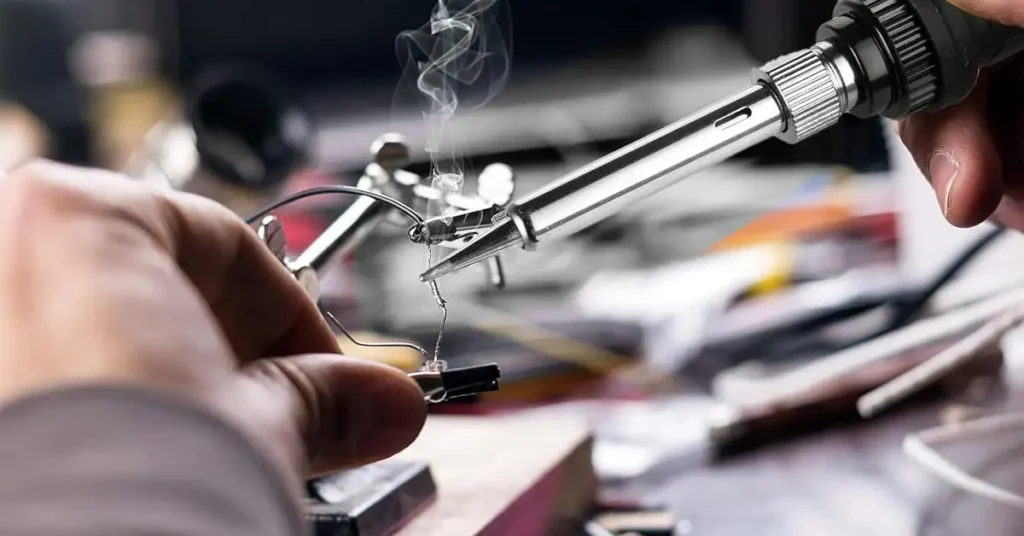
I remember the first time I really struggled with a simple repair. I was in my garage, trying to fix a loose wire on an old guitar pedal.
I had my iron hot and my solder ready. I touched the wire, fed the solder in, and waited for it to flow. But it didn’t happen.
Instead, the solder turned into a stubborn little ball. It sat on top of the wire like a drop of water on a waxed car. It mocked me.
If you are asking, “Why is my solder balling up?” I know exactly how annoying it feels. I learned that this happens for three main reasons. Let me share what I found.
Table of Contents
It All Starts With Dirt
The biggest cause I found was dirt. In technical terms, we call this oxidation. But really, it is just a layer of rust you can’t always see.
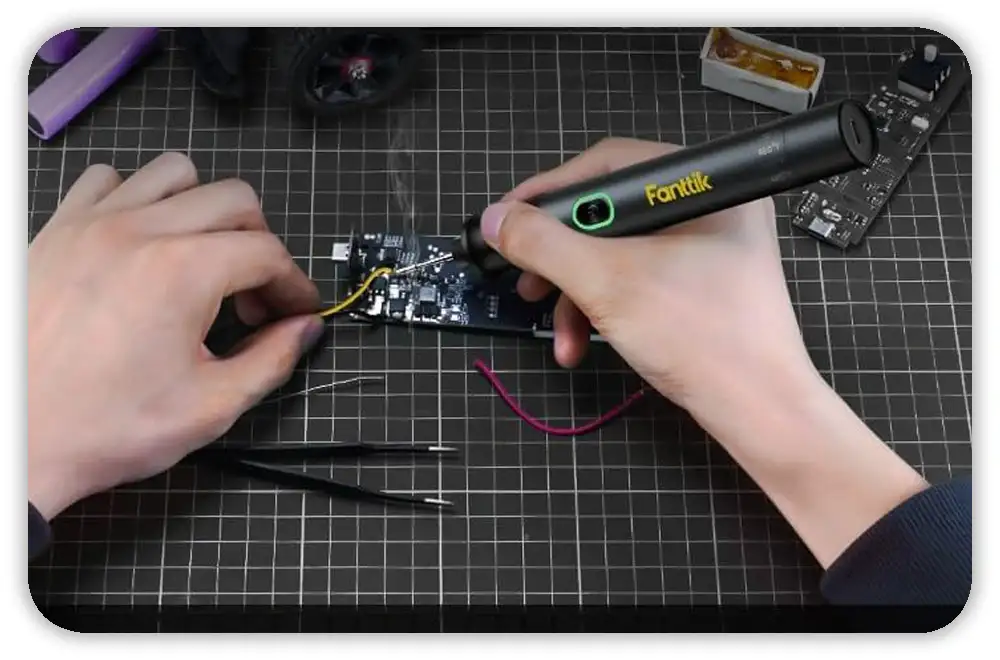
When I looked closer at my pedal, the copper pad was dull. It wasn’t shiny. Solder hates dirty surfaces. It refuses to stick to them.
Instead of spreading out flat, the solder pulls tight into a ball. It tries to get away from the dirty metal.
What I do now: I never trust a joint just because it looks okay. I take a pencil eraser and give the pad a quick scrub. If the metal shines, the solder sticks.
The “Cold Joint” Mistake
I used to make a classic rookie mistake. I would melt the solder on my iron tip first, then try to move it to the part.
I thought I was being fast. I was actually just making “cold balls” of solder. This ruined the connection.
The moment solder melts on the iron, the smoke you see is the flux burning off. Flux is the cleaner that helps solder stick. If you burn it off early, the solder dies.
My new trick: I hold the iron against the part for two seconds first. I let the pin and the pad get hot. Then, I feed the solder into the joint, not the iron.
The US Solder Issue
Living in the USA, I have noticed a big change in what we buy. Most stores here now sell lead-free solder to meet safety rules.
If you buy solder at a local hardware store, it is likely lead-free. This stuff is safer, but it is harder to use. It melts at a higher heat and balls up faster.
I found that lead-free solder doesn’t flow as smooth as the old stuff. It tends to look grainy and stays in a clump if your iron isn’t hot enough.
If you have a US-standard lead-free roll, try turning your iron heat up. I set mine to about 700°F (370°C). This helps the ball flow flat.
The Magic Ingredient: Flux
When my solder starts balling up, my secret weapon is extra flux. I keep a “flux pen” in my drawer at all times.
Solder wire has a little bit of flux inside it, but it is often not enough. This is true if you are fixing an old joint.
When I see a ball form, I stop. I don’t add more solder. That just makes a bigger ball.
I brush a little liquid flux on the joint and touch it with the iron again. The ball suddenly melts and flows flat. It feels like magic.
My Quick Checklist
Here is what runs through my head when things go wrong. This list has saved me hours of pain.
- Is the tip shiny? If my iron tip is black, it won’t pass heat. I clean it on brass wool until it looks like silver.
- Is the part hot? I make sure I am heating the leg of the part, not just the wire.
- Did I use flux? If the solder looks round and dull, I add flux right away.
Final Thoughts
Soldering is all about heat and clean parts. When your solder balls up, it is telling you one of those things is missing.
Don’t get mad at the solder. Just clean your tip, add some flux, and try again. Once you get that shiny shape, the stress goes away.
FAQs – Why Is My Solder Balling Up
Why is my solder balling up on the pad?
Solder balls up when the metal is dirty. Rust or oil stops it from sticking. Clean the spot well and add flux. This helps the hot solder flow flat onto the joint.
How do I fix a ball of solder?
Do not add more wire. Let the joint cool down first. Add liquid flux to the ball. Heat it again with your iron. The flux cleans the part so the solder can melt and bond.
Why won’t solder stick to my iron tip?
Your tip likely has black rust on it. The solder rolls right off a dirty tip. Clean it with brass wool until it is shiny. A clean tip holds the solder and transfers heat.
Do I need extra flux for soldering?
Yes, flux is a huge help. It cleans the metal as you work. Without flux, solder balls up and falls off. Use a flux pen to help the lead-free solder stick to the pad.
As an Amazon Associate, We earn from qualifying purchases