
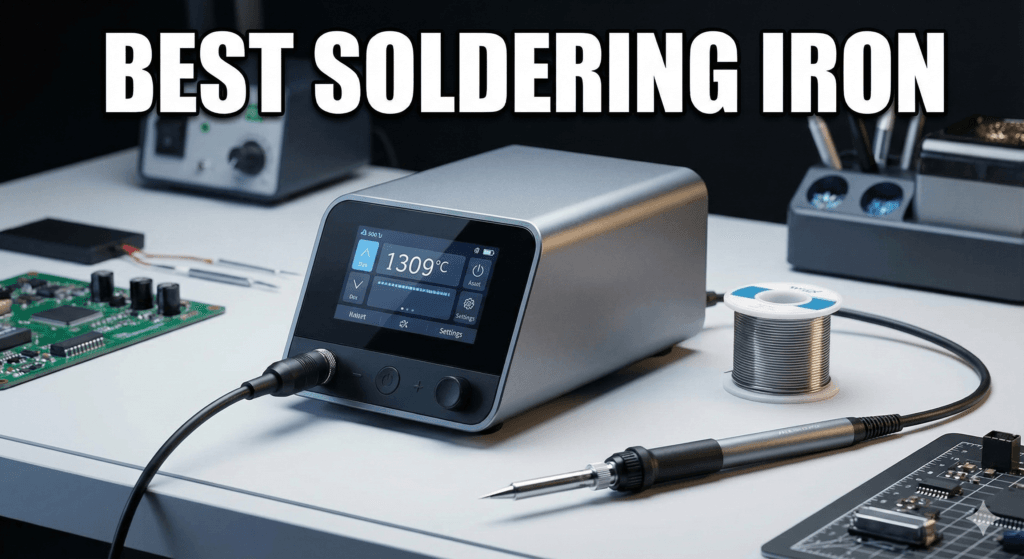
I still remember the nasty smell of burnt plastic from a rainy Tuesday in my garage. I was trying to fix a broken toy with a cheap iron that had no heat settings and a stiff, heavy cord.
It knocked my stand over constantly, and I struggled with the mess for two hours. The solder just balled up without sticking, and I ended up ruining the circuit board completely.
That frustrating day taught me that your tools matter just as much as your skills. A bad tool fights against you, while a good tool feels like an extension of your hand.
Since then, I have tested dozens of stations by fixing drone motors in the cold and repairing consoles on my kitchen table. Here is what actually works for me.
Table of Contents
The Reliable Tank: Hakko FX-888DX
If you visit any maker space in the US, you will likely see a blue and yellow box on the workbench. That is the Hakko FX-888DX, and while it looks like a colorful toy, it performs like a total beast.
I have dropped mine on concrete floors and accidentally left it on overnight, yet it works perfectly every time. It heats up fast and holds that heat well, which is vital when you are soldering thick wires or ground planes.
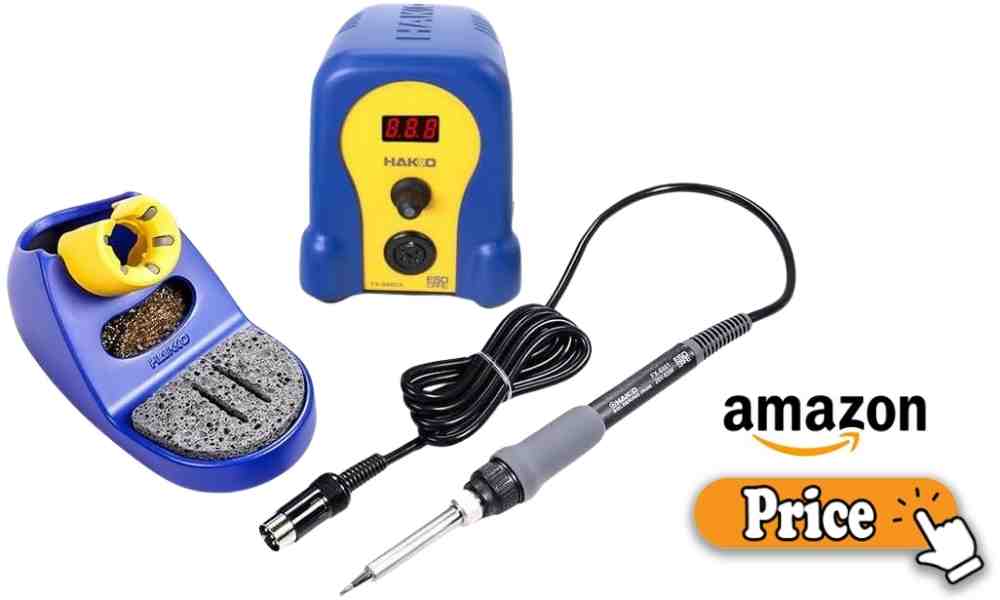
My real-life take: The interface is the only weird part because it only has two buttons, making it feel like setting an old digital watch. However, once I set mine to 350°C (660°F), I rarely ever have to touch the settings again.
US Insight: You should buy tips from trusted US shops like Adafruit or SparkFun. Avoid the cheap generic clones on Amazon because they just don’t transfer heat as efficiently.
Pros:
- Built like a tank to survive accidental drops.
- Huge selection of reliable tip shapes available locally.
- Excellent heat recovery for heavy-duty jobs.
Cons:
- The two-button menu is confusing to learn at first.
- The bright color scheme isn’t for everyone.
- It takes up a fair amount of space on your desk.
The User-Friendly Choice: Weller WE1010NA
I recently helped a friend set up his first workbench, and since he is new to this, we picked up the Weller WE1010NA. It is the main rival to the Hakko, but it focuses much more on being easy to use.
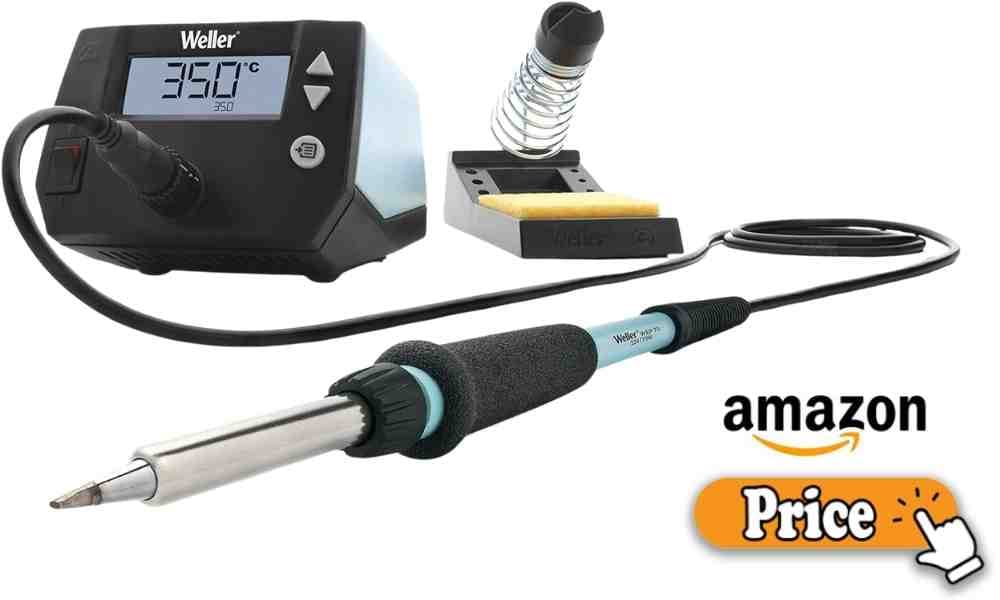
Using this station felt like a breath of fresh air because the screen is big, bright, and easy to read. You don’t need a manual since you just press the “up” or “down” buttons to change the temperature instantly.
The pencil handle is slim and fits my hand perfectly, which helps a lot when working on tiny chips. You really don’t want to fight with a heavy cable when you are trying to be precise.
US Insight: This unit is built specifically for our 120V outlets and is safety certified. That is why you see them in so many American high school tech labs.
Pros:
- Extremely intuitive interface that is great for beginners.
- Slim, ergonomic handle reduces hand strain.
- Large, clear LCD screen shows the temperature perfectly.
Cons:
- The plastic stand is light and slides around the desk.
- Heat recovery is slightly slower than the Hakko.
- The power cable feels a bit stiff out of the box.
The Modern Marvel: Pinecil V2
Last year, I decided to try a “smart” soldering iron called the Pinecil V2, which is smaller than a standard pen. I was skeptical at first, wondering how something so tiny could actually handle real work.
I was wrong, because this little tool is an absolute powerhouse that runs off a simple USB-C port. I can power it with the same brick I use for my laptop, which is incredibly convenient.
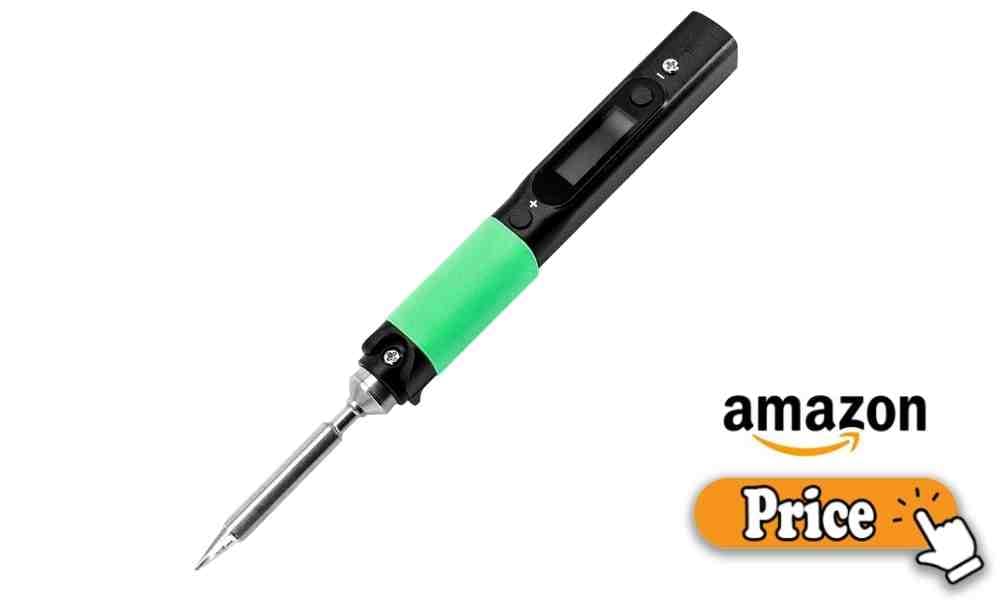
I once fixed a drone in a park using just a portable power bank, and the iron heated up in about six seconds. That is actually faster than my big, heavy bench station at home.
US Insight: You will need a decent 65W charger to get the most out of it. Since most of us in the States already have one for a MacBook or Dell laptop, this iron is a steal.
Pros:
- Incredible value for the money.
- Heats up in seconds so you can work fast.
- Runs off standard laptop chargers or power banks.
Cons:
- Does not come with a power supply included.
- The body can get a little warm during long sessions.
- The small screen might be hard for some to read.
Don’t Forget the Essentials
Buying the iron is only the first step, and I learned this lesson the hard way. A great iron with bad supplies is useless, so you need the right extras to get clean results.
Lead-Based Solder (63/37): If you are a beginner, stick to leaded solder because lead-free options require higher heat and are harder to control. Just remember to wash your hands well after you are done working.
Flux is Your Friend: Flux is a magic paste that cleans the metal as you heat it, and without it, your solder will just fall off. I always keep a flux pen nearby because it makes every joint look shiny and professional.
Brass Wool over Sponges: Please ditch the wet sponge because wiping a hot tip on it causes thermal shock. I use a brass wool ball instead, which cleans the tip gently while keeping the heat high.
Final Thoughts
So, which one should you pick for your workbench? If you want a tool that will outlive you, get the Hakko, but if you want simplicity, grab the Weller.
If you love gadgets and want to save space, the Pinecil is an incredible choice. Soldering is a superpower that lets you fix things, so pick a tool that feels right and start learning.
FAQs – Best Soldering Iron
Is the Hakko FX-888DX worth the money?
Yes, it is built like a tank for sure. It will last for many years. The heat control is great for the price. It is the best choice if you want a tool that works.
Can I use the Pinecil V2 for big repairs?
Yes, but you need a good power block. A 65W charger makes it very strong. It works well for drones or small gadgets. It is a great portable tool for your bag.
Do I need lead-free solder for my projects?
No, leaded solder is much easier to use. It melts fast and flows smooth. Lead-free needs high heat to work. Just wash your hands well when you are done with it.
Which tip shape is best for beginners?
Start with a chisel tip for your work. It holds heat better than a sharp point. This makes it easy to heat up the pad. It helps you make a strong and clean joint.
As an Amazon Associate, We earn from qualifying purchases