
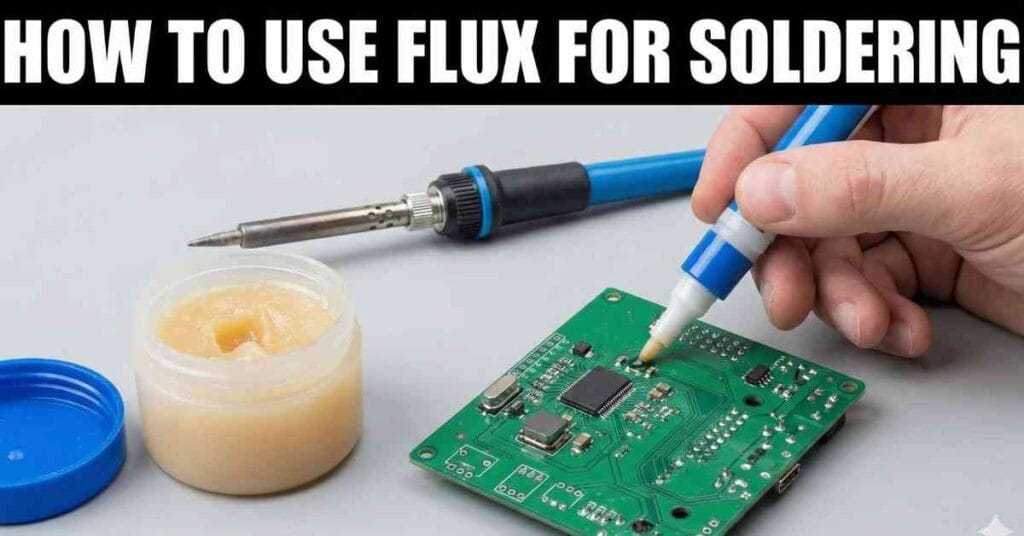
It was a crisp Saturday morning in my garage, and I had a simple repair to finish. I heated the joint and added solder, expecting a smooth bond. Instead, the solder balled up and rolled off the wire like water on a waxed hood.
I sat there frustrated, staring at a cold, ugly lump of metal. That was years ago, before I understood that heat is not enough. Flux is usually the missing piece of the puzzle. This guide shows how to use it right, so you don’t just make a mess.

Table of Contents
What Flux Does in Soldering
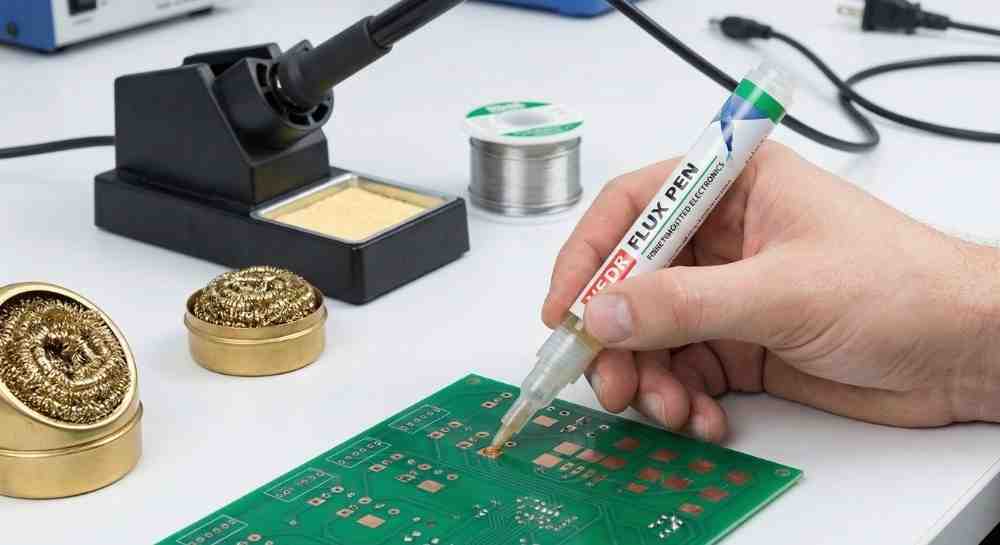
Flux is not just optional magic dust; it is a necessity. It solves a specific chemical problem that your soldering iron cannot fix on its own.
Oxidation on metal
Oxygen attacks metal the second it touches air. This creates a thin, invisible skin called oxidation on copper and brass. Even a shiny new wire can be “dirty” on a microscopic level because of this layer.
If you try to solder over this oxide skin, the bond will fail. The solder will just sit on top without grabbing the metal. This creates a weak connection that will likely break under vibration.
How flux actually works
Flux fights this oxidation chemically. When you heat it up, it turns into a mild acid that eats through the oxide layer. It cleans the metal right at the moment you need it most.
It also acts as a shield. It coats the hot metal to stop air from touching it while you work. This helps the solder spread out flat, or “wet,” instead of bunching up into a ball.
Types of Flux and When to Use Each One
Not all flux is the same. I once ruined a circuit board by using a tub of flux meant for plumbing. It is a mistake you only make once.
Rosin flux
For electronics, rosin flux is king. It comes from pine tree sap and becomes active only when hot. You will see types labeled R, RMA, or RA on the bottle.
If you are soldering PCBs or wiring a guitar, this is what you want. In the US, brands like Kester or MG Chemicals are standard in most workshops. They are safe for fine wires and won’t eat your components.
No-clean flux
“No-clean” flux sounds like a dream come true. The idea is that the residue is harmless and you can leave it there. I use this for quick wire repairs where scrubbing isn’t an option.
However, “no-clean” does not mean “invisible.” It still leaves a clear, shiny film behind. If you are doing precision work, I suggest cleaning it anyway just to make the job look professional.
Acid flux
This is the aggressive stuff you find in the plumbing aisle at Home Depot. It usually contains zinc chloride and is designed for sweating copper pipes.
Acid flux eats copper over time. If you put this on a circuit board, it will destroy the delicate traces within weeks. The fumes are also harsh, so keep this far away from your electronics bench.
How to Use Flux for Soldering Step by Step
This is the part most guides rush through. I have found that taking small steps here saves huge headaches later on.
Clean before you flux
Flux is a chemical cleaner, not a broom. If your wire has oil, grease, or thick dust on it, you must clean that first.
I use a simple alcohol wipe or a piece of Scotch-Brite pad. You want the metal to be physically clean before you ask the flux to do the chemical cleaning.
Apply flux the right way
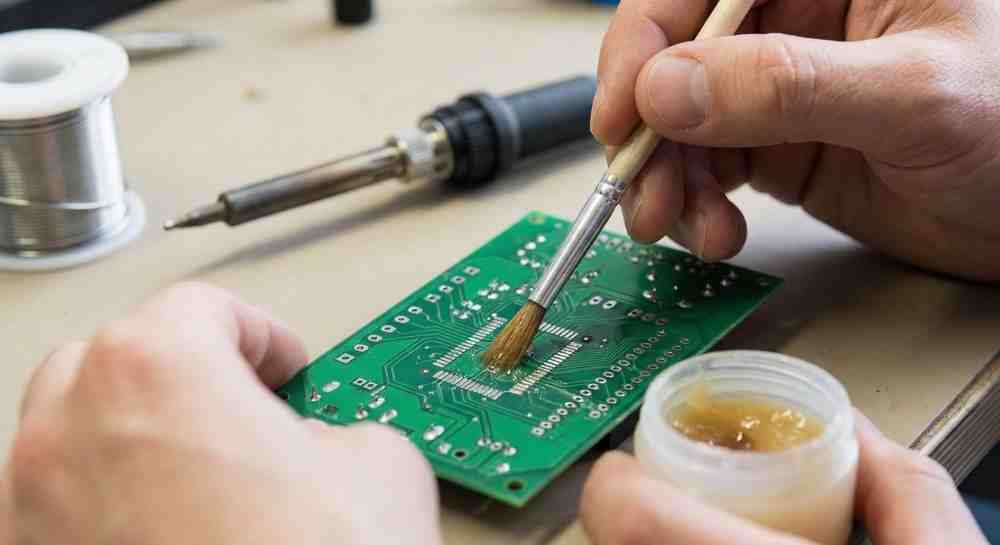
You do not need a puddle of goo. I prefer a flux pen for circuit boards because it works like a marker. It puts a thin, controlled layer exactly where I need it.
For wires, a paste works better. Dip the stripped wire end just slightly into the tin. You only need a tiny coating. If it drips when you heat it, you used way too much.
Heat, then solder
Get your iron to the right temperature. For most lead-free electronics work, I set my station around 650°F to 700°F.
Touch the iron to the joint and let the flux sizzle for a split second. That sound means it is cleaning the metal. Then feed the solder in; if the flux is working, the solder will flow like water.
Common Flux Mistakes That Ruin Good Solder Joints
Most soldering problems blamed on “bad irons” are really just flux problems. I have committed all of these errors in my own workshop.
Using too much flux
More is not better here. When I started, I drowned my boards in flux paste. The result was a sticky, brown mess that attracted dust and hair.
Excess flux can also boil and pop, spitting hot solder onto your hand. On fine chips, too much flux can actually cause solder bridges, connecting pins that shouldn’t touch.
Burning flux before solder flows
Flux has a short lifespan. If you hold the iron on the joint too long without adding solder, the flux burns off. It turns into a hard, black crust.
Once it chars, it stops working and actually blocks the solder. If you hold the heat for more than three seconds, you might need to clean it off and start over.
Using the wrong flux for the job
I mentioned this before, but it bears repeating. Plumbing flux contains strong acids. It is corrosive and conductive.
I have seen people ruin expensive drone flight controllers by using plumbing paste because it was handy in the garage. Always check the label. If it mentions “pipes,” keep it off your wires.
Cleaning Flux Residue
Some joints look fine until weeks later. Then they turn green and fail. Residue is often the culprit behind this corrosion.
When cleaning is necessary
If you live in a humid part of the US, like Florida or the Midwest, clean your boards. Humidity turns old flux residue acidic over time.
For high-voltage boards, cleaning is mandatory. Flux residue can be conductive and cause current to leak. If I am building something for outdoor use, I always scrub the board.
Safe cleaning methods
Isopropyl alcohol is my go-to cleaner. Get the high percentage stuff, like 90% or 99%. The standard rubbing alcohol in your medicine cabinet has too much water.
I use a stiff brush, like an acid brush or an old toothbrush. Dip it in alcohol and scrub the joint gently. Then, dab it dry with a lint-free wipe so the sticky mess doesn’t just dry back onto the board.
Flux Tips From Real Workshop Use
These are the habits I picked up after fixing the same mistake twice. They make the job faster and cleaner.
Flux your tip lightly—not just the joint
I always add a tiny bit of flux to my iron tip before I start. It helps clean the tip itself and prepares it for the solder.
A clean, shiny tip transfers heat much faster than a dull one. If your tip is black, it won’t melt the solder on the joint. A quick dip in tip tinner keeps it ready for action.
Reapply flux on rework
If you mess up a joint and need to reheat it, always add fresh flux. The old flux is already “spent” and won’t help you.
Reheating old solder without new flux results in a dull, gritty joint. I keep a flux pen handy just for this. A quick dab makes the old solder flow like new again.
Storage and shelf life
Flux paste can dry out if you aren’t careful. If the cap is left loose, it turns into a hard wax. I lost a whole jar of paste last winter because of this.
Flux pens can also clog. If you leave them in a cold garage, they might not flow well. I try to store my chemicals in a consistent temperature to save money.
When Flux Won’t Fix the Problem
Flux helps a lot, but it can’t break the laws of physics. Sometimes the issue is your setup, not the cleanliness of the joint.
Not enough heat
If you are soldering a thick wire or a large ground plane, flux won’t help a cold iron. The metal sucks the heat away too fast.
I have tried to flux my way out of a cold joint, and it never works. You need a powerful iron with a larger tip to keep the joint hot enough for the solder to flow.
Wrong solder alloy
Lead-free solder behaves differently than leaded solder. It needs higher heat and often requires a more active flux to work well.
If you use a mild flux meant for leaded solder with a difficult lead-free alloy, it might not work. Match your materials to the job, and the results will follow.
FAQs – How to Use Flux for Soldering
Do I really need flux if my solder already has a rosin core?
Yes, you often do. The flux inside the core is great, but it burns off fast. Adding extra flux helps the solder flow better. It makes the joint stronger and shinier.
Can I use plumbing flux for electronics?
No, never use it. Plumbing flux has strong acid that eats copper. It will ruin your circuit board in just a few weeks. Stick to rosin flux for all your wires.
How do I clean sticky flux off my board?
Use isopropyl alcohol. Get the 90% or 99% kind from the store. Scrub the sticky spot gently with an old toothbrush. Wipe it dry with a clean cloth.
Why does my solder ball up and roll away?
The metal is likely dirty or oxidized. Flux fixes this by cleaning the metal as you heat it. It helps the solder stick flat instead of beading up.
Does flux go bad or expire?
Yes, it can dry out. Old flux paste gets hard and won’t work well. Keep the lid tight. If it looks dry or crusty, it is time to buy a new jar.
As an Amazon Associate, We earn from qualifying purchases