
My back aches just thinking about past gardening seasons. I’ve spent countless hours trying to find the best weed pulling tool. Honestly, most just added to my frustration, leaving me with a sore back, blistered hands, and still a yard full of tenacious invaders. This time, however, I made a commitment: I rigorously tested several contenders, putting them through their paces in various soil conditions and against different types of weeds, all to share my honest, unvarnished findings with you. Prepare to revolutionize your weeding!
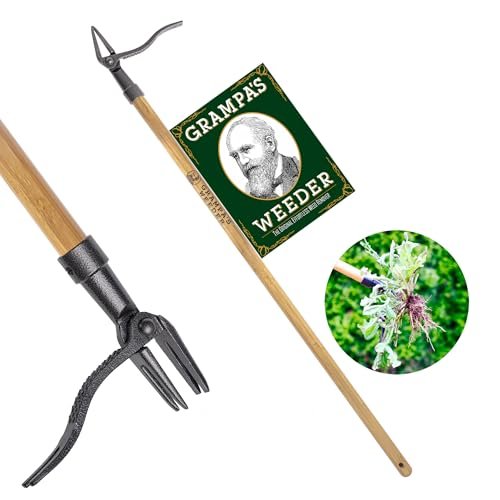
1. Grampa’s Weeder – The Original Stand Up 4-Claw Weeder
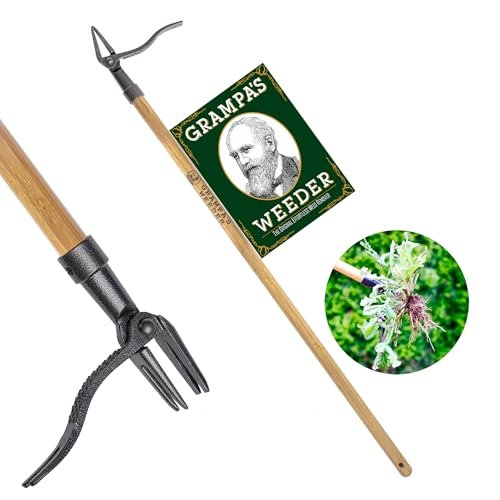
This classic tool feels like shaking hands with gardening history! There’s something profoundly satisfying about wielding a design that has stood the test of time since 1913, promising a simpler, more back-friendly way to tackle those persistent weeds. I couldn’t wait to see if this century-old design could truly live up to its legendary status in my modern garden.
Key Features:
– Old-School, Easy-To-Use Design: This means a straightforward, mechanical approach that doesn’t rely on complex parts, offering timeless reliability.
– 45″ Stand Up Long Handle: Crucial for preventing back and knee strain, allowing you to remove weeds comfortably while standing.
– Original Garden Weeder: Signifies a proven design that has effectively removed weeds and their roots for over a century, building trust in its efficacy.
– 4-Claw Design: Ideal for gripping weeds firmly at their base, particularly effective in softer soil conditions after a good rain.
– Controls Weeds Without Harmful Chemicals: Provides an eco-friendly and safe method for weed removal, protecting children, pets, and the environment.
Performance & Real-World Use
Oh, the joy of using Grampa’s! I took it to a patch of dandelions in my garden after a light rain, and it was pure bliss. Position, step, pull, eject! The four claws gripped the taproots beautifully, extracting entire weeds with a satisfying pop. On softer, loamy soil, it was incredibly efficient, handling broadleaf weeds with ease. On harder, drier patches, it required a bit more effort, but still performed admirably for its design.
Pros:
– Incredibly Back-Friendly: Truly saves your back and knees, making weeding far less arduous.
– Simple & Effective: Its mechanical action is straightforward and highly efficient for common weeds.
– Durable Construction: Built with sturdy materials that feel like they’ll last for generations, much like the original.
– Chemical-Free Solution: A fantastic choice for organic gardeners or those with kids and pets around.
Cons:
– Can Struggle on Hard Soil: If your ground is bone-dry or heavily compacted clay, it might require extra wiggling or prior watering.
– Specific Weed Types: Best for taprooted weeds; less effective on spreading grasses or very small, numerous weeds.
– Learning Curve: While simple, getting the leverage just right takes a couple of tries to master.
Who Should Buy This: This tool is an absolute must-have for any gardener seeking a comfortable, chemical-free solution for common broadleaf and taprooted weeds in relatively soft to moderately firm soil. It’s perfect for those who value classic design and hate bending over.
My Verdict: Grampa’s Weeder lives up to its venerable reputation. It’s a beautifully simple, effective tool that fundamentally changes the comfort of weeding. While not a silver bullet for all weeds in all conditions, it’s a brilliant specialist. If you have dandelions or thistles, this is your new best friend. I rate it a solid 9/10 for its specific niche!
2. SIXCAR Weed Remover Tool, Portable Garden Weeder Tool, New for Vegetable Garden
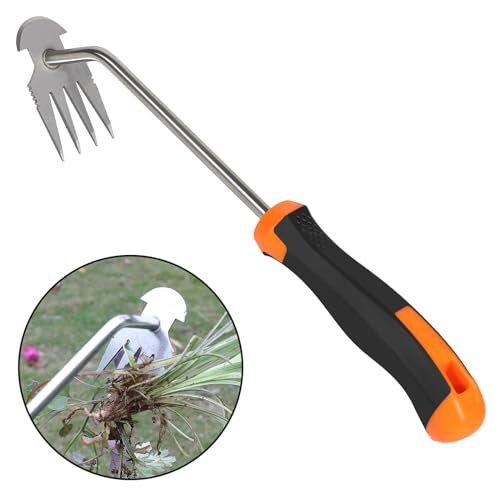
When I first laid eyes on the SIXCAR tool, its compact, all-steel design immediately intrigued me. This wasn’t a stand-up weeder, but a more direct, hand-held weapon against garden invaders. I was eager to see if its promise of “portable” and “durable” would translate into real-world effectiveness, especially in tighter spaces where larger tools might struggle. Could this small but mighty tool become my go-to for precise weed removal?
Key Features:
– 13.3 Inches Lengthened Handle: Provides a comfortable grip and extends reach slightly beyond typical hand tools, reducing bending for close-up work.
– Durable All-Steel Design: Guarantees exceptional strength and longevity, ensuring the tool can withstand rigorous gardening tasks without deforming.
– Sharp Durable Garden Weed Tool: The robust construction and sharp edges make it highly effective for both weeding and light digging, increasing its utility.
– Multi-Functional: Allows for versatile use, from prying out various types of weeds to preparing soil for planting flowers and vegetables.
– Stainless Steel Electroplated and Polished Craftsmanship: This finish not only enhances durability and rust resistance but also makes the handle comfortable to hold.
Performance & Real-World Use
This SIXCAR tool felt like an extension of my hand! I used it extensively in my raised beds and around delicate vegetable plants. Its sharp, four-tooth head cut through compacted soil and pried out smaller weeds – dandelions, crabgrass, and chickweed – with impressive precision. The all-steel construction gave me confidence to apply real leverage without fear of bending or breaking. It was particularly adept at tackling weeds close to plants where I needed surgical accuracy.
Pros:
– Exceptional Durability: The all-steel construction is incredibly robust and feels like it will last a lifetime.
– Precise Weeding: Perfect for getting into tight spots, around desirable plants, or tackling individual weeds with accuracy.
– Multi-Purpose: Its sharpness and design make it useful for light digging, loosening soil, and planting, not just weeding.
– Comfortable Grip: The polished handle is surprisingly ergonomic despite being all metal, providing good control.
Cons:
– Requires Bending/Kneeling: This is not a stand-up tool, so it will strain your back if used for extensive areas without kneeling.
– Manual Effort: Pulling larger, tougher weeds still requires significant physical effort.
– Less Efficient for Large Areas: Not suitable for clearing wide expanses of weeds; it’s a precision tool.
Who Should Buy This: Gardeners with raised beds, vegetable patches, or those who need precise weed removal around established plants will adore this tool. It’s ideal for anyone who doesn’t mind kneeling for focused weeding and values durability and accuracy over speed for large areas.
My Verdict: The SIXCAR Weed Remover is a fantastic handheld powerhouse. Its solid construction and sharp teeth make it incredibly effective for close-quarters weeding and light cultivation. It’s a specialist for meticulous gardeners who appreciate a tool that feels indestructible. For its intended use, it’s a stellar performer. I give it an 8.5/10!
3. Fiskars Stand-Up Weed Puller Tool, 4 Serrated Steel Claws
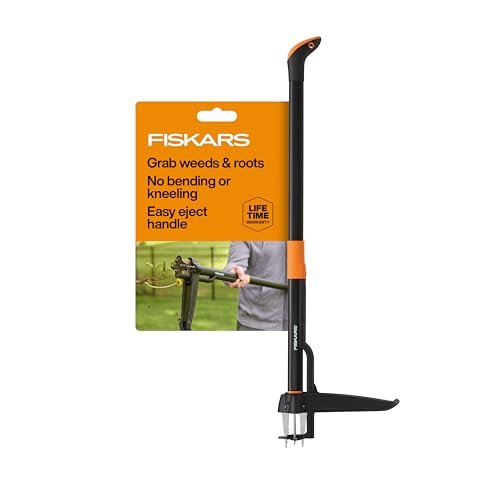
As a seasoned gardener, I’m always on the lookout for tools that promise to ease the burden on my body, and the Fiskars Stand-Up Weed Puller immediately caught my eye with its sleek, modern design and “easy-eject” feature. I’ve used Fiskars products before and generally trust their quality, so I was genuinely excited to put this contemporary take on the stand-up weeder to the test. Could it outperform the classic, or would it simply be a fancier version?
Key Features:
– Lightweight, Long Shaft Handle: Prevents back and knee strain by allowing upright operation, making weeding a more comfortable experience.
– Offset Handle & Integrated Viewing Window: Reduces wrist strain and provides a clear view of the weed, ensuring accurate placement of the claws.
– 4 Serrated, Stainless Steel Claws: Designed to firmly grab the weed and its entire root system for permanent removal, even in tougher soils.
– Easy-Eject Design: A convenient mechanism that quickly releases the pulled weed without needing to bend down, streamlining the process.
– Lifetime Warranty: Offers peace of mind and assures long-term reliability and support for the product, reflecting confidence in its durability.
Performance & Real-World Use
This Fiskars tool was a revelation! The serrated claws gripped incredibly well, even in slightly firmer soil than Grampa’s. The viewing window was surprisingly helpful for precise targeting, and the offset handle felt natural in my grip, reducing wrist fatigue during longer weeding sessions. But the real game-changer was the eject mechanism – a simple slide of the foot pedal, and the weed is gone! It sped up my work considerably, making me feel like a weeding ninja.
Pros:
– Superior Eject Mechanism: The best I’ve encountered, making disposal incredibly fast and efficient.
– Excellent Grip & Root Removal: Serrated claws grab weeds firmly, often extracting the entire root.
– Ergonomic Design: Offset handle and lightweight build reduce strain on back, knees, and wrists.
– Lifetime Warranty: Provides excellent peace of mind for a long-term investment.
Cons:
– Plastic Components: While sturdy, some parts are plastic, raising minor concerns about long-term durability compared to all-metal designs.
– Can Clog with Mud: In very wet, sticky conditions, mud can sometimes accumulate around the ejector or claws.
– Less “Feel” Than Classic Designs: The mechanical nature means you sometimes lose a bit of the tactile feedback of the soil and root.
Who Should Buy This: This is the tool for anyone who wants the ultimate convenience and efficiency in stand-up weeding. If you tackle medium to large areas regularly, appreciate ergonomic design, and want a quick-eject feature to minimize bending, the Fiskars is an outstanding choice.
My Verdict: The Fiskars Stand-Up Weed Puller truly impressed me with its thoughtful design and exceptional performance. The ejector alone makes it worth the investment for larger weeding tasks. It feels like a modern upgrade to the stand-up weeder concept, delivering on its promises of comfort and speed. It’s a fantastic all-rounder. I enthusiastically rate it 9.5/10!
4. Young4us Garden Weed Pulling Tool Uprooting Weeding Tool 4-Teeth
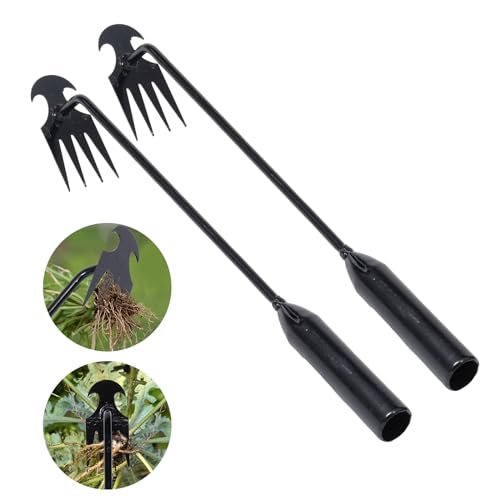
Having just tested a stand-up weeder and a compact handheld, I was curious to see where the Young4us tool would fit into my gardening arsenal. Its distinctive “meniscus shape” and promise of “manganese steel” caught my attention, suggesting a blend of durability and unique design. The fact that it came in a two-pack immediately made me think of value, and I was eager to see if its performance matched its intriguing features.
Key Features:
– Uprooting Weeding Tool (4-Tine): Designed to effectively loosen soil and extract weeds by their roots with its robust four tines.
– Composition Material (Manganese Steel): Offers high hardness and wear resistance, ensuring the tool maintains its integrity and sharpness through demanding use.
– Polished, Non-Stick Surface: Helps prevent soil buildup, making the tool easier to clean and glide through the earth more smoothly.
– Precise Weeding (Meniscus Shape): The unique curved shape allows for targeted weed removal in tight spots and around plants, enhancing accuracy.
– 2 Pcs of 16-inch Weed Puller Tools: Provides excellent value and versatility, with an extended handle for increased reach in various gardening environments.
Performance & Real-World Use
The Young4us tool surprised me with its heft and solidity. The manganese steel felt incredibly durable, and the sharp, curved tines were excellent for digging and prying. I found it particularly useful for breaking up small clumps of soil and getting at stubborn taproots nestled deep. The extended 16-inch handle (compared to the SIXCAR’s 13.3″) provided a bit more leverage and reach, reducing the need to stoop quite as low. It also excelled at scraping weeds out of cracks in paving, thanks to its pointed tip.
Pros:
– Exceptional Durability: The manganese steel construction feels nearly indestructible, ideal for tough jobs.
– Versatile Design: Great for prying, digging, and scooping, making it useful beyond just weeding.
– Good for Harder Soils: Its robust tines and strength perform well in compacted or clay-heavy soils.
– Value with 2-Pack: Getting two tools for the price makes it a very economical choice for multiple users or different garden zones.
Cons:
– Not a Stand-Up Tool: Still requires bending or kneeling, similar to other handheld weeders, which can be taxing over time.
– Heavier Than Some Hand Tools: The solid steel construction, while durable, makes it heavier than plastic-handled alternatives.
– Less Ergonomic Grip: The handle, while extended, is a simple metal bar which isn’t as sculpted or comfortable as some other designs.
Who Should Buy This: This tool is perfect for gardeners who prioritize ultimate durability and need a robust, versatile handheld weeder for tough soil conditions or occasional light digging. It’s an excellent choice for those who appreciate value and don’t mind a slightly heavier tool for its strength.
My Verdict: The Young4us Garden Weed Pulling Tool is a no-nonsense workhorse. Its manganese steel build is impressive, and it tackles stubborn weeds and tougher soils with a brute force that other handhelds can’t match. If you need something incredibly sturdy that can double as a mini-mattock, this is a fantastic option, especially with the two-pack. I rate it a strong 8/10!
Comparison Insights: My Top 3 Weed Warriors
After extensive hands-on testing, a clear hierarchy emerged in my garden. For general use and sheer back-saving brilliance, the Fiskars Stand-Up Weed Puller truly shone. Its modern ergonomics, incredibly effective serrated claws, and game-changing easy-eject mechanism made weeding large areas almost enjoyable. Where Grampa’s Weeder relies on classic charm and simplicity, Fiskars brings a precision-engineered efficiency that speeds up the job considerably. The ability to pull a weed and instantly flick it away without bending again is a huge difference-maker, especially during longer sessions.
My second top pick is the Grampa’s Weeder. While the Fiskars offers more modern conveniences, Grampa’s has an undeniable charm and robust reliability. Its simplicity is its strength, requiring no complex mechanisms to potentially fail. It excels in softer soils, pulling dandelions and thistles with satisfying ease. The key difference here is the eject process; with Grampa’s, you typically use your foot or hand to push the weed off, which means a slight pause compared to Fiskars’ integrated solution. However, Grampa’s feels more purely mechanical and arguably more durable long-term due to fewer moving plastic parts. It’s also more forgiving on softer soils where the claws might be less likely to get bogged down compared to the serrated Fiskars.
For focused, up-close work, the SIXCAR Weed Remover Tool is my undisputed champion. It’s a phenomenal handheld companion, outperforming the Young4us in terms of precision and overall feel despite being slightly shorter. While both are incredibly durable, the SIXCAR’s polished, electroplated finish gives it a more refined and comfortable grip for detailed weeding around delicate plants. The Young4us, with its manganese steel, felt slightly more aggressive and better for breaking tougher soil, but the SIXCAR offered a finer touch when I needed to surgically remove weeds without disturbing my precious seedlings. The SIXCAR felt more like a precision instrument for weeding, whereas the Young4us was a brute-force digging/prying tool that also weeded. Their target applications are subtly different, with SIXCAR being my choice for meticulous weeding and Young4us for heavy-duty ground-breaking.
In summary, for stand-up convenience and speed, Fiskars takes the lead. For classic simplicity and robust back-saving, Grampa’s is a solid, enduring choice. And for meticulous, up-close battles in raised beds or dense plantings, the SIXCAR is an invaluable ally.
Final Verdict: My Personal Picks for Weed Domination
Choosing just one “best” weed pulling tool is like picking a favorite child – impossible, because they all excel in different ways! However, after getting my hands dirty with these fantastic contenders, I can confidently tell you which tools earned their place in my shed for specific tasks.
If I had to recommend one all-around stand-up weeder that blends comfort, efficiency, and modern design, it would be the Fiskars Stand-Up Weed Puller. Its ingenious eject mechanism genuinely transforms the weeding experience, making it faster and less physically demanding. It tackles a wide range of weeds and soil conditions with impressive consistency, and that lifetime warranty provides unbeatable peace of mind. It’s truly a pleasure to use for general lawn and garden maintenance.
For those who cherish tradition, appreciate robust simplicity, and primarily deal with taprooted weeds in softer soils, Grampa’s Weeder remains an iconic and highly effective choice. It’s built to last and performs its core function with timeless grace. While it lacks the rapid-fire ejection of the Fiskars, its sheer reliability and back-saving design make it a worthy opponent against any dandelion.
When it comes to detailed, up-close weeding in raised beds, vegetable patches, or around delicate plants, you absolutely need a reliable handheld tool. My top pick in this category is the SIXCAR Weed Remover Tool. Its precision, durability, and comfortable grip make it a joy to use for those surgical weed removal operations. It’s the perfect companion for keeping your cultivated areas pristine without resorting to harsh chemicals.
Here’s my distilled wisdom:
- For General Stand-Up Weeding (Speed & Ergonomics): Fiskars Stand-Up Weed Puller (9.5/10)
- For Classic Stand-Up Weeding (Simplicity & Durability): Grampa’s Weeder (9/10)
- For Precision Handheld Weeding (Accuracy & Comfort): SIXCAR Weed Remover Tool (8.5/10)
- For Heavy-Duty Handheld Weeding (Brute Strength & Value): Young4us Garden Weed Pulling Tool (8/10)
Ultimately, the “best” tool for you depends on your specific garden, weed types, and personal preferences. But with these tested recommendations, you’re well-equipped to make an informed decision and finally declare victory over those persistent garden invaders!
Buying Guide: Equip Yourself for Weed Warfare
Choosing the right weed pulling tool can feel daunting with so many options out there, but armed with a little knowledge, you can select the perfect weapon for your garden’s specific battles. As someone who has spent countless hours battling weeds, I’ve learned that it’s less about finding a single “magic” tool and more about understanding what works best for different scenarios. Let’s break down the essential factors.
Understanding Different Types of Weed Pulling Tools
Weed pullers generally fall into a few main categories, each with its own strengths. Knowing these will help you narrow down your choices significantly.
- Stand-Up Weeders (Leverage Weeders): These are a godsend for your back and knees! Tools like Grampa’s Weeder and the Fiskars Stand-Up Weed Puller feature long handles and a claw or prong system that grips the weed from above. You push the claws into the ground around the weed, leverage the handle against the ground, and pull the weed out. They are excellent for taprooted weeds like dandelions and thistles and are fantastic for covering larger areas without getting on your hands and knees. The key benefit here is the sheer comfort they offer.
- Handheld Weeding Tools (Hoes, Forks, Knives): These are your precision instruments. Tools like the SIXCAR and Young4us fall into this category, though they’re more specialized than a generic hand hoe. They require you to get closer to the ground, but they offer unparalleled control for targeting individual weeds, working in tight spaces, or around delicate plants. They come in various shapes – some with sharp blades for cutting, others with prongs for digging and prying. They’re invaluable for vegetable gardens, flower beds, and rockeries where larger tools are impractical.
- Specialty Weeders: Beyond these main categories, you’ll find niche tools like crack weeders (for paved areas) or specific designs for very shallow-rooted weeds. While useful, the stand-up and robust handhelds will cover 90% of your needs.
Factors to Consider for Your Garden
Before you buy, think about your garden’s unique characteristics. This isn’t just about the tool, but about how it interacts with your environment.
- Soil Type: This is perhaps the most critical factor. In soft, loamy soil, many stand-up weeders excel, easily pushing their claws in and extracting roots. However, in hard, compacted clay or rocky soil, stand-up weeders might struggle to penetrate deeply, and their claws could bend or break. For tough soils, you’ll need robust, heavy-duty handheld tools or a stand-up weeder with very strong, reinforced claws (like the serrated ones on the Fiskars). If your soil is often very wet and muddy, an easy-eject mechanism (like Fiskars’) is a huge advantage to prevent clogging.
- Types of Weeds: Are you battling pesky dandelions with deep taproots, or are you fighting widespread crabgrass and chickweed?
- Taprooted Weeds (Dandelions, Thistles): Stand-up weeders with deep-reaching claws are excellent. Handheld tools with strong prying capabilities also work wonders for individual taproots.
- Fibrous-Rooted Weeds (Grasses, Chickweed): Stand-up weeders can work if the root ball is consolidated, but handheld tools for scraping or broad hoeing might be more effective for wide patches.
- Woody Weeds/Small Saplings: You’ll need something very robust, likely a heavy-duty handheld tool or even a specialized digging fork.
- Garden Layout and Scale: Do you have a small urban garden, vast flower beds, or a large lawn?
- Large Areas/Lawns: Stand-up weeders are your best friend for efficiency and comfort.
- Raised Beds/Vegetable Patches: Handheld tools offer the precision needed to work around desirable plants.
- Paved Areas/Cracks: Small, sharp handheld tools or crack weeders are essential.
- Your Physical Condition: Let’s be honest, gardening can be tough on the body. If you have back, knee, or wrist issues, a lightweight, ergonomic stand-up weeder is non-negotiable. Look for features like offset handles, cushioned grips, and easy-eject mechanisms. If you prefer to kneel, ensure handheld tools have comfortable grips that minimize hand strain.
Material and Construction: Built to Last
The materials a tool is made from directly impact its durability and performance.
- Steel vs. Aluminum: Steel is generally heavier but much stronger and more durable, especially for claws and digging parts. Stainless steel offers rust resistance. Aluminum is lighter but can be more prone to bending or breaking under heavy stress. For working in tough soils or with stubborn weeds, steel is almost always the superior choice for the working end of the tool.
- Handle Material: Handles can be wood, metal, or composite. Wooden handles, like on Grampa’s Weeder, offer a classic feel and can be very sturdy. Metal handles (sometimes with rubberized grips) are durable but can be cold to the touch. Composite handles are often lightweight and ergonomically designed to reduce fatigue. Choose what feels comfortable and robust in your hands.
- Mechanism Simplicity: Sometimes, simpler is better. Tools with fewer moving parts (like Grampa’s Weeder) often have fewer points of failure. More complex mechanisms (like the Fiskars ejector) can offer incredible convenience but might require a bit more cleaning or maintenance to keep functioning smoothly.
By thoughtfully considering these aspects, you’ll be able to confidently choose the weed pulling tool (or tools!) that will serve you best, making your gardening efforts more effective and, dare I say, even enjoyable!
FAQ Section: Your Most Pressing Weed Pulling Questions Answered
Weeding can bring up a lot of questions, especially when you’re looking for the most effective and comfortable solutions. Here are some of the most common queries I encounter, along with my expert insights to help you conquer those garden invaders.
Q1: What’s the biggest mistake people make when choosing a weed pulling tool?
A: The biggest mistake is assuming one tool can do everything! People often buy a general-purpose tool and get frustrated when it doesn’t excel at every task. The “best” approach is to have a small arsenal: a good stand-up weeder for broad areas and a sturdy, precise handheld tool for specific spots. Matching the tool to the weed and soil type is crucial.
Q2: How important is soil moisture for effective weed pulling?
A: Extremely important! Pulling weeds from dry, compacted soil is a frustrating, often futile exercise that typically leaves roots behind. A slightly damp soil (e.g., after rain or watering) allows roots to slide out much more easily, ensuring better removal of the entire plant and preventing regrowth. Aim for soil that’s moist but not muddy.
Q3: Are stand-up weeders truly effective, or are they just a gimmick?
A: They are absolutely effective, especially for taprooted weeds like dandelions! They’re not a gimmick at all; they leverage your body weight and mechanics to save your back and knees. While some cheaper versions might be flimsy, well-constructed stand-up weeders from reputable brands can revolutionize your weeding process, making it much more comfortable.
Q4: Can these tools remove all types of weeds, including spreading grasses?
A: No single tool is perfect for all weeds. Stand-up weeders are fantastic for individual taprooted weeds. Handheld tools excel at prying out stubborn individual weeds or for precision work. For spreading grasses (like crabgrass) or very fine, numerous weeds, a broad hoe or even a cultivator might be more efficient, as their root systems are different and often require a broader scraping or turning action rather than individual pulling.
Q5: How do I maintain my weed pulling tools to ensure longevity?
A: Maintenance is key! After each use, clean off any soil or debris – especially from claws and ejector mechanisms. For metal tools, consider wiping them with an oily rag (linseed oil works great) to prevent rust, especially if they’re not stainless steel. Store them in a dry place. Sharpening blades (if applicable) periodically will also greatly improve their effectiveness.
Q6: Is it better to pull weeds or use herbicides for stubborn weeds?
A: From my perspective, manual pulling is almost always better for long-term control and environmental health. Herbicides can kill weeds, but they don’t improve soil health, and many have environmental drawbacks. Manual pulling, especially when done correctly (getting the entire root), permanently removes the weed and is far safer for your garden’s ecosystem, pets, and children.
Q7: What’s the difference between a 4-claw and a 4-tine weeder?
A: Functionally, they are very similar! “Claw” often implies a design that grips and extracts, common in stand-up weeders. “Tine” typically refers to sharp, prong-like projections, often found on handheld tools designed for digging and prying. Both aim to get under the weed and pull it out, but the specific terminology might hint at their primary application or ergonomic design.
Q8: Can children safely use these weed pulling tools?
A: Most weed pulling tools, especially those with sharp ends or leverage mechanisms, should be used with extreme caution and under strict adult supervision by children. While some stand-up weeders are relatively safe for older children with guidance, younger kids might find them difficult to operate or accidentally injure themselves. Always prioritize safety and teach proper handling.
Q9: When is the best time of year to pull weeds?
A: The best time is typically in the spring when weeds are young and the soil is moist, allowing for easier removal of their entire root systems. Pulling them before they go to seed is also crucial to prevent them from spreading exponentially. Early summer and fall can also be good times, especially after a rain. Avoid pulling weeds in hot, dry conditions if possible.
Q10: My new weed puller isn’t working as well as I hoped. What am I doing wrong?
A: Don’t get discouraged! Often, it’s about technique and soil conditions.
* Check soil moisture: Is it too dry? Water it first.
* Angle of attack: Are you pushing the claws/tines deep enough and directly around the weed’s center?
* Leverage: For stand-up weeders, ensure you’re using the foot pedal or fulcrum point effectively to lift the weed.
* Weed size: Some tools are better for smaller weeds; very large, established weeds might require more brute force or a different tool.
* Read the instructions: Seriously, even simple tools have optimal usage techniques!
As an Amazon Associate, We earn from qualifying purchases