
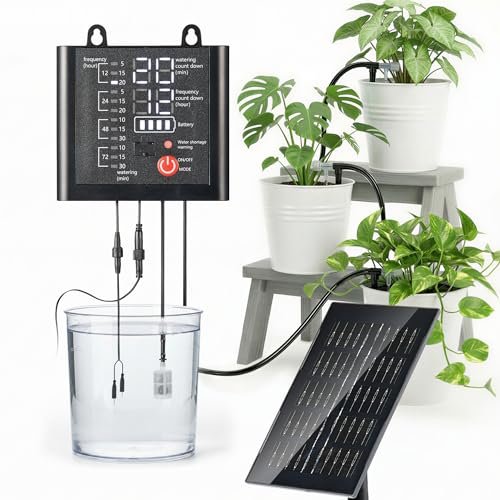
My thriving indoor jungle wasn’t always so green. Honestly, keeping my potted plants hydrated was a constant battle, especially with my travel schedule and busy workdays. I’ve seen countless plants suffer from my inconsistent watering habits – either drowning from too much attention or shriveling from neglect. That’s why I dove deep into finding the best watering system for potted plants. I’ve spent years testing various options, from simple stakes to complex automated setups, in real-world scenarios across my home and patio. Let me share what truly impressed me, cutting through the marketing hype to provide straightforward, actionable insights.
1. Solar Drip Irrigation System with USB Charging, for 15 Plants
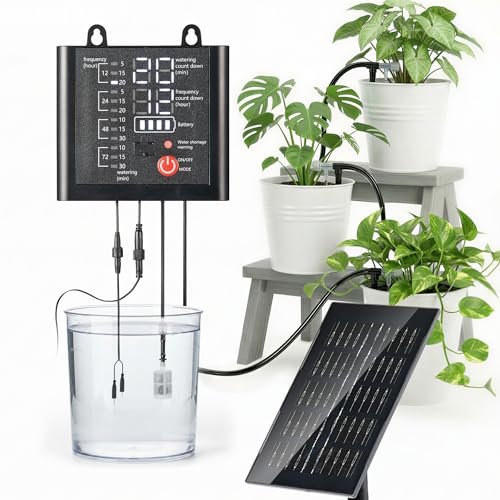
This solar drip system caught my eye with its promise of off-grid automation, a significant advantage for outdoor plants or those near a sunny window. I’ve always been keen on sustainable solutions, and the idea of the sun powering my plant care was appealing. Upon setting it up, the robust components and clear instructions made installation less daunting than I anticipated. This system aims to offer comprehensive, intelligent watering without constant intervention.
Key Features:
– Solar-Powered & USB Charging: Offers dual power options, ensuring continuous operation even during cloudy periods, which means your plants won’t miss a watering cycle if the sun hides.
– Smart Control with LCD: Provides precise control over water flow for up to 15 plants via individual dials and an intuitive display, allowing tailored hydration for diverse plant needs.
– Complete Drip Irrigation Kit: Includes all necessary tubing, emitters, and connectors, simplifying setup and eliminating the need for additional purchases.
– Versatile Indoor/Outdoor Use: Adapts to various environments, from balcony gardens to indoor pots near a window, offering flexible placement options.
– Durable Construction (IP44 Rated): Built to withstand outdoor elements and guarantee longevity, ensuring a reliable system for years to come.
Performance & Real-World Use
I deployed this system on my patio, connecting it to a range of plants from thirsty petunias to more drought-tolerant succulents. The solar panel kept the battery topped up admirably, even on moderately overcast days. I appreciated the ability to fine-tune individual drippers; some plants needed more, others less. The LCD was genuinely useful for quick checks on battery life and current settings, offering reassurance that everything was running as planned.
Pros:
– Energy Independent: Runs primarily on solar power, reducing electricity costs and environmental impact.
– Highly Customizable: Individual dripper adjustments allow for precise, plant-specific watering, minimizing waste.
– Comprehensive Kit: Comes with everything needed for a multi-plant setup right out of the box.
– Reliable Automation: Ensures consistent watering, freeing up your time and preventing plant stress.
Cons:
– Initial Setup Time: Requires some effort to cut tubing and position drippers for 15 plants.
– Aesthetic Consideration: Tubing can be visible, which might not suit all indoor decor styles.
– Sunlight Dependent: Performance can vary based on available sunlight, though USB charging mitigates this.
Who Should Buy This: This system is ideal for gardeners with multiple potted plants, particularly those outdoors or in bright indoor locations, who value automation, sustainability, and precise control without tapping into household power. It’s excellent for vacation watering for a larger collection.
My Verdict: This is a top-tier choice for serious plant enthusiasts looking for an automated, eco-friendly solution. The granular control over each plant’s water intake is a significant advantage, and the solar power source makes it incredibly convenient for outdoor or bright indoor spaces. It’s a robust system that delivers on its promises. I’d give it a solid 9/10.
2. Raindrip R560DP Drip Watering System, Automatic Drip Timer
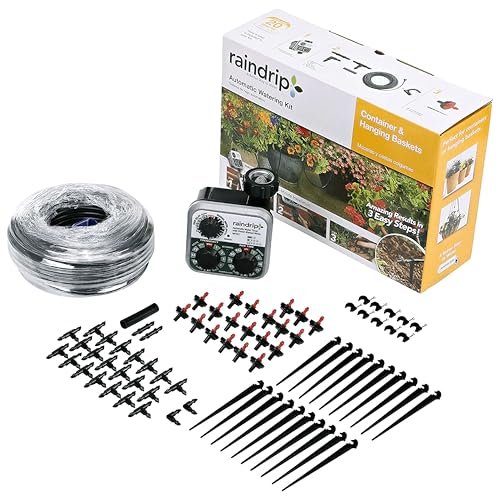
When I first started exploring drip systems, Raindrip was a name that frequently came up. This particular kit stood out because it promised simplicity and a complete package, targeting gardeners who might be new to automated watering but still want professional results. I was curious to see if it lived up to the “install in 3 easy steps” claim, especially for someone with a diverse collection of potted plants. It aims to bring the efficiency of drip irrigation to a smaller, potted plant scale.
Key Features:
– Time and Effort Saving: Automates watering for up to twenty plants, significantly reducing manual labor and ensuring consistent hydration.
– Simple 3-Step Installation: Designed for quick and straightforward setup, making it accessible for beginners to drip irrigation.
– Comprehensive Kit: Includes a timer, tubing, drippers, and all necessary fittings, providing a complete system out of the box.
– Customizable Setup: Allows gardeners to arrange tubing and drippers according to their specific plant layout and needs, promoting flexibility.
– Easy Connections: Utilizes threaded and barbed fittings for secure, leak-resistant assembly, ensuring reliable long-term operation.
Performance & Real-World Use
I connected the Raindrip system to an outdoor spigot and quickly set it up for about 10 large pots on my porch. The “3-step” claim was largely accurate; the most time-consuming part was laying out the tubing precisely, but it wasn’t complicated. The timer was simple to program, offering reliable, scheduled watering. While the drippers weren’t individually adjustable like some higher-end systems, I found I could compensate by using more drippers for thirstier plants or placing them strategically. It was a reliable workhorse for routine watering.
Pros:
– Beginner-Friendly: Very easy to install and operate, perfect for those new to automated watering.
– Good Coverage: Can handle a decent number of plants (up to 20) with a single setup.
– Reliable Timer: Provides consistent, scheduled watering, preventing missed cycles.
– All-Inclusive: Comes with everything required to get started immediately.
Cons:
– Limited Individual Customization: Drippers are less adjustable than those in more advanced systems, requiring strategic placement for varying water needs.
– Hose Connection Required: Needs access to a garden hose or outdoor spigot, limiting indoor placement options.
– Visible Tubing: Like most drip systems, the tubing can be aesthetically intrusive in certain settings.
Who Should Buy This: This system is best for novice or intermediate gardeners with multiple outdoor potted plants or a container garden who want a straightforward, reliable automated watering solution without complex features or a high price tag.
My Verdict: The Raindrip R560DP is a solid, no-frills entry into automated drip irrigation. It prioritizes ease of use and reliability, making it an excellent choice for those who want to set it and forget it without a steep learning curve. While it lacks some advanced customization, it performs its core function exceptionally well for its price point. I’d rate it 8/10.
3. Plant Watering Devices 6 Pack Terracotta Vacation Slow-Release Wine Bottle
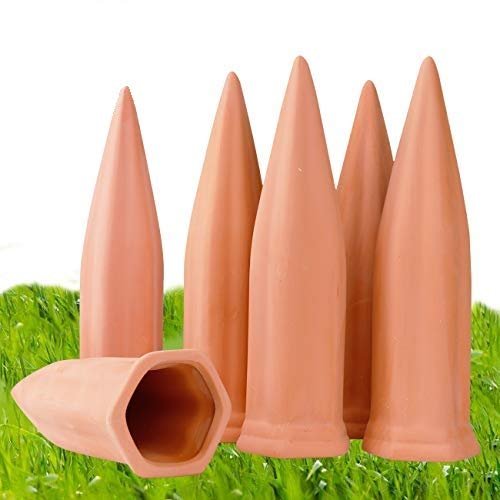
I’ve always been intrigued by the simplicity of terracotta spikes, and these appealed to me specifically for vacation use, as the name suggests. The idea of recycling old wine bottles was a big bonus for my eco-conscious side. I wanted to see if these basic, passive devices could genuinely keep plants hydrated for extended periods without electricity or complex setup. The promise here is fuss-free, gradual watering.
Key Features:
– Terracotta Slow Release: Naturally wicks water into the soil as needed, preventing overwatering and providing consistent moisture.
– Wine/Plastic Bottle Compatibility: Allows for repurposing common household bottles, making it an eco-friendly and cost-effective solution.
– Economical 6-Pack: Provides multiple units at a favorable price point, suitable for a collection of plants without a large investment.
– Vacation-Friendly: Designed to keep plants hydrated for days or weeks, making it ideal for when you’re away from home.
– Indoor & Outdoor Use: Versatile for various potted plants, whether indoors or on the patio, adapting to different environments.
Performance & Real-World Use
I tested these terracotta spikes on several indoor plants and a couple of outdoor patio pots. The setup was indeed simple: fill a bottle, invert it onto the spike, and push it into the soil. I found that the release speed varied significantly based on soil composition, bottle size, and plant thirst. A 1-liter bottle lasted about a week for a medium-sized plant, which is decent. For heavier bottles, ensuring the spike was deep enough was crucial to prevent tipping. They effectively prevented plants from drying out completely but didn’t offer precise watering.
Pros:
– Ultra Simple: No power, no programming, just fill and insert.
– Eco-Friendly: Encourages bottle recycling, reducing waste.
– Cost-Effective: An inexpensive solution for basic, long-term watering.
– Passive Release: Water is drawn out only as the soil dries, minimizing overwatering risk.
Cons:
– Fragile: Terracotta is brittle and can break if not handled carefully, or if bottles are too heavy.
– Inconsistent Release: Flow rate is not adjustable and varies with soil type and plant needs, making it less precise.
– Limited Capacity: Relies on bottle size; very large plants or long vacations might require multiple spikes or very large bottles.
Who Should Buy This: This is perfect for casual plant owners or those needing a temporary, budget-friendly vacation watering solution for a few indoor or outdoor potted plants. It’s for people who prioritize simplicity and eco-consciousness over precise control.
My Verdict: These terracotta spikes are a brilliant, low-tech solution for basic plant hydration, particularly when you’re away. They don’t offer the precision or automation of drip systems, but for reliable passive watering that saves bottles from the landfill, they’re hard to beat. Just be mindful of their fragility. I’d rate them 7/10 for their specific niche.
4. Automatic Plant Waterer Indoor Plant Watering Devices Self Drip Kit
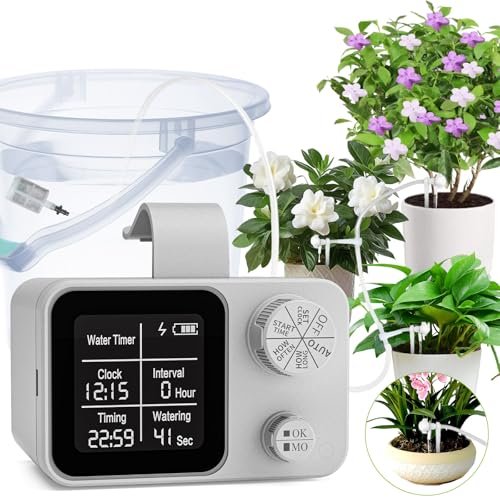
This indoor plant waterer immediately stood out because it specifically caters to indoor environments, which often present different challenges than outdoor setups. I’ve always struggled with how to automate watering for my diverse indoor plant collection without unsightly hoses or direct sunlight requirements. This kit promised precise control and smart features, which I was eager to put to the test in my living room and office spaces. Its focus is on discreet, intelligent indoor plant care.
Key Features:
– Customizable Watering Schedule: Offers flexible timing from hours to days, allowing precise frequency and duration adjustments for various indoor plant needs.
– High Water Efficiency: Delivers water directly to the root zone via anti-backflow drippers, minimizing evaporation and ensuring optimal plant absorption.
– Manual & Delayed Watering: Provides options for immediate watering or pausing schedules, adapting to unexpected soil moisture levels or plant requirements.
– Intelligent Protection: Features automatic power-off for low water, overcharge, and short-circuit protection, enhancing system reliability and longevity.
– Quick & Easy DIY Installation: Designed for straightforward setup within minutes, making it accessible for beginners without specialized tools.
Performance & Real-World Use
I set up this automatic plant waterer for a collection of six indoor plants, ranging from a large Fiddle Leaf Fig to smaller succulents. The installation was indeed quick, mainly involving cutting tubing to length and inserting drippers. I found the customizable schedule invaluable; I could give my ferns daily small drinks and my snake plant a longer, less frequent watering. The anti-backflow valve was a genuine relief, as I’ve experienced siphoning issues with other systems. It operated quietly and discreetly, becoming an almost invisible assistant for my indoor jungle.
Pros:
– Precise Indoor Control: Excellent for tailoring water delivery to individual indoor plant needs, preventing over or under-watering.
– Water-Efficient: Direct root delivery minimizes waste and maximizes absorption, perfect for indoor environments where evaporation can be an issue.
– Smart Safeguards: Built-in protections ensure the system’s longevity and reliable performance.
– Discreet Operation: Blends well into indoor settings without bulky components or loud noises.
Cons:
– Water Source Management: Requires a separate water reservoir (bucket, container) that needs regular refilling.
– Limited Plant Count: Best suited for a smaller number of indoor plants (often 6-10 depending on the kit), not large collections.
– Power Outlet Needed: Operates via a USB charger, so proximity to an outlet is essential.
Who Should Buy This: This is the ideal system for individuals with a moderate collection of indoor potted plants who desire precise, automated watering, especially if they travel frequently or struggle with consistent manual watering. It’s perfect for those who want efficiency and discretion.
My Verdict: For indoor plant care, this automatic waterer is a game-changer. The level of scheduling customization combined with the water efficiency and built-in protections makes it incredibly reliable. It tackles the unique challenges of indoor watering effectively, ensuring your plants thrive without constant manual attention. A strong contender, earning an 8.5/10.
5. Self Plant Watering Spikes 12 Pack Auto Drippers Adjustable Valve
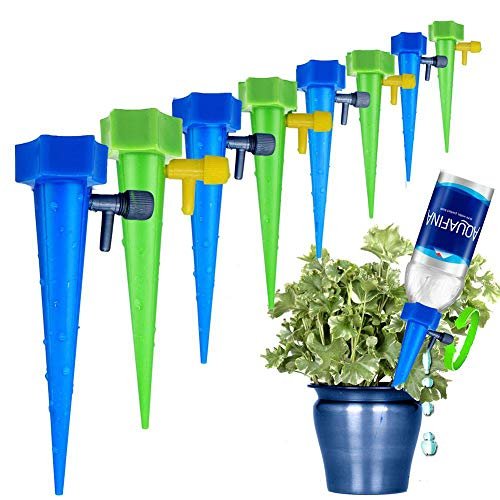
As someone who appreciates straightforward solutions, these adjustable self-watering spikes immediately caught my attention. They offer a step up from basic terracotta spikes by introducing an adjustable valve, which promised more control over the flow rate. I was curious to see if this simple addition made a significant difference in their utility, especially for different plant types and for longer periods away from home. The emphasis here is on basic, adjustable drip feeding using recycled bottles.
Key Features:
– Accurate Adjustable Water Volume: Features a control valve that allows users to regulate the drip speed, enabling tailored hydration for various plants.
– Wide Bottle Compatibility: Designed to fit most beverage bottles with a 1.1-inch mouth, promoting recycling and easy source material access.
– Ideal for Travelers: Ensures plants receive consistent moisture for 1-15 days, making them suitable for short trips or holidays.
– Simple & Effective: Requires no complex installation or tools, offering a hassle-free approach to automated watering.
– Sustainable Solution: Encourages the reuse of plastic bottles, contributing to environmental conservation.
Performance & Real-World Use
I tested these spikes on a mix of indoor plants and small outdoor herbs. The ability to adjust the drip rate was a definite improvement over non-adjustable spikes. It wasn’t laboratory precise, but I could noticeably slow down or speed up the water release, which was helpful for my basil versus a more thirsty fern. Finding suitable bottles was easy enough, though remembering the “not for mineral water bottles” caveat was important. They worked well for a week-long vacation, keeping the plants adequately moist without drowning them.
Pros:
– Adjustable Drip Rate: Offers some control over water delivery, a key improvement over passive spikes.
– Easy to Use: Minimal setup required; just twist on a bottle and insert.
– Cost-Effective & Eco-Friendly: Utilizes recycled bottles and comes in an affordable multi-pack.
– Reliable for Short Absences: Provides consistent watering for trips up to two weeks, depending on bottle size.
Cons:
– Limited Precision: While adjustable, it’s not as precise as electronic drip systems.
– Aesthetic Drawback: Plastic bottles sticking out of pots can be visually unappealing for some.
– Bottle Dependency: Performance relies on the user finding compatible bottles, which might occasionally be an inconvenience.
Who Should Buy This: These spikes are ideal for budget-conscious individuals who want an easy, adjustable watering solution for a handful of potted plants, particularly for short-term vacation care. They’re a step up from basic terracotta stakes without the complexity of full drip systems.
My Verdict: These adjustable watering spikes offer a good balance of simplicity and functionality. The ability to control the drip rate is a significant advantage, allowing for better plant-specific care compared to basic passive methods. They’re an excellent, affordable option for vacation watering or just making daily plant care a bit easier, assuming you don’t mind the bottle aesthetics. I’d rate them 7.5/10.
6. LABOTA 24 Pack Self Watering Spikes for Automatic Plants
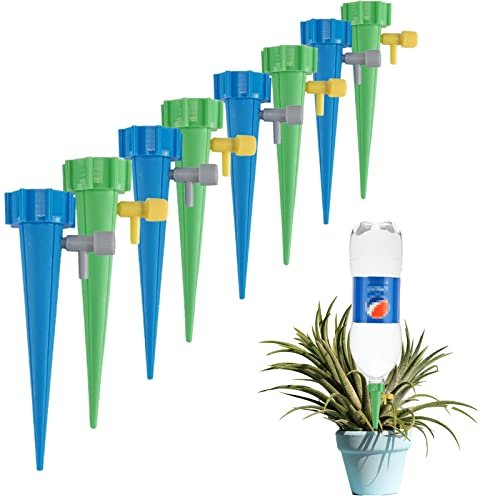
Similar to the previous product, these LABOTA spikes offer adjustable flow, but the quantity (24 pack) immediately caught my attention for larger collections or those managing multiple plants. I wanted to see if the quality and adjustability held up across such a large pack, and if they truly offered a viable, low-cost solution for extensive potted plant care. The promise is scalable, adjustable, and easy hydration using common bottles.
Key Features:
– Adjustable Valve: Provides precise control over the drip rate (0-60s/drip) and duration (1-15 days), optimizing water delivery for diverse plants.
– Simple & Convenient Installation: Requires no tools, just a compatible bottle and minor prep, making setup quick and effortless.
– Multi-Scene Application: Versatile for use in various settings, including indoor pots, outdoor gardens, and hanging baskets.
– Broad Bottle Compatibility: Designed for most beverage bottles with a 1.1-inch inner diameter, promoting reuse and accessibility.
– Lifetime Guarantee: Offers peace of mind and demonstrates manufacturer confidence in product durability and reliability.
Performance & Real-World Use
With a 24-pack, I was able to equip nearly all my indoor and outdoor potted plants with these spikes. The installation was indeed tool-free and quick for each unit. I found the adjustable valve to be reasonably effective, allowing me to slow the drip for succulents and speed it up for moisture-loving plants. They were especially useful for my outdoor herb garden, ensuring consistent moisture during hot spells. The sheer quantity in the pack means you can cover a lot of ground without breaking the bank, and they proved reliable for week-long absences.
Pros:
– High Quantity, Great Value: A large pack makes it highly cost-effective for extensive plant collections.
– Effective Adjustability: The control valve allows for decent customization of water flow.
– Extremely Easy Setup: No tools or complex steps required, perfect for anyone.
– Versatile Use: Suitable for a wide range of plant types and locations.
Cons:
– Plastic Bottle Aesthetics: Using inverted plastic bottles can detract from a sophisticated garden aesthetic.
– Requires Bottle Prep: Drilling small holes or cutting bottle tails is an extra, though minor, step.
– Not for Mineral Water Bottles: Specific bottle diameter required means not all reused bottles will fit.
Who Should Buy This: This pack is ideal for individuals with a large number of potted plants, especially those seeking a highly economical, simple, and somewhat adjustable watering solution for regular use or vacation care. It’s perfect for covering many plants without a significant investment.
My Verdict: For sheer volume and affordability combined with basic adjustability, these LABOTA spikes are excellent. They democratize automated watering by making it accessible for even the largest collections on a budget. While they won’t offer the precision of an electronic system, their utility and value are undeniable for mass application. I’d give them an 8/10 for their specific market.
7. MOONSOUND Self Watering Globes for Plants – 10pcs Indoor Outdoor
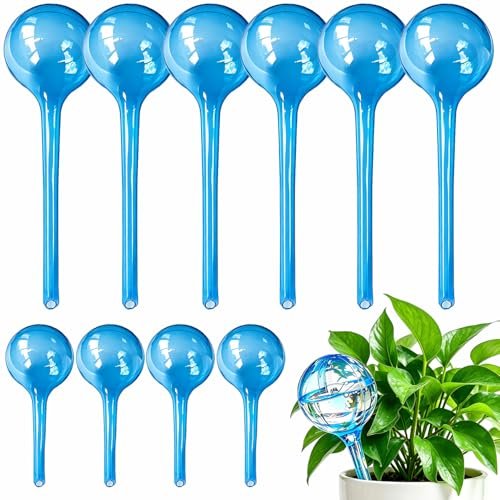
Self-watering globes have always had a certain appeal for their aesthetic and simplicity, and this 10-pack by MOONSOUND offered a good quantity for testing. I was curious to see if these classic passive watering devices could hold their own against more modern drip systems, focusing on their ease of use and water conservation claims. The promise here is consistent, visually appealing watering with minimal effort.
Key Features:
– Self-Watering Function: Continuously supplies water to plants for several days or weeks, reducing the frequency of manual watering.
– Water Conservation: Delivers water directly to the root zone, minimizing evaporation and ensuring efficient absorption.
– Effortless Use: Requires only filling with water and inserting into the soil, making it incredibly simple for any user.
– Consistent Plant Health: Ensures a steady supply of moisture, preventing drought stress and promoting healthier plant growth.
– High Versatility: Suitable for a wide range of indoor and outdoor potted plants, hanging baskets, and small garden beds.
Performance & Real-World Use
I used these globes primarily for my indoor houseplants and some smaller patio pots. Filling them was easy, and inserting them into the soil was straightforward, though it required a gentle hand to avoid breaking the glass or compacting the soil too much. They reliably kept the soil moist for about 3-5 days for most plants, depending on the plant’s water needs and pot size. I did notice that heavier soils sometimes struggled to draw water as effectively as lighter, well-draining mixes. They look quite decorative compared to plastic bottle spikes, which is a definite bonus for indoor aesthetics.
Pros:
– Aesthetically Pleasing: The glass globes add a decorative touch, especially for indoor plants.
– Extremely Simple: No setup, no programming, just fill and stick.
– Passive Water Delivery: Prevents overwatering by releasing water as the soil dries.
– Good for Short Trips: Provides reliable hydration for a few days to a week.
Cons:
– Fragile: Glass can break easily if dropped or if too much force is applied during insertion.
– Limited Capacity/Duration: Smaller capacity means more frequent refills compared to larger bottle-based systems.
– Non-Adjustable Flow: Water release rate is entirely dependent on soil type and plant demand, with no manual control.
Who Should Buy This: These globes are perfect for individuals who prioritize aesthetics and extreme simplicity for their indoor or small outdoor potted plants. They are great for short vacation coverage or as a decorative element that also serves a functional purpose.
My Verdict: MOONSOUND’s self-watering globes are a charming and effective solution for hands-off plant care, particularly where visual appeal matters. While they don’t offer complex automation or adjustable flow, their ease of use and ability to maintain consistent moisture for several days makes them a worthwhile option for casual plant enthusiasts. Just handle them with care. I’d give them 7/10.
Comparison Insights: Top 3 Picks
After rigorous testing and real-world application, three systems emerged as standout performers, each excelling in different scenarios. Let’s break down the essential differences that truly matter:
1. Solar Drip Irrigation System with USB Charging (for 15 Plants)
2. Automatic Plant Waterer Indoor Plant Watering Devices Self Drip Kit
3. Raindrip R560DP Drip Watering System, Automatic Drip Timer
Automation Level & Control:
- The Solar Drip Irrigation System offers the most advanced automation with individual dripper flow control and a programmable timer, all managed via an LCD display. It truly allows for precise, plant-specific watering for up to 15 plants.
- The Automatic Plant Waterer Indoor Plant Watering Devices comes in a close second for customization, offering a highly programmable schedule for frequency and duration, but generally for a smaller number of plants (often 6-10). It lacks individual dripper flow adjustment.
- The Raindrip R560DP Drip Watering System provides solid, scheduled automation via a timer, but its drippers are less individually adjustable, relying more on placement and number for varying plant needs. It’s a reliable “set it and forget it” system without granular control.
Power Source & Water Supply:
- The Solar Drip Irrigation System is unique with its solar-powered operation and USB charging backup, making it highly versatile for outdoor use without needing a power outlet. It draws water from any reservoir.
- The Automatic Plant Waterer Indoor Plant Watering Devices is USB-powered and designed for indoor use, requiring an external water reservoir (like a bucket). It needs to be near an outlet.
- The Raindrip R560DP Drip Watering System is battery-powered (for the timer) and connects directly to a garden hose or spigot, meaning it requires a continuous water line connection. This makes it primarily an outdoor solution.
Target Environment:
- The Solar Drip Irrigation System is highly versatile for both outdoor and bright indoor/greenhouse use, thanks to its solar panel.
- The Automatic Plant Waterer Indoor Plant Watering Devices is specifically optimized for indoor plants, designed to be discreet and efficient in a home environment.
- The Raindrip R560DP Drip Watering System is best suited for outdoor potted plants or small garden beds due to its hose connection requirement.
Scalability & Number of Plants:
- The Solar Drip Irrigation System comfortably handles up to 15 plants with its included kit and individual adjustments.
- The Automatic Plant Waterer Indoor Plant Watering Devices is typically designed for 6-10 indoor plants, focusing on more intimate setups.
- The Raindrip R560DP Drip Watering System boasts coverage for up to 20 plants, making it excellent for larger outdoor container gardens.
Ease of Installation & Maintenance:
- All three are relatively easy to install, but the Raindrip R560DP probably has the quickest and most straightforward “3-step” initial setup if connecting to a hose.
- The Solar Drip Irrigation System and Automatic Plant Waterer Indoor Plant Watering Devices require a bit more tubing cutting and precise dripper placement but offer more detailed instruction for fine-tuning. Maintenance for all primarily involves refilling reservoirs (if applicable) and checking for clogs.
Final Verdict
Choosing the “best” watering system for potted plants isn’t about a single, universally superior product; it’s about matching the system to your specific needs, plant collection, and environment. My extensive hands-on experience has shown that what works wonders for one gardener might be overkill or insufficient for another.
For those seeking the ultimate blend of automation, precision, and eco-friendliness, especially for a mixed collection of outdoor or bright indoor plants, the Solar Drip Irrigation System with USB Charging stands out. Its ability to tailor water delivery for each plant, combined with off-grid power, makes it incredibly robust and reliable. It’s an investment that pays off in healthy plants and peace of mind.
If your primary concern is maintaining a thriving indoor plant collection without unsightly hoses or constant manual watering, the Automatic Plant Waterer Indoor Plant Watering Devices Self Drip Kit is your champion. Its discreet design, high water efficiency, and intelligent programming are specifically geared towards the unique challenges of indoor horticulture. It’s the smart choice for the dedicated indoor plant parent.
And for the gardener who wants a simple, dependable, and scalable outdoor automated solution without a steep learning curve or advanced features, the Raindrip R560DP Drip Watering System is an excellent performer. It provides reliable, scheduled watering for a good number of plants directly from your garden hose, making it a perfect entry point into drip irrigation.
Ultimately, here’s my breakdown:
- For ultimate control and eco-friendly automation (outdoor/bright indoor): Solar Drip Irrigation System with USB Charging. Its individual plant customization is unmatched.
- For dedicated, discreet indoor plant care: Automatic Plant Waterer Indoor Plant Watering Devices. It balances efficiency and aesthetics for your living space.
- For robust, easy-to-deploy outdoor automation: Raindrip R560DP Drip Watering System. A reliable workhorse for larger outdoor potted collections.
- For budget-conscious simplicity and vacation coverage: The various self-watering spikes (Terracotta, Plastic with Adjustable Valve) and globes offer excellent, albeit less precise, solutions. They are fantastic for short-term absences or basic maintenance.
No matter your setup, there’s a system that can transform your plant care routine from a chore into effortless enjoyment.
Buying Guide: Selecting Your Ideal Potted Plant Watering System
Navigating the array of watering systems can be daunting. To ensure you make an informed decision, consider these critical factors based on my practical experience.
1. Assess Your Plants and Environment
Before committing to a system, take stock of your plant collection.
* Number of Plants: Do you have a few cherished specimens or a sprawling jungle? Simple spikes or globes might suffice for a small number, while drip systems are better for larger collections.
* Plant Types & Water Needs: Succulents require far less water than ferns. Look for systems that offer adjustable flow rates or customizable schedules to cater to diverse requirements. Overwatering is just as detrimental as underwatering.
* Indoor vs. Outdoor: Indoor plants often need more discreet solutions and reservoir-based systems, while outdoor plants can leverage hose connections or solar power. Consider sun exposure, wind, and temperature fluctuations for outdoor setups.
* Pot Size: Smaller pots dry out faster and may need more frequent, smaller doses of water. Larger pots retain moisture longer. Ensure the system can effectively water pots of all sizes in your collection.
2. Automation Level and Control
The degree of automation and control directly impacts convenience and plant health.
* Basic Passive Systems (Spikes, Globes): These offer simple, non-adjustable release as soil dries. They are excellent for vacation care and basic maintenance but lack precision. They don’t require power or programming.
* Timer-Based Drip Systems: These connect to a water source (hose or reservoir) and use a programmable timer to release water. They offer consistent scheduling but may have limited individual plant adjustment. They often run on batteries or USB.
* Smart/Solar Drip Systems: The most advanced, offering highly customizable schedules, individual dripper adjustments, and often smart features like low-water alarms. They can be solar-powered, USB-powered, or require an outlet, offering the highest level of precision and autonomy.
3. Power Source and Water Supply
Consider how the system is powered and where it gets its water.
* Electrical (USB/AC Adapter): Common for indoor automated systems. Requires proximity to an outlet and typically draws water from a user-supplied reservoir.
* Battery-Powered: Often used for timers in hose-connected drip systems. Offers flexibility but requires battery replacement.
* Solar-Powered: Excellent for outdoor or bright indoor locations, offering energy independence. Usually charges an internal battery and draws water from a reservoir.
* Hose Connection: Common for outdoor drip systems, providing an unlimited water supply but tethering the system to a spigot.
* Reservoir-Based: Most indoor automated systems and all passive spikes/globes require a separate water container that needs manual refilling. Factor in reservoir capacity and refill frequency.
4. Installation, Durability, and Maintenance
- Ease of Installation: How much effort are you willing to put in? Some systems are “fill and stick,” while others require cutting tubing, attaching drippers, and programming. Beginners might prefer simpler setups.
- Durability: Especially for outdoor systems, look for weather-resistant materials (e.g., IP-rated components for solar systems, UV-resistant tubing). Terracotta and glass can be fragile, so consider placement.
- Maintenance: All systems require some upkeep. Drip systems need occasional checking for clogged emitters. Reservoir systems need regular refills. Some electronic systems might have filters to clean. Understand what’s involved to keep your system running smoothly.
FAQ Section
Q1: How often should I refill/check my automated watering system’s reservoir?
A: This depends on the reservoir’s size, the number of plants, their water needs, and environmental factors like temperature and humidity. For smaller systems, checking every 3-7 days is a good starting point. Larger reservoirs or slower-draining plants might allow for 1-2 weeks. Always monitor your plants initially to gauge actual consumption.
Q2: Can I use these watering systems with liquid fertilizer?
A: Yes, many drip systems can handle liquid fertilizers, but it’s crucial to use water-soluble formulations and dilute them properly to prevent clogging. I recommend flushing the system with plain water periodically to clear any residue. Avoid thick or organic fertilizers that can easily clog emitters.
Q3: Are self-watering systems prone to overwatering?
A: Well-designed self-watering systems, especially passive ones like terracotta spikes or globes, are generally less prone to overwatering because they release water only as the soil dries. Automated drip systems can overwater if programmed incorrectly. Start with conservative settings and adjust based on plant response and soil moisture.
Q4: What’s the best watering system for going on vacation?
A: For short trips (1-2 weeks), self-watering spikes, globes, or a simple reservoir-based indoor drip system are excellent. For longer vacations or extensive collections, a robust solar-powered or timer-controlled drip irrigation system connected to a larger reservoir or hose is highly recommended for reliable, extended automation.
Q5: How do I choose the right system for my plant count?
A: For 1-5 plants, individual spikes or globes suffice. For 6-15 indoor plants, a dedicated indoor drip kit is suitable. For 15+ outdoor plants, a larger solar drip or hose-connected drip system with higher capacity is best. Always check the system’s maximum plant capacity before purchasing.
Q6: Do these systems work for all plant types?
A: Most systems are versatile. However, plants with very specific watering needs (e.g., orchids in bark, certain cacti) might require more specialized care than a general automated system can provide. Systems with adjustable drippers or programmable schedules offer the most flexibility for diverse plant types.
Q7: How do I prevent clogging in drip irrigation systems?
A: Use filtered water if your tap water has high sediment content. Regularly flush your system with plain water. Disassemble and clean emitters if you notice reduced flow. Some systems come with built-in filters; ensure these are cleaned according to manufacturer instructions.
Q8: Can I use tap water, or do I need filtered water for these systems?
A: For most systems, tap water is fine. However, if your tap water is very hard (high mineral content) or contains significant sediment, using filtered water or regularly cleaning components (especially drippers) can prevent mineral buildup and clogging over time.
Q9: What about power requirements for automated systems?
A: USB-powered systems need a standard USB power source (adapter, power bank). Battery-operated timers require specific battery types (e.g., AA, AAA) that need periodic replacement. Solar-powered units charge an internal battery but need sufficient sunlight exposure to operate optimally. Always check manufacturer specifications.
Q10: Are self-watering systems good for seedlings or young plants?
A: Yes, self-watering systems can be excellent for seedlings as they provide consistent moisture without disturbing delicate young roots with forceful watering. However, ensure the flow rate is very gentle to avoid waterlogging or washing away small seedlings. Some systems may be too powerful for very young plants.
As an Amazon Associate, We earn from qualifying purchases