
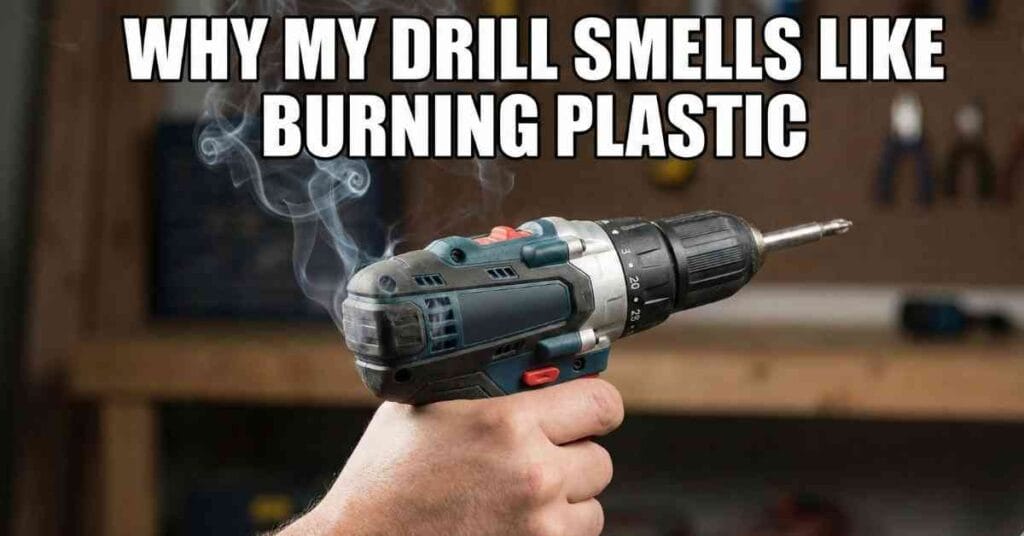
I was drilling into an old oak stump last weekend when a sharp, toxic smell hit me. It smelled exactly like melting plastic. I pulled the trigger again, and saw a tiny puff of smoke.
I panicked. I thought my trusty drill was dead.

If you smell this right now, stop immediately. You are likely seconds away from a permanent failure.
I didn’t throw my drill away. I diagnosed it. Here is the technical breakdown of what is burning, why it happens, and the data on how to fix it.
What Is Actually Burning?
I learned that the smell is rarely the outer plastic shell. It is almost always the motor insulation.
Inside your drill, copper wires are wrapped around a metal core (the armature). These wires are coated in a special chemical varnish or resin. This coating separates the electrical currents.
- The Heat Limit: Most consumer drill motors use insulation rated for about 220°F to 266°F (Class E or B insulation).
- The Failure Point: When you push the drill too hard, the internal temperature spikes above this limit.
- The Smell: That “plastic” scent is actually the varnish boiling off the copper wires. If this coating melts completely, the wires touch (short circuit), and the motor dies.
My 4-Step Diagnosis Process
I used this logical process to figure out if my drill was safe to use or if it was trash.
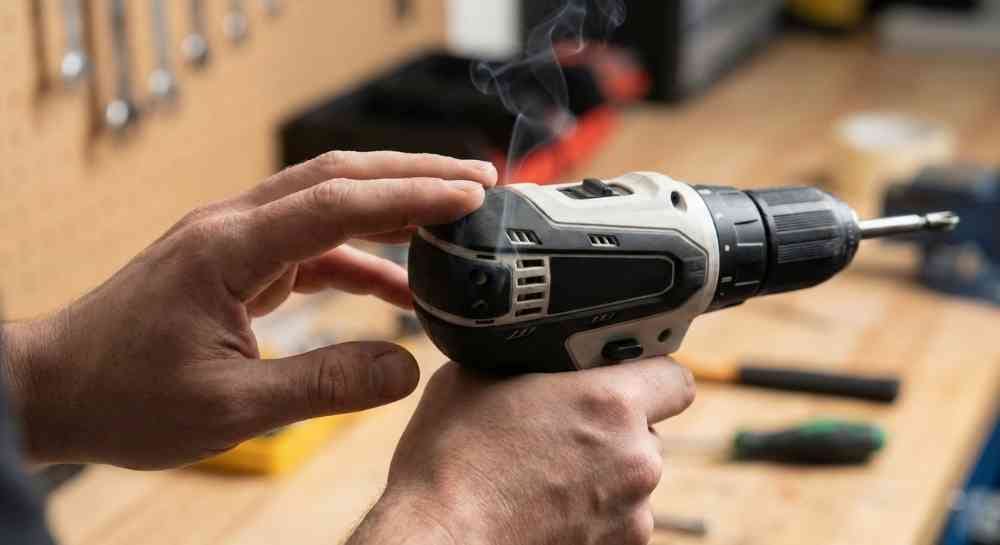
1. The Heat Check (Touch Test)
I unplugged the drill (or removed the battery) immediately. I placed my hand on the plastic housing near the back vents.
- Warm: Normal operation.
- Hot to the touch: The motor is overheated. It needs at least 30 minutes to cool down.
2. The Vent Inspection
I shined a flashlight into the side vents. I was looking for black soot or melted debris.
- What I found: My vents were clogged with sawdust. This acts like a blanket, trapping heat inside the motor.
- The Fix: I used a can of compressed air to blow out the dust. A huge cloud of dust came out, which immediately helped airflow.
3. The Spark Test (For Brushed Motors)
Most older or corded drills have “brushes.” These are small blocks of carbon that transfer power. I looked through the vents while running the drill slowly.
- Small Blue Sparks: This is normal data transfer.
- Large Orange Sparks: This is a warning. It means the brushes are worn out or the surface is uneven. This friction creates the burning smell.
4. The “No-Load” Run
After letting it cool for an hour, I ran the drill at half-speed in the air (drilling nothing).
- Result: It ran smooth. The smell was faint but fading. This told me I caught it before the insulation melted permanently.
Troubleshooting Data Table
I compiled this table based on common failure points I’ve seen. It matches the symptom to the specific internal part.
| Symptom | Internal Cause | My Fix |
| Smell + High Heat | Motor Winding Overload (Amps too high) | Stop. Cool down. Use a sharper bit. |
| Smell + Orange Sparks | Carbon Brush Friction | Replace brushes ($5-$10 part). |
| Smell + Smoke | Insulation Failure (Short circuit) | The motor is toasted. Recycle it. |
| Smell + Grinding Sound | Gearbox / Bearing Seizure | Grease the gears or replace the bearing. |
| Faint Smell (New Tool) | Varnish “Curing” / Oil burn-off | Normal. Run gently for 5 minutes. |
How I Prevent This Now
I don’t want to buy a new drill every year. I follow these rules to keep the motor temperature down.
- Check the Bit: A dull bit is the #1 killer. I swapped my old bit for a new titanium one. The drill cut through the wood in half the time. Less time drilling means less heat.
- Listen to the RPM: If the drill sound drops in pitch (bogs down), I am pushing too hard. I back off and let the RPMs speed up. This fan cools the motor.
- Clear the Chips: When drilling deep holes, I pull the bit out every few seconds to clear the wood chips. Packed chips create massive friction and heat.
If your drill smells, it is screaming for help. Let it cool, clean the dust, and check your brushes. It saved my tool from the landfill.
FAQs – Why My Drill Smells Like Burning Plastic
Why does my new drill smell like burning plastic?
It is usually normal. New motors have a protective oil coating. As you use the drill, this oil gets hot and burns off. This creates a temporary chemical smell. It should go away after a few uses.
Is it safe to use a drill that smells like burning?
No, you should stop right away. A strong burning smell often means the motor is too hot. If you keep using it, the plastic parts inside may melt. Let the tool cool down for at least 30 minutes.
How do I fix the burning smell in my drill?
First, let it cool down completely. Next, use compressed air to blow dust out of the vents. Dust can trap heat inside. If the smell stays, you may need to change the old carbon brushes.
What causes a drill motor to smell burnt?
The most common cause is dust buildup or a dull bit. When a bit is dull, the motor works harder and gets too hot. This heat cooks the wire coating inside, which smells like burning plastic.
Can worn carbon brushes cause a burning smell?
Yes, they can. Worn brushes create extra friction and sparks inside the motor. This can burn the dust trapped near the vents. Changing these small parts often fixes the smell and saves the tool.