
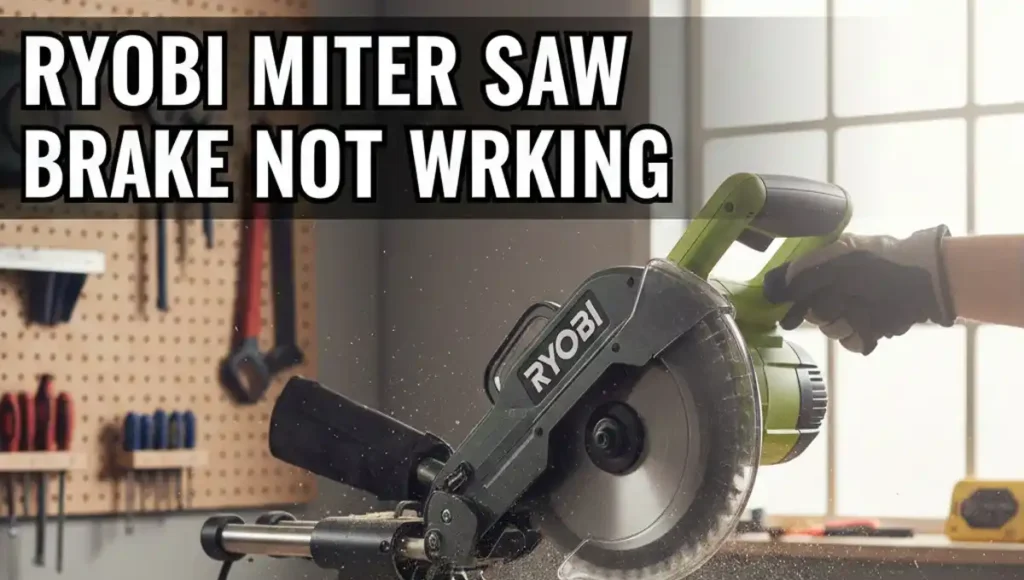
It was a cold Tuesday morning in my garage. I was mid-way through cutting some 2x4s for a new workbench. I released the trigger on my Ryobi saw, expecting a quick stop. Instead, the blade just kept spinning for nearly ten seconds. I stood there like a statue, waiting to safely move my hand.
When your Ryobi miter saw brake is not working, it is more than just a pain. It is a safety risk that slows down your whole day. I spent the afternoon covered in sawdust to find out why my saw lost its snap. If your blade will not quit, here is exactly what I found during my fix.
Why the Electric Brake Fails on Ryobi Saws
Most modern miter saws use an electric brake to stop the blade. It does not use a physical pad like a car. Instead, the motor reverses the power flow for a split second. This stops the momentum fast, but it needs a perfect electrical path.
In my experience, three main things cause this system to fail. Dust is usually the biggest villain in the shop. Over time, fine wood particles find their way into every part of the motor. This creates a wall that stops the braking charge from reaching its goal.
Common Causes of Brake Failure
| Component | Role in Braking | Typical Failure Sign |
| Carbon Brushes | Sends power to the motor | Saw sparks or stops slowly |
| Trigger Switch | Reverses current flow | Saw runs but never brakes |
| Commutator | The spinning contact point | Black soot or oily buildup |
The First Culprit: Dirty or Worn Carbon Brushes
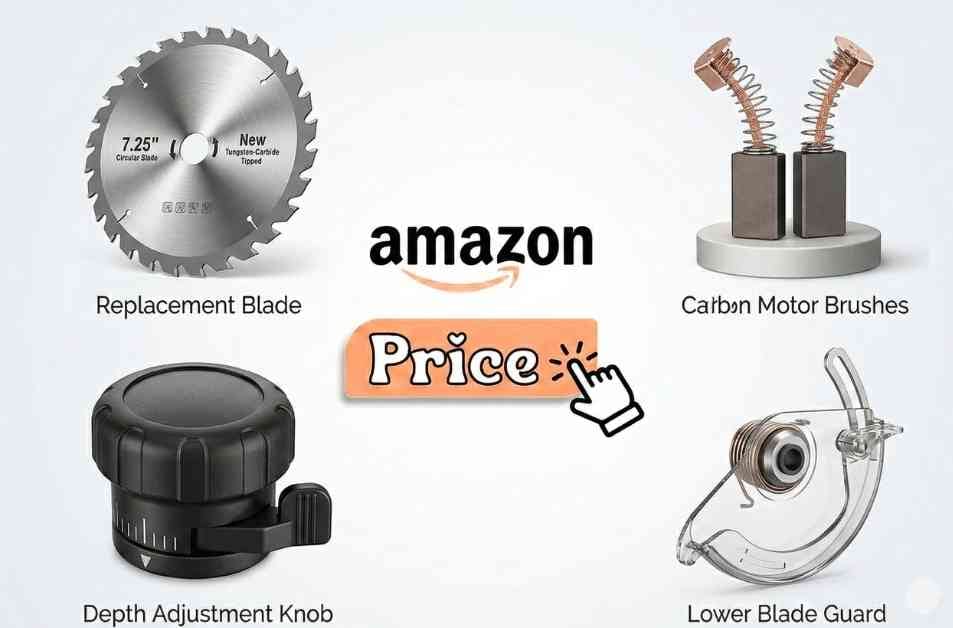
I started my repair by checking the carbon brushes. These are the small blocks that sit inside the motor housing. They are the messengers that deliver power to the spinning parts. If these messengers are tired or dirty, the brake signal never arrives.
When I pulled mine out, they looked very dark and shiny. This means the heat from the motor turned the dust into a hard layer. This layer acts like a wall for electricity. It lets the saw run but keeps the brake from kicking in.
How to Inspect Your Brushes
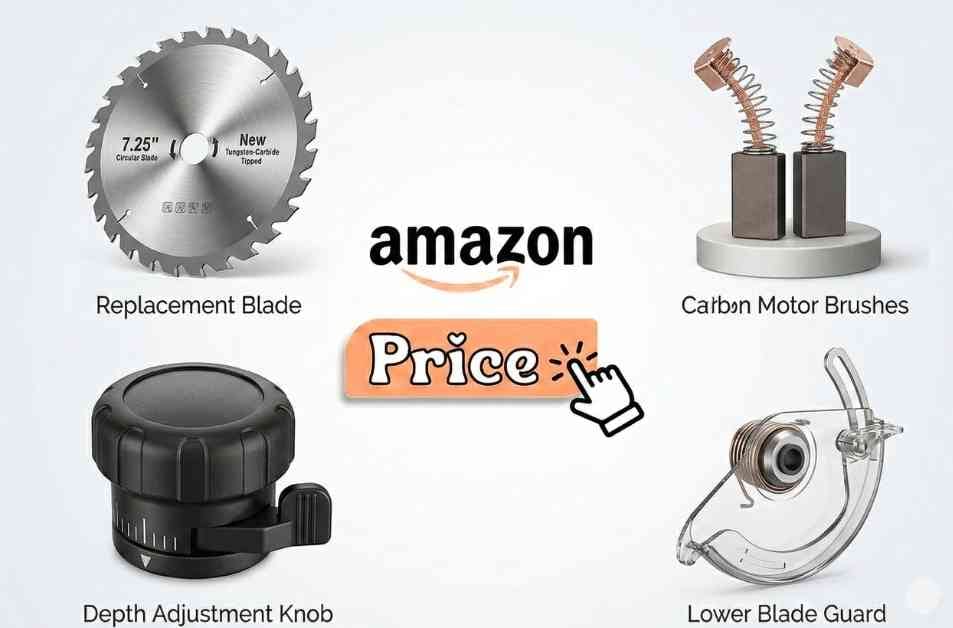
First, make sure the saw is unplugged from the wall. I found two large plastic screw caps on the sides of the motor. I used a wide flat-head screwdriver to pop them off slowly. Be careful, as there is a small spring behind the cap that likes to jump out.
Once the spring is out, the carbon brush should slide right out. I looked closely at the length of the carbon piece. A good rule is that if the brush is shorter than 1/4 inch, it is time for a new set. They are cheap and easy to swap.
When to Clean vs Replace
If they are long enough but look shiny, they just need a quick cleaning. I took some fine-grit sandpaper and lightly rubbed the tip. I did this until the shiny glaze was gone and the dull carbon showed. This simple step fixed half of my braking problem.
I also used a can of air to blow out the hole where the brush sits. A huge cloud of grey dust flew out of my saw. This dust is often what shorts out the brake system. Keeping this area clean is the best way to make your tool last.
Troubleshooting the Trigger Switch Contacts
If your brushes look new but the brake is still dead, the problem is likely in the handle. The trigger on a Ryobi saw is a special kind of switch. When you pull it, it starts the motor. When you let go, it snaps back to hit a separate brake contact.
I noticed that my trigger felt a little stiff. It did not have that crisp click it used to have. Sawdust had worked its way inside the handle over the years. This was physically blocking the switch from hitting the brake contact point.
Testing the Switch Logic
| Action | Motor Response | Likely Problem |
| Pull Trigger | Saw starts normally | Run circuit is healthy |
| Release Trigger | Blade coasts for 10 seconds | Brake contact is dirty |
| Release Trigger | Sudden stop (2 seconds) | System is working fine |
Cleaning the Handle Assembly
I took out the screws holding the plastic handle together. Inside, there is a maze of wires and a small black box. I did not take the switch apart because they are hard to put back. I just used a vacuum and more air to clean the area.
If the internal copper plate in that switch is burnt, you will need a new one. It is a ten-minute job that saves you from buying a whole new saw. Once I cleaned the dust out, my trigger clicked much better. This is a common fix for older saws.
Cleaning the Commutator for Better Grip
The commutator is the copper ring inside the motor that the brushes touch. After years of cutting wood, this ring gets coated in carbon dust and oil. When I looked into the brush hole with a light, my ring looked dark brown.
It should look like a bright new penny for the brake to work well. That dark coating creates a lot of resistance. It lets enough power through to spin the saw, but it blocks the quick burst of energy needed for the brake.
My Method for a Deep Clean
I kept the brushes out and used a cotton swab with a tiny bit of alcohol. I reached into the motor and wiped the copper bars while spinning the blade by hand. Do not do this with the saw plugged in, and do not use too much liquid.
After a few spins, the swab came out pitch black. I kept going until the copper looked bright and clean again. This simple step restored the electrical path. It allowed the brake to kick in with full force every single time.
Final Thoughts on the Ryobi Brake System
Fixing a Ryobi miter saw brake not working is mostly about cleaning. These motors are simple machines that just want a clear path for power. If you clean the brushes and the motor, you will likely fix the issue.
If you have tried all these steps and the blade still spins, the motor may be failing. At that point, a new saw might be a better choice. But in my experience, a little bit of air and sandpaper usually does the trick.
FAQs: Ryobi Miter Saw Brake Stopped Working
Why does my Ryobi miter saw blade take so long to stop?
The electric brake is likely dirty or worn out. Dust buildup on the carbon brushes or motor often prevents the quick stop feature from working safely.
Can I still use my saw if the brake is not working?
Yes, the saw will still cut wood just fine. However, you must wait for the blade to stop completely before moving your hands to stay safe in the shop.
How do I know if my Ryobi carbon brushes are bad?
Check the length of the carbon blocks inside the motor. If they are shorter than 1/4 inch or look burnt, they cannot send enough power to engage the brake.
Will blowing out the motor with air fix the braking issue?
It often does because wood dust blocks electrical flow. Use compressed air to clean the trigger and motor vents to help the brake circuit connect again.