
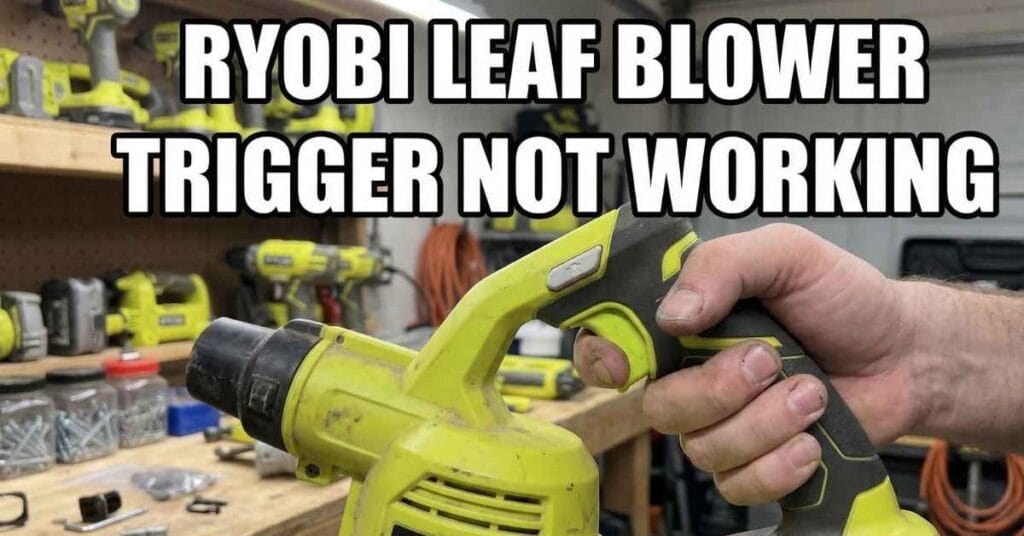
Fall is my favorite time of the year. The cool air is nice, but the falling leaves are a huge chore. I rely heavily on my yard tools every weekend. Raking by hand simply takes way too many hours. Last week, my trusty blower suddenly gave out on me. I grabbed the handle, but my Ryobi leaf blower trigger was not working at all. It felt stuck and totally dead.
I stood there in my yard feeling very annoyed. My grass was covered in thick, wet leaves. A broken tool ruins a perfectly good day of hard work. I just wanted to finish my chores and go back inside. Instead, I had a heavy, useless plastic tube in my hands. I felt let down and quite stuck in that moment. Has this ever happened to your tools? It is a very bad feeling.
I refused to let a broken tool ruin my weekend plans. Buying a brand new blower was too costly for me. I wanted to see if I could find the problem myself. I am no expert, but I like trying to fix basic things. I carried the blower into my garage to take a close look. This is the real story of how I found the issue. I will share my easy steps to help you save your tool, too.

Finding Out Why the Ryobi Leaf Blower Trigger Is Not Working
When a yard tool stops, you have to play detective. I took a deep breath and looked closely at my blower. When your Ryobi leaf blower trigger is not working, it is usually a basic fault. Sometimes it is just a completely dead battery pack. Other times, the tiny switch inside the handle gets stuck. Dirt and fine dust can easily block the electrical connection.
I use my blower a lot in very dusty areas. It picks up a lot of grit from the driveway. So, a dirty switch made a lot of sense to me right away. I wanted to test each part step by step. I needed to narrow down the exact cause of the failure. Working slow helps you avoid making silly mistakes.
Checking the Battery First
First, I checked the main power source of the tool. A bad battery can easily act like a broken trigger. I pushed the small test button on my battery pack. All four green lights lit up to show a full charge. I even swapped it with a fresh battery from my drill. The blower still did not start at all.
Lithium batteries can be quite tricky sometimes. They can show full lights but still fail when under a load. That means they look fine until the motor demands power. My drill worked perfectly with the blower battery. This was clear proof for me. The battery was totally fine and not the villain here. The hunt for the problem had to move to the main handle.
Looking at the Trigger Switch
Next, I focused purely on the trigger button itself. I pressed the plastic trigger hard with my index finger. It felt very sticky and quite hard to press down. It did not have that nice, snappy click anymore. Dust had clearly packed tightly into the small gaps around it.
This was a major clue for my repair job. If the button cannot move, the switch cannot close the circuit. The motor will never get the signal to spin up. I felt glad I found a real physical problem so fast. It was time to open the case and clean things out.
Tools You Need for This Simple Fix
Before I took things apart, I gathered my tools. You do not need a massive shop to do this fix. A simple home tool kit works perfectly fine. Having everything close by makes the whole job much easier. A tidy workspace helps you keep track of tiny parts.
I cleared off my kitchen table to have a flat spot. I put down an old towel to catch any loose dirt. A towel also stops small screws from bouncing onto the floor. Here is a quick list of what I used for my repair.
| Tool Needed | Why You Need It | Where to Find It |
| Torx Screwdriver | To remove the handle screws | Basic home tool kit |
| Small Bowl | To hold the tiny screws | Kitchen cabinet |
| Contact Cleaner | To clean out the dusty switch | Auto parts store |
| Soft Rag | To wipe away messy dirt | Old rag pile |
My Step-by-Step DIY Fix
Always put safety first when fixing power tools. You do not want to get hurt over a simple yard tool. First, I took the battery out of the tool right away. Never work on a tool with power still inside it. It could turn on fast and hurt your hands badly. Second, I put on some clear safety glasses. Dust and dirt can fly up into your eyes easily.
Step 1: Taking Off the Cover
Next, I had to open the main plastic handle. I took my star driver and took out the screws. There were about eight long screws holding the shell together. I kept them very safe in my small glass bowl. Losing a screw is a big pain during a fix.
Once the screws were out, the handle split right in half. I carefully pulled the plastic shells apart. I could see all the wires and parts inside. It looked a bit messy, but it was not too scary. I took a clear picture with my cell phone. This picture helped me remember exactly where things went later.
Step 2: Cleaning the Dusty Contacts
Now I could see the main part of the problem. The trigger switch is a small plastic box with wires. The dirt was blocking the small metal contacts inside the box. This was the real reason my Ryobi leaf blower trigger was not working smoothly.
I grabbed my can of electrical contact cleaner. I sprayed a tiny burst right into the tiny switch gaps. Then, I clicked the trigger fast, over and over again. This works the liquid cleaner deep into the dirty spots. A lot of black dirt and grit dripped out fast. I wiped it all away with my soft rag.
Step 3: Putting It Back Together
After the cleaning, it was time to close it up. I looked at the picture on my cell phone again. I made sure all wires were in the proper spots. You do not want to pinch a wire when closing the hard case. Pinched wires can cause a dangerous short circuit.
I put the plastic halves back together slowly. They fit together perfectly with a soft snap. Then, I put all the long screws back in with my driver. I went slow so I did not crack the weak plastic. The tool looked whole and complete once again.
Common Causes for Trigger Failure
While doing this, I learned a few handy things. There are a few main reasons why triggers fail on blowers. I made a helpful list to help you spot your own problem. You might have a totally different issue than I did. Finding the exact cause saves you time and stress.
Here are the most common things that go wrong with these triggers. Check this list before you start tearing your tool apart.
| Trigger Problem | What It Looks Like | How to Fix It |
| Dirty Switch | Trigger is sticky or hard to push | Spray with contact cleaner |
| Dead Battery | Trigger clicks but no power comes | Charge or swap battery pack |
| Broken Spring | Trigger stays pushed in totally | Buy a brand new switch unit |
| Loose Wire | Wires look disconnected inside | Plug wires back onto switch |
When to Ask for Expert Help
Sometimes, a simple clean is just not quite enough. You might open the tool and find burnt wires inside. If you see melted plastic parts, stop right there. That is a clear sign of a much bigger motor issue. I do not mess with burnt electrical wires at all. It is just not safe for a beginner to touch.
If your tool looks very bad inside, call an expert. Do not risk your own safety for a simple leaf blower. A pro can fix it safely or tell you it is dead. Knowing when to walk away from a fix is very smart.
Checking Your Warranty Rules
Before you take it apart, always check the brand rules. Ryobi offers a very good warranty on their yard tools. If your tool is new, opening it up might break those rules. My blower was over five years old already. I had nothing to lose by opening it up myself.
If yours is brand new, call the company phone line first. They might just send you a brand new one for free. They handle defects very well if you keep your receipt. It is always smart to check your store papers first. You could save yourself a lot of dirty work.
Keeping Your Blower in Great Shape
Now I take much better care of my yard tools. I want to stop this sticky trigger problem from happening again. A little basic care goes a very long way. I wipe down my blower body after every single use. I make sure no wet leaves stick to the air vents.
I also store it in a dry, clean place now. Dust and damp air are your tool’s absolute worst enemies. I hang it on a wall hook off the dirty floor. Here is my new care plan to keep my blower running strong.
| Care Task | How Often to Do It | Why It Helps |
| Wipe down plastic body | After every use | Keeps dust out of the switch |
| Blow out air vents | Once a month | Keeps the main motor very cool |
| Check battery slots | Every few weeks | Stops bad power connections |
| Store in a dry place | All year round | Prevents rust on metal parts |
Wrapping Up My DIY Story
Fixing my yard tool was a great learning moment for me. When my Ryobi leaf blower trigger was not working, I was mad. But solving the problem all by myself felt incredibly good. It was not a hard job at all in the end. It just took some basic steps and a bit of cleaning.
My blower trigger is back to normal now. The tool has plenty of power to clear my whole yard. The falling leaves do not stand a chance against it. If this sticky trigger happens to you, please do not panic. You can very likely fix it right in your own garage.
I hope my personal story helps you out today. Dealing with broken yard gear is simply no fun at all. But with a few small tools, you can save the day. Just take your time and stay very safe while working. Your green lawn will look truly great again very soon.
Would you like me to find a trusted online store where you can buy replacement Ryobi trigger parts just in case yours is fully broken?