
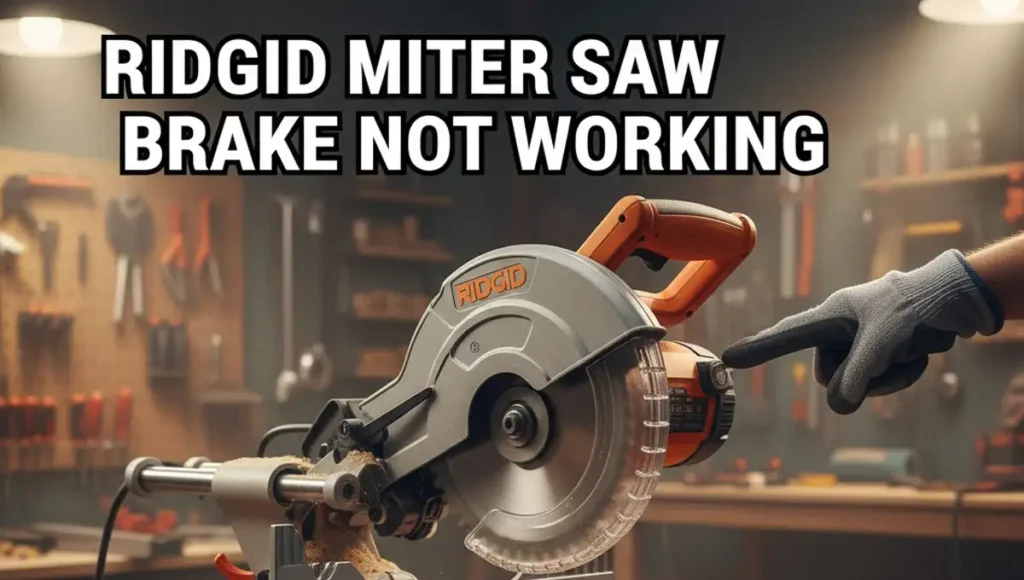
It was a cold Tuesday morning in my shop. I was halfway through a stack of pine boards for a new shelf. I finished a clean cut and let go of the trigger. I expected that quick “thud” of the blade stopping. Instead, the blade just kept spinning and spinning. It felt like an eternity before it stopped.
That coasting blade is more than just a slow way to work. It is a real safety risk. When a Ridgid miter saw brake is not working, you lose that sense of control. I spent my afternoon covered in dust to find out why. Most of the time, the fix is fast and very cheap.

My First Stop: Checking the Carbon Brushes
When the brake fails, I always check the carbon brushes first. These are small blocks that pass power to the motor. On a Ridgid saw, the brake works by reversing the electricity. If the brushes are too short, the connection is weak. The brake simply will not engage without a solid contact.
Last year, my saw started to spark a bit before the brake died. I pulled the brushes and they were tiny. They had worn down so much that the springs could not push them. Once I put in a fresh pair, the brake snapped back to life instantly. It felt like I had a brand new saw again.
Brush Health and Brake Success
| Brush Look | Brake Result | What to Do |
| Long and Clean | Works Great | Keep Working |
| Short and Worn | Fails Often | Buy New Brushes |
| Chipped or Dark | Weak Stop | Replace Them |
| Oily or Greasy | No Brake | Clean the Area |
Cleaning a Dirty Motor Part
Sometimes new brushes do not fix the issue. This happened to me on an old saw I found at a yard sale. The motor was full of gunk. Inside the motor is a copper ring called a commutator. This is the part the brushes touch to make the blade spin.
Over time, wood sap and dust create a dark film on the copper. This film acts like a wall. It lets enough juice through to start the saw, but it blocks the quick pulse needed for the brake. I call this “phantom” failure because the saw runs fine but will not stop.
How I Clean the Gunk
I do not like taking the whole motor apart if I can help it. I start by blowing out the vents with a can of air. You would be shocked at how much fine dust hides in there. It can look like a small sandstorm is coming out of your motor housing.
If the copper still looks black, I use a very fine sandpaper. I gently touch the copper while I turn the blade by hand. Once I see that bright penny color, I know I am in good shape. This simple cleaning has saved me from buying many expensive parts over the years.
The Hidden Trigger Switch Problem
I once had a saw with perfect brushes and a clean motor, but the brake still failed. I was stumped for an hour. Then I looked at the trigger. The trigger on your Ridgid saw is a special switch. It has two jobs. It starts the motor when you pull it and stops it when you let go.
In a dusty shop, fine dust gets inside the handle. It gums up the small spring inside the switch. If that switch does not snap back all the way, the brake circuit stays open. The saw thinks you are still trying to cut, so it just lets the blade coast.
Switch and Wiring Fixes
| Problem | Cause | My Fix |
| Saw runs, no brake | Clogged Switch | Use Air Spray |
| No power at all | Blown Switch | Get New Switch |
| Works sometimes | Loose Wire | Tighten the Nuts |
| Burning Smell | Short Circuit | Stop Using Saw |
Don’t Forget the Blade Bolt
This sounds too simple, but it happens more than you think. If your blade bolt is even a little loose, the brake won’t work. The motor might stop perfectly, but the blade keeps spinning on the shaft. It is like a car with loose lug nuts on the highway.
I make it a habit to check my arbor bolt every single Monday. I use the wrench that came with the saw. I make sure the flange is tight against the blade. If the blade slips even a tiny bit, the brake will feel like it is broken when it is actually fine.
When the Motor is Done
I love fixing my own gear, but sometimes the saw is just tired. If you see big green sparks or smell melting plastic, stop right away. This usually means the internal wiring is shorted out. At that point, fixing it might cost more than a new tool.
If your saw is still under the Ridgid service plan, take it to a shop. They can test the motor fields for you. If not, it might be time to treat yourself to an upgrade. A tool that stops when you want it to is worth every penny in a busy wood shop.
FAQs: Ridgid miter saw brake not working
Why is my Ridgid miter saw brake not working suddenly?
The most common cause is worn carbon brushes. These small parts must touch the motor to stop the blade. If they wear down, the electrical brake cannot engage.
Can sawdust cause my Ridgid miter saw brake to fail?
Yes, fine dust can clog the trigger switch or the motor. This prevents the brake circuit from closing. A quick blast of air often fixes the problem instantly.
How often should I replace the brushes on my Ridgid saw?
Check your brushes once a year if you use the saw often. Replace them when they are shorter than a quarter inch. This keeps the brake strong and safe.
Is a failing brake on a miter saw dangerous to use?
A coasting blade is a major safety risk in any shop. It is easy to forget the blade is still spinning. Always fix the brake before starting a big project.