
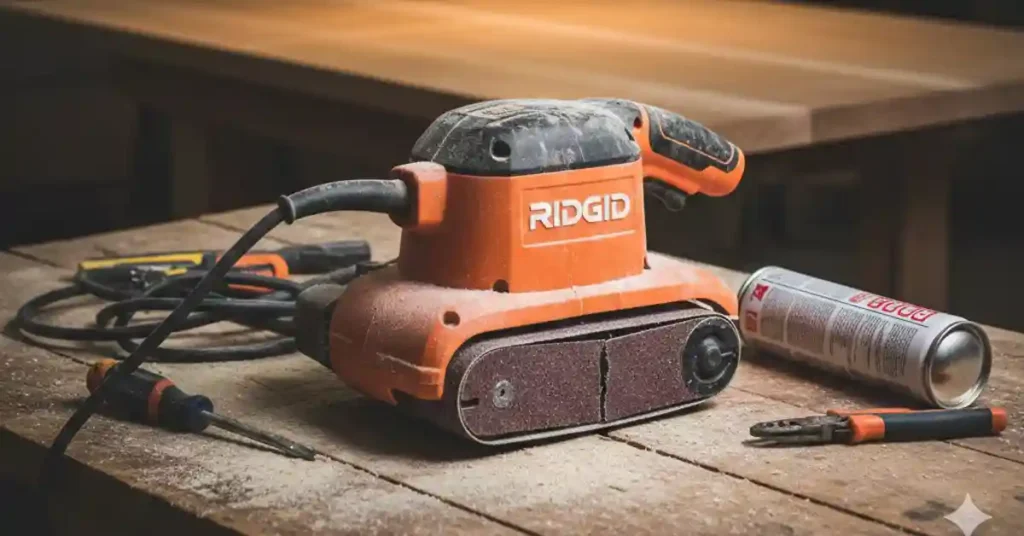
It was a hot Tuesday in my dusty garage. I was sanding a large oak table for my porch. Suddenly, my trusty sander just died. No smoke, no noise, just total silence. It was a real pain because I was almost done with the job.
When a Ridgid belt sander stopped working, it feels like a huge blow. I stood there with a dead tool and a half-sanded board. But I did not want to buy a new one yet. I knew I could fix it if I took my time and looked inside.

The Mystery of the Dead Motor
I started with the most basic things first. I checked the plug and the outlet. It turns out I had tripped a breaker in the garage. I flipped the switch back on, but the sander still would not start up. I realized the problem was deep inside the tool.
Quick Fix Diagnostic Table
| Part to Check | The Reason | The Simple Fix |
| Power Cord | A break in the wire | Cut and fix the end |
| Trigger Switch | Dust is blocking it | Blow it out with air |
| Carbon Brushes | They are worn out | Put in new brushes |
| Drive Belt | It snapped in half | Buy a new rubber belt |
Checking the Life Blood: Carbon Brushes
Most of the time, a dead tool just needs new brushes. These are small black blocks that carry power to the motor. They wear down as you use the sander over the years. I opened the two plastic caps on the side of the motor to check them.
One brush was very short and looked chipped. It was too small to touch the motor anymore. This is a very common issue for tools that work hard. I found my spare set of brushes in a small bag in my tool chest.

The “Crunchy” Trigger Syndrome
Even with new brushes, my sander was acting odd. I had to pull the trigger very hard to get it to move. I call this “crunchy trigger” because of all the wood dust. Fine dust gets into the switch and stops the flow of power.
I used a can of air to blow out the switch area. A large cloud of gray dust flew out of the cracks. After a few more blasts, the trigger felt smooth and clicked well. This simple trick saved me from buying a whole new switch.
The Motor Hums But Nothing Moves
Last year, I had a different problem with this same tool. The motor made a loud hum, but the belt sat still. I could smell burning rubber and saw a bit of smoke. I knew right away that the internal belt was the main culprit.
I took off the side cover with a small screwdriver. The drive belt had snapped and was wrapped around the gear. I cleaned out the old rubber bits and put on a fresh belt. It was a tight fit, but it made the sander run like new.
Common Belt Problems
| What You See | What is Wrong | How to Fix It |
| Belt slips off | Tracking is bad | Turn the side knob |
| Squealing noise | Belt is too loose | Tighten the tension |
| Motor spins fast | Belt is broken | Replace the drive belt |
Dealing with a Seized Roller
While the belt was off, I checked the front roller. It did not want to spin when I pushed it with my hand. A stuck roller puts too much stress on the motor. This can cause the tool to get hot and stop working very fast.
I used a drop of light oil on the metal bearings. I spun the roller until it moved with just one finger. Keeping the rollers smooth is the best way to avoid a burnt motor. It also makes the sander much quieter while you work.
Is Your Sander Overheating?
Sometimes, the tool is just too hot to keep going. Many Ridgid sanders have a sensor that kills the power to save the motor. If you have been sanding for an hour, the tool might just need a break. This is the tool’s way of protecting itself.
I set my sander on the cool floor for twenty minutes. I went and grabbed a cold drink while I waited for it to cool. Once the metal felt cool to the touch, I plugged it back in. It started up on the very first try without any issues.
When to Use the Warranty
I love to fix my own gear, but some jobs are too big. if the motor smells like burnt wire, it might be dead for good. Ridgid has a great plan to fix tools for free if you signed up. If the motor is fried, I let the pros at the shop handle it.
Always check your paperwork before you take the tool apart. If you see a lot of sparks inside the motor, stop using it. Large sparks mean the motor is failing and needs a pro to look at it. Safety is always more important than a fast fix.
My Shop Maintenance Routine
Now, I do not wait for my sander to stop working. I spend a few minutes each week cleaning my shop tools. I blow out all the dust and check the cords for any cracks. This keeps my tools ready for any big project that comes my way.
My sander is back to work and my table is smooth. Fixing it myself was a great way to learn more about my gear. It feels good to save money and keep a great tool out of the trash. Most fixes only take a few minutes of your time.
FAQs: Ridgid Belt Sander Stopped Working
Why did my Ridgid belt sander stop working all of a sudden?
Most often, your Ridgid belt sander stopped working because of a tripped breaker or worn carbon brushes. Check your power source first, then look at the motor brushes for wear.
How do I know if the motor brushes on my sander are bad?
Open the side caps to see the small carbon blocks. If they are less than a quarter inch long, they cannot touch the motor. New brushes will bring the tool back to life fast.
Can dust cause my power tool switch to fail?
Yes, fine wood dust often gets inside the trigger and blocks the flow of power. Use compressed air to blow out the switch area. This simple fix often solves the problem for free.
What should I do if the motor hums but the belt does not spin?
This usually means the internal drive belt has snapped or slipped off the gears. You will need to open the side panel and replace the small rubber belt with a new one.
Is it safe to use my belt sander if it smells like it is burning?
No, a burning smell means the motor is too hot or the belt is rubbing. Stop the tool right away and let it cool down. Check for wood jams or a broken belt before you start again.