
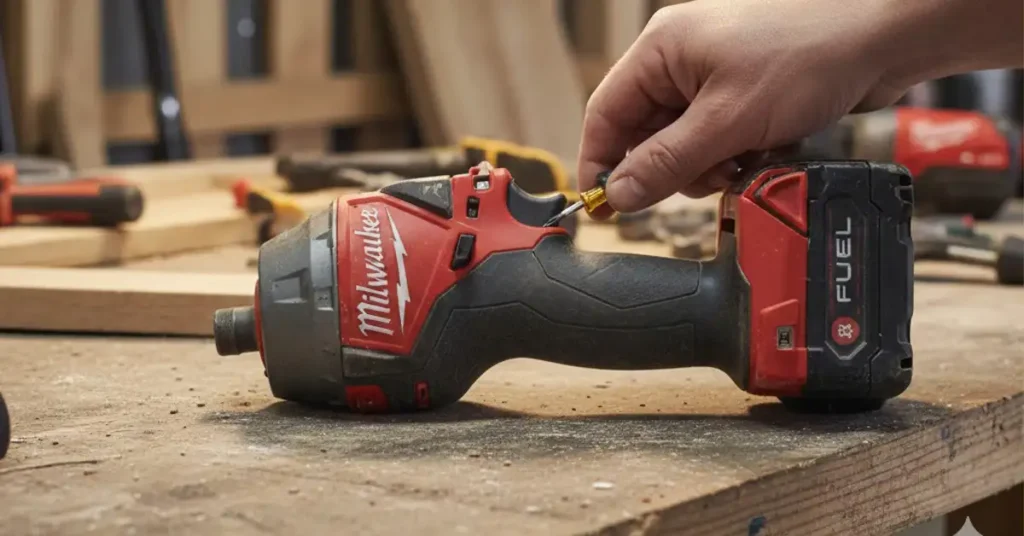
It was a hot Tuesday afternoon. I was in my garage. I was building a new cedar fence for my backyard. The sun was beating down. I was on the very last section. I lined up a long screw. I pulled the trigger on my M18 Fuel. Nothing happened. No roar. No spin. Just a small, sad click.
I stood there for a second. I felt a mix of shock and a little bit of rage. You know that feeling. It is like your best friend just walked away when you needed them most. My Milwaukee impact driver stopped working at the worst time. I did not want to drive to the store. I did not want to buy a new one.
I sat on my workbench. I took a deep breath. I smelled the sawdust and the oil in the air. I decided to fix it myself. I spent the next few hours digging into the guts of the tool. Here is what I found. If your tool is dead, do not panic. I can help you save it.
Why Impact Drivers Quit on the Job
When a tool stops, it is usually one of three things. It is either the power, the switch, or the brain. I looked at my tool like a doctor looks at a patient. I checked the easy things first. I wanted to see if it was a quick fix before I got too deep.
Quick Troubleshooting Guide
| Symptom | Most Likely Cause | Easy Fix |
| No lights and no sound | Battery or pins | Clean the metal tabs |
| Lights flash but no spin | Overload or heat | Let it cool down |
| Tool runs then cuts out | Loose battery fit | Tweak the terminals |
| Motor hums but won’t turn | Stuck anvil or gears | Use a rubber mallet |
The Battery Connection Problem
The most common reason a Milwaukee impact driver stopped working is the battery. I know what you are thinking. You checked the battery. You saw three green bars. But the bars do not tell the whole story. The connection must be perfect for the tool to draw power.
I looked inside the slot where the battery slides in. I saw a tiny bit of gray gunk. It looked like a mix of grease and fine dust. This gunk blocks the electricity. It acts like a wall between the battery and the motor. I knew I had to get that surface clean.
I grabbed a Q-tip. I dipped it in rubbing alcohol. I scrubbed the metal pins until they shone. I also looked at the battery itself. The metal slots on the battery can get wide. If they are too wide, they do not touch the pins. This causes the tool to cut out.
I took a small pick. I bent the pins on the tool just a tiny bit. I wanted them to be tight. I slid the battery back in. I heard a loud click. I pulled the trigger. The lights came on! But the motor still did not spin. I had more work to do.
Testing the Trigger and Switch
The trigger is a mechanical part. It moves every time you drive a screw. Over time, dust gets inside. I noticed my trigger felt a bit “crunchy.” It did not have that smooth snap. This grit can stop the signal from reaching the motor.
I also checked the forward and reverse button. This is a sneaky one. If that button is stuck in the middle, the tool will not run. It is a safety feature. I pushed it back and forth ten times. I wanted to clear out any grit that was stuck in the track.
Trigger and Motor Health Check
| Part | What to Look For | Sound/Feel |
| Trigger Switch | Sticky or slow return | Should snap back fast |
| Direction Button | Stuck in neutral | Must click firmly |
| Brushless Motor | Burnt smell | Should smell like nothing |
| Cooling Vents | Clogged with hair/dust | Must be clear for air |
Dealing with the Control Board
Modern Milwaukee tools are smart. They have a circuit board inside. This is the “brain.” If the brain gets too hot, it shuts down. This is called thermal protection. It keeps the tool from melting itself during a hard job.
On that hot Tuesday, my tool was sitting in the sun. The black casing was burning to the touch. I put the tool in the shade. I waited twenty minutes. I drank a cold water. I gave the tool a break too. Sometimes, all a tool needs is a bit of time to chill out.
Sometimes, the brain gets a glitch. I call this the “frozen state.” I found a trick online. I took the battery out. I held the trigger down for ten seconds. Then I put the battery back. This can reset the board. It worked for my neighbor once, but it did not work for me this time.
The Famous Smack Test
I was getting frustrated. I looked at the tool. I thought about the money I spent on it. I decided to try something old school. I call it “percussive maintenance.” It sounds fancy, but it just means giving the tool a good thump to wake it up.
I held the tool in my left hand. I gave the side of the motor housing a firm slap with my right palm. I was not trying to break it. I just wanted to jar it. Sometimes a bit of carbon dust or a stuck fan blade needs a nudge to move again.
I pulled the trigger again. Whirrr! The motor jumped to life. A tiny puff of dust flew out of the vents. It turns out a small piece of debris was jammed near the fan. That one smack cleared it. I felt like a genius and finished my fence before the sun went down.
When to Use the Warranty
If your Milwaukee impact driver stopped working and none of this helps, do not open the case. If you unscrew the body, you might lose your warranty. Milwaukee has a great 5-year plan. It is one of the best in the tool world, and you should use it.
I checked my serial number later that night. You can find it on the side of the tool. It is a long string of letters and numbers. You can go to the Milwaukee website. You type in the code. It tells you if you are covered. If it is under five years old, you are likely in luck.
If the tool is under warranty, they will fix it. They usually send it back in a week. It is better than buying a new one. I always keep my receipts just in case. It makes the whole process much smoother if you have proof of when you bought it.
How to Keep Your Tool Alive
I learned my lesson that day. I want my tools to last. Here is what I do now to prevent a dead impact driver. A little bit of care goes a long way. It saves time and it saves money.
- Keep it clean: I use a can of air to blow out the vents every Friday.
- Keep it dry: I never leave my bag in the back of my truck when it rains.
- Check the pins: I wipe the battery tabs once a month with alcohol.
- Watch the heat: If the tool feels hot, I stop. I let it rest in the shade.
Final Thoughts on Tool Failure
It sucks when tools fail. It makes you feel stuck. But most of the time, the fix is simple. It is usually just dirt or a loose fit. My Milwaukee impact driver stopped working because of a tiny bit of dust and a lot of heat. It was a simple fix for a big problem.
FAQs: Milwaukee Impact Driver Stopped Working
Why is my Milwaukee impact driver light flashing?
A flashing LED on your Milwaukee impact driver usually means the battery is low. It can also signal that the tool is too hot or has a bad connection. Try a fresh battery first.
How do I fix a sticky trigger on a Milwaukee tool?
Dust often gets inside the trigger of a Milwaukee impact. Use a can of compressed air to blow out the grit. You can also click the switch back and forth to clear the path.
Can I reset the electronics on my M18 Fuel impact?
Yes, you can reset the brain of your M18 Fuel. Pull the battery out and hold the trigger for ten seconds. This drains the power and lets the circuit board start over fresh.
What does it mean if my Milwaukee tool hums but won’t spin?
This hum usually means something is jammed in the gears or fan. A light tap on the side of your Milwaukee impact driver can often dislodge the dust. It saves a trip to the shop.