
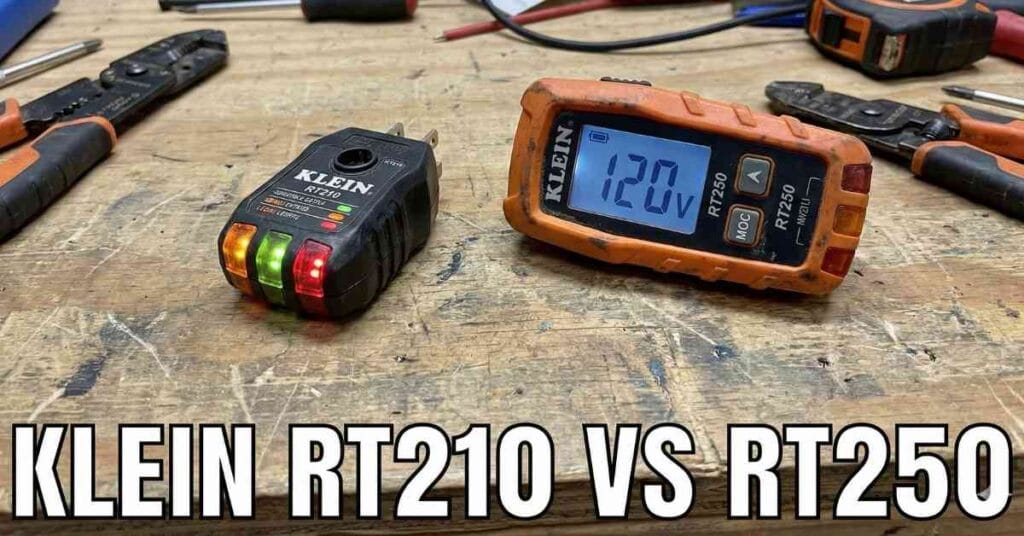
The Klein RT210 vs RT250 test is a fun job for me. I test new tools for my work every week. I took both of these plugs to real jobs. I checked old wires and new wires. Here is what I found out.
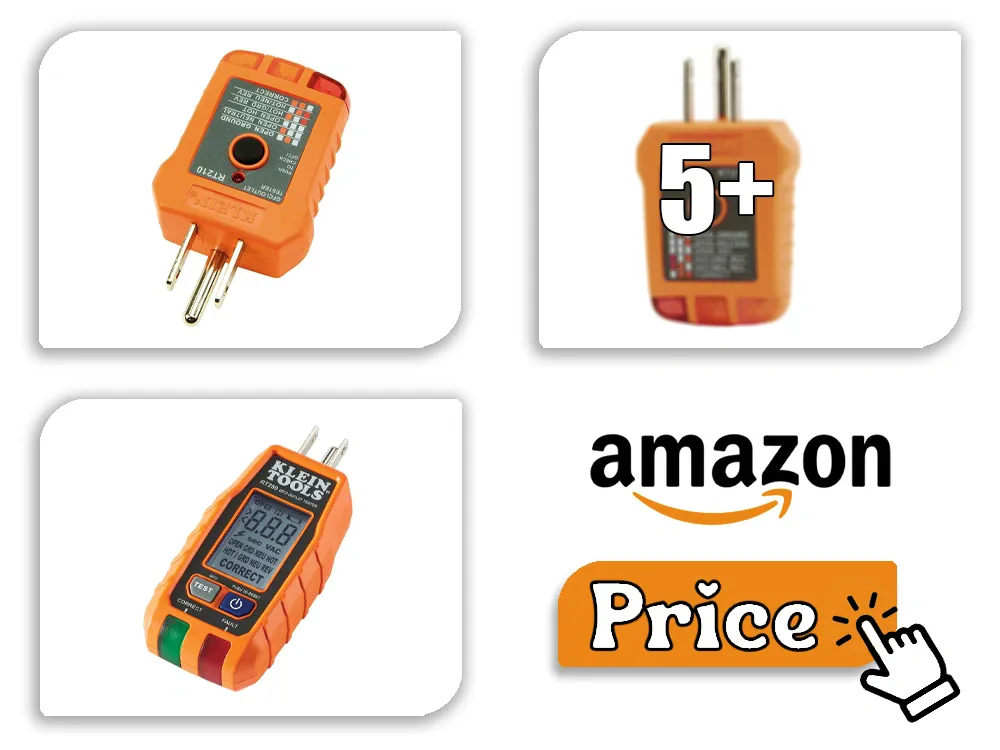
Klein RT210 Review
I took the RT210 to a big house job first. I had to check a lot of wall plugs. I just pushed the tool into the wall. The tool has three small lights on the top edge. It does not use a glass screen at all. It has a chart printed on the side shell. You look at the three lights. Then you match the lights to the chart. The chart tells you if the wires are good. It also tells you if the wires are bad. It is a very fast way to check things. I like that it works right away. It feels very strong in my hand. I dropped it on a hard floor twice. It did not break or crack at all. The thick plastic shell is very tough.
It gets power straight from the wall plug. You do not need to buy batteries for it. This is a huge win for my daily work. I keep it in my tool pouch all day. I never worry that it will go dead on me.
| Pros | Cons |
| Needs no batteries at all | Shows no exact numbers |
| Lights up fast | Hard to read in bright sun |
| Survives falls on the floor | Shows no exact trip time |
| Costs much less money | Side chart can rub off |
I pushed the test button on a bath plug. The tool made the plug trip right away. But it does not tell you the exact trip time. I trust this tool for fast daily jobs. It fits tight in old and new wall plugs. The metal prongs are thick and do not bend. I checked ten wall plugs in ten minutes. It is a very basic tool. It does one job and does it very well. If you want a fast check, this is a great pick. It will stay in my tool bag for a long time. It works great for a quick look at any job.
Klein RT250 Review
I used the RT250 on a brand new house build. This tool has a bright glass screen. It does not use basic small lights. I plugged it into a very dark wall corner. The screen lit up right away. I could read the text with no problems. It tells you the exact volts on the clear screen. I saw one hundred and twenty volts clear as day. This helps me find bad power drops fast. It tells you the exact wire fault in plain words. You do not have to guess at all.
This tool needs two small batteries to work well. I do not like to buy extra batteries. But the bright clear screen makes it worth the cost. I used the hold button on a hard to reach plug. I pulled the tool out of the tight wall. The screen kept the numbers up for ten seconds. This made my job so much easier.
| Pros | Cons |
| Shows exact volt numbers | Needs two small batteries |
| Bright clear screen | Costs a bit more money |
| Holds facts on the screen | Takes up much more space |
| Shows exact trip time | Dies if power runs out |
I tested the trip button on a kitchen plug. . The screen showed me the exact trip time. I found one plug that was much too slow. I swapped it out to keep the whole house safe. The rubber sides feel great in my bare hands. It feels very safe to hold all day. It costs a bit more cash. But the exact facts save me lots of time. I use this when I need full details on a job.
Detailed Comparison for Klein RT210 vs RT250
I compared these tools on real jobs. I looked at how they work in real life. Here is what I found out.
Accuracy
I checked the same wall plug ten times. I wanted to see if the tools gave the same facts. The screen on the RT250 wins this test. It gives you the exact volt count each time. The RT210 just tells you if power is there. The digital tool gives you much more rich data. I need that exact data to fix hard wire faults. The numbers stay the same each time I test it.
| Feature | Klein RT210 | Klein RT250 |
| Volt Facts | On or off only | Exact clear numbers |
| Trip Facts | Did it trip fast | Exact time in seconds |
| Exact Data | Good for fast looks | Best for hard jobs |
Display Interface
How you read the tool is a big deal to me. The RT210 makes you look at a small chart. You must match the lights to the small chart. This is quite hard to do in a dark room. The RT250 spells out the fault on the screen. The big screen is bright and very clear. You can see it well in the dark. It is much faster to read the plain text.
| Feature | Klein RT210 | Klein RT250 |
| Look Type | Lights and a small chart | Bright lit up screen |
| Dark Use | Hard to see well | Very clear to see |
| Fast Read | Takes a few long seconds | Very fast to read |
Design and Grip
Tool size matters a lot to me. My tool bag is quite heavy each day. The RT210 is very small and very light. I can slide it right into my work shirt pocket. The RT250 is a bit fat and quite long. It holds a glass screen and two small batteries. I like the soft rubber grip on the big tool. It does not slip out of my hand at all. But the small tool is less work to carry all day.
| Feature | Klein RT210 | Klein RT250 |
| Pocket Fit | Slips right in fast | A bit tight to fit |
| Hand Feel | Hard smooth shell | Nice soft rubber grip |
| Weight Class | Does not weigh much | Weighs a little bit more |
Build Quality
Both tools can take a good hard hit. I dropped them both on a hard floor. Neither tool broke at all. They both kept working just fine for me. The hard plastic shells are very thick. The metal prongs are stiff and very strong. They do not bend in tight wall plugs. The screen on the big tool might crack if you hit it hard. But it held up well in my tool bag all week.
| Feature | Klein RT210 | Klein RT250 |
| Drop Test | Did not break at all | Did not break at all |
| Main Shell | Thick hard plastic part | Thick hard plastic part |
| Tool Prongs | Stiff thick metal parts | Stiff thick metal parts |
Battery Life
This is a main point for my daily work. The RT210 runs on wall plug power. You plug it in and it just works. It will never run out of juice. The RT250 needs two batteries to turn on. If the batteries die, the tool is a brick. You must keep spare batteries in your work truck. But the screen shuts off fast to save power. The batteries will last for a long time if you are smart.
| Feature | Klein RT210 | Klein RT250 |
| Power Type | Uses wall power | Uses two batteries |
| Dead Risk | No risk at all | Can die on the job |
| Extra Cost | None at all | Must buy new cells |
Both tools are great items to own. The RT210 is good for a fast and simple check. It will last a long time with zero upkeep. The RT250 is best for finding exact details. It makes hard jobs much easier for me to solve.