
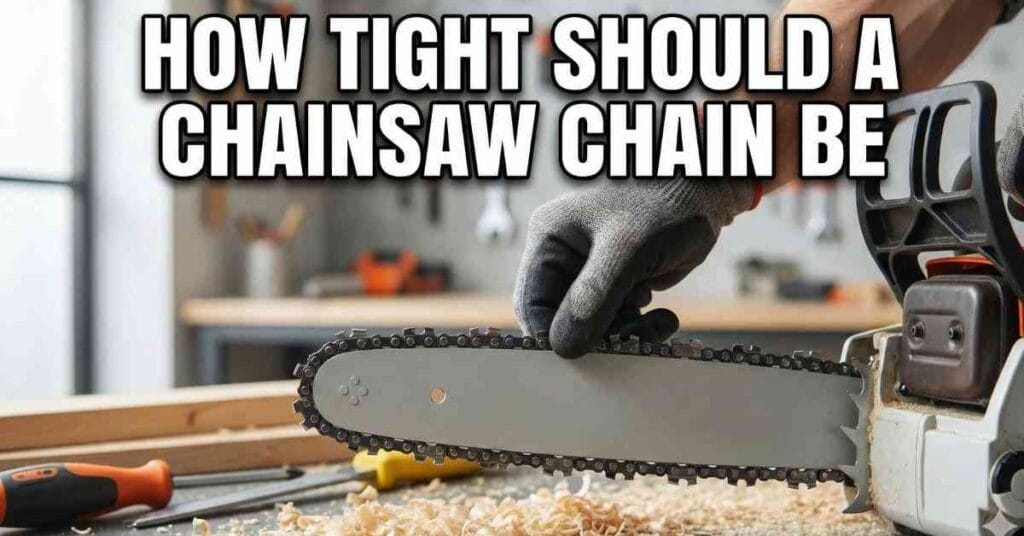
I almost ruined my chainsaw one Saturday morning. I was in a rush to cut a log and ignored a loose chain. That was a bad call.
Halfway through the cut, the chain flew off the bar with a loud snap. It was scary, but I got lucky. I learned that day that correct tension keeps you safe. I made the mistake so you don’t have to. Here is how to check it.
Table of Contents
The “Goldilocks” Zone
So, what is the perfect tension?
You want the chain to be snug against the bar, but loose enough to pull freely by hand.
Think of it like a belt on your pants. If it is too loose, your pants fall down. If it is too tight, you can’t breathe. You need that sweet spot in the middle.
- Too Loose: The chain hangs down. It can fly off the bar. This is dangerous for you and bad for the saw.
- Too Tight: The chain binds. It creates friction. Friction makes heat. Heat destroys your bar and burns out your engine.
I have a simple way to check this. I do it every single time I pick up my saw.
My Two-Step Check
I don’t guess anymore. I use two quick tests.
Important: Before you do this, turn the engine off. Let the saw cool down. And please, wear your heavy leather gloves. Chains are sharp, even when they are not moving.
1. The Snap Test
This test tells me if the chain is too loose.
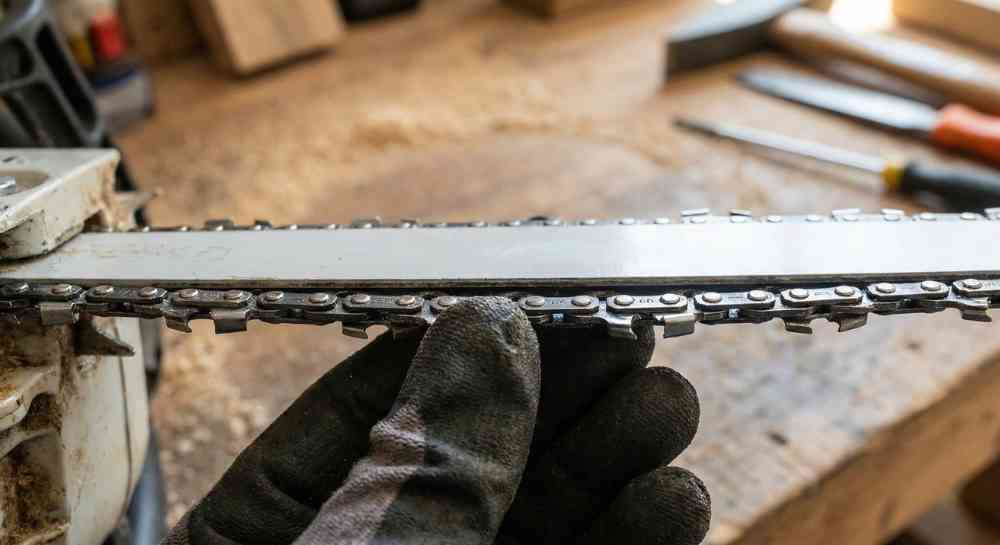
I take my gloved hand and grab the chain on the bottom of the guide bar. I pull it down.
- What I look for: I should be able to pull it down a little bit. I look for a small gap, maybe the size of a dime.
- The Key Detail: Look at the drive links. Those are the little metal “shark fins” that sit inside the groove of the bar. Even when I pull the chain down, those fins should stay inside the groove.
- The Snap: When I let go, the chain should snap right back up against the bar. It should be tight.
If the drive links come all the way out, it is too loose. If the chain hangs there and doesn’t snap back, it is time to adjust.
2. The Pull Test
This test tells me if the chain is too tight.
First, I make sure the chain brake is off. (I have embarrassed myself many times trying to pull a locked chain. It doesn’t move!)
I grab the chain on the top of the bar and try to pull it forward, moving it toward the nose of the bar.
- What I feel: It should move smoothly. I feel a little resistance, which is normal. That is just the gears and the oil. But I should be able to move it with one hand.
- The Warning Sign: If I have to use two hands, or if I have to really yank on it, it is too tight.
A tight chain is a silent killer for your saw. I once burned out a clutch on a perfectly good saw because I thought “tighter is better.” It is not. It puts too much stress on the engine.
Why Does the Tension Change?
You might set your tension perfectly in your garage. You drive to the woods, make three cuts, and suddenly the chain is sagging.
Why does this happen?
It usually comes down to heat.
The Science of Heat
When you cut wood, you create friction. Friction creates heat. When metal gets hot, it grows. It expands.
As your chain rips through that oak log, it gets hot. The metal links physically get longer. This makes the chain loose.
This leads me to the most important rule of chainsaw maintenance:
Never tighten a hot chain and then put the saw away.
Here is why. Let’s say you are cutting, and the chain gets hot and loose. You stop, tighten it up, and finish the job. Then you throw the saw in the back of your truck.
As the saw cools down on the ride home, that metal shrinks. It tries to go back to its original size. But you tightened it!
It creates massive tension. It can pull with enough force to bend your crankshaft or crush the roller tip of your bar.
If you tighten a hot chain in the field, you must loosen it again when you are done. Make it a habit. I loosen my chain every time I put the saw back in its case.
How to Adjust Tension the Right Way
Okay, let’s get our hands dirty.
I used to just turn the screw and hope for the best. But an old-timer at a small engine repair shop showed me the proper way. There is one step almost everyone misses.
What you need:
- A scrench (that tool that is a screwdriver and wrench in one).
- Gloves.
Step 1: Loosen the Bar Nuts
Look at the side cover of your saw. You will see one or two big nuts. These hold the bar in place. Loosen them with your wrench.
Do not take them off. Just loosen them until they are finger-tight. The bar needs to be able to move a little bit.
Step 2: The Secret Step (Hold the Nose Up)
This is the trick that changed everything for me. Gravity pulls the heavy guide bar down. This creates “false slack.” If you adjust the tension while the bar is drooping, it will be wrong as soon as you tighten the nuts.
So, take your left hand and lift the nose of the bar up. Hold it there.
Step 3: Turn the Tension Screw
While you are holding the nose up with one hand, use your other hand to turn the tension screw.
- Clockwise tightens it.
- Counter-Clockwise loosens it.
Watch the underside of the bar. Turn the screw until the chain comes up and touches the bar rail. There should be no sag.
Step 4: Tighten the Bar Nuts
Keep holding that nose up! Don’t let go yet. Use your wrench to tighten the bar nuts down firmly. Once they are tight, you can let go of the nose.
Now, do the Snap Test and the Pull Test. It should be perfect.
Why Does It Keep Loosening?
Sometimes, no matter what I do, the chain just won’t stay tight. It drives me crazy.
When this happens, I stop and check a few things.
1. Is it a New Chain?
New chains stretch. A lot. It’s called “initial stretch.” The rivets and links are settling into place.
When I put on a brand new chain, I run the saw at half-speed for a minute. Then I stop and check the tension. I usually have to adjust a new chain two or three times in the first hour of work. This is normal. Don’t worry about it.
2. Is the Bar Worn Out?
I take a close look at my bar. The groove should be deep enough to hold the drive links.
If the rails are worn down, the chain will wobble side-to-side. A wobbly chain feels loose even when it is tight. If I can wiggle the chain side-to-side a lot, it might be time for a new bar.
3. Did I Forget the Bar Nuts?
I hate to admit it, but I’ve done this. I adjusted the tension screw perfectly but forgot to tighten the big bar nuts on the side. The vibration shook everything loose in seconds. Always double-check those nuts.
4. Is the Tensioner Broken?
On some cheaper saws, the little pin that moves the bar can strip out. If you turn the screw and nothing happens, that gear might be broken.
A Quick Cheat Sheet
I made this little table to help you spot issues fast while you are working.
| What You See or Feel | What It Means | What To Do |
| Sagging Belly | The chain hangs below the bar. | Stop. Tighten it immediately. It is unsafe. |
| The Stall | The engine runs, but the chain stops in the wood. | Stop. It is too tight. Loosen it a bit. |
| Smoking Bar | You see smoke or smell burning oil. | Stop. It is too tight or out of oil. |
| New Chain Sag | It goes loose after 5 minutes of use. | Normal. Re-tighten it. It is just breaking in. |
| High Whine | The saw makes a “singing” noise. | Stop. Too tight. You are stressing the engine. |
Essential Care for Your Bar and Chain
Adjusting tension is only half the battle. You have to keep things lubricated.
I check my bar oil every time I fill the gas tank. No exceptions. If your tank is dry, your chain will get hot. Hot chains stretch. Stretched chains sag. See the cycle?
I also flip my guide bar every time I sharpen the chain. Most bars are symmetrical. You can run them upside down. This helps the rails wear evenly. If you always run the bar one way, the bottom rails wear out faster than the top. This makes it harder to keep proper tension.
When to Ask for Help
If you have tried everything and the chain still won’t cut right, don’t force it. A dull chain can also act like a loose chain. It bounces around in the cut. Check your cutters. Are they sharp? Check your depth gauges (the “rakers”). Are they too high?
Sometimes, the best tool in your box is the phone number of a good local repair shop. There is no shame in asking a pro to look at it.
Wrapping It Up
Chainsaws are incredible tools. They save me hours of back-breaking labor. But they demand respect.
Taking thirty seconds to check your chain tension isn’t a nuisance. It is part of the craft. It protects your saw, and more importantly, it protects you.
So, next time you head out to cut some firewood or clear a trail, remember the snap test. Remember to lift that bar nose. And if the chain gets hot, give it some slack before you pack up for the day.
FAQs – How Tight Should a Chainsaw Chain Be
How tight should a chainsaw chain be?
Pull the chain down gently. The drive links must stay in the bar groove. It should snap back up. If it sags, it is too loose. Fix it now to stay safe while you cut.
Can I tighten a hot chain?
No, do not do that. Hot metal grows. When it cools, it will shrink tight. This can break your saw parts. Wait for it to cool down first before you touch the tools.
Why does my new chain get loose?
New chains stretch out fast. This is normal wear. Run the saw for a bit. Then stop and fix the slack. You must check it often at the start to keep the cut smooth.
Is a tight chain bad for the saw?
Yes, it hurts the engine. It makes too much heat and friction. The chain must pull freely by hand. If it is hard to move, loosen it up now. This saves your clutch.
How often do I check the tension?
Check it each time you add gas. Also check before you start a job. A loose chain is not safe to use. It takes just a few seconds to look. This helps you work well.