
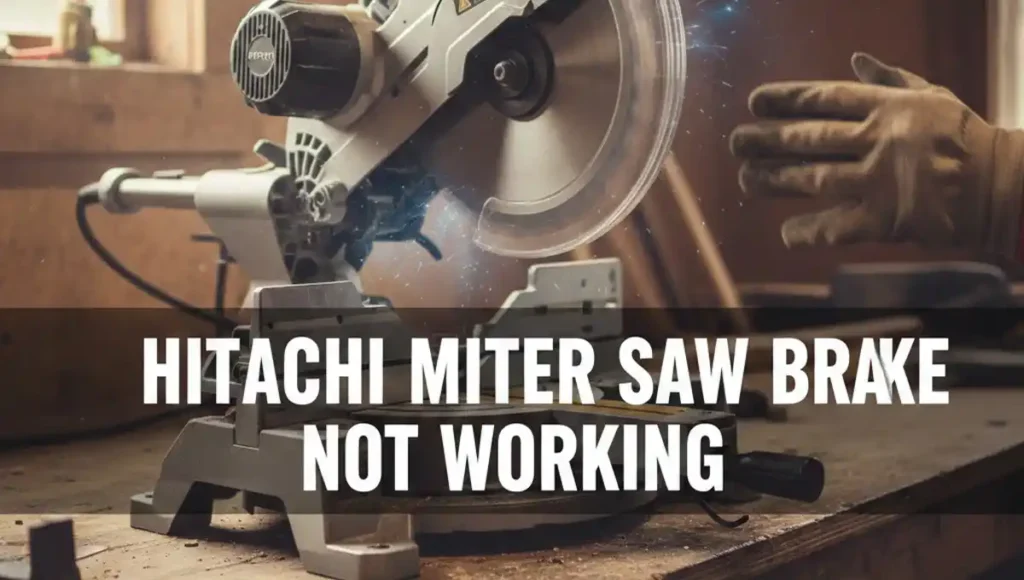
It was a cold Tuesday morning in my shop. I was mid-way through cutting oak trim for a big project. I let go of the trigger on my trusty Hitachi saw. I expected that familiar “thump” of the electric brake. Instead, there was silence from the motor, but the blade kept spinning at full speed. It felt like an eternity before it finally came to a rest on its own.
When your Hitachi miter saw brake is not working, it changes the way you work. You cannot just lift the head and move to the next mark. You have to sit and wait. It is slow, it is very annoying, and frankly, it is quite dangerous. I have spent years fixing my own gear. I have learned that this specific fail usually comes down to three simple things you can fix at home.
The Day My Brake Gave Out
I remember the faint smell of burnt toast coming from the motor housing right before the brake quit. That was my first big clue. If you see blue sparks or smell something “electric,” your saw is trying to tell you a story. On most Hitachi or the newer Metabo HPT saws, the brake is not a physical pad. It is a clever electrical trick.
The motor reverses the flow of power to stop the blade fast. If that flow is broken by dirt or wear, the blade just freewheels. I once ignored it for a day, but the lack of control made me nervous. I decided to tear it down and find the root cause before I made another cut.
Quick Fix Guide for Hitachi Saws
| Part to Check | What It Does | Ease of Repair |
| Carbon Brushes | Sends power to the motor | Very Easy |
| Trigger Switch | Starts and stops the flow | Moderate |
| Commutator | The spinning contact point | Moderate |
| Power Cord | Supplies the main juice | Easy |
Why Carbon Brushes Are the Usual Suspect
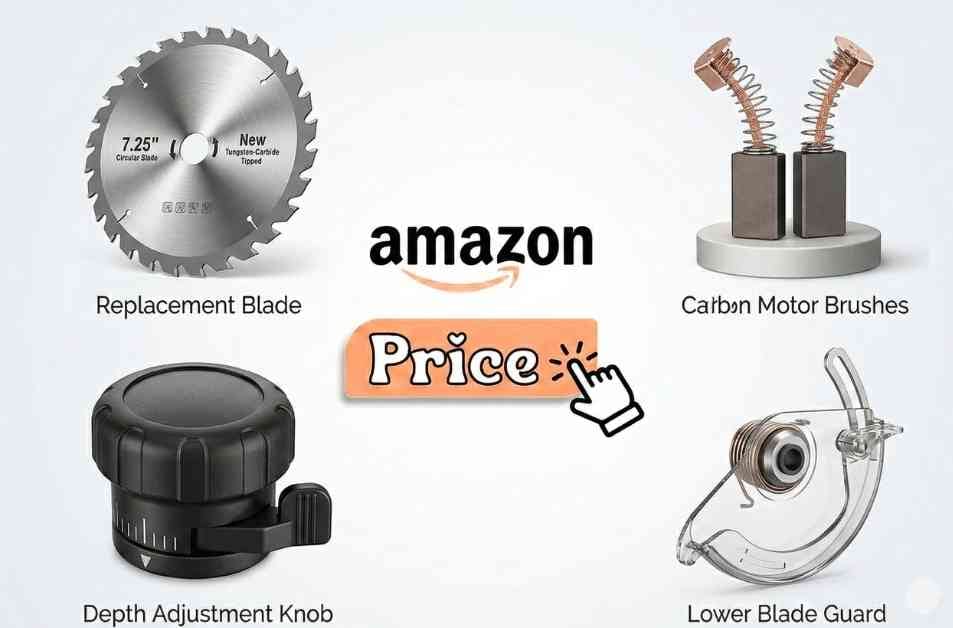
I always check the brushes first because they are designed to wear out over time. They are essentially the “brake pads” of your electric motor. Last summer, I had a saw that would not stop no matter what. I pulled the brushes out and they were tiny nubs. They were less than a quarter inch long and looked very charred.
The electric brake needs a very clean, strong contact to work well. If the brushes are too short, they start to bounce off the motor. That tiny bounce breaks the circuit right when the brake needs it most. It is a simple part, but it is the heart of the braking system.
How I Replace My Brushes
First, I always unplug the saw because I value my fingers. I find the two black plastic caps on the sides of the motor housing. I use a large flat-head screwdriver to turn them slowly. Be careful, as these plastic caps can crack if you force them too hard.
I pull the old brush out and check the spring. If the spring is weak or the carbon is short, I toss it in the trash. I slide the new one in and make sure it seats flat. This is the fastest way to get your brake back to peak performance.
The Hidden Dust in the Trigger Switch
If your brushes look brand new but the Hitachi miter saw brake is not working, the switch is likely full of gunk. We work in a thick cloud of fine sawdust every single day. That dust gets into the handle and coats the metal contacts. It acts like a wall that stops the electricity from flowing.
The Hitachi switch is a “double pole” type of part. One side turns the saw on when you pull. The other side engages the brake when you let go. If dust gets in the brake side, the saw will run fine, but it will never stop. It is a very common issue in busy wood shops.
Testing the Switch Logic
| Action | What Should Happen | If It Fails… |
| Pull Trigger | Motor starts instantly | Switch or Cord is bad |
| Release Trigger | Blade stops in 2 seconds | Brake circuit is open |
| Look at Motor | Small sparks are normal | Large sparks mean bad brushes |
I once spent an hour blowing out my handle with an air compressor. A huge, thick cloud of cedar dust flew out of the cracks. Suddenly, the brake worked like it was brand new again. It was a free fix that saved me a long trip to the tool repair shop.
Cleaning a Grimy Commutator
This is what I call a “pro” level fix for your saw. The commutator is the copper ring inside the motor that the brushes rub against. Over time, it gets a black coating called “glaze” which looks like burnt sugar. This dark glaze acts like an insulator and stops the brake from grabbing.
I noticed my saw was braking very weakly one afternoon. It took five seconds to stop instead of two. I took the brushes out and looked inside the hole with a bright flashlight. The copper looked black and oily instead of shiny. I knew exactly what I had to do to fix it.
My Personal Cleaning Method
I take a very fine piece of sandpaper, usually 400 grit or higher. I wrap it around the flat end of a pencil eraser. I gently touch the copper ring while I turn the blade by hand. Please make sure the saw is unplugged before you do this!
I keep going until I see that bright, shiny copper color again. This usually restores the “bite” to the electric brake system. It makes the motor run cooler and stops the blade much faster. You will hear a sharp click when it works right.
Is It Time for a New Switch?
Sometimes, a simple cleaning is just not enough to fix the tool. Electrical arcing can “pit” or burn the metal inside the switch. If you hear a weird clicking sound in the handle but the blade keeps spinning, the switch has likely failed. This happens after years of heavy use on the job site.
I have had to swap switches on my Hitachi saws after about three years of daily work. It is a cheap part, usually costing under twenty dollars online. It is a lot cheaper than a trip to the doctor. A spinning blade is a silent killer in a busy shop environment.
Why You Should Never Ignore a Failing Brake
I have seen guys try to slow the blade down by shoving a piece of scrap wood against it. Please, do not ever do this with your tools. It warps the blade and puts way too much stress on the motor bearings. If the Hitachi miter saw brake is not working, take the time to fix it right.
A working brake makes your shop a much safer place to be. It also makes your finished cuts look a lot cleaner. When the blade stops fast, you can lift the saw head and see your mark. It keeps your work rhythm going so you can finish the job on time.
Summary of the Fix
Most of the time, you just need ten minutes and a simple screwdriver. Check those carbon brushes first because they are usually the cause. Blow out the dust from the handle second to clear the switch. Clean the copper ring third if you still see sparks.
My saw is back to snapping shut like a hungry trap. It makes a loud, solid sound when I let go of the trigger. That is a sound I love to hear while I am working. It means my tool is healthy and I can work fast without any fear.
FAQs: Hitachi Miter Saw Brake Stopped Working
How long should my Hitachi miter saw brake take to stop?
A healthy electric brake should stop the blade in about two seconds. If it takes longer, your carbon brushes are likely worn out and need a quick check.
Can I still use my miter saw if the brake is not working?
It is not safe to use a saw with a broken brake. The freewheeling blade stays sharp and dangerous long after you let go of the power trigger.
Why does my motor spark when the Hitachi miter saw brake engages?
Small sparks are normal for brushed motors. However, large blue sparks mean your carbon brushes are too short or your commutator ring needs a good cleaning.