
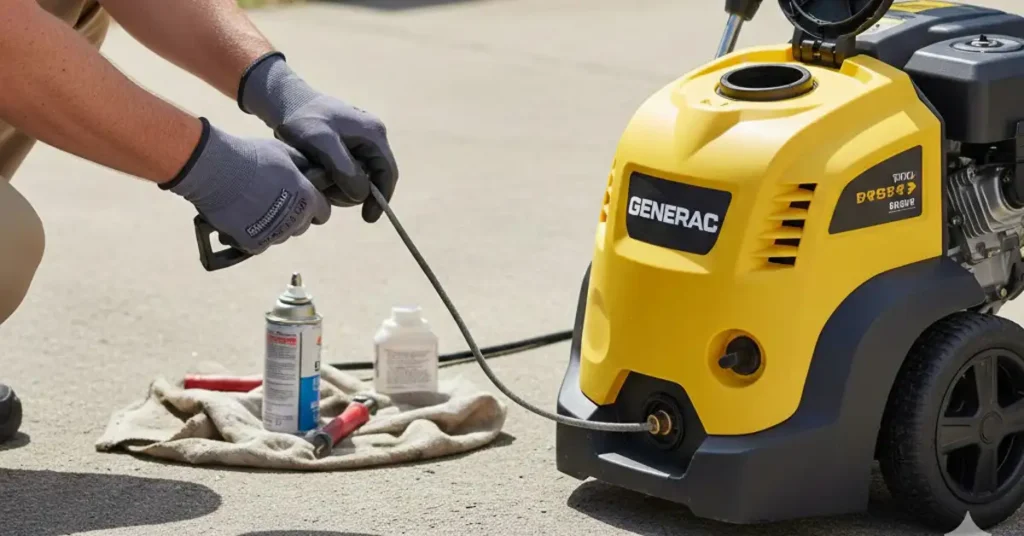
It was a bright Saturday morning in my driveway. I had my boots on and a pile of muddy bricks waiting for me. I grabbed the pull cord on my Generac pressure washer. I pulled hard. Nothing happened. I pulled again and again. Still nothing. By the tenth try, my arm was sore. My mood was ruined.
If your Generac pressure washer is not starting, I know that pain. I have spent years testing tools and getting my hands greasy. Most of the time, these machines are not broken. They are just being picky. I want to share the exact steps I took that day. These are the real steps that work when you are stuck.
Why Your Engine Feels Stuck
The most common reason a Generac engine won’t turn has nothing to do with the motor. It is all about water pressure. When you try to start the engine, the pump is often full of water. This water creates a lock. It makes the cord feel like it is stuck in lead or heavy mud.
I remember the first time I learned this trick. I felt so silly for pulling that cord so hard. All you have to do is squeeze the trigger on your spray wand while you pull. This lets the trapped water escape. Once the water flows, the engine can spin. It is a simple fix that solves half of all starting problems.
| Step | Action | Why it works |
| 1 | Connect garden hose | Provides water to the pump |
| 2 | Squeeze spray trigger | Releases internal pressure |
| 3 | Pull starter rope | Allows engine to spin freely |
The Fuel Problem: Why Old Gas is Your Enemy
Gasoline does not stay fresh forever. If your pressure washer sat in the shed all winter, the gas inside is likely bad. Gas starts to break down in about thirty days. It turns into a thick, sticky mess that smells like old paint. I call it gasoline gum.
When I work on a machine that won’t start, I check the gas cap first. I take a sniff. Fresh gas has a sharp, crisp smell. Bad gas smells sour or like vinegar. If your gas is old, it will clog the tiny paths inside your carburetor. You must drain the tank completely. You cannot just add fresh gas on top of old gas.
Cleaning the Carburetor
The carburetor is where the magic happens. It mixes air and fuel. If your Generac pressure washer is not starting, the carb is a prime suspect. I often use a can of carb cleaner for a quick fix. It is a cheap way to save a lot of time.
I remove the air filter and spray a tiny bit of cleaner into the intake. If the engine starts for a second, I know the fuel path is blocked. This tells me I need to clean the carb bowl. It is a messy job, but it is better than buying a new machine.
The Oil Sensor Secret
Generac engines are smart. They have a sensor that checks the oil level. If the oil is low, the engine kills the spark. It does this to save itself from burning up. I have seen many people get mad because their oil looked okay, but it was just low enough to trigger the sensor.
Don’t just look for oil on the stick. Make sure it is right at the top of the fill hole. On a hot day, if you work on a slope, the oil might move away from the sensor. This will shut the engine off mid-job. I always keep a bottle of 10W-30 oil nearby. A tiny splash can bring a dead engine back to life.
| Oil Type | Standard Use | Capacity |
| SAE 30 | Above 40 degrees F | Approx. 20 ounces |
| 10W-30 | All temperatures | Approx. 20 ounces |
Testing the Spark Plug
If you have fresh gas and plenty of oil, look at the spark plug. This little part is the heart of the engine. Over time, it gets covered in black soot. This soot prevents the spark from jumping the gap. No spark means no fire and no power.
I keep a spark plug wrench in my back pocket. I pull the wire off and unscrew the plug. If the tip is black and oily, the plug is fouled. If the porcelain is cracked, it is dead. I usually just buy a new plug every spring. It costs less than a cup of coffee.
Air and Filters: Let the Engine Breathe
An engine needs to breathe just like we do. If your air filter is clogged with dust, the engine will starve. I once spent an hour trying to start a washer. I found a wasp had built a nest in the air intake. It was a funny find, but it stopped my work cold.
Pop the plastic cover off. If the paper filter looks gray or black, toss it out. If you have a foam filter, you can wash it with soap and water. Just make sure it is dry before you put it back. A clean filter helps the engine run cool and smooth.
Checking the Switches and Valves
It sounds simple, but check your switches. I have spent minutes pulling a cord only to see the switch was set to off. My dog once bumped the fuel valve and shut it. I felt quite silly when I finally noticed it.
Check that the fuel valve is pointing down or toward the “on” symbol. Make sure the engine toggle is set to “run” or “on.” If your model has a choke, put it in the “cold start” spot. Once the engine pops, move it to “run.” These small checks save your arm from extra work.
FAQs: Generac pressure washer not starting
Why is my Generac pressure washer engine so hard to pull?
Water stays inside the pump and creates high pressure. Squeeze the spray gun trigger while you pull the cord. This lets the water flow so the engine spins easily.
Can low oil stop my pressure washer from starting?
Yes, most Generac engines have a low oil sensor. If the oil level drops, the engine will not spark to prevent damage. Check your dipstick and fill it to the top.
How do I know if the gasoline in my tank is bad?
Open the gas cap and smell the fuel. Fresh gas smells sharp, but old gas smells like sour paint. If it has sat for over a month, drain it and add fresh fuel.
What should I do if my spark plug is black or wet?
A black tip means the plug is dirty and cannot spark. Clean it with a wire brush or buy a new one. A wet plug means the engine is flooded and needs to dry out.