
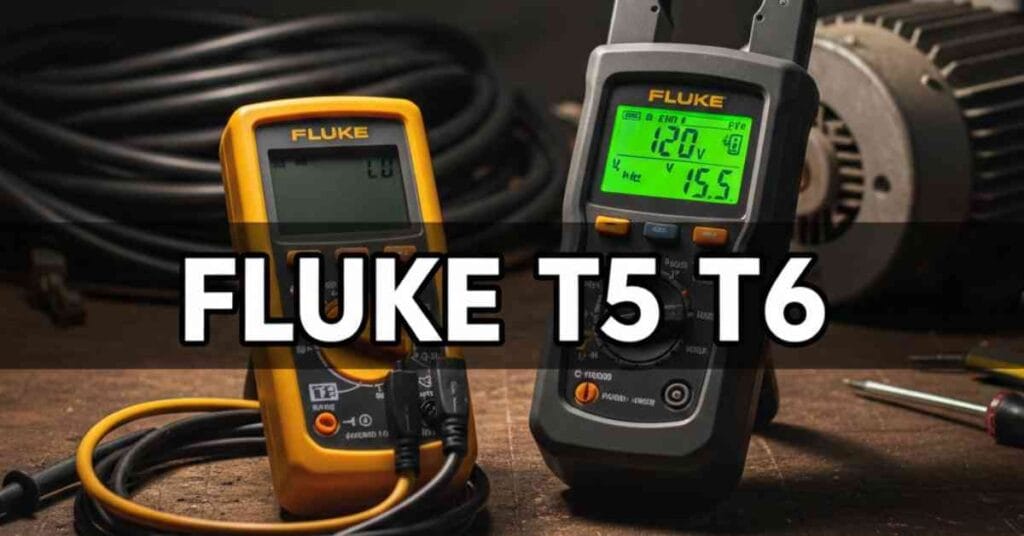
I spent weeks testing the Fluke T5 and T6 on real jobs. From checking home outlets to fixing heavy shop motors, I’ve seen where they shine and where they fail. Here is my honest take on which one you should carry.
My Experience with the Fluke T5-1000
I’ve carried the T5 for a long time. It is a simple tool that just works. Last Tuesday, I used it to troubleshoot a dead outlet in a dark basement. The probes are tough and the slim design fits right in my pocket.
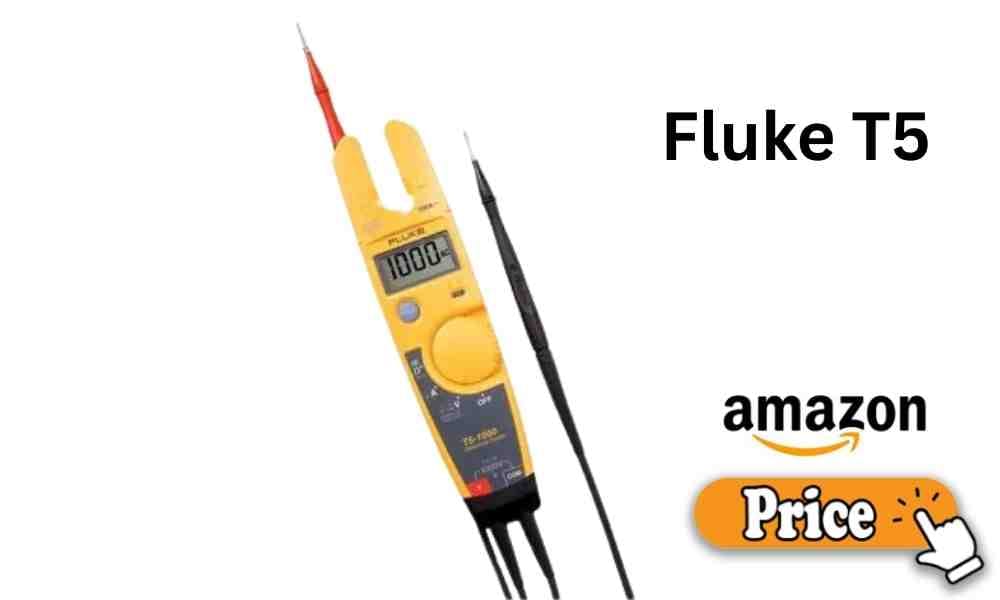
I tested it against my high-end bench meter and the readings were very close. However, I did miss having a backlight when working in that dim corner.
| Pros | Cons |
| Very tough and durable | No screen backlight |
| Slim, pocket-friendly size | Must use leads for voltage |
| Long battery life | Basic features only |
My Experience with the Fluke T6-1000
The T6 felt like a huge upgrade the moment I opened the box. I took it to a local shop to check a large motor start-up. The FieldSense jaw let me check voltage without even touching a live wire. It felt much safer.
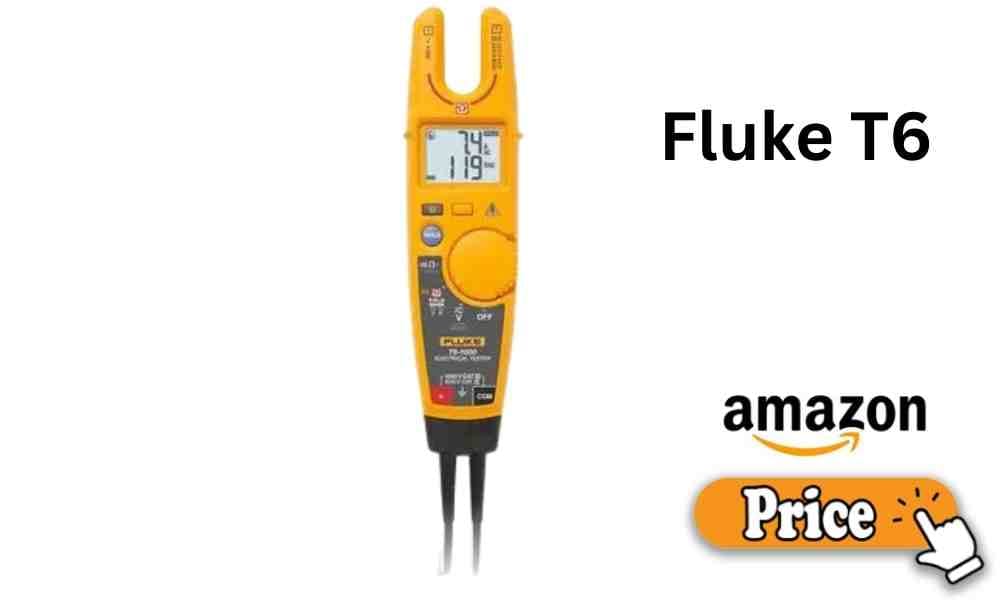
The screen lights up bright green, which made it easy to see the numbers. I noticed the jaw is wider too, which helped when I had to clamp onto thicker 4/0 wires.
| Pros | Cons |
| Measures V and A at once | Needs a good ground path |
| Bright backlit display | Slightly bulkier than T5 |
| Safer non-contact testing | Uses more battery power |
Detailed Comparison for Fluke T5 vs T6
Both tools are great, but they act very differently in your hand. Let’s look at the five things that actually matter when you are on the job.
Core Measurement Capabilities
The T5 is a basic tool for volts, amps, and ohms. The T6 does more by showing you volts and amps at the exact same time. This saved me a lot of switching back and forth during a car battery draw test.
| Feature | Fluke T5 | Fluke T6 |
| Dual Display | No | Yes |
| Max Current | 100A | 200A |
| True RMS | No | Yes |
Accuracy and Stability
In my tests, both meters were very steady. The T5 is great for standard home AC. But for “dirty” power like LED lights, the T6 is better. Its True RMS sensing gave me a more stable reading than the T5.
| Metric | Fluke T5 | Fluke T6 |
| AC Accuracy | 1.5% | 1.0% |
| Sensing Type | Average | True RMS |
| Stability | High | Very High |
Jaw Size and Design
I tried clamping both on a thick generator cable. The T5 struggled to fit. The T6 has a much wider jaw. That extra space makes a big difference when wires are cramped in a tight panel.
| Design | Fluke T5 | Fluke T6 |
| Jaw Opening | 12.9 mm | 17.8 mm |
| Wire Size | Up to 1/0 | Up to 4/0 |
| One-Hand Use | Good | Excellent |
Display and Usability
The T6 wins here easily. The backlight is a lifesaver. I used the T5 in a sunny yard and it was fine, but in a dark shed, I had to use a flashlight just to see my results. The T6 screen is also bigger and easier to read.
| Usability | Fluke T5 | Fluke T6 |
| Backlight | No | Yes |
| Digits | 1000 Count | 2000 Count |
| Visibility | Medium | High |
Safety and Build Quality
Both feel like they can survive a drop onto concrete. They are both rated CAT III 1000V. However, the T6 is safer because FieldSense lets you keep the leads tucked away for many common tests.
| Safety | Fluke T5 | Fluke T6 |
| CAT Rating | III 1000V | III 1000V |
| Contactless | No | Yes (FieldSense) |
| Case Feel | Hard Plastic | Rubber Overmold |
Conclusion
If you want a simple, cheap, and tough tool for home use, get the T5. It will last you for years. But if you work on motors or in dark spots, the T6 is worth the extra money. The backlight and the safer jaw make my work day much faster.