
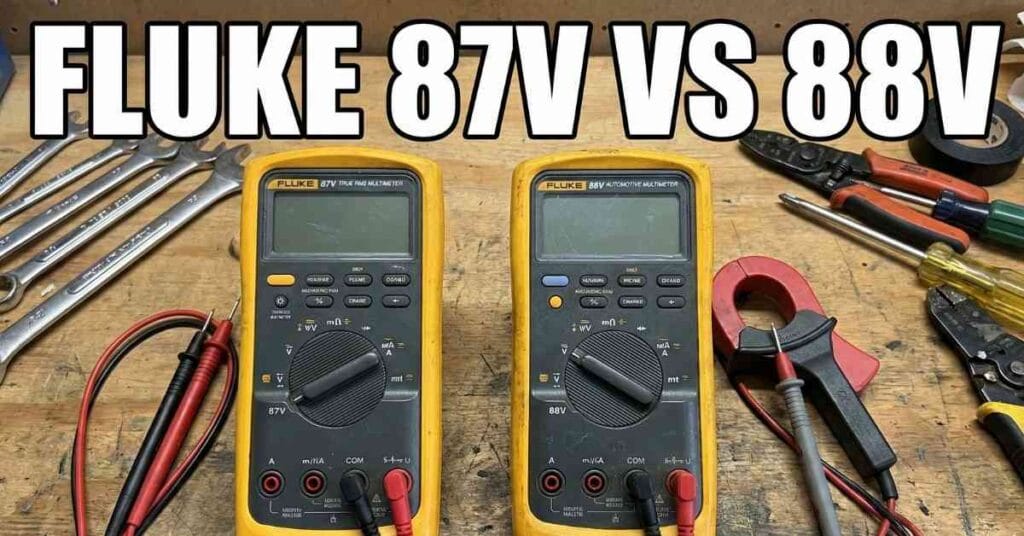
I spent weeks with these yellow bricks. I used them on my truck and my house. It is hard to pick the right one. I wrote this guide to help you.
My Experience With The Fluke 87V
I grabbed the Fluke 87V first. My dryer broke down. This meter feels heavy and strong. It gives me trust right away. I set it to AC volts to check the wall plug. The dial clicks loud and firm. It does not feel cheap.
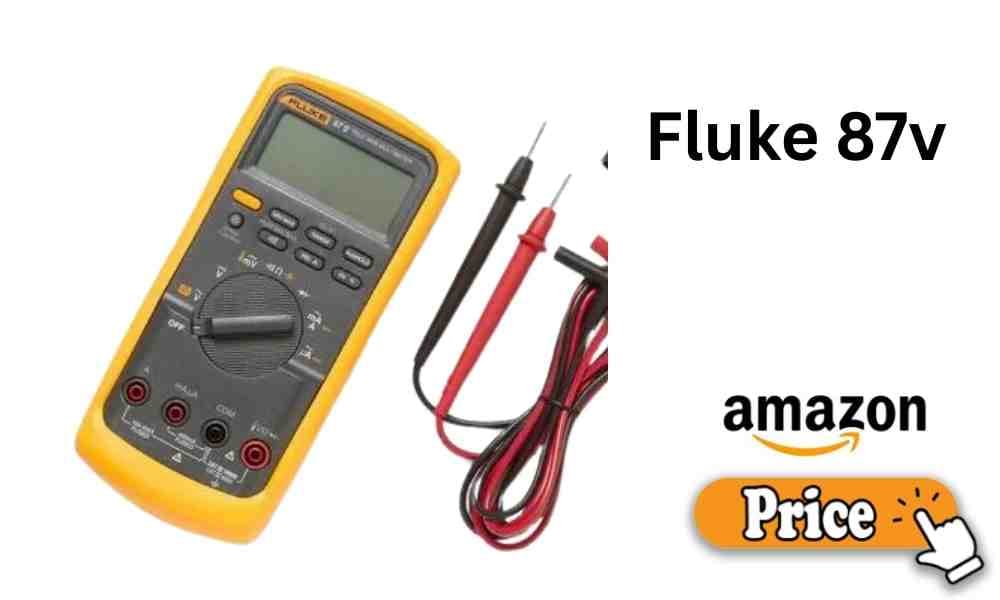
I love the screen on this thing. The numbers are big. I can read them fast. I tested the light in a dark spot. It was very bright. It made the job safe. The best part was the speed. The numbers settle fast. I do not have to wait.
I also tested it on a fan motor. I used the “Low Pass” button. This is a special trick on the 87V. It smoothed out the noise. It gave me a clean number. I also dropped it once. It hit the hard floor. I picked it up. It worked fine. The rubber case saved it.
Fluke 87V Pros and Cons
| Pros | Cons |
| Reads very fast | Costs a lot |
| Screen is easy to see | A bit heavy |
| Cleans up noise | Buttons are stiff |
| Very tough build | No magnet clip |
My Experience With The Fluke 88V
Next, I took the Fluke 88V to my garage. I had to fix my truck. This meter looks like the 87V. But it acts different. It starts in DC mode. That is great for cars. I do not have to press a button to switch it.
I tested the battery first. It gave me a fast read. Then I tried the RPM mode. This is where the 88V wins. I clipped the lead to a plug wire. The screen showed the engine speed. It was steady. It matched my dash.
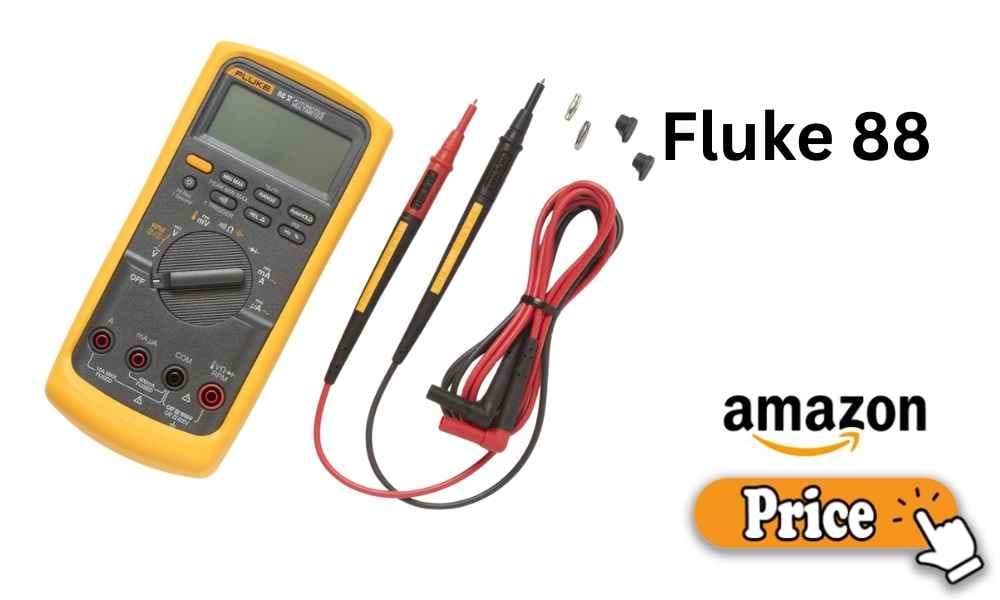
I also checked the fuel injectors. The 88V has a pulse width mode. It sounds hard, but it is easy. It told me how long the valves stayed open. I did not do any math. The meter did it for me. It felt just as tough as the 87V. But it is made for engines, not house wires.
Fluke 88V Pros and Cons
| Pros | Cons |
| Great for car tests | Not True-RMS |
| Reads engine RPM | Hard to read drives |
| Starts in DC mode | Price is high |
| Checks fuel pulses | Same heavy size |
Fluke 87V vs 88V Details Comparison
Here is how they compare. I picked five key points.
Core Measurement Capabilities
I tested both on many wires. The main difference is AC power. The 87V is True-RMS. It is exact even if the power is messy. The 88V is average responding. It works fine for clean power. But it missed the mark on a dimmer switch. The 87V gave me the real volts. The 88V read low. For DC volts on my car, both were spot on.
| Feature | Fluke 87V | Fluke 88V |
| AC Type | True-RMS | Average Sense |
| Best For | House & Plant | Cars & 12V |
| Accuracy | High on all AC | Good on clean AC |
Display and Usability
Both screens are large. They are very clear. I like the bar graph at the bottom. It moves fast like a needle. This helps when I tune an engine. The 87V has a hi-res mode. It shows more digits. This lets you see small changes. The 88V does not have this. But I did not miss it in the shop. The light on both is great.
| Feature | Fluke 87V | Fluke 88V |
| Counts | 20,000 | 6,000 |
| Light | Two Steps | Two Steps |
| Digits | 4.5 digits | 3.5 digits |
Safety Ratings
Safety is why I pay more. Both meters are CAT rated. They handle big surges. They will not blow up in my hand. I checked the fuses. They are big and sand-filled. They are made to stop a flash. I feel safe with them on my main panel. The inputs beep if you plug the leads in wrong.
| Feature | Fluke 87V | Fluke 88V |
| Rating | CAT IV 600V | CAT IV 600V |
| Fuse | High Energy | High Energy |
| Alert | Yes, beeps | Yes, beeps |
Special Features
This is the real test. The 87V has a Low Pass Filter. I used this on a motor drive. It cut out the fuzz. The 88V cannot do this. But the 88V has an RPM mode. I used it to set the idle on my mower. The 87V cannot do that well. The 88V also times pulses. The 87V can only check duty cycle.
| Feature | Fluke 87V | Fluke 88V |
| Key Tool | Low Pass Filter | RPM Reading |
| Key Tool | Start-up Amps | Pulse Width |
| User | Electrician | Mechanic |
Battery Life and Power
Both use a 9V battery. I used my 87V for months. It is still going strong. The sheet says 400 hours. My use backs that up. The auto-off helps a lot. If I leave it on the bench, it turns off. Changing the cell is easy. You remove the rubber boot. Then you unscrew the back door. It is quick.
| Feature | Fluke 87V | Fluke 88V |
| Battery | One 9V | One 9V |
| Life | ~400 Hours | ~400 Hours |
| Access | Easy Door | Easy Door |
Conclusion
If you fix cars, buy the 88V. The RPM and pulse tools save time. If you fix house wires, get the 87V. The accuracy is a must for safety. Both are built like tanks. They will last for years.