
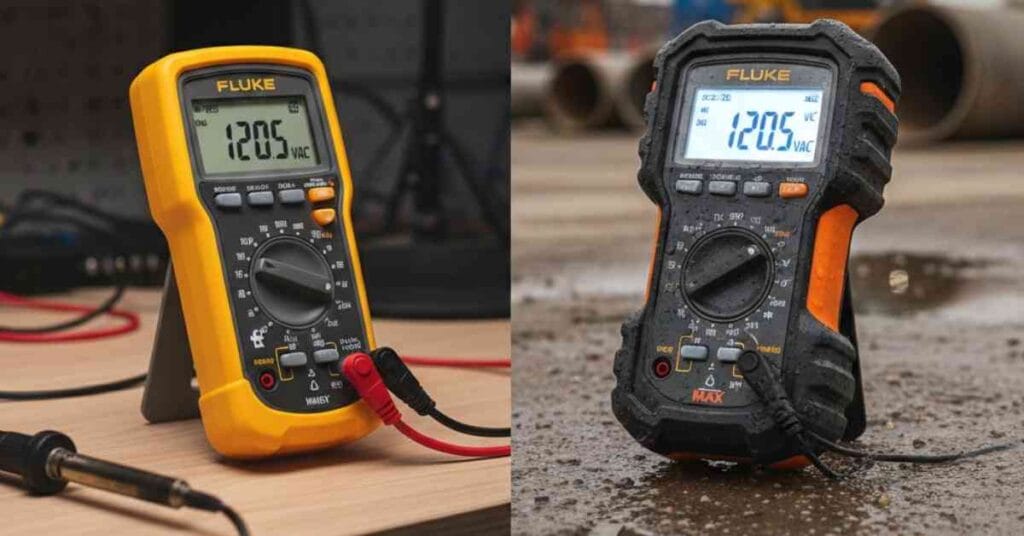
I spent weeks testing the Fluke 87V and the 87V MAX in my shop and out in the field. Here is what I learned about which meter actually earns its keep when things get messy.
My Experience with the Fluke 87V
I have used the standard 87V on my bench for a long time. It is my go-to for checking car battery draw and testing small electronics. Last Tuesday, I used it to find a parasitic drain on an old truck. The readings were rock solid. It reacts so fast that I never feel like I am waiting on the screen.
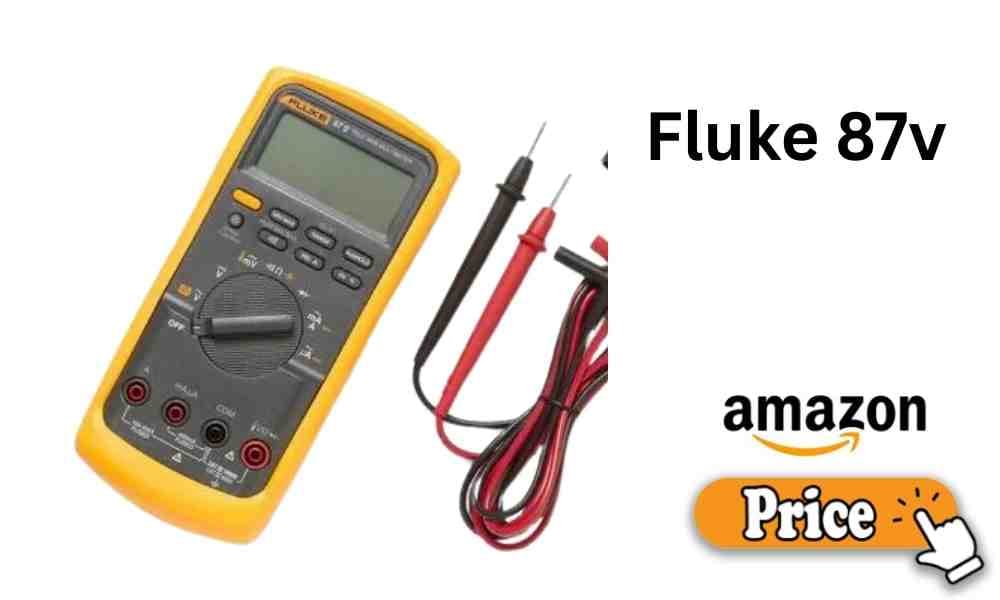
The buttons feel snappy, and the dial clicks into place with a high-quality thud. Even after years of use, the accuracy matches my reference meter almost perfectly. It is a tool that just works every time you pick it up.
| Pros | Cons |
| Very fast response time | Not waterproof |
| Slimmer and lighter | Uses 9V batteries |
| Proven track record | Screen can be hard to see in sun |
My Experience with the Fluke 87V MAX
I took the 87V MAX out to a rainy job site to test a large motor start-up current. I actually dropped it off a four-foot workbench onto concrete. It bounced, and I didn’t even flinch. That is the peace of mind you pay for. The IP67 rating meant I didn’t worry about the damp grass or the light drizzle.
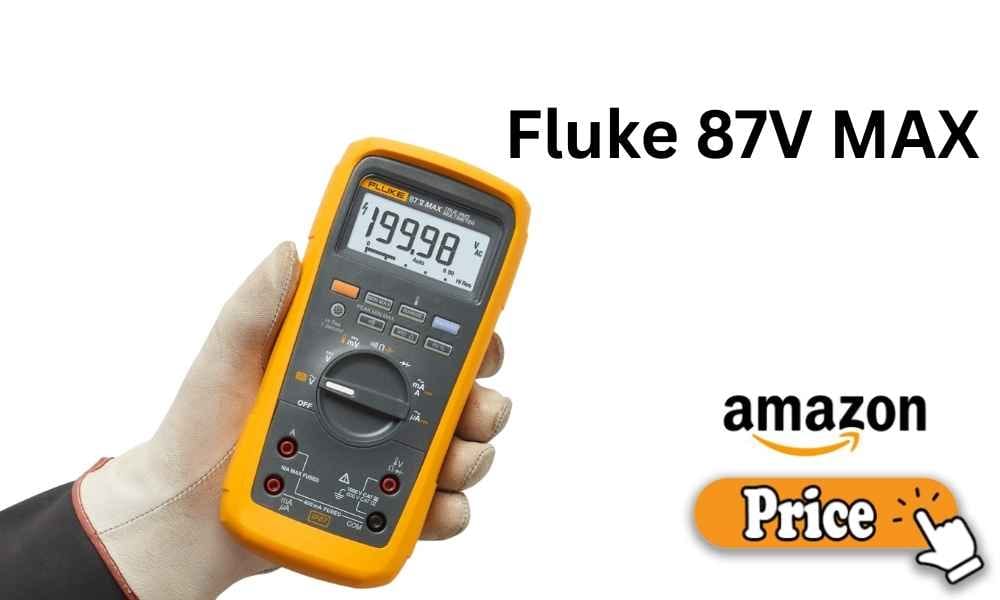
Testing the motor was easy with the backlit buttons. I also love that it uses AA batteries. I found some in a kitchen drawer when the old ones died. It feels like a tank in your hand, though it is a bit heavy for a pocket.
| Pros | Cons |
| Fully waterproof and dustproof | Bulkier and heavier |
| Survives huge drops | Higher price tag |
| Uses easy-to-find AA batteries | Too big for small tool pouches |
Detailed Comparison for Fluke 87V vs 87V MAX
Both meters share the same high accuracy, but they feel very different in real-world use. Here is how they stack up across five key areas.
Accuracy and Stability
In my shop, I ran both meters against a calibrated voltage source. Both stayed within 0.05% of each other. The 87V MAX seemed slightly more stable when I was testing household AC current near noisy machinery. Neither meter drifted, even after being left on for an hour.
| Feature | Fluke 87V | Fluke 87V MAX |
| Basic DC Accuracy | 0.05% | 0.05% |
| Counts | 20,000 | 20,000 |
| Stability | Excellent | Excellent |
Build Quality and Durability
The 87V is tough, but the 87V MAX is on another level. The MAX has a thicker rubber holster that absorbs shocks better. I noticed the 87V MAX dial feels a bit stiffer, likely due to the extra seals to keep water out. The 87V feels more like a precision instrument, while the MAX feels like a piece of safety gear.
| Feature | Fluke 87V | Fluke 87V MAX |
| Drop Rating | 1 meter | 4 meters |
| IP Rating | IP30 | IP67 |
| Shell Material | Hard Plastic/Rubber | Heavy Duty Polymer |
Battery Life and Power
The 87V uses a 9V battery which lasted me about six months of light use. The 87V MAX uses three AA batteries. This is a game changer for me. I hate hunting for 9V batteries at 10 PM. The MAX also lasts twice as long. I’ve been using it for weeks and the low battery icon hasn’t even flickered.
| Feature | Fluke 87V | Fluke 87V MAX |
| Battery Type | 9V Alkaline | 3x AA Alkaline |
| Rated Life | 400 Hours | 800 Hours |
| Access | Single Screw | Three Screws (Sealed) |
Display and Usability
Both screens are large, but the 87V MAX has a much brighter backlight. I tried reading both in direct sunlight while checking a solar array. The MAX was easier to see at an angle. However, the 87V is much easier to use with one hand because it is not as wide.
| Feature | Fluke 87V | Fluke 87V MAX |
| Backlight | Dual Level | High Contrast White |
| Keypad | Standard | Backlit Glow |
| Weight | 355g | 460g |
Safety and Leads
Safety is where Fluke shines. Both are rated for CAT IV 600V. However, the MAX comes with the TL175 TwistGuard leads. I love these because I can change the exposed tip length with a simple twist. It makes probing tight wiring much safer. The standard leads on the 87V are good but feel a bit stiff in the cold.
| Feature | Fluke 87V | Fluke 87V MAX |
| Safety Rating | CAT IV 600V | CAT IV 600V |
| Leads Included | TL75 | TL175 Silicone |
| Fuse Protection | 11A/440mA | 11A/440mA |
Conclusion
If you work inside at a desk, buy the Fluke 87V. It is lighter and costs less. But if you work in the rain, on ladders, or in dusty shops, get the 87V MAX. It is a beast that handles every drop and splash I throw at it.