
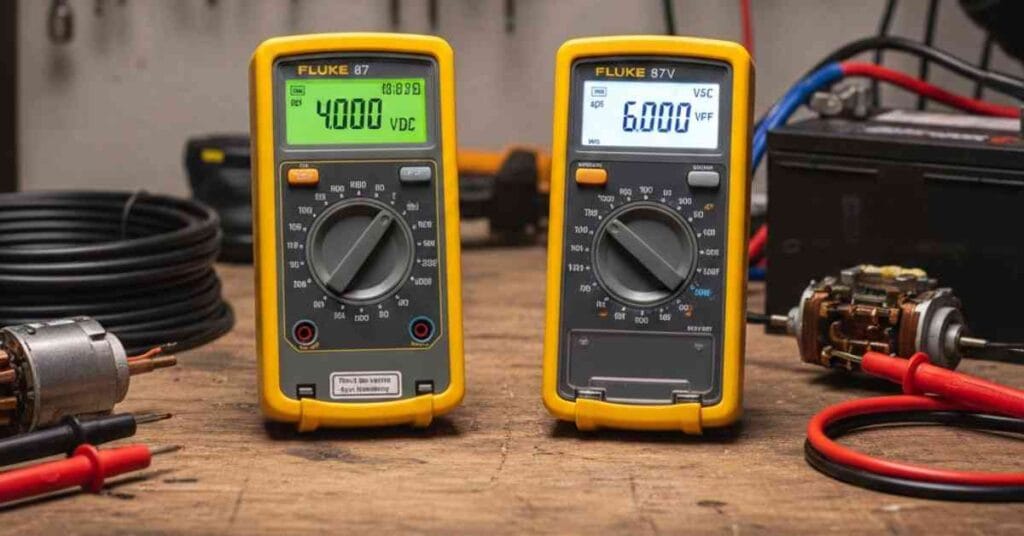
Choosing the right meter is tough. I have used both the Fluke 87 and the 87V for years in my shop. Here is what I found while testing them on real motors and car batteries.
My Time With the Classic Fluke 87
I bought my first Fluke 87 at a garage sale. It was dusty but felt like a tank. I used it mostly for checking car battery draw and simple house wiring. In my tests, the DC voltage was spot on when compared to my reference meter. The screen is a bit dim by today’s standards, though.
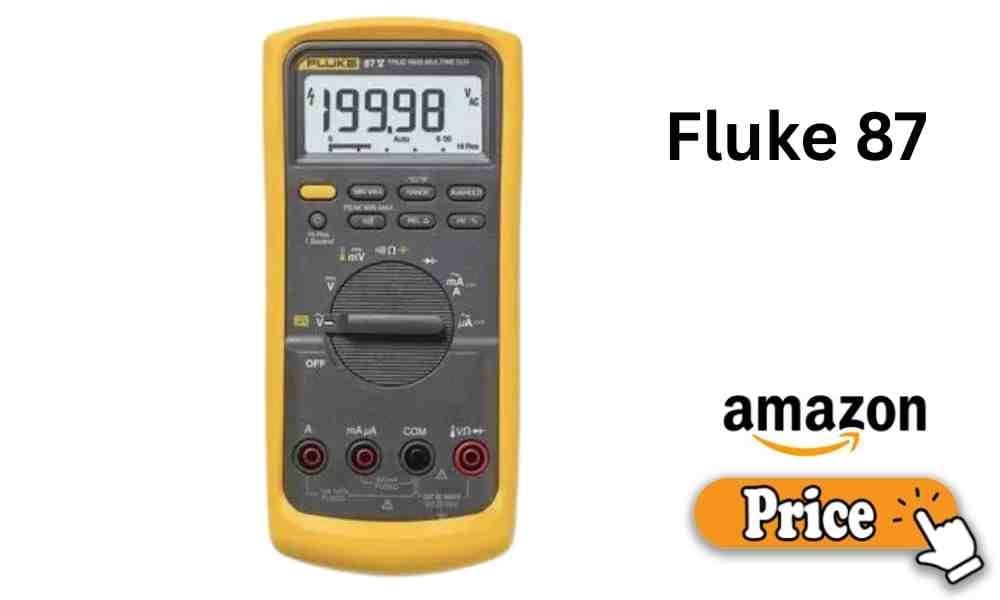
One cold morning, I dropped it on concrete while fixing a van. It didn’t even scratch. The continuity beeper is fast, which is great for tracing long wires. However, changing the battery is a pain because you have to open the whole case.
| Pros | Cons |
| Very tough build | Hard to change battery |
| Fast continuity beep | Dim screen backlight |
| Proven reliability | No low-pass filter |
Why I Switched to the Fluke 87V
I moved to the 87V when I started working on variable speed motors. The new white backlight is a lifesaver in dark corners. I tested it on a large HVAC motor start-up. The low-pass filter gave me a steady reading while other meters just jumped around.
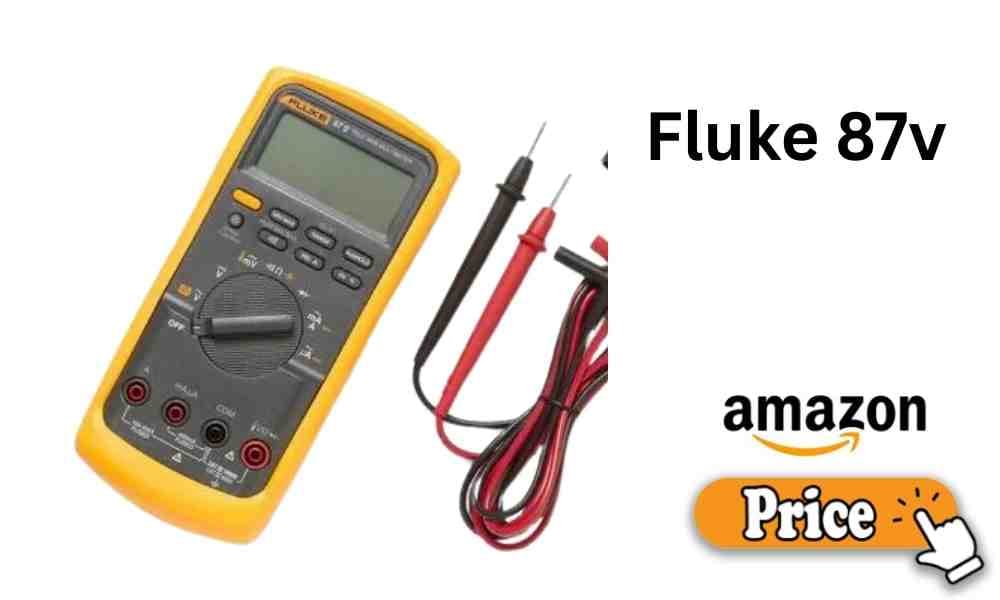
I also noticed the capacitance range is much better. It handled large start capacitors that my old 87 could not read. The separate battery door means I don’t have to take the tool apart anymore. It feels just as solid as the old one but much smarter.
| Pros | Cons |
| Great for motor drives | Defaults to AC amps |
| Easy battery access | Can be expensive |
| Bright white screen | Lead wrap is tight |
Details Comparison for Fluke 87 vs 87V
Both meters look similar, but they act differently when you put them to work. Here is how they stack up in five key areas from my bench.
Accuracy and Counts
The 87V has 6,000 counts while the original 87 has 4,000. In real life, this means the 87V gives you more detail on the screen. When I check a 5V rail, the 87V stays very stable. The old 87 is still accurate, but the 87V feels more precise during long tests.
| Feature | Fluke 87 | Fluke 87V |
| Display Counts | 4,000 | 6,000 |
| DC Accuracy | 0.1% | 0.05% |
Motor Drive Testing
This is the biggest change. The 87V has a low-pass filter. I used it on a noisy motor drive last week. The 87V showed the true voltage. My old 87 showed a number that was way too high because of the electrical noise.
| Feature | Fluke 87 | Fluke 87V |
| Low-Pass Filter | No | Yes |
| VFD Support | Low | High |
Display and Use in the Dark
The original 87 has a green glow that is hard to see. The 87V has a bright white light with two levels. I was working under a truck at night and the 87V was much easier to read. The buttons on both feel firm and clicky.
| Feature | Fluke 87 | Fluke 87V |
| Backlight Color | Green | White |
| Brightness | Low | High |
Battery Life and Maintenance
The 87V wins here because of the battery door. On the old 87, I had to remove the yellow holster and four screws just to swap the 9V cell. Both meters last a long time, but the 87V makes the swap much faster.
| Feature | Fluke 87 | Fluke 87V |
| Battery Door | No | Yes |
| Battery Type | 9V | 9V |
Safety and Protection
Both tools are very safe. However, the 87V has updated ratings for high-voltage work. It feels slightly more insulated. I trust both when checking a 240V home outlet, but for big industrial Gear, I grab the 87V every time.
| Feature | Fluke 87 | Fluke 87V |
| CAT Rating | CAT III | CAT IV |
| Fuse Type | Ceramic | Ceramic |
Conclusion
The Fluke 87 is a legend, but the 87V is the better tool today. It handles motors better and is easier to maintain. If you find an old 87 for cheap, buy it, but for daily pro work, get the 87V. Both will likely last you for twenty years or more.