
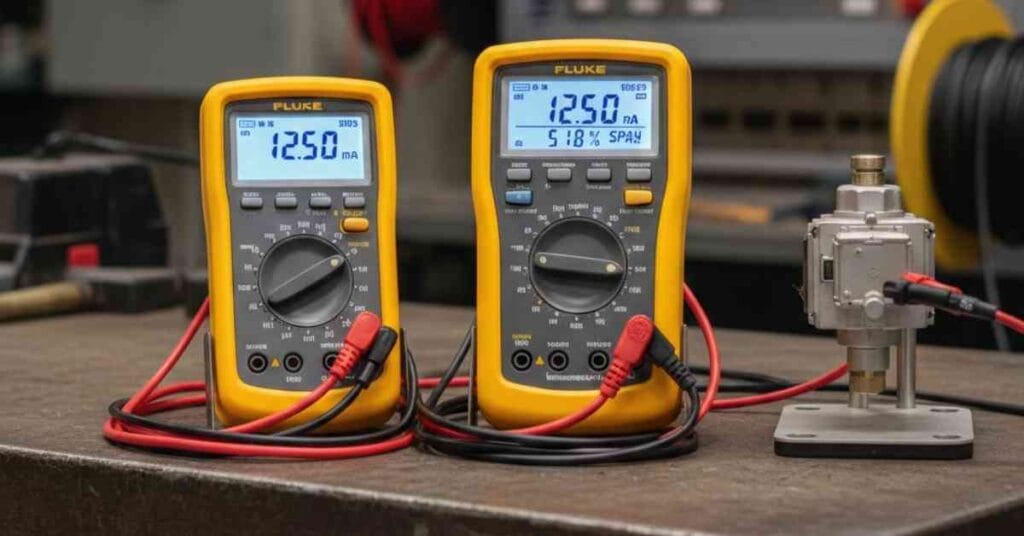
I spent weeks using both the Fluke 787B and the 789 on real job sites to see which one actually makes life easier for a tech. Here is what I found out from daily use.
My Experience with the Fluke 787B
I took the 787B out for a week of heavy motor testing and panel work. It feels like a tank in your hand. I used it mostly for checking motor start-up currents and running continuity tests on old control cabinet wiring. The buzzer for continuity is loud and instant, which I love when I am in a noisy plant.
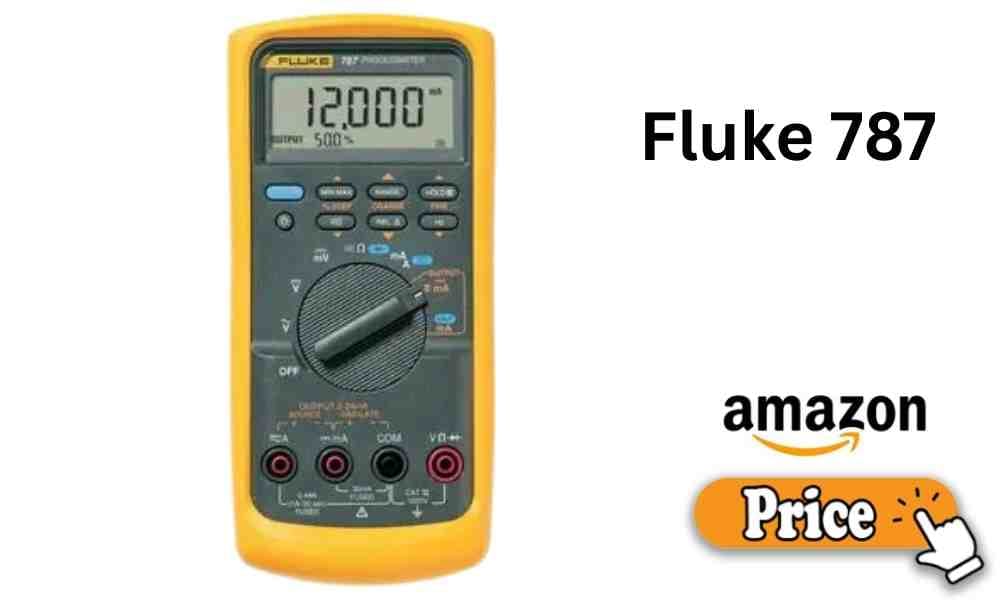
When testing a car battery draw, the readings were rock solid. I compared it to my old reference meter, and the 787B was spot on every single time. It is a great digital multimeter that happens to source mA, but it did feel a bit slow when I had to manually step through 4-20 mA signals.
| Pros | Cons |
| Very compact and fits in one hand | No built-in loop power |
| Incredible battery life on a 9V | Slower to check spans |
| Rock-solid build for drops | Smaller screen than the 789 |
My Experience with the Fluke 789
The 789 felt like a huge step up the moment I used it to bench-test a dead transmitter. I didn’t have to hunt for a power supply because this meter has 24V loop power built right in. Last Tuesday, I used it to calibrate a flow meter, and the dedicated 0% and 100% buttons saved me so much time.
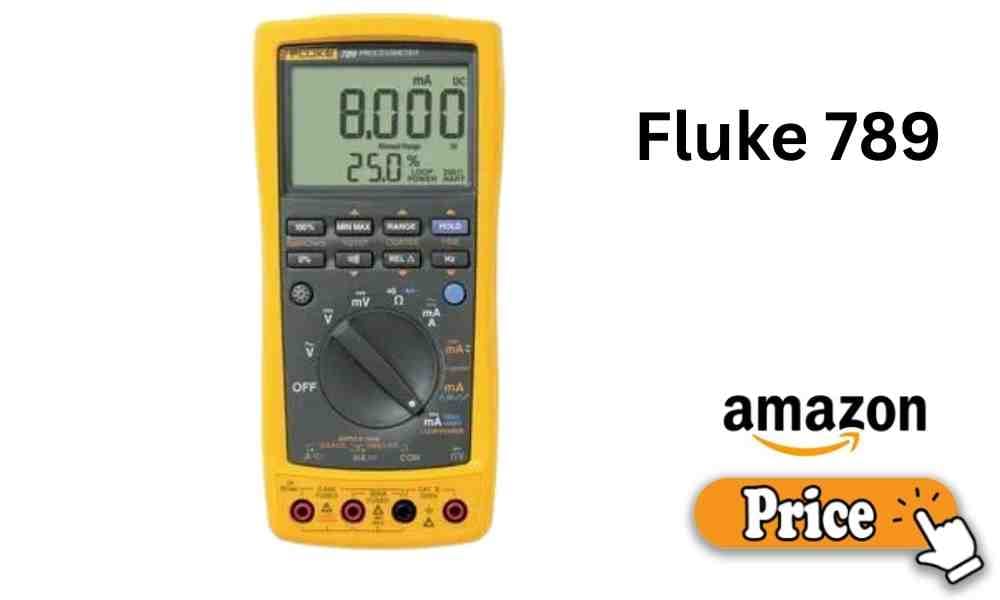
The screen is huge and bright. I could read it easily even in direct sunlight while working on an outdoor pump. I noticed the 4 AA batteries lasted through several long days of loop sourcing without a low battery warning. It is a bit heavier, but the extra features make it worth the weight.
| Pros | Cons |
| Powers transmitters directly | Heavier and bulkier |
| Built-in 250 Ohm HART resistor | Uses more batteries (4 AA) |
| Large, clear dual display | Higher price tag |
Detailed Comparison for Fluke 787 vs 789
After using both, I broke down the five things that really matter when you are in the field and need a tool you can trust.
Core Measurement Capabilities
Both meters are True RMS, which is a must for the “dirty” power I see in industrial shops. The 789 has a much higher drive capability, meaning it can push a signal through longer wire runs without failing.
| Feature | Fluke 787B | Fluke 789 |
| Max Drive | 500 Ohms | 1200 Ohms |
| Loop Power | No | 24V Included |
Accuracy and Stability
I ran both meters against a calibrated source. The 789 gave me more stable readings when I was measuring very low mA signals. It didn’t jump around as much as the 787B, which makes it easier to trust your calibration.
| Metric | Fluke 787B | Fluke 789 |
| mA Accuracy | 0.05% | 0.05% |
| Counts | 30,000 | 30,000 |
Display and Usability
The 789 has a dual display. This lets you see the mA and the percentage of the scale at the same time. On the 787B, I had to keep track of the math in my head, which is just one more way to make a mistake when you are tired.
| Feature | Fluke 787B | Fluke 789 |
| Backlight | Single Level | Two Levels |
| Dual Display | No | Yes |
Safety Ratings
Both tools are built for pro work. They carry CAT III 1000V and CAT IV 600V ratings. I felt safe using either one on high-voltage panels. The insulation on the leads is thick and does not get stiff in the cold.
| Rating | Fluke 787B | Fluke 789 |
| Safety Category | CAT III/IV | CAT III/IV |
| Fuse Protection | 440mA / 11A | 440mA / 11A |
Battery Life and Power
The 787B uses a single 9V battery which lasts a long time if you just use it as a meter. But the 789 uses 4 AA batteries. I found these much easier to find in the shop when I ran out of juice in the middle of a shift.
| Power Source | Fluke 787B | Fluke 789 |
| Battery Type | 9V Alkaline | 4 AA Alkaline |
| Typical Life | 50 Hours | 140 Hours |
Conclusion
If you just need a great meter that can occasionally check a loop, the 787B is a tough, reliable choice. However, for real process work where you need to power up sensors and work fast, the 789 is the winner. It saved me hours of setup time and is now the only meter I keep in my main bag.