
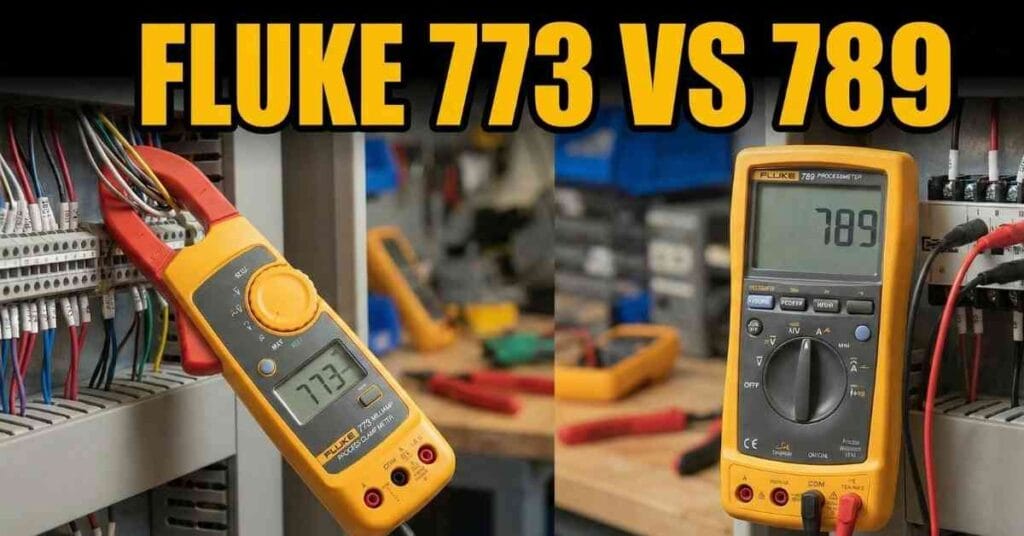
I work with controls and automation every day. I know how hard it is to choose the right tool. I tested the Fluke 773 and Fluke 789 side by side. Here is the truth about how they work in the real world.
Fluke 773 Review: The Time Saver
I used the Fluke 773 on a messy job site. The wires were tight and hard to reach. I needed to check a signal fast. I did not want to shut down the machine. This is where the 773 shines.
I just clamped the jaw over the wire. I got a reading of 12.4 mA right away. It was safe and fast. I did not have to undo any screws. I also used it to send a 0–10V signal to a damper. The 789 cannot do that.
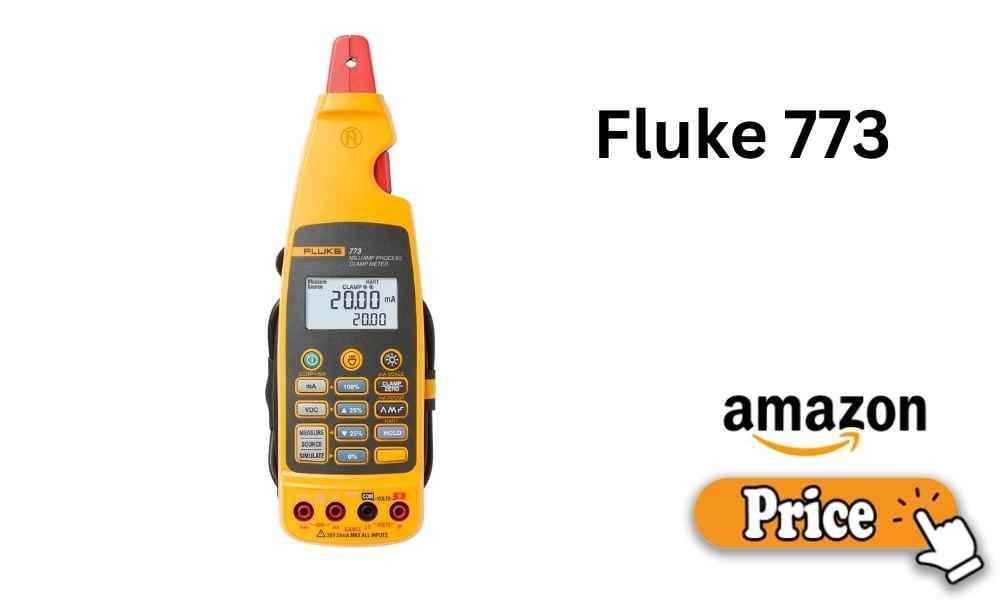
But it has limits. I tried to check a fuse for continuity. It made no sound. It has no beeper. I also tried to check a wall outlet. It cannot measure AC volts. It is a specialized tool, not a general meter.
| Pros | Cons |
| Reads signal through the wire | No beeper for continuity |
| Sends 0–10V signals | Cannot read wall power |
| Detachable clamp is great | Cost is high for one job |
| Works in tight spots | Screen is small |
Fluke 789 Review: The Big Beast
The Fluke 789 is a tank. It feels heavy in my hand. It is a full meter and a loop tool in one. I keep it in my bag when I have limited space.
I tested it on a dead transmitter. The 789 powered it up with its own 24V supply. That saved me a trip to the truck. I also used it to check a 480V line. It is rated safe for that. It gives me peace of mind.
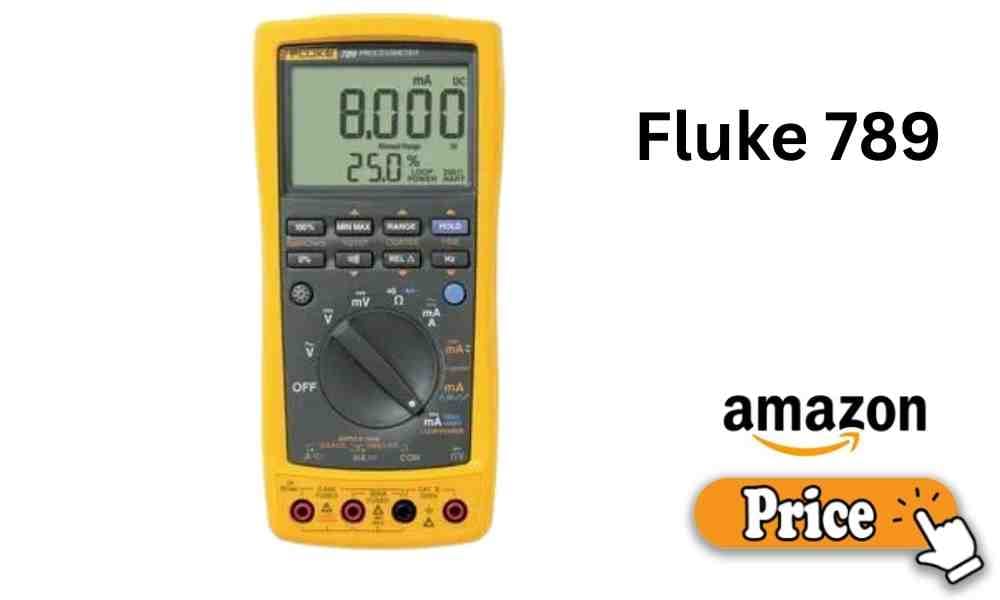
But you must be careful. To check current, you must break the wire. You have to put the leads in line. That takes time. Also, do not test a motor start-up or car battery with this. It has a 1-amp fuse. I blew a fuse trying to check a small solenoid. It is strictly for controls, not high current.
| Pros | Cons |
| Does almost everything | Must cut wire to test amps |
| Safe for high voltage | Very big and heavy |
| Powers dead devices | Low amp limit (1 Amp) |
| Has a clear, big screen | Eats batteries fast |
Detailed Comparison for Fluke 773 vs 789
Here is how these two tools compare when you use them on the job.
Core Measurement Capabilities
The main difference is how you connect them. The 773 clamps on. The 789 plugs in.
| Feature | Fluke 773 | Fluke 789 |
| How it reads Amps | Clamp (Easy) | Leads (Hard) |
| Wall Power (AC) | No | Yes |
| Ohms / Resistance | No | Yes |
| Source Voltage | 0-10 Volts | No |
Accuracy and Stability
I checked both against a lab standard. In the field, stable numbers matter most.
| Feature | Fluke 773 | Fluke 789 |
| Drift | Can drift a little | Very stable |
| Precision | Good (0.01 mA) | Best (0.001 mA) |
| Reliability | Good | Excellent |
Display and Usability
I work in dark rooms and bright sun. The screen quality is a big deal.
| Feature | Fluke 773 | Fluke 789 |
| Screen Size | Small | Large |
| Light | Okay | Bright |
| Handling | Slim fit | Bulky block |
Safety Ratings
Safety is key. If you work on main power lines, you need the right rating.
| Feature | Fluke 773 | Fluke 789 |
| Main Power Safe? | No | Yes (CAT IV) |
| Max Volts | 30 Volts | 1000 Volts |
| Fuse Type | None | 440 mA Fuse |
Battery Life and Power
These tools use power fast. Here is how long they last in my bag.
| Feature | Fluke 773 | Fluke 789 |
| Battery Type | 4 x AA | 4 x AA |
| Run Time | ~12 Hours | ~140 Hours |
| Battery Door | Needs Tool | Tool-Free |
Conclusion
If you need to check signals without stopping work, get the Fluke 773. It is faster and easier. But if you need one tool to do it all, get the Fluke 789. It is safer for high voltage and has more functions. Choose the one that fits your daily work best.