
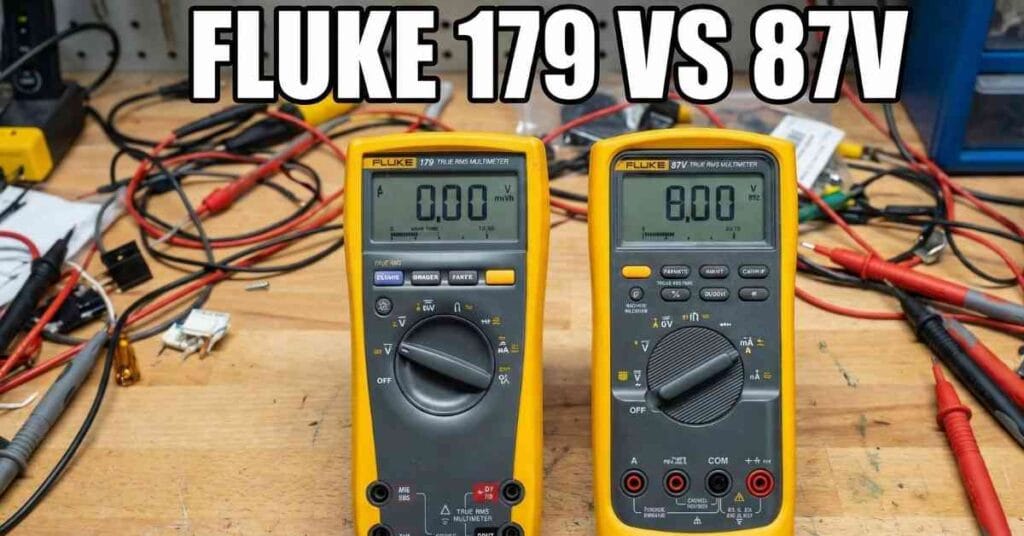
I spent the last month carrying both the Fluke 179 and the Fluke 87V in my tool bag to see which one earned its spot. I used them on everything from a finicky car battery to a noisy HVAC motor control drive. Here is the honest breakdown of how these two industry standards actually handle daily abuse.
My Experience with the Fluke 179
I started my week with the Fluke 179, treating it as my grab-and-go meter for general trouble calls. The first thing I noticed was the simplicity. I had to check a tripped breaker on a dryer circuit, and the 179 was perfect for this. I didn’t have to fiddle with menus or special setups. I just turned the dial to AC volts and got my reading.
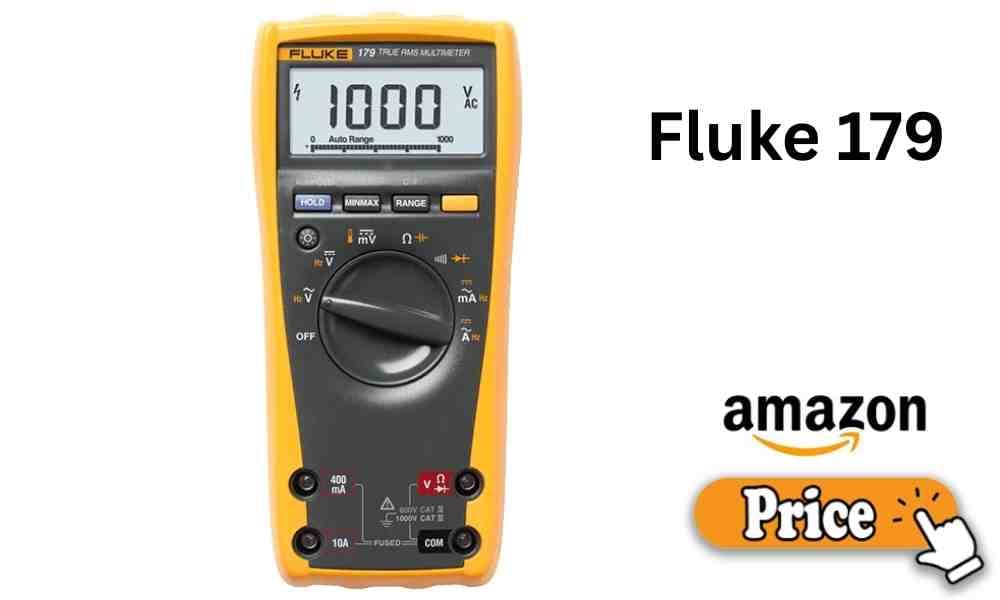
Later, I used it to check for a parasitic draw on my neighbor’s truck battery. The 179 handles DC current well, but I did miss the finer resolution when looking for very small leaks. I also dropped it—accidentally, I swear—from about four feet onto concrete while checking a sub-panel. It didn’t even flicker. It feels like a brick in the best way possible. The continuity beeper is loud and snaps instantly, which saved me time when tracing a mess of wires in a junction box. It is the tool I grab when I just need to know if a wire is live or dead without overthinking it.
Pros and Cons: Fluke 179
| Pros | Cons |
| Simple interface is fast to use | Lacks microamp range for electronics |
| Extremely durable build quality | No Low Pass Filter for VFDs |
| Great battery life (200+ hours) | Lower display resolution |
| Loud, instant continuity beeper | Price is high for basic features |
My Experience with the Fluke 87V
The next week, I switched to the Fluke 87V. Immediately, I felt the difference in capability. I was working on a variable speed motor that was acting up. My older meter was jumping all over the place because of the electrical noise. I hit the “Low Pass Filter” button on the 87V, and the reading steadied out instantly. That one feature alone justifies the cost if you work in industrial settings.
I also do some board-level repair on furnace control boards. The 87V has a microamp setting that the 179 lacks. I used it to test a flame sensor, and seeing that precise 2.4 µA reading gave me total confidence in the diagnosis. The high-resolution mode is nice, but I found I rarely used it for standard electrical work. The screen is crisp, and the dual-level backlight is a small luxury that helps in dim attics. It feels just as tough as the 179 but like a sharper, more precise instrument.
Pros and Cons: Fluke 87V
| Pros | Cons |
| Includes microamps for flame sensors | More expensive initial cost |
| Low Pass Filter handles electrical noise | Slightly more complex to operate |
| High accuracy (0.05% DC) | Battery life is shorter than the 179 |
| Peak capture catches fast glitches | Overkill for simple house wiring |
Detailed Comparison for Fluke 179 vs 87V
Here is where we get into the weeds. I put these meters head-to-head on the bench and in the field to see where the specs actually translate to real work.
Core Measurement Accuracy
Accuracy on paper is one thing, but stability is another. I hooked both meters up to a stable DC power supply set to 12.00 volts. The 87V nailed it exactly, while the 179 was off by a tiny fraction, reading 12.01.
For house wiring, this does not matter. But when I was calibrating a sensor loop, that 87V precision was vital. The 87V also has a 20,000-count mode. This lets you see smaller changes in the signal that the 6,000-count screen on the 179 simply smooths over.
| Feature | Fluke 179 | Fluke 87V |
| DC Accuracy | 0.09% | 0.05% |
| Display Counts | 6,000 | 6,000 or 20,000 |
| Best For | General Voltage | Precision Electronics |
Display and Readability
I took both meters outside on a sunny afternoon to check a compressor unit. Both screens are clear, but the 87V has larger digits that are slightly easier to read from an angle. The real difference is the backlight.
The 179 has a single brightness setting—it is either on or off. The 87V has two levels. In a pitch-black electrical closet, the low setting on the 87V was easier on my eyes, while the 179 felt a bit like a flashlight beaming at me. The bargraph on the bottom of the 87V also seemed to update a fraction faster, which mimics an analog needle better.
| Feature | Fluke 179 | Fluke 87V |
| Digit Size | Large | Large |
| Backlight | Single Level | Two-Stage (Hi/Lo) |
| Viewing Angle | Good | Excellent |
Electronics and Microamps
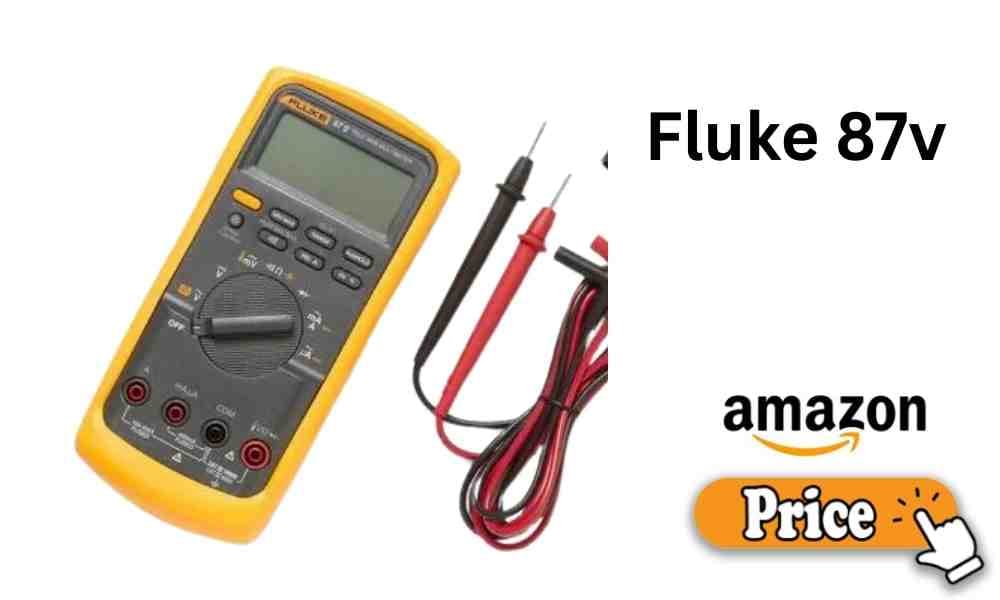
This is the dealbreaker for many. I tried to measure a flame sensor on a gas furnace with the 179. I couldn’t do it directly because the 179 does not have a microamp (µA) range. It stops at milliamps.
I had to use the 87V for this job. The 87V dial has a dedicated spot for µA. If you work on HVAC systems or fix circuit boards, the 179 will force you to carry a second meter. If you only pull wire and install outlets, you will never miss this feature.
| Feature | Fluke 179 | Fluke 87V |
| Microamps (µA) | No | Yes |
| Low Range | 0.01 mA | 0.01 µA |
| Use Case | Motors/Pumps | PCBs/Sensors |
Variable Frequency Drives (VFD)
I tested both meters on a 3-phase motor driven by a VFD. The VFD chops up voltage to control speed, which creates a lot of “hash” or noise on the line.
When I measured output voltage with the 179, the numbers drifted around because the meter was confused by the high frequencies. The 87V has a button specifically for this. Once engaged, the Low Pass Filter blocks the noise. The 87V gave me a rock-steady reading that matched the drive’s display panel.
| Feature | Fluke 179 | Fluke 87V |
| VFD Filter | No | Yes |
| Motor Readings | Unstable on VFDs | Accurate on VFDs |
| Noise Rejection | Standard | High |
Battery Life and Build
I left both meters on to see how long they would last. The 179 uses a 9V battery and claims about 200 hours. In my use, it feels like it lasts forever. I have not changed the battery in six months.
The 87V also uses a 9V but burns through it a bit faster, likely due to the higher processing power and fancy features. Physically, the cases are almost identical. They both have that rubber overmolding that absorbs shock. The tilt stand on the 87V felt slightly sturdier, but both are built to survive a drop from a ladder.
| Feature | Fluke 179 | Fluke 87V |
| Battery Type | 9V Alkaline | 9V Alkaline |
| Est. Life | ~200 Hours | ~400 Hours (w/o backlight) |
| Durability | Excellent | Excellent |
Conclusion
If you are an electrician doing residential or light commercial work, the Fluke 179 is your workhorse. It is simple, rugged, and saves you money. But if you touch HVAC flame sensors, industrial motors, or circuit boards, you need the Fluke 87V. That extra cost pays for itself the first time you need to filter VFD noise or measure a tiny current.