
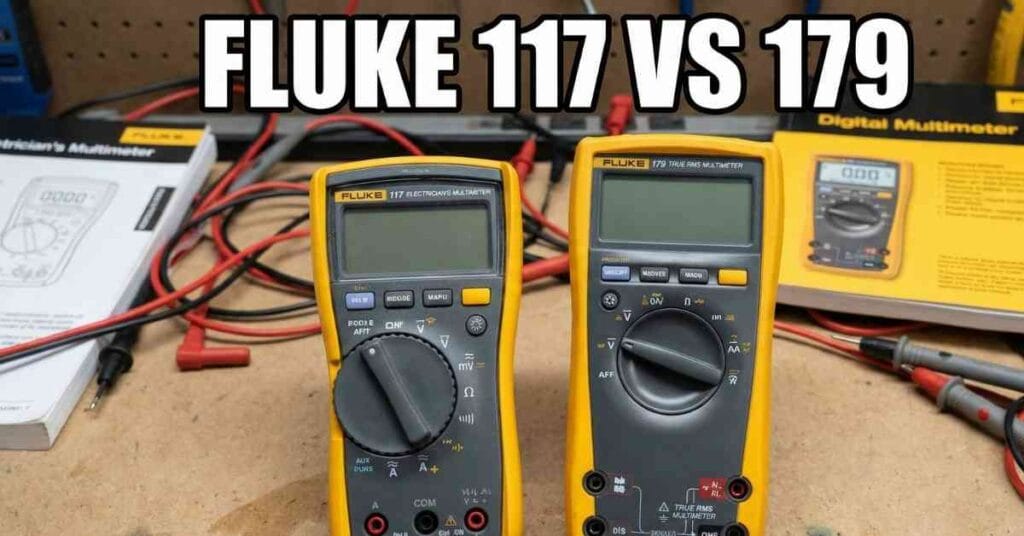
I grabbed both of these yellow meters and headed to the garage. I spent two weeks testing them on everything from a messy breaker box to a finicky dryer sensor. One is built for speed, and the other is built for precision. Here is what I actually saw.
My Experience with the Fluke 117
I started with the 117 while rewiring some lights in my basement last Tuesday. It felt light in my hand. I loved that. It fits right in my back pocket.
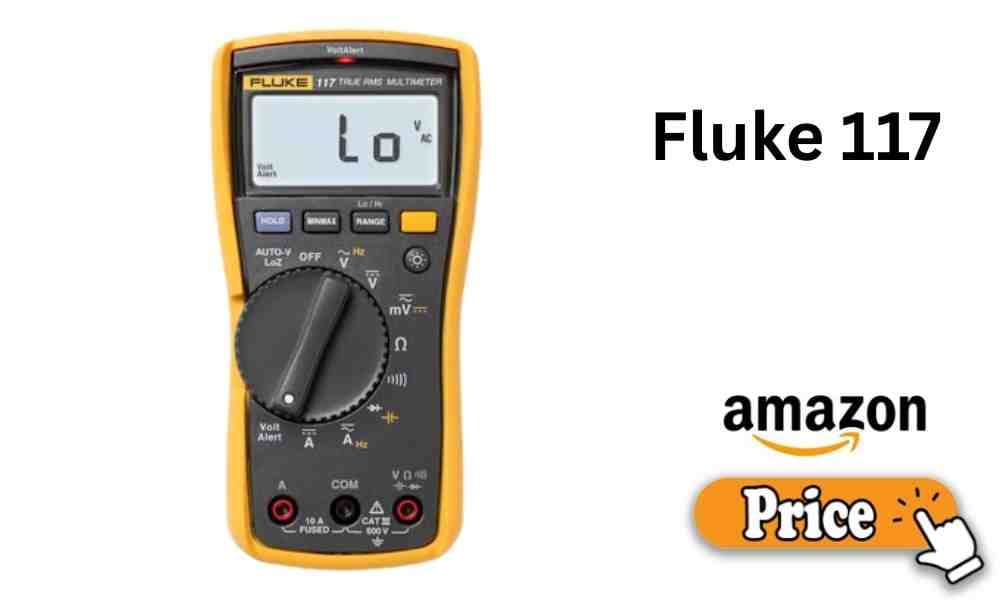
The best part was the VoltAlert feature. I held the meter near a wire I thought was dead. The red light glowed. It saved me from a nasty shock. I also tested a “live” wire that was reading 60 volts on my cheap meter. I switched the 117 to LoZ mode. The voltage dropped to zero. It was just ghost voltage. That feature alone is worth the cash for home wiring.
The screen is bright, but the contrast fades if you look from the side. The battery life is solid. I left it on overnight by accident, and it was still good the next day. It uses a 9V battery, which is easy to find.
Pros and Cons for Fluke 117
| Good Stuff | Bad Stuff |
| Finds “Ghost Voltage” fast | No milliamp (mA) range |
| Built-in non-contact voltage detector | No temperature reading |
| Great white LED backlight | Lower accuracy (0.5%) |
| Fits in one hand easily | Not for electronics repair |
My Experience with the Fluke 179
A few days later, my clothes dryer quit heating. This is where the 117 failed me, and the 179 shined. The 179 feels tough. It is heavier and thicker. You feel like you could drop it off a ladder and it would survive.
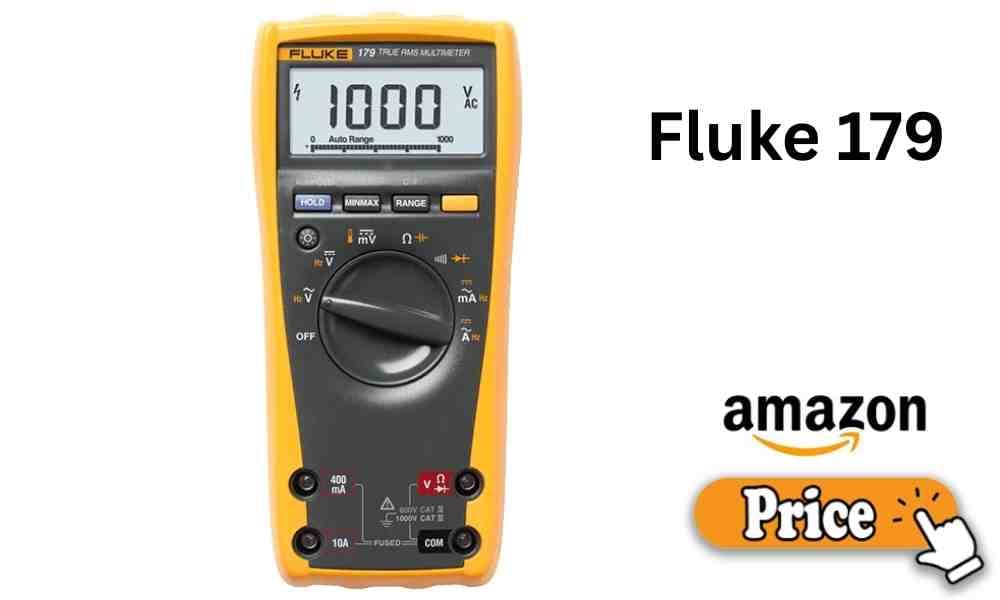
I needed to check the temperature of the air vent. The 179 comes with a temperature probe. I plugged it in and saw the heat rise to 145°F. The 117 cannot do that. Then I had to test a flame sensor. I needed to read very small currents in milliamps. The 179 has a specific setting for this. It gave me a steady reading of 3.2 microamps.
The readings on this meter are rock solid. They do not jump around. It gives you confidence. It takes a second longer to settle than the 117, but it is more precise.
Pros and Cons for Fluke 179
| Good Stuff | Bad Stuff |
| Reads temperature directly | No Ghost Voltage mode |
| Very precise for electronics | Heavier to carry around |
| Measures tiny currents (mA) | No non-contact voltage alert |
| Lifetime warranty backup | Costs more money |
Details Comparison for Fluke 117 vs 179
Here is how these two tools stack up when you put them head-to-head. I looked at the things that actually matter when you are on the job.
Core Measurement Capabilities
This is the biggest difference I found. If you work on circuit boards or appliances, you need the 179. It reads temperature and tiny currents. The 117 is purely for “is it on or off” type work. The lack of milliamp range on the 117 limits you to basic electrical work.
| Feature | Fluke 117 | Fluke 179 |
| Milliamp (mA) | None | Yes (Critical for sensors) |
| Temperature | None | Yes (-40°C to 400°C) |
| DC Volts | 600V | 1000V |
Ghost Voltage and NCV
The 117 wins here, hands down. I used the LoZ mode on the 117 to ignore stray voltage on three separate wire runs. The 179 showed me 40 volts on a dead wire because it is so sensitive. The 117 knew it was noise. Plus, the 117 has the voltage beeper built-in.
| Feature | Fluke 117 | Fluke 179 |
| LoZ Mode | Yes (Ignores ghost volts) | No |
| Non-Contact Voltage | Yes (VoltAlert™) | No |
| Input Impedance | Low (in LoZ mode) | High (Always) |
Accuracy and Precision
I compared both against a calibrated bench meter. The 179 was spot on every time. The 117 was close, but drifted by a decimal point on DC voltage. For house wiring, 0.5% error does not matter. For a control board, you want the 0.09% accuracy of the 179.
| Spec | Fluke 117 | Fluke 179 |
| DC Accuracy | ± 0.5% | ± 0.09% |
| Counts | 6,000 | 6,000 |
| Reading Stability | Good | Excellent |
Display and Usability
Both screens are clear, but I prefer the 117 for dark attics. The backlight seemed a bit punchier. However, the 179 has a “Hold” feature that is smarter. It waits until you touch the probes to the wire to freeze the number. The 117 just freezes instantly.
| Feature | Fluke 117 | Fluke 179 |
| Backlight | White LED | White LED |
| Weight | Light (350g) | Heavy (420g) |
| Probe Holders | Rear clip | Rear clip |
Safety and Build Quality
The 179 is built for factories. It is rated for higher voltage spikes. I felt safer using the 179 on the main panel feed. The 117 is safe for home use, but I would not take it to an industrial plant. The rubber case on the 179 is integrated better.
| Rating | Fluke 117 | Fluke 179 |
| Safety Category | CAT III 600V | CAT IV 600V |
| Max Voltage | 600V | 1000V |
| Warranty | 3 Years | Lifetime |
Conclusion
If you wire houses or offices, get the Fluke 117. The ghost voltage feature saves so much time. If you fix HVAC, appliances, or factory machines, you need the Fluke 179. You cannot do your job without the temperature and milliamp settings. Choose the tool that fits your daily work.