
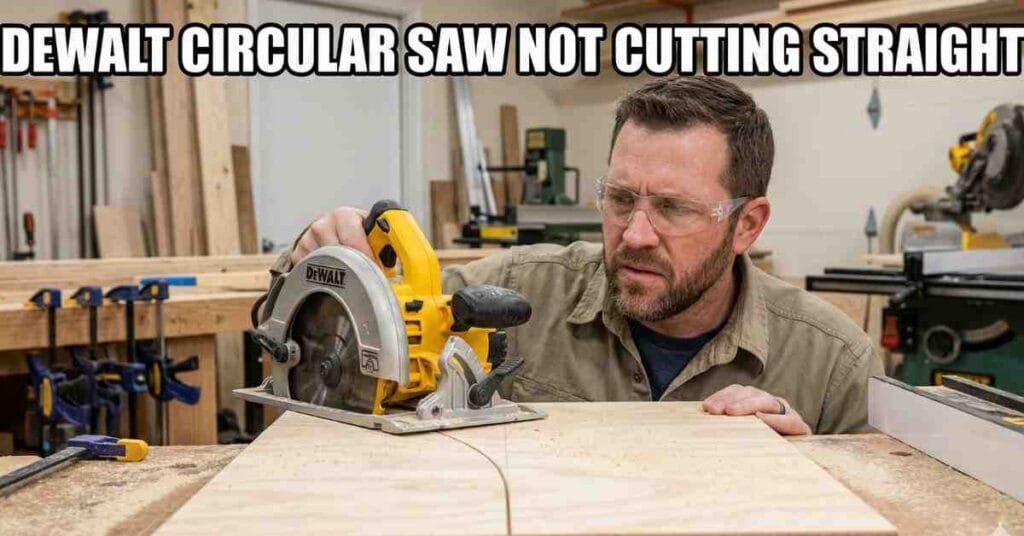
It was a hot day in my Florida shop. The sun was very bright outside the open door. My dog slept by the fan to stay cool. I wanted to build a nice cedar chest. My young niece asked for it last week.
I took out my trusty DeWalt circular saw. I needed to cut a thick piece of good wood. The saw motor sounded fine at first. But then the cut went way off my mark. The blade drifted badly to the left side.
It ruined a very nice piece of lumber. I stopped the saw and wiped the sweat from my face. The strong smell of burnt wood filled the hot air. I felt a deep knot in my gut right then. No one likes to waste good wood on a bad cut.
The Smell of Burnt Wood
I set the saw flat on my wood bench. I had to find out what went wrong. A crooked cut is a very big headache. It makes you feel like a fool. But it is just a clear tool fault.
I write for a site called ToolsEngineers.com. I test a lot of gear for that site. I know how to track down tool bugs. I knew I could fix this saw fast. I just had to look at the parts closely.
Why A Saw Will Drift Off the Line
There are three big things to look at first. A saw will wander if the parts get old. It is rarely the fault of the person holding it. Let me share what I have found over time. These facts will help you save your wood.
The Blade is Too Dull
The top reason for a bad cut is a dull blade. Metal teeth get very dull over time. They stop biting into the wood with a clean edge. The blade seeks an easy path through the grain. It pushes away from your straight pencil line.
The Shoe is Out of Square
Your saw glides on a flat metal plate. We call this flat plate the saw shoe. The shoe must sit perfectly flat against the spinning blade. We all drop our tools on the floor sometimes. A bent shoe will ruin your cut angle fast.
Pushing the Wood Too Fast
We all rush our work on a busy day. Pushing the saw too fast hurts the tool. It puts too much stress on the thin metal blade. The blade will bend deep inside the dense wood. You must let the motor work at a slow pace.
Problems and Quick Fixes
Here is a list of things to check. I made this list to help you work fast. It shows the sign of the fault and the exact fix. Use this data to get your saw running right.
| Saw Fault | Sign of the Fault | My Quick Fix |
| Dull Teeth | Burnt smell or rough cuts | Put on a new sharp blade |
| Bent Shoe | Saw rocks on the bench | Fix the bevel lock angle |
| Weak Blade | Cut curves near the end | Push the saw very slow |
| Bad Support | Saw bogs down tight | Use a foam board base |
How to Check the Saw Baseplate
Fixing the shoe is a very fast job. You do not need big or hard tools. You just need a flat spot to work on. I put my saw on my flat work bench. I unplugged the long cord from the wall first.
Finding the Right Tools
Safety must come first in any wood shop. A spinning saw can hurt you very badly. I pulled the plug to be totally safe. Then I grabbed a small square from my tool box. I needed to check the angle of the blade.
Read More: DeWalt 20V Circular Saw Stopped Working
Testing the Flat Metal Base
I flipped the saw upside down on the bench. I put the square flat against the steel blade. The base of the square sat on the shoe. I saw a small gap near the front edge. The bevel angle was slightly off the mark.
Fixing the Bevel Lock Angle
I turned the big knob on the front side. This knob locks the shoe in place. I moved the shoe until the gap went away. It sat flush against the square on the bench. Then I locked the knob down very tight.
Changing Out the Worn Blade
A bad angle is not the only fault to check. My blade was quite old and very worn out. I felt the teeth with my thumb. They felt dull and round on the tips. I knew I had to put a new one on.
Using My Dad’s Old Wrench
I reached up to my top wall shelf. I grabbed an old wrench from my dad’s tool box. I like to use his old tools when I work. It makes me feel close to him in the shop. I locked the arbor nut to hold the blade.
Putting on a Fresh Sharp Blade
I turned the wrench to pop the nut loose. I took the old dull blade off the saw hub. I put a brand new blade on the tool. This blade had sixty sharp teeth for smooth cuts. I locked the nut back down tight and snug.
Cleaning Pitch and Tar Off the Blade
Sometimes a blade is not dull at all. It might just be covered in sticky wood sap. Pine and cedar have a lot of wet sap. This sap gets very hot when you cut wood. It bakes onto the metal teeth like hard glue.
Wood Sap Slows the Saw Down
The sap creates a lot of bad drag. Drag makes the saw drift off your straight line. I like to soak my blades in a good cleaner. I spray them down and let them sit wet. Then I scrub the teeth with a brass brush.
Saving Money on New Blades
This fast trick saves me a lot of money. I do not have to buy new blades as often. A clean blade cuts just like a new one. It spins fast and stays on the pencil line. Keep your blades clean for the best cut path.
Setting Up the Wood for a Good Cut
A tuned saw still needs a good work base. I ruined a lot of wood in my early days. You must support the wood before you start the cut. Wood that sags will pinch the thin metal blade. A pinch makes the saw jump off the line.
Using Foam Board for Good Support
I bought a thick sheet of hard pink foam. I keep it in the back of my hot shop. I put the foam flat on my wood table. I lay my good wood right on top of it. The foam holds the wood up from end to end.
I drop the saw blade just a tiny bit. The teeth cut into the foam as I push. The wood stays flat and does not sag down. The saw glides clean through the whole long cut. It is a very neat trick to learn.
Setting Up a Straight Edge Guide
Cutting a straight line by hand is quite hard. You need a very clear and steady eye. I like to use a straight wood guide piece. I clamp a straight board to my good wood. I measure the gap from the blade to the edge.
I push the saw shoe right against the board. The saw can not move left or right at all. It must glide straight down the clamp line. This trick works great every single time I try. It takes out all the guess work for me.
Testing the Saw for a Straight Cut
My saw had a sharp new blade on it. The metal shoe base was set square and flat. My wood sat firm on the pink foam board. My straight guide board was clamped down tight. I felt ready to make a test cut.
I plugged the black cord back into the wall. I put on my clear eye glasses for safety. I lined the saw up on the start mark. I pulled the switch to hear the motor run. It hummed with a loud and steady sound.
The Sweet Sound of a Clean Cut
I pushed the saw into the wood piece. The sharp teeth bit into the wood with ease. It felt like cutting soft butter with a hot knife. The saw did not bind or kick back once. The cut tracked straight down the pencil line.
I smelled fresh cut cedar in the hot air. There was no bad burnt smell this time. I looked at the edge of the new cut. It was straight and smooth like fine glass. I smiled and wiped the dust off my hands.
Getting Back to the Cedar Chest
I felt a huge wave of pure joy. My good tool was back in top shape. It took less than ten minutes to fix the fault. I did not have to pay a shop to fix it. I used my own hands to make it right.
I gave my sleeping dog a soft pat. He wagged his tail but did not wake up. I turned back to my wood working plans. I had a nice cedar chest to build today. My young niece would be so very happy soon.
Taking care of your tools is a very good habit. You learn how parts work when you fix them. Do not get mad when a tool fails you. Just stop and look for the basic root cause. You can fix most faults with simple hand tools.