
Can I Use A Leaf Blower For Snow?
=================================
Snowfall can turn a beautiful morning into a real chore. I remember waking up early one winter to find my driveway covered in fresh, light snow. My snow shovel was nowhere to be found. I looked around and saw my electric leaf blower in the garage. That’s when I asked myself: can I use a leaf blower for snow? I was curious, maybe even a bit desperate. I wanted an answer that was practical, safe, and based on real experience, not just theory.
Over the years, I’ve tried many methods to clear snow quickly. I’ve also talked to neighbors, hardware experts, and read lots of guides. In this article, I’ll share not just what I’ve learned, but also what actually works in the real world.
If you’re staring at a snowy sidewalk and holding a leaf blower, you want clear, simple advice—no fluff. Let’s see if your leaf blower can help you beat the snow.
How Leaf Blowers Work With Snow
To understand if a leaf blower can really clear snow, you have to know how these tools work. A leaf blower uses a motor to push air out at high speed through a nozzle. The air moves leaves, dirt, and yes, sometimes snow. But not all snow is the same.
Types Of Snow And Their Behavior
Snow is not just snow. It changes based on temperature, humidity, and how long it’s been on the ground. Knowing what kind of snow you’re dealing with is half the battle.
- Dry, powdery snow: This kind of snow is light and fluffy. It doesn’t stick much. A strong gust of air can move it easily. When you pick it up, it falls apart in your hand. It usually happens when the air is cold (below freezing), and the snow has just fallen. It’s the kind of snow you can blow off your car with a simple brush or, in our case, a leaf blower.
- Wet, heavy snow: This snow feels sticky and packs together. It’s much harder to move, even with strong wind. It’s the kind of snow that makes big snowballs or snowmen. It usually falls when the temperature is just above freezing or if there’s a thaw. You’ll notice it clumps on your boots and is hard to sweep away.
- Icy snow: Sometimes snow melts a little and then freezes again. It forms a crust. Leaf blowers cannot move ice. If you tap it, it sounds hard, and you have to chip at it to get it off. Icy snow is the worst for clearing, no matter the tool.
Example: Why Snow Type Matters
One morning, I tried using my blower after a night of heavy, wet snow. The air just made the snow ripple but didn’t move it. Another day, after a light, cold snowfall, I cleared my whole porch in minutes. If you know the snow type, you can save yourself a lot of frustration.
How Much Air Does A Leaf Blower Move?
Leaf blowers measure air movement in two main ways:
- CFM (cubic feet per minute): This shows how much air comes out of the blower. More CFM means the blower can move more snow at once.
- MPH (miles per hour): This measures how fast the air moves. More MPH means the blower can blow heavier or stuck snow.
For snow, you want:
- CFM above 350: This is usually enough to move light snow. Some stronger blowers go as high as 600 CFM, which is useful if you have a large area.
- MPH above 150: The air needs to be fast to lift snow off the ground.
If your leaf blower is weak (CFM under 200), it will not move much snow. You’ll spend more time and effort with poor results.
Real-world Example
I once tried my old, small leaf blower (about 180 CFM) on a dusting of snow. It mostly made noise and blew a little snow around my shoes. When I upgraded to a 400 CFM model, the difference was huge—I could clear my steps and car in a few minutes.
Non-obvious Insight: The “air Sheet” Effect
Most people think only about power. But how you use the air matters too. If you “sweep” the nozzle side to side, you create a wide “sheet” of moving air. This lifts and carries more snow than pointing the blower straight and holding it still.
When A Leaf Blower Is Good For Snow
From my own winters, I’ve found that a leaf blower is great for quick jobs when the conditions are right. Here’s when you’ll get the best results:
- Fresh, powdery snow: If the snow just fell and is light, your blower will clear it easily. You’ll notice the snow practically floats away.
- Small amounts: Less than 2 inches is ideal. More than that, and the blower starts to struggle. For example, after a one-inch snowfall, you can clear a standard driveway in under 10 minutes.
- Smooth, flat surfaces: Driveways, sidewalks, decks, and car roofs are perfect. Grass is harder because snow sticks between blades. On gravel, the blower may throw small stones, which is dangerous.
- Quick action: Use your blower soon after the snow falls. Waiting lets the snow get heavier or freeze.
Practical Example
After a light overnight snow, I grab my blower before breakfast. I clear my steps, car, and a path on the sidewalk in about five minutes. But if I wait until afternoon, the sun can melt the snow just enough to make it wet and heavy.
Then, the blower does almost nothing.
Non-obvious Insight: Prevent Re-freezing
If you clear snow early, you also prevent it from melting and re-freezing into ice. This makes your walkways safer. It’s a small detail, but it can save you from slipping later.
Decks, Stairs, And Car Roofs
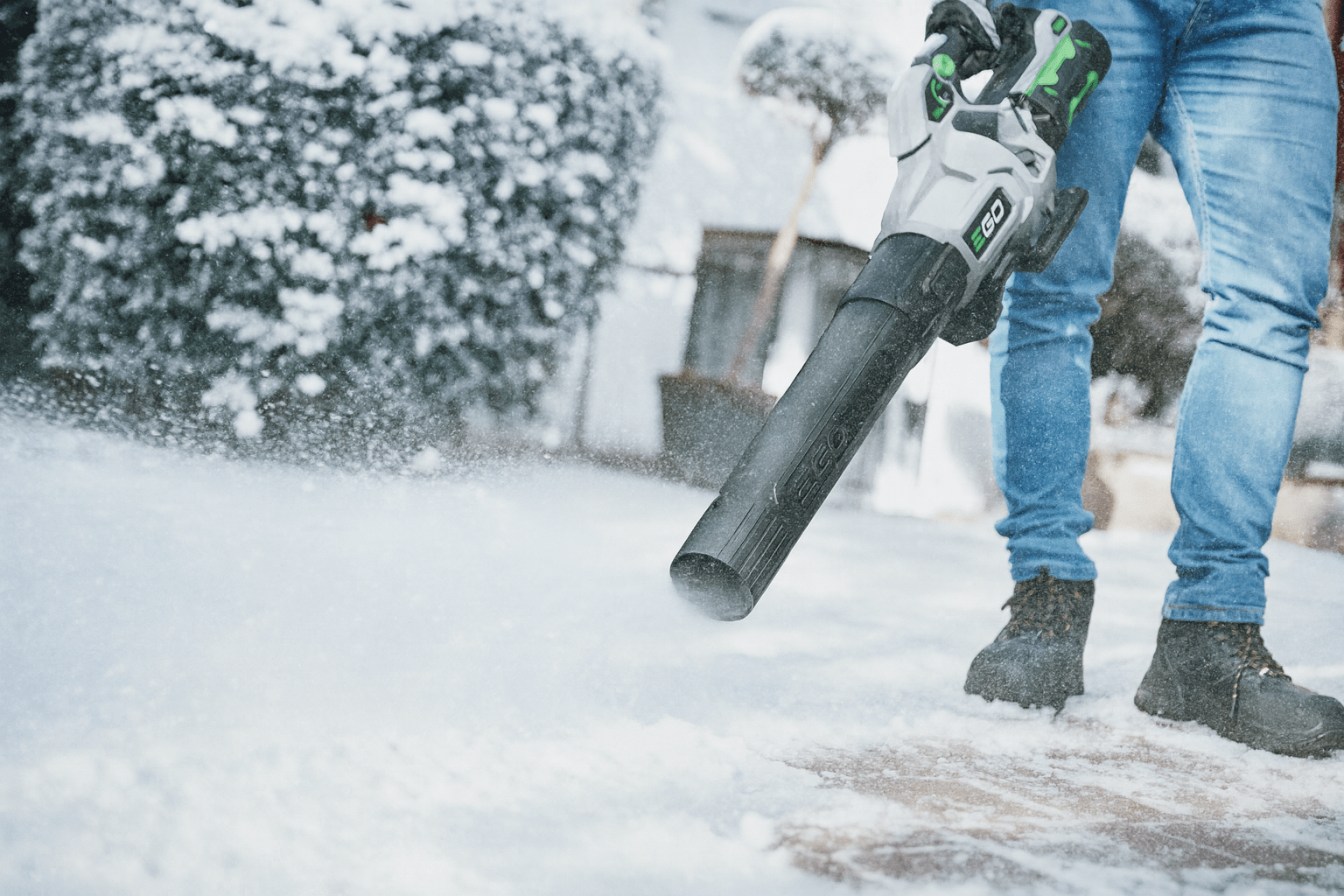
Leaf blowers are especially handy for steps and car roofs. Snow brushes can scratch paint, and shovels are awkward on stairs. A blower is fast, gentle, and keeps you from bending over too much. Just start at the top and work down, so snow never piles below your feet.
Limits Of Using A Leaf Blower For Snow
A leaf blower can save time, but it has clear limits. You need to know these before you get started.
What Leaf Blowers Can’t Do
- Wet or compacted snow: If the snow is heavy, sticky, or has been walked on, the blower cannot lift it. The snow simply sits there, and the air blows around it.
- Deep snow: Once snow is over 2-3 inches, the blower’s air can’t reach the ground. The lower layers are untouched, and you’ll end up with uneven patches.
- Ice: If there’s a layer of ice, even a powerful leaf blower won’t help. You risk damaging your blower or hurting yourself with flying ice chips.
- Packed snow: Snow that has been driven or walked on gets hard. Blowers can’t move it. If you have a busy sidewalk, clear it early, or you’ll need a shovel.
Example: Dealing With Deep Snow
One year, we got a heavy storm. I tried to use my blower on the driveway, but after an hour, I had barely cleared a path. I switched to a shovel and finished in half the time. Sometimes, you have to admit defeat and grab the right tool.
Weather And Temperature Effects
- Warm days: If the sun comes out, snow gets wet. Wet snow is much heavier, and most blowers can’t lift it.
- Very cold days: Snow stays light and fluffy. This is the perfect time for a leaf blower.
- Wind: If it’s windy, blowing snow can go right back where you started or blow into your face. Try to work with the wind, not against it.
Pro Tip: Check The Forecast
If you know a warm-up is coming, clear snow before it melts and refreezes. A little effort early saves a lot of work later.
Noise And Power Concerns
- Noise: Leaf blowers are noisy, especially gas-powered ones. Some cities have rules about when you can use them. Check your local noise laws—sometimes you can only use them during certain hours.
- Battery-powered blowers: These are quieter but may run out of power quickly in the cold. If you have a big area, consider having a spare battery.
Battery Life In Cold
If you use a cordless blower, expect the battery to drain faster in winter. Cold weather can reduce battery life by up to 40%. Always charge your battery before you clear snow.
Example: Real-life Battery Drain
One morning, my battery lasted only 10 minutes instead of the usual 20. I learned to keep the battery indoors and only attach it right before I started.
Electric Vs Gas Leaf Blowers For Snow
You might wonder which type of leaf blower is better for snow: electric or gas. Both have pros and cons. Here’s what I’ve learned from using both.
| Feature | Electric Blower | Gas Blower |
|---|---|---|
| Power | Good for light snow | Stronger, handles deeper snow |
| Noise | Quieter | Loud |
| Weight | Lighter | Heavier |
| Maintenance | Easy | Needs more care |
| Battery Life | Shorter in cold | No battery |
| Emissions | None | Pollutes air |
My Personal Experience
- Electric blowers: Good for quick jobs, decks, and cars. Easy to start and carry. But the battery dies fast if it’s cold. They’re also much quieter, so I can use them early in the morning without disturbing the neighbors. For smaller driveways and light snow, they’re perfect.
- Gas blowers: More power, work on bigger areas. But heavy, loud, and smell of gas. Not fun to use early in the morning. They require regular maintenance, like changing spark plugs and cleaning air filters. On the plus side, they don’t lose power in the cold, so if you get a lot of snow, they can handle bigger jobs.
Non-obvious Insight: Corded Electric Blowers
Corded blowers are often overlooked. They’re lighter than gas, don’t need charging, and can run as long as you have power. The main downside is managing the cord in snow, which can be tricky and sometimes unsafe if the cord gets wet.
What To Choose
If you have a small area and light snow, an electric blower is fine. For longer driveways or lots of snow, a gas blower may be better.
Example: Choosing For Your House
If you have a two-car driveway and get less than 3 inches of snow at a time, a good electric blower is enough. If you have a 100-foot driveway or live in a place with heavy snow, you’ll want a gas model or a snow thrower.
Step-by-step: Using A Leaf Blower For Snow
If you decide to try your leaf blower on snow, here’s how to get the best results.
- Check the snow: Is it dry and powdery? Is it less than 2 inches deep? If yes, proceed.
- Dress warmly: Wear gloves, boots, and eye protection. Snow will fly around. A winter hat and scarf protect your ears and face from cold wind.
- Charge or fuel your blower: Make sure the battery is full or the gas tank is filled. For corded models, use a heavy-duty extension cord rated for outdoor winter use.
- Test in a small area: Start at the edge of your driveway or steps. This lets you see how well the blower works before committing to the whole area.
- Keep the nozzle low: Hold the blower close to the ground, but not touching it. Sweep side to side. A low angle moves more snow and prevents blowback.
- Work with the wind: Blow snow in the direction the wind is blowing. This saves effort. If you blow against the wind, snow may end up on you.
- Clear in layers: If snow is deeper than 2 inches, try to remove the top layer first, then the bottom. This is easier than trying to move all the snow at once.
- Clean the blower: After use, wipe off snow to avoid rust or ice buildup. Don’t let snow sit on the blower for hours.
- Store inside: Keep the blower in a dry place so it doesn’t freeze. This also extends battery life.
Extra Tips
- If you have cars parked outside, clear snow off them first. It’s easier before snow hardens.
- Start at the top of steps and work down. This keeps snow from piling up below.
- On decks, blow snow away from the house, not toward doors.
- If snow is sticking to the ground, try gently tapping it first with the blower nozzle to loosen it, then blow it away.
- For large areas, work in sections. Divide your driveway into manageable strips, clearing one at a time to avoid missing spots.
Example: Clearing A Car
Start at the roof, blow snow toward the back, then clear the hood and windows. Work methodically to avoid blowing snow onto areas you just cleared.
Non-obvious Insight: “snow Drifts”
After windy nights, snow can drift into high piles. Use the blower on the edges of these drifts, where the snow is still loose, but don’t expect to clear the whole drift—use a shovel for the densest parts.
Comparing Leaf Blowers To Other Snow Removal Tools
You have options besides a leaf blower. Let’s see how it stacks up.
| Tool | Best For | Limitations |
|---|---|---|
| Leaf Blower | Light, fresh snow; small areas | Weak with wet or deep snow |
| Shovel | All types; cheap; any depth | Hard work; can hurt back |
| Snow Thrower | Big jobs; deep snow | Expensive; takes space; needs gas or power |
| Snow Broom | Cars, steps | Slower; not for deep snow |
My Recommendation
Use a leaf blower for quick, light jobs. Keep a shovel for heavy snow. If you get a lot of snow every year, invest in a snow thrower.
Example: Mixing Tools
On most days, I use my blower first. If I hit packed or deep snow, I switch to the shovel. For my car, I use a snow broom for the windows and a blower for the roof.
Non-obvious Insight: Multi-tool Approach
Don’t think you have to pick just one tool. Start with the blower to remove what you can, then use a shovel or broom for the rest. This saves time and energy, especially on big snow days.
Safety Tips For Using A Leaf Blower On Snow
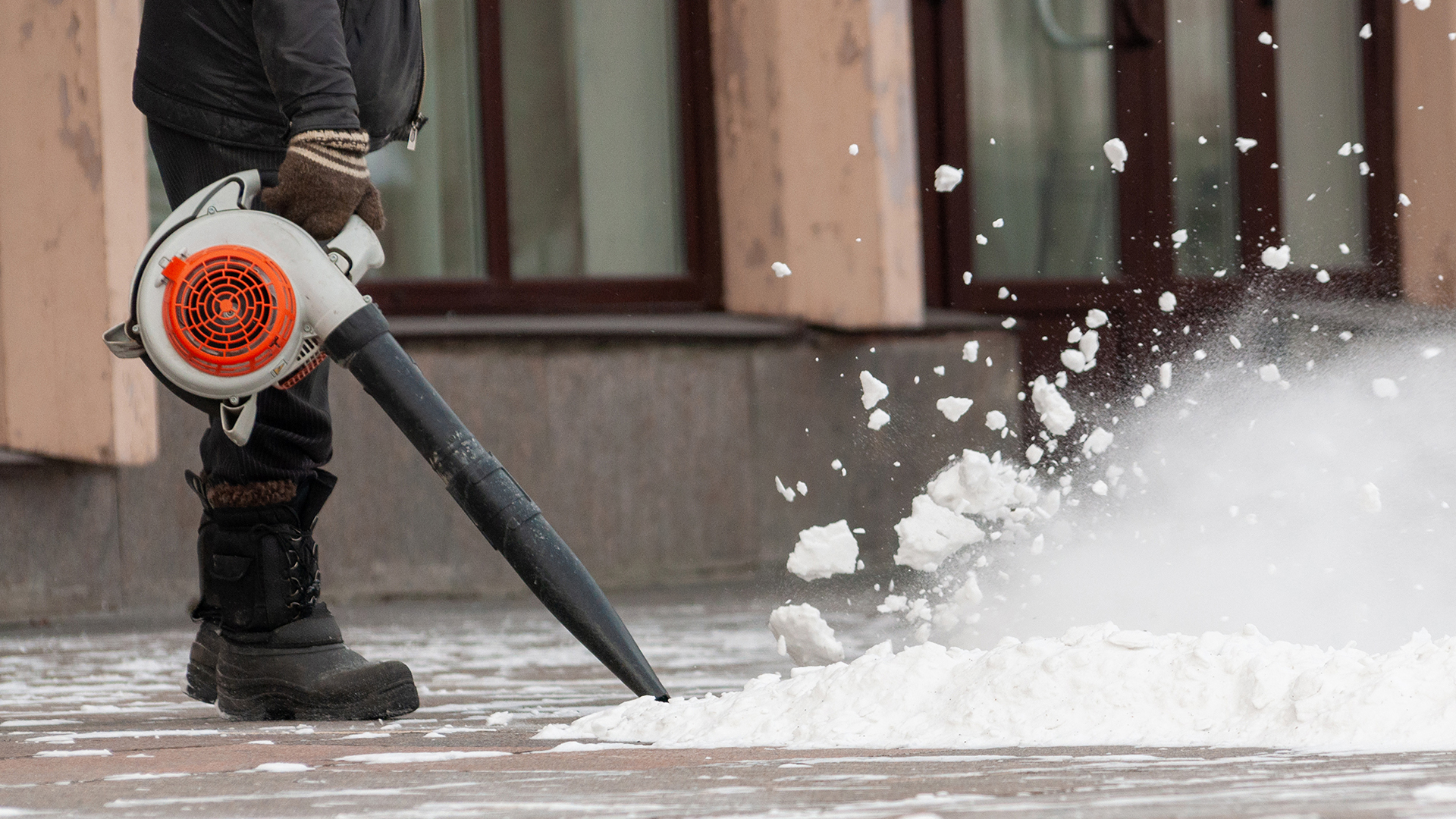
It’s easy to forget about safety when you’re in a rush. But using a leaf blower in winter has special risks.
- Wear eye protection: Flying snow or ice can hurt your eyes. Even a small piece of ice can cause injury.
- Use gloves: Cold air from the blower can numb your hands. Gloves also protect from flying debris.
- Watch your footing: Snow and ice are slippery. Take small steps. Wear boots with good tread to avoid slips.
- Keep cords clear: If you use a corded electric blower, don’t let the cord sit in water or snow. Wet cords can cause electrical shock.
- Don’t aim at people or pets: The air is strong and can throw snow or debris.
- Avoid blowing near cars: Snow can scratch paint if it contains dirt or ice.
- Dress in layers: Wind from the blower can make you cold quickly. Layering keeps you warm and lets you adjust as needed.
Electrical Safety
- Never use an electric blower in wet conditions. If it’s raining or slushy, wait until it’s dry.
- Plug into an outlet with a ground-fault circuit interrupter (GFCI) to prevent shocks.
- Check cords for cracks before use. Replace damaged cords right away.
Maintenance After Use
- Dry your leaf blower after each use. Moisture can rust metal parts or damage motors.
- Check the air intake and nozzle for ice buildup. Remove any snow or ice stuck in the blower before storing.
Example: Avoiding Electrical Hazards
Once, I used my corded blower after a wet snow. The cord got wet, and I felt a slight shock in my hand. Now, I only use the blower when it’s dry and always check the cord first.
Common Mistakes People Make
I’ve seen neighbors try to use a leaf blower in ways that just don’t work. Here are some mistakes to avoid:
- Waiting too long: If you wait until snow is packed down, the blower can’t move it.
- Trying with wet snow: Leaf blowers aren’t made for heavy, sticky snow.
- Ignoring battery charge: In cold, your battery drains fast. Always start with a full charge.
- Not clearing in layers: If you try to move all the snow at once, it doesn’t work. Go in thin layers.
- Forgetting about wind: Blowing against the wind is frustrating and wastes effort.
- Using the wrong nozzle: Some people use a round nozzle for snow, but a flat nozzle works better.
- Wearing poor footwear: Clearing snow in sneakers or smooth shoes is risky. Always wear boots.
Example: “i’ll Do It Later”
My neighbor left snow on his porch all day, thinking he’d clear it after work. By then, it had melted a bit and refrozen. His blower just made noise, and he had to chip away at ice with a shovel.
Non-obvious Insights Most Beginners Miss
Most people think a leaf blower is only for leaves. But with the right conditions, it’s a real time-saver for snow. Here are two tips I wish I knew sooner:
- Use the right nozzle: Some blowers come with extra nozzle tips. The flat, wide nozzle moves snow better than a round one because it spreads out the air. If you only have a round nozzle, try holding it at a shallow angle to the ground for a wider sweep.
- Keep the blower warm: If you store your battery blower inside, it will work longer. Cold batteries lose power fast. Bring the blower out only when you’re ready to use it.
- Blow in “lanes”: Divide your driveway or sidewalk into strips and clear one at a time. This keeps you organized and avoids missing spots.
- Check for hidden ice: Sometimes, snow covers ice patches. Move slowly and test with your foot before stepping forward.
Example: Extra Battery
I bought a spare battery for my cordless blower. On cold mornings, having a second battery means I finish the job even if one runs out.
The Environmental Impact
You may not think about the environment when clearing snow, but it matters. Gas blowers make noise and air pollution. Some towns even ban them. Electric blowers are cleaner and quieter, but making batteries also impacts the planet.
If you want to be eco-friendly, use a manual shovel or a broom for very small jobs. For bigger jobs, an electric blower is better for the air and your ears.
Example: Community Rules
In my town, gas leaf blowers are banned from November to March because of noise. Check your local laws—using a gas blower at the wrong time can lead to fines.
Non-obvious Insight: Airborne Dust
Leaf blowers can kick up dust and debris under the snow, especially late in the season when dirt mixes with melting snow. If you have allergies, wear a mask.
Real-world Examples
Let me share a few real stories to give you a sense of what works.
- My neighbor’s deck: She uses a small electric leaf blower after every light snow. Her deck is always safe to walk on, and she never has to shovel. But after a heavy storm, she switches to a shovel. She says it saves her back and keeps her steps safe for her dog.
- My own driveway: One morning, I used my gas blower to clear a light, fluffy snow. It took me less than 10 minutes. But when I tried after a wet snowfall, the blower just made noise and moved nothing. I learned to check the snow type first.
- A local business: I saw a store owner using a backpack blower to clear snow from a large sidewalk. It worked well because he started early, right after the snow stopped. He told me he uses the blower daily for small snowfalls, saving his team hours of work.
- Family with kids: My cousin’s kids help clear the porch with a small battery blower. It’s light enough for them and turns a chore into a game.
Non-obvious Insight: Apartment Living
If you live in an apartment with a balcony, a small electric blower is perfect for keeping your space clear. Just be careful not to blow snow onto neighbors below!
When Not To Use A Leaf Blower For Snow
Knowing when not to use your leaf blower saves you time and keeps you safe.
- After freezing rain: Ice cannot be moved by air.
- If snow is deeper than 3 inches: Use a shovel or snow thrower instead.
- When snow is very wet: The blower will just blow water, not snow.
- On gravel driveways: The blower can pick up and throw rocks. This is dangerous.
- During heavy wind: The wind can blow snow back in your face.
- At night in residential areas: Noise can disturb neighbors. Some places have noise ordinances.
Example: Gravel Problems
I once tried using my blower on a gravel walkway. Pebbles shot out with the snow—dangerous for windows and people. Now I only use it on solid surfaces.
How To Prepare Your Leaf Blower For Winter Use
Before you use your blower in winter, do a little prep work.
- Clean the blower: Remove leaves, dirt, and dust from the intake and nozzle. Dirt can freeze and block air.
- Check for cracks: Cold can make plastic brittle. Fix any damage before use. Cracks can worsen in freezing temperatures.
- Lubricate moving parts: A little spray oil keeps parts moving smoothly.
- Charge batteries fully: Cold drains batteries fast.
- Store inside: Keep the blower in a warm, dry place until you need it. Avoid leaving it in an unheated garage overnight.
Example: Preventing Freezing
Last winter, I left my blower in the trunk of my car. The next day, the battery barely worked. Now, I always bring it inside.
Non-obvious Insight: Air Filter
If your blower has an air filter, clean or replace it before winter. Snow dust can clog filters quickly, reducing power.
Maintenance After Snow Use
Snow can be hard on your blower. Take care of it after each use.
- Wipe dry: Use a towel to remove moisture.
- Check for ice: Ice can block air flow.
- Let it warm up: Bring the blower inside to dry out.
- Inspect cord and plug: If you use electric, check for moisture or damage.
- Empty gas tank (for gas models): If you won’t use it for weeks, drain the tank or add fuel stabilizer.
Regular care will help your blower last many years.
Non-obvious Insight: Rust Prevention
A thin coat of silicone spray on metal parts prevents rust. This is especially helpful for gas blowers with exposed bolts and screws.
Upgrades And Accessories That Help
You can get more from your leaf blower with a few extras.
- Nozzle attachments: Flat nozzles spread air better for snow.
- Extension cords: For corded models, use a winter-rated cord. Regular cords can stiffen or crack in cold.
- Extra batteries: Have a spare if you use a battery blower.
- Backpack straps: Make carrying easier for big jobs.
- Heated gloves: If your hands get cold fast, battery-heated gloves keep your fingers moving.
Example: Upgraded Nozzle
After I bought a flat nozzle attachment, my blower worked twice as well on snow. It was a small investment for a big improvement.
Non-obvious Insight: Tool Storage
Hang your blower on a wall hook near the door. This keeps it dry and handy, so you use it more often.
The Cost: Is It Worth It?
A good leaf blower costs anywhere from $60 to $300. But if you already have one, using it for snow saves money. You don’t need a separate tool for light jobs.
- Gas models: More expensive, but more power. Good for larger areas.
- Cordless electric: Cheaper, easy to store, but less power.
Cost Example
If you only get a few light snowfalls each year, a blower is all you need. For heavy snow regions, a snow thrower ($400+) is a better investment.
Non-obvious Insight: Value Over Time
A quality blower lasts for years. If you use it for both leaves and snow, it pays for itself faster. Just remember, maintenance and proper storage will protect your investment.
The Science: Why Air Moves Snow
You might wonder: how can air move snow? Dry snow is made of tiny crystals with lots of air between them. That’s why it’s light and fluffy. When you blow air at it, the snow lifts and moves. Wet snow has more water, making it heavy. The air from a blower isn’t strong enough to lift it.
Example: Snow Density
A cubic foot of dry snow can weigh as little as 7 pounds. The same amount of wet snow can weigh 20 pounds or more. That’s why your blower can move dry snow but struggles with wet snow.
Non-obvious Insight: Temperature And Snow Structure
When the temperature rises above freezing, snowflakes melt and stick together. This change happens fast, and you’ll notice the blower’s effectiveness drops suddenly. If you hear the snow “crunch” under your feet, it’s probably too dense for a blower.
When To Upgrade To A Snow Thrower
If you find yourself using your leaf blower every time it snows, but still struggling, it may be time for a new tool.
- You get more than 3 inches of snow often
- You have a large driveway or sidewalk
- Your blower can’t keep up
Snow throwers are made for the job, but they cost more and take up space.
Example: Upgrading
After three winters of struggling with my blower, I bought a small single-stage snow thrower. Clearing my driveway now takes 10 minutes instead of 40.
Non-obvious Insight: Used Equipment
If you’re on a budget, check for used snow throwers at local hardware stores or online. Many people upgrade and sell good machines for less.

Pros And Cons Of Using A Leaf Blower For Snow
Let’s sum up the main points.
Pros
- Fast for light snow
- Easy to use
- Saves your back
- Good for decks, cars, and steps
- No extra tool needed if you already own one
- Quiet (electric models)
- No need for fuel (electric models)
Cons
- Doesn’t work on heavy or deep snow
- Battery dies quickly in cold
- Can blow snow back if wind changes
- Noisy (gas models)
- Needs quick action after snowfall
- Not for gravel or uneven surfaces
- Limited by cord length (corded models)
Non-obvious Insight: Ergonomics
Blowers are lighter than shovels, which is better for seniors or people with back pain. Just remember to switch hands or rest your arm to avoid fatigue.
Who Should Use A Leaf Blower For Snow?
If you live where snow is light and not too deep, a leaf blower is a handy tool. Great for seniors, people with back pain, or anyone who wants a fast, easy way to clear small areas. If you get heavy snow often, you’ll need stronger tools.
Example: Ideal User
If you have a small home, short walkway, or just want to clear your car, a leaf blower is perfect. For a long driveway or heavy snow, you’ll need more power.
Frequently Asked Questions
What Kind Of Leaf Blower Works Best For Snow?
A gas-powered blower with high CFM and MPH ratings works best for snow, especially if you get snow often. For small areas and light snow, a strong electric blower also works well. Look for at least 350 CFM and 150 MPH for the best results. Backpack blowers are also effective for larger properties.
Can I Use A Battery-powered Leaf Blower In Cold Weather?
Yes, but remember that cold weather drains batteries faster. Keep your blower inside before use and always start with a full charge. You may need a spare battery for larger jobs. After finishing, bring batteries indoors to recharge.
Is It Safe To Use An Electric Leaf Blower In The Snow?
It’s safe if you follow some rules. Never use your blower in heavy rain or slush. Plug it into a GFCI outlet and keep cords dry. Always check for cracks in the cord before use. If the blower gets wet, unplug it and let it dry before using again.
Will Using A Leaf Blower On Snow Damage My Driveway Or Deck?
No, a leaf blower won’t damage hard surfaces like concrete or wood. Just make sure you’re not blowing gravel, rocks, or debris. Don’t use it on gravel driveways, as it can throw stones.
Where Can I Find More About Snow Removal Tools?
For more details on snow removal equipment, visit the [Wikipedia Snow Removal page](https://en.wikipedia.org/wiki/Snow_removal) for in-depth guides and comparisons.
Final Thoughts
So, can you use a leaf blower for snow? The answer is yes—with the right conditions. If the snow is light, dry, and fresh, a leaf blower is a quick, easy way to clear driveways, steps, cars, and decks. But know its limits: wet or deep snow, packed snow, and ice are too much for most blowers. Use your leaf blower as part of your winter toolkit, not your only tool.
I’ve cleared many snowy mornings with nothing but my trusty blower and a little common sense. With the right expectations and a few smart tips, you can too. Stay safe, work quickly, and enjoy those extra minutes you’ll save on cold winter days.
—
*With the right approach, your leaf blower can make winter a little easier. Just remember: act fast, dress warm, and don’t be afraid to use the right tool for the job. Happy snow clearing!*