
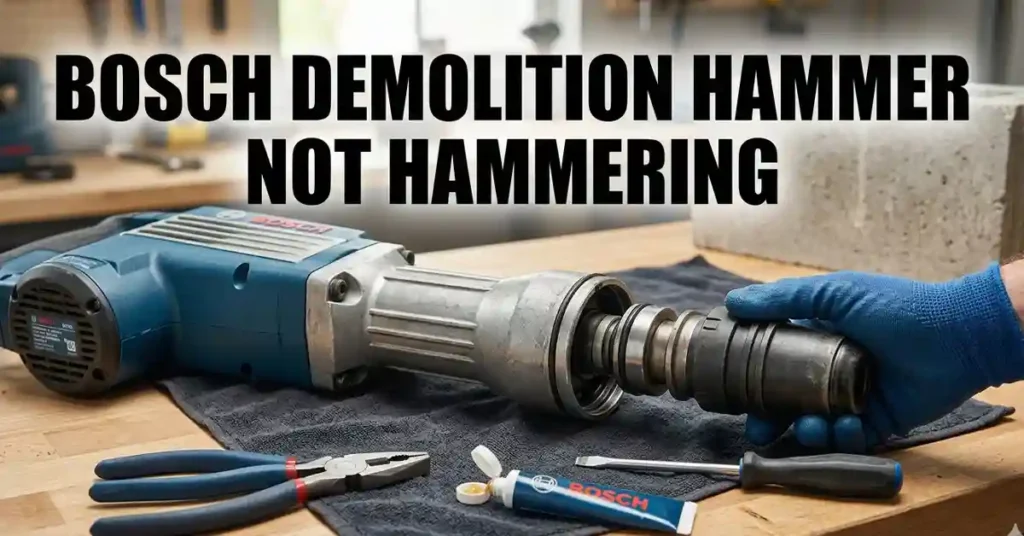
Last Tuesday started like any other work day. I had a big concrete slab in a small basement that needed to go. I grabbed my trusty Bosch hammer and plugged it in. The motor roared. The fan blew cool air. But the bit just sat there. It was vibrating, but it was not hitting.
If you are staring at a Bosch demolition hammer not hammering, I feel your pain. It is one of the most annoying things on a job site. You have power, but you have no impact. After years of fixing these tools for ToolsEngineers.com, I have learned the truth. This “ghost hammering” usually comes down to air, grease, or a tiny rubber ring.
The Morning I Learned About Air Locks
I used to think that if the motor turned, the tool was fine. That cold morning in the basement proved me wrong. It was about 45 degrees downstairs. I kept pushing the tool against the floor, but nothing happened. I felt like a total fool standing there with a noisy, useless stick.
The truth is, these tools are pneumatic. They use a pocket of air to throw a heavy metal striker against the bit. When it is cold, the grease inside turns thick. That paste acts like glue. It holds the striker in place so it cannot move. If the striker stays still, the air cannot push it.
Quick Fixes for a Cold Start
| Action | Why it works | Success Rate |
| Free Running | Warms up the internal grease | High |
| Vertical Tapping | Forces the striker to drop | Medium |
| Heat Gun | Thins out old, gummy lube | Low |
I spent ten minutes letting the tool run in the air. Finally, I gave the chisel a hard thunk against the concrete. It started hitting right away. If your tool sits in a cold truck, try this first. Let it run and get it warm.
The Mystery of the Dry Chisel Shank
By noon, the hammer started acting up again. It would hit for a minute, then stop. I pulled the bit out and saw it was bone dry. I could see fresh metal shavings on the steel. That is a huge red flag for any tool owner.
When the shank of your chisel is dry, it creates friction. This friction generates a lot of heat. That heat makes the metal expand. Soon, the bit is stuck so tight that the internal striker cannot move it. A dry bit can kill a very expensive tool in minutes.
My Personal Lube Routine
I always wipe the bit clean with a rag first. Dirt and old grease make a bad grinding paste. I put a dab of grease on the grooves. It should be about the size of a nickel. I rotate the bit as I click it into the tool to spread it well.
I used to use regular car grease. Please do not do that. It is far too thick for this job. Use the Bosch brand or a real hammer grease. It stays thin enough to keep the parts moving when the tool gets very hot.
When the Internal O-Rings Give Up
Sometimes, no amount of grease or warming up will help. This happened to me on a big deck job last summer. I could hear a strange hissing sound coming from the side vents. That hiss is the sound of money leaving your pocket.
Inside the hammer, there is a piston and a striker. Both have rubber O-rings. These rings create a vacuum seal. If they crack or get flat, the air leaks out. Without air pressure, the striker just sits there doing nothing.
Signs Your Seals are Blown
There are three big signs to watch for. You might hear air escaping the motor housing. You might see oil misting out of the vents. Often, the tool hits, but it feels very weak. It feels like a toy instead of a real demolition tool.
Replacing these rings is the most common repair I do. It sounds scary to open the tool, but it is just a few bolts. You pull out the piston and swap the rubber rings. Once you do that, the tool will feel brand new again.
The Danger of Over-Greasing Your Gearbox
I once met a guy who thought he could fix a weak hammer with more grease. He filled the whole case until it was oozing out of the trigger. Two minutes later, the tool stopped for good. This is a very common mistake.
This is called hydraulic lock. Since grease does not compress like air, the piston has no room to move. It is like trying to run through deep water. You will burn out the motor trying to fight that much thick grease.
How Much Grease is Enough?
| Bosch Model | Grease Amount | Frequency |
| GSH 5 / 11316 | 45 grams | Every 100 hours |
| GSH 11 / 11311 | 60 grams | At brush change |
| Jackhammers | Full tube | Check manual |
When I service a Bosch, I clean out all the old, black grease first. Then, I add exactly what the manual says. Usually, it is just a spoonful or two. If you see grease coming out of the vents, you have put in way too much.
Checking the Beat Piece and Piston
If you have fresh grease and good seals but no luck, look deeper. Last year, I opened a tool that would not hit at all. I found the beat piece had snapped in half. This is the part that actually touches the bit.
The beat piece takes a massive amount of abuse. Thousands of hits per minute will eventually wear the metal down. I saw tiny cracks in the steel before it finally gave way. If this part breaks, your tool will sound like a box of loose rocks.
Sensory Details to Watch For
Listen for a loose metal clinking when you shake the tool. If the handle vibrates but the bit stays still, the connection is broken. A hot, electrical smell usually means the motor is straining. This happens when it fights a jammed part inside.
Don’t Forget the Carbon Brushes
I know what you are thinking. Brushes are for the motor, not the hammering. But Bosch tools are very smart. Many models have auto-stop brushes. When they get too short, a small pin pops out and cuts the power.
Sometimes, the brushes are just worn enough to lose contact. The motor will spin, but it won’t have the torque needed. If I am already opening the tool, I always check them. If they are less than a quarter inch long, they go in the trash.
My Final Advice for Your Bosch Hammer
Repairing a Bosch demolition hammer not hammering is a great DIY job. Most of the time, it is a cheap ring or a small tube of grease. Do not throw away a great tool just because it lost its seal.
Start with the simple steps. Warm it up. Grease the bit. If that fails, look at the seals. My basement project was a success once I got that striker moving. There is no feeling like a healthy hammer turning hard stone into dust.
Summary Checklist for Repairs
- Run the tool for two minutes to warm it up.
- Tap the bit on the floor to break the lock.
- Clean and lube the bit with real hammer grease.
- Check the O-rings for cracks or flat spots.
- Look at the beat piece for any metal damage.
- Make sure you did not put in too much grease.
If you follow these steps, you will save a lot of money. These tools are built like tanks. They just need a little bit of air and the right oil to do their job. Always keep your bits clean and your seals fresh for the best results.